
Explaining ADHD to your child doesn't have to be a big, scary conversation. The key is to frame it in a simple, positive way, often using analogies they can immediately grasp.
Think of it this way: you're telling them about their brain's unique wiring, like having a super-fast race car engine. It’s incredibly powerful, but sometimes it just needs a little help with the brakes. This approach can turn a conversation that feels intimidating into one about empowerment and working together as a team.
Starting the ADHD Conversation with Your Child
That first talk after an ADHD diagnosis can feel monumental for a parent, but it’s a crucial first step in building your child’s trust and self-awareness.
Finding the right moment is everything. You don't want to rush it. Choose a time when you and your child are both relaxed and won't be interrupted—maybe during a quiet drive, while taking a walk, or just hanging out at home.
Your main goal is to set a loving, open, and judgment-free tone. This conversation should frame ADHD not as a problem or a personal flaw, but simply as a different way of thinking and experiencing the world. A great way to start is by connecting the idea to their own lived experiences.
You could open with a gentle, curious question like, "Have you ever noticed that your brain seems to have a super-fast engine, and sometimes it's hard to slow down?" This helps normalize what they’re feeling internally and gives them an open door to share their perspective without feeling singled out or put on the spot.
Using Simple Analogies They Can Understand
Clinical terms and diagnostic labels can be confusing and even a little scary for a child. Instead, lean on simple, age-appropriate metaphors to explain their unique brain wiring.
It can also be incredibly powerful to reassure them that many creative, energetic, and successful people have brains that work this way. This helps them feel connected to a larger community rather than feeling isolated or "different."
The infographic below offers some great analogies you can adapt for different age groups.
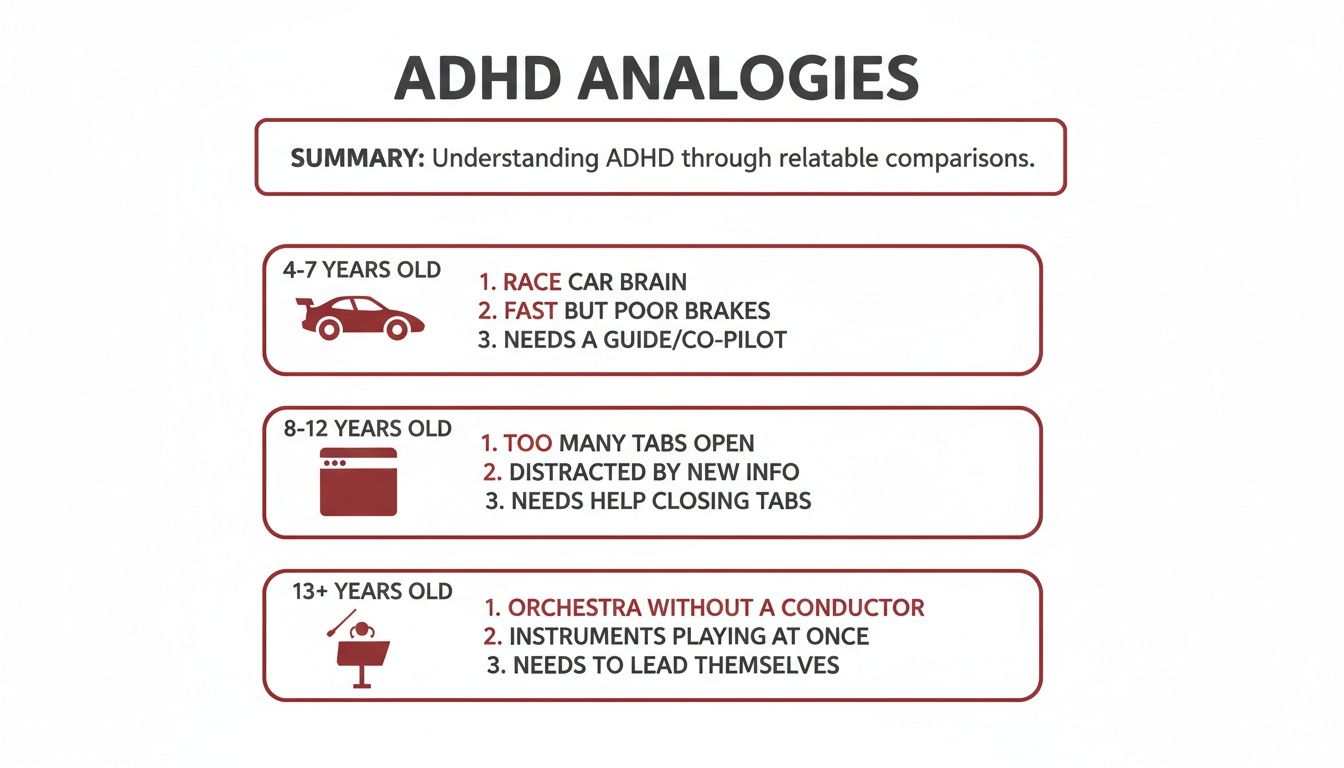
Whether it's a race car, a busy orchestra, or a browser with too many tabs open, these metaphors provide a simple, visual language to talk about complex traits without shame or stigma.
To make it easier, here’s a quick reference guide for tailoring your explanation.
Age-Appropriate ADHD Analogies and Key Messages
| Age Group | Simple Analogy | Core Message |
|---|---|---|
| Ages 4-7 | A race car brain—super fast and powerful but needs help with the brakes. | Your brain is extra speedy and full of energy! Sometimes we just need to learn how to slow it down when we need to. |
| Ages 8-12 | A browser with too many tabs open—lots of great ideas happening at once. | Your brain is amazing at jumping between different ideas. Our job is to learn how to focus on one "tab" at a time when we need to get things done. |
| Teens | An orchestra conductor trying to direct many instruments at once. | Your brain has so many talented "musicians" (thoughts, ideas, feelings), and learning to manage ADHD is like becoming a better conductor. |
Ultimately, choosing the right analogy depends on your child’s personality and interests. The goal is to give them a tool to understand themselves better.
Navigating Their Initial Reactions
It’s important to remember that your child is not alone in this. A major 2023 review looking at over 3 million people found that about 8% of children and teens have ADHD. That means in a typical classroom, two or three other kids might have brains that also work like high-speed engines—revving with great ideas but sometimes struggling to stay on track.
Your child’s reaction might range from relief ("Oh, that's why I feel this way!") to confusion, anger, or sadness. Whatever they feel, the most important thing you can do is validate it.
"Whatever you're feeling is okay. The most important thing to know is that we are a team, and we're going to figure this out together. This doesn't change who you are—it just helps us understand how your amazing brain works."
This collaborative approach sends a powerful message: they are supported, and they are not on this journey by themselves. By focusing on teamwork from day one, you create a positive foundation for everything that comes next. For more guidance on creating this supportive home environment, check out our guide on effective ADHD parenting tips.
Explaining ADHD Symptoms with Simple Analogies
Once you’ve opened the door to the conversation, the next step is breaking down what ADHD actually feels like. To a child, clinical terms like "inattention" or "hyperactivity" can sound abstract and even a little scary. This is where simple, positive, and relatable analogies become your best tool.
The whole point is to give them a mental picture they can grab onto, something that connects to their own experiences. This approach does something crucial: it separates their actions from who they are. It teaches them that their brain is wired differently, not that it's defective. This helps them grasp why they do certain things, which is the very first step toward self-awareness and feeling empowered.
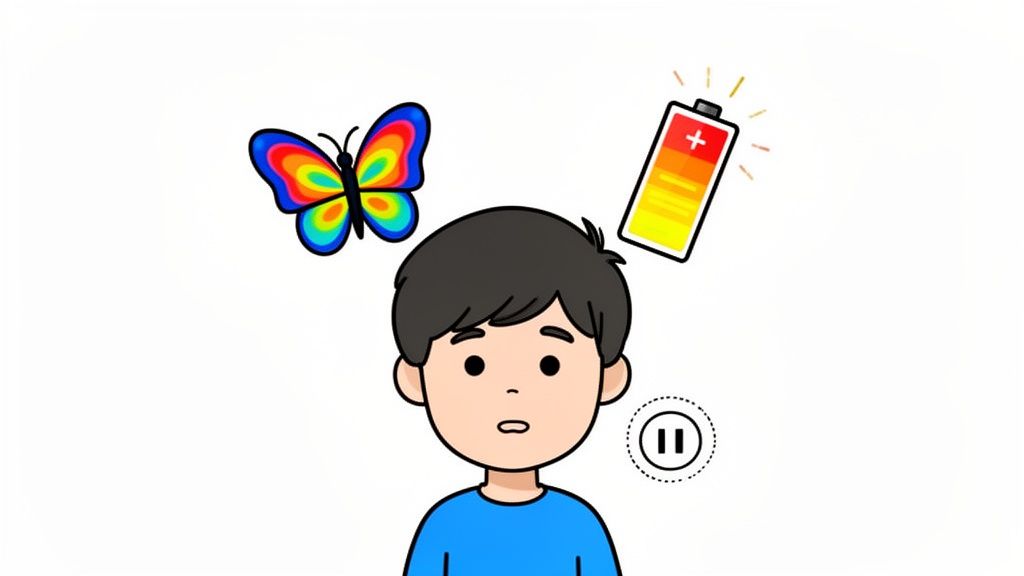
The Butterfly Brain for Inattention
When focus is a challenge, the "butterfly brain" metaphor works wonders. You can explain that their mind is like a beautiful butterfly, always fluttering from one interesting flower (or thought) to the next.
This isn't a flaw—it's what makes them so curious and often so creative. But, when it’s time to stay on just one flower for a while, like during a math lesson, it can feel really hard. This reframes the issue so they understand their mind isn't "bad" at focusing; it's just naturally built to explore.
This inattentive trait is incredibly common. A comprehensive review of studies found the inattentive type of ADHD to be the most prevalent, especially as kids get older. It also means many children, particularly girls whose symptoms can be less disruptive, experience this "spacey" or "daydreamy" state. You can read more about these findings on ADHD prevalence.
Extra Energy Batteries for Hyperactivity
Hyperactivity can be framed as a superpower that just needs the right mission. I often suggest describing it as having extra energy batteries that most other people just don't have.
You could say something like: "Your body comes with extra-large, super-powered batteries. That's why you have all this amazing energy for playing and exploring! But sometimes, when you have to sit still, those batteries get so charged up they make your legs want to wiggle. Our job is to find good ways to use all that awesome energy."
This simple analogy transforms restlessness from a "problem" into a resource. From there, you can brainstorm positive outlets together—like running, sports, or creative projects—to help them "use up" their extra battery power in a healthy way.
A Brain with No Pause Button for Impulsivity
Impulsivity is often one of the trickiest traits to explain. A great analogy is a brain with no pause button, or maybe a remote control where the pause button is just a little glitchy.
- Here's how that might sound: "Sometimes your brain has an idea and immediately presses 'play' before it gets a chance to think about what happens next. It’s not that you mean to interrupt or grab something—it's that your brain’s 'pause' button didn't get pressed in time."
This helps your child see that their impulsive actions aren't a reflection of their character or intentions. It externalizes the behavior, making it something you can work on together. This opens the door to discussing strategies for building that "pause" muscle, like counting to three before speaking or taking a deep breath before acting.
Focusing on Strengths to Build a Positive Identity
Once you've explained the basics of how an ADHD brain works, it's time to pivot the conversation. This is crucial. We need to move from talking about challenges to celebrating strengths. An ADHD diagnosis isn’t a life sentence of struggles; it’s an opportunity to understand a unique, and often brilliant, way of thinking. This part of the talk is all about reframing their diagnosis from something "wrong" with them to something that makes them uniquely powerful.
Start by being an observer in your own home. Actively notice and call out the amazing gifts that often come hand-in-hand with this neurotype. It's true—many kids with ADHD are incredibly creative, seeing connections and solutions that fly right past everyone else. Their boundless energy? That can translate into incredible athleticism or a deep passion for hands-on projects.
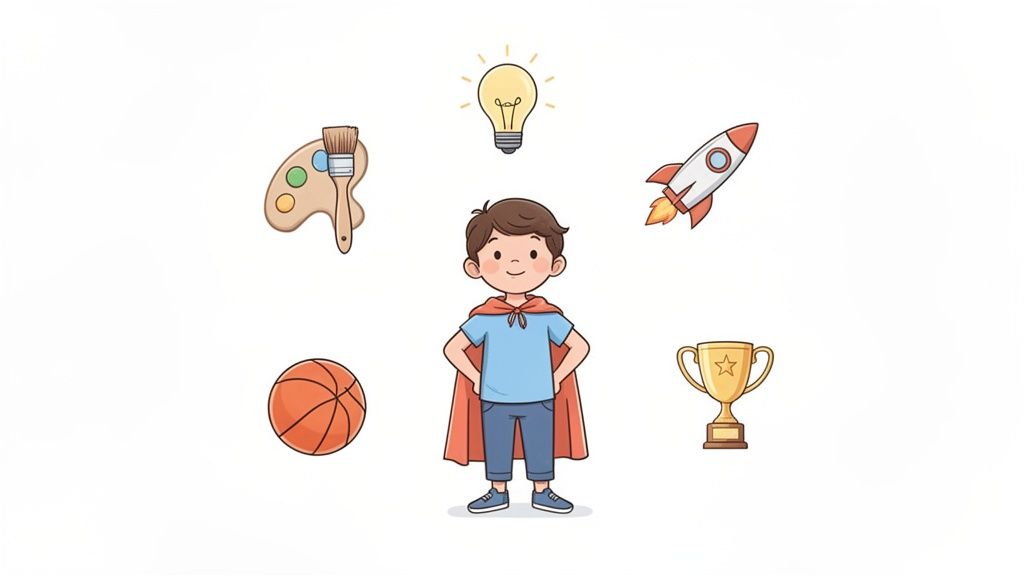
Identifying and Nurturing ADHD Superpowers
Think of yourself as a "strength spotter." Your job is to point out their talents as they happen, right in the moment. Instead of only commenting on the homework they're struggling to finish, celebrate that moment their hyperfocus kicks in on a topic they genuinely love. That ability to get lost in something is a superpower, allowing them to learn with incredible depth and passion.
Here are some common ADHD-associated strengths to keep an eye out for:
- Creativity and Innovation: Did they just spend an hour building an intricate LEGO city? Or did they solve a sibling squabble with a funny, out-of-the-box idea? Praise that unique way their brain works.
- Hyperfocus: When they are completely absorbed in drawing, coding, or learning every single fact about dinosaurs, point it out. Acknowledge what an amazing skill it is to concentrate that intensely.
- Resilience: Let's be honest, kids with ADHD often face more setbacks and frustrations than their peers. Recognize their toughness. Tell them you see how hard they work to bounce back when things get tough.
- High Energy: That energy can be a lot to handle, but try to frame it as a gift. It's what makes them a star on the soccer field, a whirlwind in dance class, or an unstoppable explorer on a hike.
Helping your child build a positive self-image is deeply connected to fostering resilience and a belief in their own potential. A great way to do this is by exploring ideas on How to Develop a Growth Mindset in Children, which reinforces that challenges are just opportunities to learn and get stronger.
Sharing Inspiring Role Models
Show them they’re in good company—really good company. Share stories of wildly successful artists, entrepreneurs, athletes, and scientists who have ADHD.
Learning about figures like Simone Biles, Michael Phelps, or Justin Timberlake can completely transform a child's perspective. It shows them that an ADHD brain isn't a barrier to success; in many cases, it's the very engine that drives it.
This simple act helps them see their brain not as a disorder, but as a different kind of operating system—one that has powered some of the most innovative and successful minds in the world. When you consistently focus on these positive traits, you help your child build a strong, confident identity that isn't defined by their challenges. Our guide on how to help someone with ADHD offers even more strategies for creating this kind of supportive environment at home.
How to Answer Tough Questions and Validate Emotions
Once you’ve had that initial chat about ADHD, the door is open. This is when your child’s real questions and feelings start to bubble up. It's a critical moment—they've had some time to process, and now they’re looking for reassurance and honest answers to the tough stuff swirling in their head.
Be ready for some heartfelt, sometimes painful, questions. You might hear things like, "Does this mean I'm dumb?" or "Why am I different from my friends?" These aren't attacks. They're bids for connection and a desperate need to understand. How you respond right now can genuinely shape how they see themselves for years to come.
Navigating Difficult Questions
When your child asks if ADHD means they're not smart, it's coming from a place of deep frustration. They’ve likely been struggling in areas where their friends seem to breeze by. Your job is to completely separate their challenges from their intelligence.
A direct, compassionate answer works best. Try something like: "Absolutely not. Having ADHD has nothing to do with how smart you are. You have a creative, fast-thinking brain; it just gets bored with slow stuff. School isn't always designed for fast brains, but we'll figure out ways to make it work for you."
For questions about being "different," it's important to validate that feeling while framing it in a positive light.
You could say: "Yes, your brain works a little differently, and that might feel lonely sometimes. But everyone's brain is different! Yours is just extra creative and full of energy. Our job is to help you use all those amazing parts of you."
Creating a Safe Space for Big Feelings
Beyond just answering questions, you have to make room for the emotions behind them. Whether it’s frustration over homework, sadness from feeling left out, or anxiety about what comes next—those feelings are real and they matter. Simply acknowledging their emotions without rushing to "fix" them builds an incredible amount of trust.
Saying, "I can see how frustrating that must be," or "It sounds like you're feeling really sad about that," shows them you’re in their corner. Creating this safe space allows them to open up without any fear of being judged.
- Listen More, Talk Less: Just give them the floor. Let them get everything out.
- Share Your Own Feelings: Normalize their experience by saying things like, "I get frustrated sometimes, too." It helps them feel less alone.
- Don't Dismiss Their Worries: Avoid saying "Don't worry about it." Instead, try, "Let's talk about what's worrying you."
Engaging in emotional intelligence activities can also be a great way to give your child practical tools for coping and building self-awareness.
This is also the perfect time to introduce the idea of a "support team." Explain that you, their teachers, and their doctors are all on a team with one goal: to help them shine. It's a powerful way to reassure them that they aren’t facing this journey alone.
Talking About Professional Support and Diagnosis
At some point, you might realize it’s time to bring in an expert. Introducing this idea requires the same gentle, supportive touch you’ve been using all along. The goal isn't to signal that something is wrong, but to frame it as an exciting step toward getting a personalized user manual for their amazing brain.
It helps to steer clear of language that sounds clinical or alarming. Instead, think of it as meeting a special kind of helper. You could try saying something like, "We're going to meet a 'brain detective' who is an expert in how super-creative and fast brains work. Their job is to figure out exactly what makes your brain so special and find the best tools to help you use all your awesome energy."
This simple shift reframes the entire process. It’s no longer an intimidating evaluation but a collaborative adventure focused on discovery, not deficits.
Demystifying the Diagnostic Process
Explaining what an evaluation actually involves is key to easing any anxiety your child might feel. Keep it simple and focus on the activities they’ll be doing, not the "testing" part.
You can describe it like this: "The brain detective will have us do some fun puzzles, answer questions, and play a few games. It’s all to help them understand your unique strengths—like your incredible imagination or how you can focus so deeply on things you love." This makes the assessment feel more like a series of interesting activities rather than a scary test they can pass or fail.
Modern telehealth options have also made this process much more comfortable and accessible. The Sachs Center offers a virtual AuDHD evaluation for $890 that uses clinical interviews and validated tools to provide accurate insight, all from the comfort of home. This specialized care is particularly effective for girls and BIPOC individuals who often mask symptoms, a critical factor in getting an accurate picture. This approach empowers parents to frame ADHD as a 'busy brain superpower' that simply needs the right strategies, not shame.
What a Diagnosis Really Means
The word "diagnosis" can sound heavy, especially to a child. You can lighten that load by explaining it as simply getting the official name for their type of brain. It's a key that unlocks new tools and a whole new level of support.
A diagnosis isn't a label that defines them; it’s a guide that helps everyone on their team—parents, teachers, and doctors—understand how to best support them. It’s about getting the right playbook for their specific brain.
This is a powerful message of empowerment. It shows them that getting a diagnosis is a proactive step toward gaining understanding and accessing resources that will actually help.
Here are some of the positive outcomes you can focus on:
- School Support: It can lead to special help at school, like getting more time on tests or being able to take movement breaks when their brain needs it.
- New Strategies: We’ll all learn new tricks and strategies to make homework, chores, and even friendships feel easier and more fun.
- Understanding: It gives them a word for what they’re experiencing, which can be a huge relief and help them feel less alone.
By focusing on these practical, real-world benefits, you show them that this process is all about helping them shine. You can learn more about what to expect by reviewing our guide on how to get tested for ADHD.
Frequently Asked Questions About Explaining ADHD
That first conversation about ADHD is a huge step, but it’s rarely a one-and-done deal. As you and your child navigate this new understanding together, questions will pop up, and tricky situations will arise. Knowing how to handle these moments is key to reinforcing your support and helping your child feel secure.
Here are some of the most common questions we hear from parents after they’ve had "the talk."
What If My Child Has a Negative Reaction?
Don't panic if your child gets angry, sad, or just plain denies it. This is a lot for them to process, and a negative reaction is totally normal. The absolute most important thing you can do right now is to meet them where they are. Don't force them to accept the ADHD label.
Start by validating whatever they’re feeling.
You could say, "I get it. This is a lot to take in, and it's okay to feel upset or confused." Just showing them you're listening and that their feelings are valid can make a world of difference.
Once you’ve acknowledged their emotion, gently steer the conversation away from the word "ADHD" and back to what they actually experience day-to-day. Try something like, "Okay, let's forget the label for a second. We both know that focusing on homework when you'd rather be building LEGOs is really tough. I just want to find ways to make that part easier for you."
The goal isn't to win an argument over a word; it's to show them you're on their team. Give them the time and space they need to process everything on their own terms.
How Should I Explain ADHD to Siblings?
When you bring siblings into the loop, your main goals are to build empathy and a sense of teamwork. You can use the same simple, age-appropriate analogies you used before, but frame the chat around fairness and support.
Help them understand that their sibling’s brain just works a little differently, and because of that, they need different kinds of help to be at their best. A great go-to comparison is glasses. Some people need glasses to see clearly, while their sibling might need a movement break to think clearly. It’s not about getting "special treatment"—it's about everyone getting what they need to succeed.
Emphasize that your family is a team. You might say, "Your brother has a super-fast brain with a lot of energy, so he needs to run around more to feel settled. You are so good at being patient, and that's a huge way you can help him." This frames their role as a supportive teammate rather than a frustrated bystander.
When Is the Right Age to First Explain ADHD?
The best time to have the first conversation is shortly after you have a clear understanding or a formal diagnosis, no matter how old they are. If you wait, you risk your child internalizing their struggles. They might start to believe they are "bad," "lazy," or "not smart," which is exactly what we want to avoid.
The trick is to tailor the explanation to where they are developmentally:
- Preschool (Ages 4-6): Keep it incredibly simple. Focus on one specific, observable trait. Something like, "Your body has extra wiggles and energy, and that's why you love to move so much!" works perfectly.
- Elementary (Ages 7-12): This is a great time to introduce analogies like the "race car brain." You can start talking about specific challenges (like forgetting homework) and brainstorm simple strategies you can try together.
- Teens (Ages 13+): Your conversations can become more direct and sophisticated. You can introduce concepts like executive functions, the importance of self-advocacy, and how they can take an active role in managing their own brain.
Starting early and keeping the dialogue open and positive helps them build a strong, healthy self-perception right from the start.
Navigating the journey of ADHD requires understanding, patience, and the right professional support. At the Sachs Center, we specialize in telehealth-based diagnostic evaluations and treatment for children, teens, and adults. Our expert team can provide the clarity and tools your family needs to thrive.
Explore our ADHD testing and support services today.
