

For autistic adults, online therapy offers a flexible and accessible path to support, all from an environment you can control. It’s a way to get help that’s specifically designed around the unique sensory, communication, and executive functioning needs that come with being autistic. This isn't just a minor tweak to mental health care; it's a fundamental shift that makes connecting with the right specialist easier than ever.
Why Accessible Autism Therapy Is More Important Than Ever
Autism isn’t just a childhood diagnosis—it's a lifelong neurotype. We're seeing a growing wave of adults seeking support for the very first time. They’re looking for answers, for ways to better understand themselves, and for tools to navigate a world that often feels designed for neurotypical brains.
Think of therapy not as a cure, but as building a personalized toolkit. The goal is to empower you with strategies and skills to manage challenges and, just as importantly, leverage your unique strengths. This guide will walk you through how online therapy for adults with autism provides a modern, effective way to build that toolkit.
Overcoming Traditional Barriers
For many autistic adults, just getting to a traditional therapy appointment can be a massive hurdle. These aren't just minor inconveniences; they can be so draining that they undermine the entire therapeutic process before it even begins.
Some of the most common roadblocks include:
- Sensory Overload: The harsh fluorescent lights, unfamiliar sounds, and strong smells of a clinical office can be completely overwhelming and dysregulating.
- Executive Function Demands: Just planning the commute, navigating public transport, and showing up on time requires a ton of executive functioning skills. It can be exhausting.
- Social Energy Depletion: The whole process of traveling to an appointment and interacting in a new space can completely drain the social battery needed for the actual session.
By getting rid of these environmental and logistical stressors, online therapy lets you save your mental and emotional energy for the real work. The focus shifts from the struggle of getting to therapy to the benefit of being in therapy.
The Growing Need for Flexible Support
The demand for accessible mental health services has never been greater. We now know that approximately 1 in 45 adults in the United States is autistic, and the biggest increase in diagnoses has been among young adults.
This reality has fueled the rise of telehealth services designed specifically for autistic adults, making online therapy a critical piece of modern mental healthcare. To dig deeper, you can explore the research on rising adult autism prevalence.
What Online Therapy for Autistic Adults Actually Looks Like
When you hear “online therapy,” you might just picture a Zoom call—something like a work meeting or a chat with family. But for an autistic adult, good online therapy is so much more than that. It’s better to think of it as a digital therapeutic space, a secure, controlled environment built from the ground up to support your specific communication style and sensory needs.
This space is more than a webcam and a microphone. It’s a whole suite of tools designed to make therapy less draining and more accessible. While the goals are the same as in-person therapy—developing coping skills, improving executive function, building communication strategies—the way we get there is different. It puts you in the driver’s seat.
More Than Just a Video Call
Modern telehealth platforms offer features that can be customized to create a far more comfortable and effective experience. These aren't just bells and whistles; they’re fundamental to making the digital space work for neurodivergent individuals. The whole idea is to lower the barrier to entry so you can focus your energy on the actual work of therapy.
Many platforms now integrate tools that give you more control:
- Secure Text-Based Messaging: This lets you communicate with your therapist between sessions. It’s perfect for processing thoughts without the pressure of an immediate, on-the-spot verbal response.
- Shared Digital Whiteboards: A lifesaver for visual thinkers. A therapist can use one to map out a Cognitive Behavioral Therapy (CBT) exercise or collaboratively create a visual schedule to manage your week.
- Resource Libraries: Many providers offer curated collections of articles, worksheets, and videos you can look through on your own time, at your own pace.
- Flexible Communication Options: You can often choose to have your camera on or off. You can use a chat box alongside the video feed, or even switch to audio-only if you're feeling visually overstimulated that day.
The real power of this digital space is its adaptability. It bends to fit your needs, rather than forcing you to adapt to a rigid, unfamiliar clinical setting. This simple shift can make a world of difference in your ability to engage and benefit from therapy.
The Same Goals in a New Environment
Even though the setting is different, the core purpose of therapy hasn’t changed one bit. The work is still centered on achieving real-world outcomes that matter to you. You and your therapist will work together to tackle the specific challenges and goals you bring to the table.
For example, a session might focus on:
- Developing Coping Mechanisms: You could work with your therapist to identify triggers for sensory overload and create a personalized plan to manage them, using shared documents to track what works and what doesn't.
- Enhancing Executive Functioning: Therapy might involve breaking down a huge, overwhelming project into smaller, manageable steps on a digital planner or learning strategies to get past procrastination.
- Building Communication Skills: You could practice navigating social scenarios in a low-stakes environment, using the session to role-play conversations and get direct, helpful feedback.
The key difference is that all this happens in an environment where you feel most at ease. By removing the stress of commuting, navigating an unfamiliar building, and dealing with unpredictable sensory input, you can show up to your sessions with more mental and emotional energy. This is what allows proven therapeutic models to work so well in a digital setting.
Proven Therapeutic Approaches in a Digital Setting
The real power of online therapy isn't that it's a brand-new invention. Instead, think of it as a new, more adaptable venue for delivering well-established, evidence-based support. The core strategies that help autistic adults thrive aren't lost when you log into a video call; in many ways, they're actually enhanced.
This digital environment gives therapists a chance to use familiar tools in more creative and direct ways, turning a simple video session into a dynamic space for real growth. It’s all about taking what we know works and making it work better for you.
This is where the unique features of a digital space—its accessibility, flexibility, and security—really shine, forming a solid foundation for effective therapy.

When these elements are combined, online platforms can create a supportive framework that is uniquely suited to the specific needs of autistic adults. Let's look at a few powerful examples.
Adapting Cognitive Behavioral Therapy for Online Use
Cognitive Behavioral Therapy (CBT) is a cornerstone of support for many autistic adults because it focuses on the practical link between our thoughts, feelings, and actions. In an online setting, CBT can become incredibly interactive.
Imagine you struggle with rigid thinking, and a sudden change in plans sends your anxiety soaring. An in-person therapist might talk this through with you. But an online therapist can use a shared digital whiteboard in real time.
Together, you can map out the automatic thought ("Now the whole day is ruined"), challenge its logic, and type out more flexible responses ("This is frustrating, but I can use this extra time for my special interest"). This process creates a concrete, visual record you can look back on later, making abstract concepts tangible. Specialized forms like CBT for Insomnia (CBT-I) are also highly effective online, offering valuable support for co-occurring sleep issues through alternatives to sleeping pills, including CBT-I.
Building Skills in Virtual Social Groups
For many autistic adults, typical social gatherings feel unpredictable and draining. Online social skills groups offer a structured, lower-pressure environment to practice and build confidence. These aren't just awkward video chats; they're thoughtfully moderated sessions with clear goals.
A typical online session often includes:
- Structured Check-ins: Everyone gets a designated, uninterrupted turn to speak, which removes the anxiety of trying to jump into a conversation.
- Themed Discussions: The group might focus on a specific, practical topic, like how to navigate small talk at work or understand conversational turn-taking.
- Practice in Breakout Rooms: Small groups can work on a particular skill—like how to start a conversation or politely end one—with direct feedback from a facilitator.
This format strips away overwhelming sensory input and ambiguous non-verbal cues. It allows you to focus purely on the mechanics of social interaction in a safe, controlled space. At Sachs Center, we provide these exact kinds of supportive environments, which you can read more about in our guide to online social skills training.
Executive Functioning Coaching in Your Own Space
Executive functioning—those core mental skills for planning, organizing, and managing your time—is a common area of challenge. Online coaching is a game-changer here because it happens right in the environment where you need those skills the most: your home or office.
Instead of just talking about getting organized, your coach can help you get organized.
For example, a coach can use screen sharing to walk you through setting up a digital schedule with an app like Trello. You could work together to break down a big project into smaller, color-coded steps, set up reminders, and build a system that actually works for your brain.
To help clarify how these approaches differ, the table below breaks down their focus and best uses.
Comparing Therapeutic Approaches for Autistic Adults
This table compares common therapeutic models used in online therapy, their primary focus, and the types of challenges they are best suited to address.
| Therapeutic Approach | Primary Focus | Best For Addressing |
|---|---|---|
| Cognitive Behavioral Therapy (CBT) | Identifying and changing unhelpful thought patterns and behaviors. | Anxiety, depression, rigid thinking, and emotional regulation. |
| Social Skills Groups | Practicing and developing social communication skills in a structured setting. | Navigating social cues, conversational skills, and building relationships. |
| Executive Functioning Coaching | Building practical skills for organization, planning, and time management. | Procrastination, task initiation, and managing daily responsibilities. |
Each of these methods offers a unique pathway to growth, and the right one often depends on your specific goals and challenges. By bringing them into a digital space, therapy becomes more direct, practical, and integrated into your daily life.
Navigating the Benefits and Challenges of Telehealth
Moving therapy online opens up some huge advantages, especially for autistic adults. It helps to think of telehealth not just as a stand-in for in-person visits, but as a completely different environment—one you can actually shape to fit your own sensory and social needs. Having that level of control can shift the entire experience from something draining into a process that feels genuinely supportive.
The most obvious win is creating a sensory-safe space. Instead of dealing with the harsh fluorescent lighting, weird smells, and unpredictable noises of a clinic, you can log into your session from a familiar room. You’re in charge. You can dim the lights, wrap up in a weighted blanket, or have a comfort item just out of view. This simple change can drastically lower the sensory cost of therapy, freeing up your mental energy for the actual work.
Maximizing the Upsides of Online Therapy
Beyond sensory comfort, telehealth gets rid of many of the logistical and social roadblocks that make traditional therapy feel impossible. For many autistic adults, just the executive function required to plan the commute, navigate public transport, and show up on time is completely exhausting. Online sessions wipe that entire sequence of demands off the table.
This isn't a niche trend, either. By 2021, a solid 59% of Americans said they'd be open to using telehealth for mental healthcare. Even more telling, 43% of adults wanted to keep using it even after the pandemic, which shows its staying power. You can discover more about the growing popularity of telehealth and how it’s changing access to mental health support.
The core advantages really boil down to a few key things:
- Access to Specialists: Your location no longer limits your options. This opens the door to connecting with therapists who truly specialize in adult autism and neurodiversity-affirming care, no matter where they’re based.
- Reduced Social Energy Cost: Cutting out the travel and the need to navigate a new physical space saves your social battery. That means you have more energy to engage deeply with your therapist during the session itself.
- Greater Consistency: When getting to an appointment is as easy as opening your laptop, it’s much simpler to stick to a regular schedule. That consistency is crucial for building momentum and actually reaching your therapy goals.
Proactively Managing Potential Hurdles
Of course, online therapy isn’t without its own set of potential tripwires. The key to a good experience is knowing what they are ahead of time and having a plan. Think of these less as roadblocks and more as practical issues you can solve with a little preparation.
Technology itself is a common one. A spotty internet connection, confusing software, or audio glitches are frustrating and can derail a session. That's why a quick "tech rehearsal" before your first appointment is a great idea.
Take a few minutes to log into the platform, test your camera and microphone, and just click around. This small step can head off a lot of anxiety and make sure your first session gets off to a smooth start.
Navigating the nuances of online communication can also be a challenge. When you're not in the same room, it’s easy for both you and your therapist to miss some of the non-verbal cues. If you don't address it directly, this can lead to misunderstandings.
To get around this, it helps to be upfront about your communication style from the very beginning. Be open with your therapist about what works for you. You could say something like, "I sometimes find it hard to process everything you're saying at once, so I might need to pause and type in the chat," or "I find direct questions a lot easier to answer than really open-ended ones."
Finally, finding a truly private space for your sessions can be tricky, especially if you live with family or roommates. This is a big one—you need to feel safe and open. Using headphones is a must, and try to find a room where you can close the door. If you’re really in a pinch, taking the call from a parked car can guarantee you won't be overheard. By planning for these things, you can create a telehealth experience that is reliable, comfortable, and incredibly effective.
How To Find The Right Therapist And Prepare For Your First Session
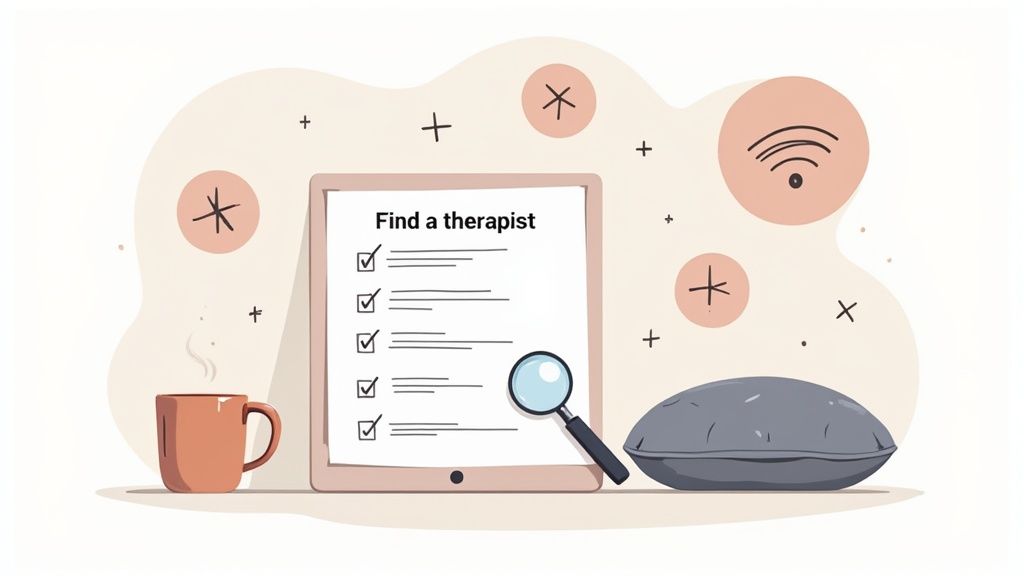
Starting online therapy for adults with autism can feel like a huge step, but finding the right professional makes all the difference. The goal isn't just to find a therapist; it's to connect with someone who truly gets it—someone who respects and affirms your neurotype. This person is a partner in your mental health journey, not just a service provider.
Think of it like hiring a guide for a trip to a country you’ve never visited. You wouldn’t want just anyone. You'd want an expert who speaks the language, understands the local culture, and can help you navigate the terrain with confidence. In therapy, that means finding a professional with a neurodiversity-affirming perspective. They see autism as a different way of being, not something that needs to be "fixed."
Vetting Potential Therapists
When you start looking, it helps to have a checklist. Go beyond general credentials and dig into their actual experience and philosophy. A therapist's qualifications are important, of course, but their direct experience working with autistic adults is what really counts.
Here are a few key things to look for:
- Specialized Experience: Does their profile explicitly say they work with autistic adults? Look for things like a Certified Autism Specialist (CAS) credential, which signals advanced training.
- Therapeutic Style: Do they use approaches that sound right for you, like CBT, executive functioning coaching, or Acceptance and Commitment Therapy (ACT)? Their website should give you a good idea.
- Neurodiversity-Affirming Language: How do they talk about autism? Using identity-first language ("autistic person") and focusing on strengths and accommodations are great signs of a respectful, modern approach.
For many, getting a formal diagnosis is the first step toward finding this kind of specialized support. If you're just starting to explore your own neurotype, learning about the process of an online autism diagnosis for adults can give you a clearer path forward.
Preparing For Your Initial Consultation
Most therapists offer a free, short consultation call. This is your chance to interview them. Having a few questions ready can help you feel more in control and make sure you get the information you need.
You might ask things like:
- How do you adapt your communication style for autistic clients who prefer directness or need more processing time?
- What's your experience helping adults with challenges like autistic burnout, sensory overload, or executive dysfunction?
- Can you walk me through your approach to setting goals with neurodivergent clients?
This first chat is as much for you as it is for them. It’s an opportunity to see if their communication style clicks and if you feel heard, comfortable, and respected. Trust your gut—the connection you have with your therapist is one of the biggest predictors of success.
Once you’ve made a choice, a little prep can make that first full session feel a lot less intimidating. We've put together a simple checklist to help you get ready.
Your Pre-Therapy Checklist
| Step | Action Item | Why It Matters |
|---|---|---|
| 1. Set Up Your Space | Find a quiet, private spot with a stable internet connection. | Minimizing distractions helps you focus and feel secure enough to open up. |
| 2. Gather Comfort Items | Have a favorite blanket, a fidget toy, or a warm drink nearby. | These items can help you self-soothe and stay grounded if you feel anxious. |
| 3. Jot Down Your Thoughts | Write down a few key points or goals you want to discuss. | You don't need a script, just a starting point to guide the conversation. |
| 4. Test Your Tech | Check your camera, microphone, and the therapy platform a few minutes before the session. | Solving tech issues ahead of time reduces stress and ensures you don't lose valuable session time. |
| 5. Be Open-Minded | Remember that the first session is about getting to know each other. | It's okay if you don't solve everything at once. The goal is to build a foundation of trust. |
A little preparation goes a long way. Setting up your physical and digital space for success helps ensure your first session is a positive and productive step on your new therapeutic journey.
How Sachs Center Provides Neurodiversity-Affirming Telehealth
Here at Sachs Center, our telehealth services are built from the ground up on a foundation of respect for neurodiversity. We don't see autism as a problem to be fixed. We see it as a unique way of processing the world, complete with its own powerful strengths. This core belief shapes every single part of our online therapy for adults with autism, from the very first meeting to your ongoing support.
Our process kicks off with a detailed virtual assessment designed to understand who you are as a whole person. We move far beyond simple checklists to really dig into your personal history, the challenges you're facing right now, and—most importantly—your strengths and passions. This lets us build a truly personalized roadmap for therapy that actually aligns with your goals.
A Focus on Strengths and Personalized Strategies
We know that a cookie-cutter approach just doesn't cut it. That's why we adapt evidence-based methods like Cognitive Behavioral Therapy (CBT) to fit your specific communication style and sensory profile. Our telehealth sessions aren't just about talking through problems; they're a collaborative space where we build practical, real-world skills together.
For example, an executive functioning coaching session might involve us using screen sharing to help you map out a project in a way that just clicks with your brain. The entire focus is on creating sustainable systems that cut down on the overwhelm and play to your natural thinking patterns, rather than trying to shoehorn you into a neurotypical mold.
Our commitment is to create a therapy experience where you feel genuinely seen, understood, and validated. We partner with you to develop strategies that honor your authentic self, helping you build confidence and empowerment in every area of your life.
This client-centered partnership is at the heart of everything we do. We believe the most powerful support comes from a place of mutual respect and understanding, which is central to our neurodiversity-affirming therapy approach.
Integrated Support for Holistic Growth
The Sachs Center offers a connected ecosystem of care that addresses the diverse needs of autistic adults, because we know support often needs to go beyond a single type of therapy. Our integrated services mean you can get the right kind of help at the right time.
Our telehealth offerings include:
- Comprehensive Evaluations: Our virtual assessments for Autism and ADHD are led by specialists who are experts in identifying neurodivergence in adults, even in highly masked individuals.
- Individual Therapy: We provide one-on-one sessions using proven methods like CBT, thoughtfully adapted to be engaging and effective in an online setting.
- Executive Functioning Coaching: Our coaches deliver direct, actionable support to help you build skills in planning, organization, and time management—all from your own environment.
- Group Support: We run online groups that create a structured, safe space to connect with peers and practice social communication skills.
By delivering these services on a secure telehealth platform, we tear down the usual barriers to getting help. You can access expert support from the comfort and safety of your own space, which means you can save your energy for the important work: your personal growth and well-being.
Got Questions About Online Autism Therapy? We've Got Answers.
Diving into the world of online therapy for autistic adults can feel like navigating a new city—it's exciting but also brings up a lot of questions. We get it. This section is designed to be your straightforward guide, answering the most common things people ask.
Think of it as a quick chat with an expert. We’ll clear up the confusion so you can feel confident about what to expect from telehealth and make the best decision for your mental health.
Is Online Therapy Really as Good as Meeting in Person?
This is the big question, right? For many proven approaches like Cognitive Behavioral Therapy (CBT), the research is clear: telehealth can be just as effective as sitting in a therapist's office. What really makes therapy work isn't the room you're in—it's the connection you build with your therapist and how comfortable you feel.
A strong, trusting relationship can absolutely be built through a screen. In fact, for many autistic adults, being in their own space actually reduces the anxiety and sensory overload that can come with a new office, new commute, and new person. That comfort can lead to deeper, more focused work and better results.
How Do I Know My Sessions Are Private?
Your privacy is a top priority, and any reputable provider will use secure, encrypted, HIPAA-compliant platforms built for healthcare. This isn't just a nice-to-have; it's a non-negotiable standard. Before you even start, you should always ask a potential therapist to confirm their platform meets these strict security requirements.
It's a team effort, though. While your therapist handles the secure platform, you can protect your end by finding a private spot for your sessions where you won't be overheard. Popping in a pair of headphones is another simple but powerful trick to keep your conversation confidential.
What if My Internet Cuts Out or the Tech Fails?
Tech glitches happen—it’s just a fact of life. Experienced telehealth therapists know this and always have a backup plan. Most will do a quick tech check with you before your first real session to make sure your camera, microphone, and internet are good to go.
If your connection does drop mid-session, the most common fix is to simply finish the appointment over the phone. The best move is to talk about these "what ifs" with your therapist beforehand. Knowing the plan takes the stress out of any potential technical hiccups.
How Much Does Online Therapy Cost, and Will Insurance Cover It?
The cost of online therapy can vary quite a bit. It depends on things like the therapist's credentials, your location, and how long the sessions are. It’s always smart to do a little research to see what the typical range is in your area.
Many online practices do accept insurance, but what's covered really comes down to your specific plan. Your best first step is to call your insurance company and ask directly about your mental health benefits, copays, and deductibles. Then, confirm that information with the therapy provider before you start. A little prep work upfront can prevent any financial surprises down the road.
At Sachs Center, we specialize in providing telehealth evaluations and neurodiversity-affirming therapy designed specifically for autistic adults. If you're ready to explore what this could look like for you, learn more about our services and book an appointment.
