

An adult autism assessment is the process a qualified clinician uses to see if someone’s developmental history and current traits fit the criteria for Autism Spectrum Disorder. For many people, this evaluation is the first real step toward understanding why they've always felt different, offering a profound sense of clarity and validation.
Why Are More Adults Seeking an Autism Diagnosis?
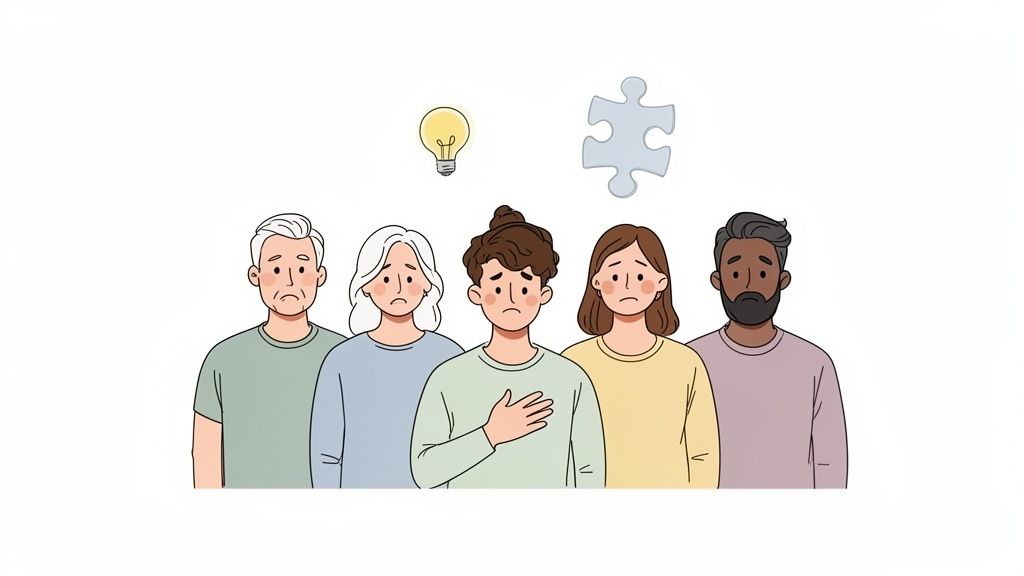
The entire conversation around autism has changed. It's no longer viewed as just a childhood condition but as a lifelong neurotype, which has led to a huge number of adults finally seeking answers for experiences they've been navigating their whole lives. This isn't because autism is more common; it's because awareness is exploding, and our culture is slowly starting to embrace neurodiversity.
So many adults are having a lightbulb moment, realizing that their lifelong social challenges, deep-seated interests, and sensory sensitivities might actually be signs of undiagnosed autism. The idea that you could be autistic without anyone ever realizing it is becoming more and more mainstream, thanks in large part to social media, where autistic adults are sharing their stories with raw honesty. This has given countless people a new way to understand their past and present.
The Hidden Impact of Masked Autism
One of the biggest reasons for this wave of adult diagnoses is our growing understanding of masked autism, often called camouflaging. This is the exhausting, often subconscious, effort of hiding autistic traits to fit in with neurotypical social rules. Masking is incredibly common, especially in women, people of color, and anyone else who went undiagnosed for decades.
For too long, the classic picture of autism was based on how it showed up in young boys, leaving so many others to slip through the cracks. Today, we know that masking can look like a lot of different things:
- Forcing yourself to make eye contact even when every fiber of your being is screaming not to.
- Mentally scripting out conversations before they even start.
- Actively suppressing the urge to engage in repetitive movements (or "stims") that feel natural and calming.
- Pushing through the discomfort of loud, bright, or crowded places until you're on the verge of a shutdown.
Imagine getting to 35 and finally discovering that the social struggles and intense interests you've always had aren't character flaws—they're signs of autism. Stories like this are becoming incredibly common as adult autism assessments surge worldwide.
This constant performance is mentally and emotionally draining. It often leads to burnout, anxiety, and depression. For many, getting an adult autism assessment is about finally getting permission to drop the mask and start living as their authentic selves. This surge in awareness is backed by global data, which shows a significant number of people living with autism, many of whom remain undiagnosed. You can learn more about the latest global autism rates on psychiatrist.com.
Recognizing the Signs of Undiagnosed Autism in Adults
For many adults, the journey toward considering an adult autism assessment doesn’t start with a clear-cut symptom. It often begins with a quiet, lifelong feeling of being just a little out of sync with everyone else. It’s that nagging sense that you’re working off a different social script, trying to manually translate a language that others seem to know by heart. This feeling shows up in real, everyday situations that have little to do with the outdated stereotypes of autism.
A classic example is profound social exhaustion. You might be the star of the weekly team meeting, effortlessly navigating conversations and professional small talk. But when you get home, you’re completely spent—needing hours, or even a full weekend of quiet, to feel human again. This goes beyond simple introversion; it’s the fallout from constantly “performing” neurotypical social behavior, a mentally demanding process known as masking.
The Hidden Cost of Masking
Masking, or camouflaging, is the often unconscious habit of hiding or suppressing natural autistic traits to fit in. Think of it like being a method actor who is never allowed to break character. This constant performance is exhausting and is a huge reason why so many adults—especially women and people of color—fly under the radar for decades.
This relentless effort to blend in might look like:
- Forcing eye contact: You do it because you’ve learned it's expected, even if it feels intense, unnatural, or physically uncomfortable.
- Scripting conversations: You mentally run through conversations before they happen, trying to prepare for every possible response or question.
- Suppressing stims: You consciously hold back from rocking, tapping your fingers, or other repetitive movements that actually help you feel calm and regulated.
- Mimicking others: You’ve become a keen observer, copying the facial expressions, gestures, and even vocal tones of people around you to seem ‘normal.’
The sheer amount of energy this takes often leads to autistic burnout—a state of deep physical, mental, and emotional depletion. It’s frequently misdiagnosed as treatment-resistant depression, a severe anxiety disorder, or even a personality disorder, leaving the root cause completely missed.
Sensory Overload and the Need for Routine
Beyond the social world, undiagnosed autism often comes with a very different sensory experience. It can feel like the world’s volume knob is permanently stuck on high. The fluorescent hum of the grocery store lights might be painful, the sound of a coworker typing can be gratingly distracting, and the tag in your shirt might feel like sandpaper.
This isn’t just a matter of preference. It’s a neurological reality where your brain processes sensory information more intensely. To cope with this potential for overwhelm, many autistic adults rely heavily on routine and predictability for comfort.
An unexpected change of plans isn't just a minor annoyance—it can feel completely destabilizing, throwing your entire day off-kilter. Routines create a predictable framework that feels safe in a world that often seems chaotic.
This need for consistency often extends to hobbies and passions. Many autistic people have special interests, which are deep, consuming areas of focus that provide immense joy and expertise. This is far more than a casual hobby. Whether it’s cataloging historical fashion, mastering a specific video game, or learning everything about marine biology, engaging with a special interest is a powerful way to recharge and feel centered.
Do These Experiences Sound Familiar?
If you see yourself in these descriptions—the social hangovers, the sensory sensitivities, the deep comfort in sameness—it doesn’t automatically mean you are autistic. What it does mean is that your experiences are real, valid, and worth exploring. For many people, recognizing these patterns is the first step toward seeking clarity and finally understanding a core part of who they are. An adult autism assessment could be the key to getting the answers you've been looking for.
Choosing the Right Type of Autism Evaluation for You
Deciding to pursue an adult autism assessment is a huge step, but figuring out what kind of assessment you need can feel confusing. With different evaluations available, it's easy to get overwhelmed.
Think of it like choosing the right tool for a job—you wouldn't use a sledgehammer to hang a picture. The right assessment depends entirely on what you want to accomplish.
Are you looking for answers for yourself and maybe some reasonable accommodations at work? Or do you need heavy-duty documentation for something like getting extra time on the GRE? Each goal requires a different approach, and knowing the difference will save you time, money, and a whole lot of stress.
This decision tree can help you see how common adult experiences—like feeling drained by socializing—might point toward autism.
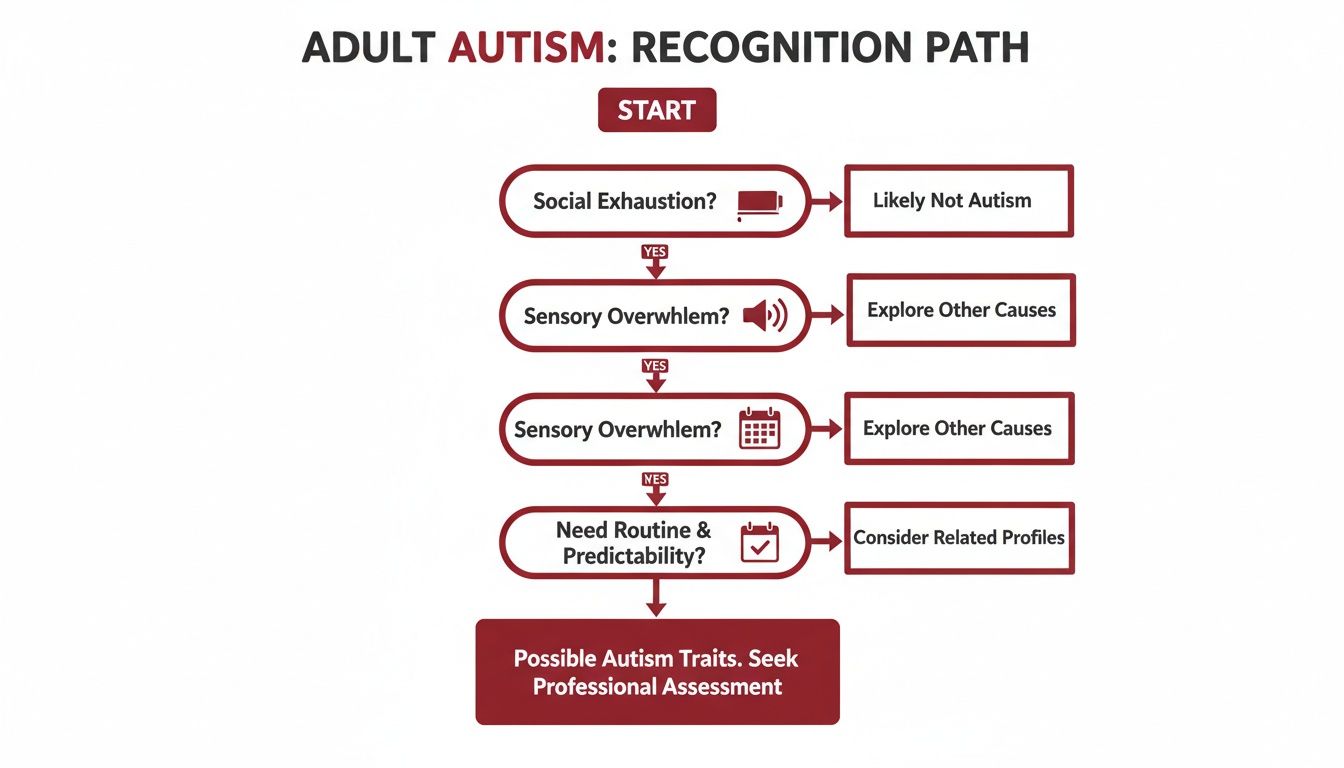
As the chart shows, feelings of social exhaustion, sensory overwhelm, and a strong need for routine are often key signs that an assessment could provide the answers you've been looking for.
The Focused Diagnostic Assessment
For most adults I see, the main goal is simply clarity. A focused diagnostic assessment is built for exactly that. It’s designed to determine if you meet the criteria for Autism Spectrum Disorder (ASD), plain and simple.
The process usually involves a deep-dive clinical interview where we talk through your developmental history and current life experiences. We also use validated self-report measures to get a full picture. It’s the most direct and efficient way to get a formal diagnosis. If you're curious about the first steps, you can learn more about our autism screening process for adults.
This type of assessment is perfect if your goals are:
- Personal Validation: Finally getting a real answer to lifelong questions about why you feel different.
- Workplace Accommodations: Getting the documentation needed to ask for support at your job.
- Informing Therapy: Giving your therapist a clear diagnosis to help guide your mental health journey.
At the end, you'll get a diagnostic letter or a brief report that clearly states the findings. It’s straightforward, practical, and exactly what most adults need.
The Comprehensive Neuropsychological Evaluation
Now, let’s switch gears. A neuropsychological evaluation is a much bigger, more intensive process. It’s not something you need for a straightforward diagnosis, but it’s absolutely essential for certain high-stakes situations.
This is a deep dive into your entire cognitive profile. It goes way beyond just autism to measure things like your IQ, processing speed, memory, and executive functioning skills in minute detail. The process takes many hours of one-on-one testing and produces a massive report—often 20+ pages long.
This in-depth testing is the gold standard for securing accommodations on standardized tests like the SAT, GRE, or GMAT, or for developing an Individualized Education Program (IEP) at school. It provides the extensive data that testing boards and schools require.
This path is really for people who specifically need:
- Accommodations on high-stakes academic or professional exams.
- Support for a school-based IEP or 504 plan.
- A detailed map of cognitive strengths and weaknesses for very complex situations.
Making the Right Choice for Your Journey
Ultimately, choosing the right adult autism assessment is about matching the evaluation to your life goals.
For the vast majority of adults seeking answers, a focused diagnostic assessment hits the sweet spot. It provides the clarity you need for self-acceptance and practical life changes without the major time and financial commitment of a full neuropsychological workup.
To make things even clearer, we’ve put together a table comparing our evaluation options at the Sachs Center. This should help you pinpoint the exact service that fits your needs.
Sachs Center Evaluation Options Compared
A clear comparison of the different assessment types offered by the Sachs Center, helping you choose the right evaluation for your needs.
| Evaluation Type | Best For | Deliverable | Cost (Autism Only) | Duration |
|---|---|---|---|---|
| Autism Screening | Initial exploration to see if a full assessment is warranted. | Feedback session with recommendations. | $600 | 1-2 sessions |
| Diagnostic Assessment | Personal clarity, workplace accommodations, informing therapy. | Diagnostic Letter or a concise 4-page report. | $2,400 | 4-6 sessions |
| Neuropsychological Evaluation | Accommodations on standardized tests (SAT, GRE), school IEPs/504 plans. | A detailed 20+ page report with extensive cognitive data. | $4,800 | 8-10 sessions |
We hope this breakdown makes your decision easier. Whether you need a straightforward diagnosis for peace of mind or a comprehensive report for academic accommodations, we’re here to provide the right support for your journey.
What Happens During a Telehealth Autism Assessment
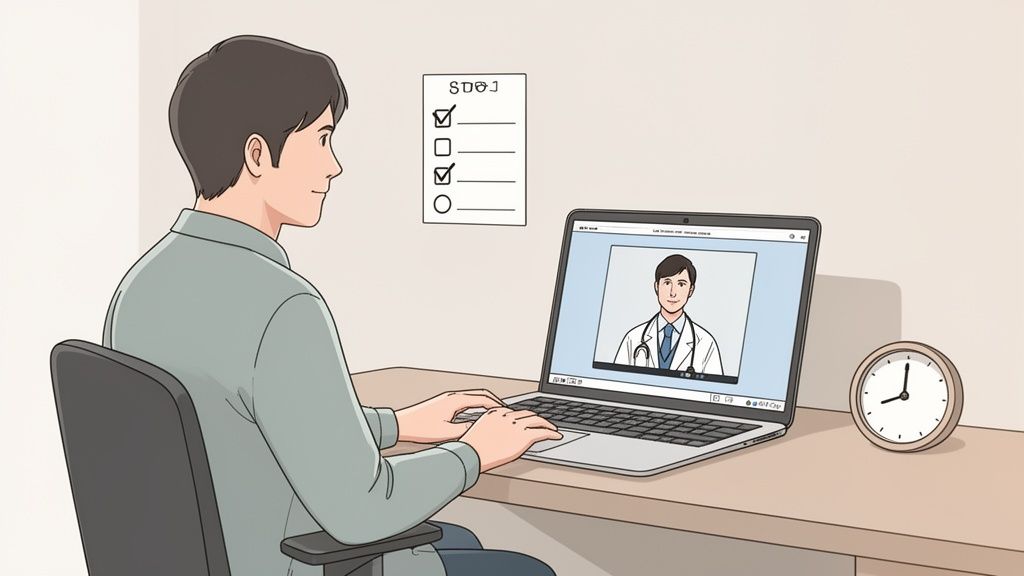
The thought of any formal assessment can be a little nerve-wracking, but a telehealth adult autism assessment is designed to feel as comfortable and collaborative as possible. Instead of sitting in a sterile clinic, you’re in your own space, which makes it much easier to be your authentic self.
Think of the process less like a test and more like a structured conversation aimed at understanding your unique life story. The entire journey is straightforward, unfolding in a few key stages that build on each other, from scheduling your appointment to the final feedback session where you get your results.
The Initial Steps of Your Telehealth Journey
Your assessment journey starts with some simple logistics. After scheduling, you'll get a secure link for a video call and be asked to fill out some initial paperwork and self-report questionnaires. These forms are a crucial first step, giving your psychologist valuable background information before you even meet.
These are validated, research-backed tools that help paint a picture of traits related to autism and other co-occurring conditions. Think of them as a way to organize your experiences with social communication, sensory sensitivities, and repetitive behaviors. They provide a solid foundation that helps guide the clinical interview.
The Collaborative Clinical Interview
The heart of the adult autism assessment is the clinical interview itself. This is a one-on-one, in-depth conversation with a psychologist over a secure video platform. The goal is to build a detailed picture of your life, both in the past and the present, in a safe, non-judgmental space.
During this session, you can expect questions about a few key areas:
- Your Developmental History: You’ll talk about early childhood experiences, how you navigated school, and your social development.
- Current Challenges and Strengths: The conversation will shift to your current life, exploring your work, relationships, sensory experiences, and special interests.
- Your Social and Communication Style: You’ll get to discuss how you experience social interactions, friendships, and communicating with others.
This conversation is truly collaborative. It’s your chance to share your story in your own words with a professional who understands the nuances of masked autism and is trained to listen for the subtle signs that might have been missed for years.
Receiving Your Results and Next Steps
The final stage is the feedback session. After your psychologist has carefully reviewed all the information from your interview and questionnaires, you’ll meet again to discuss the findings. This is where you’ll receive the diagnostic outcome and, more importantly, have a chance to understand what it all means for you.
Your psychologist will explain how your experiences align with the criteria for autism, answer any questions you have, and talk about potential next steps. Whether you receive a diagnosis or not, the assessment provides invaluable insight into your neurotype, giving you a framework for self-understanding and a clear path forward.
You can learn more about how our telehealth autism diagnosis process works at the Sachs Center.
Using Your Diagnosis to Build a Support System

Getting an adult autism diagnosis isn't the final page of your story. It’s the first page of a new, more authentic chapter. This confirmation gives you a new lens to view your life through, finally turning years of confusion into a clear narrative of self-understanding.
Think of your diagnostic report as your personal user manual. For the first time, you have the official language to describe your unique neurology. This empowers you to stop just coping with the world and start actively shaping it to fit your needs. It's a tool for advocacy, a guide for self-care, and a key to unlocking the right support.
This is the moment you stop trying to force yourself into a neurotypical mold and start building a life that actually honors your autistic brain.
Translating Your Diagnosis Into Action
Your diagnostic report—whether it's a short letter or a detailed evaluation—is a powerful tool for self-advocacy. One of the most immediate places it can help is at work, where it provides the documentation you need to request reasonable accommodations.
These accommodations aren't about getting special treatment; they're about creating an environment where you can do your best work. For example, you might use your diagnosis to request:
- Noise-canceling headphones to manage a loud, overstimulating open-plan office.
- Written instructions instead of verbal ones to make sure everything is clear and reduce your processing load.
- A flexible schedule that lets you work during your most productive hours or from home to conserve social energy.
Sharing this information with your healthcare team is another crucial step. Your primary care doctor, therapist, and other specialists can give you much better care when they understand the fundamentals of your neurotype. This leads to more coordinated treatment and helps prevent them from misinterpreting autistic traits as symptoms of other conditions.
Finding Your People and Professional Support
Beyond practical accommodations, a diagnosis opens the door to support systems designed to help you thrive. You don't have to figure out your challenges alone anymore. Now, you can find resources and therapies that are specifically tailored to the autistic experience.
This might mean working with a therapist who specializes in autism-affirming Cognitive Behavioral Therapy (CBT). Unlike traditional CBT, this approach helps you develop coping strategies without making you feel like you have to mask your true self. It focuses on managing anxiety and burnout in ways that respect your neurology.
Another powerful resource is psychoeducation, which means learning about autism from a strengths-based perspective. When you understand concepts like autistic inertia, burnout, and your own sensory profile, you gain the knowledge to anticipate your needs and advocate for yourself more effectively.
An adult autism assessment does more than provide a label; it offers an invitation into a community. Finding other autistic adults who share your experiences can be one of the most validating and healing parts of the post-diagnosis journey.
Connecting with your peers is a profoundly affirming experience. It helps break down the sense of isolation that so many late-diagnosed adults have carried for years. Hearing someone else describe the exact same "weird" thing you've done your whole life is incredibly powerful. For many, finding their community is the first time they truly feel understood. If you are looking for that connection, consider learning more about the benefits of joining autism support groups for adults to find your neurotribe.
A New Framework for Life
Ultimately, an adult autism assessment gives you permission to be yourself. It allows you to reframe past struggles not as personal failures, but as the logical result of an autistic person trying to navigate a world that wasn't built for them.
With this new understanding, you can start making conscious choices that align with your needs. You can set boundaries to protect your energy, embrace your special interests without shame, and build a support system that celebrates you for who you are. Your diagnosis isn’t a limitation; it’s the start of a more empowered, self-aware, and authentic life.
Ready for Some Answers? It’s Time to Take the Next Step.
If you’ve been reading this guide and nodding along, feeling that sense of recognition in your bones, it might be time to stop wondering and start understanding. The constant exhaustion from masking, the social hangovers, that persistent feeling of being just a little out of step with everyone else—those aren't things you have to just live with. An adult autism assessment can be the first step toward real clarity.
For so many people, a diagnosis isn’t a label or an ending. It’s a beginning. It’s like finally getting the instruction manual to your own brain, and suddenly, a lifetime of experiences clicks into place. Past struggles are reframed not as personal failures, but as the logical outcomes of being an autistic person in a world that wasn't built for you. That validation alone can be life-changing.
Your Path to a Clearer Future
Getting answers is about more than just understanding the past; it’s about equipping yourself for the future. A diagnosis gives you the language to advocate for yourself, to ask for the accommodations you actually need at work or school, and to find a community that finally gets it. It's a genuine investment in your long-term well-being.
Moving forward with an evaluation offers some very real, practical benefits:
- Get Validation: Finally have a professional, compassionate answer to questions you’ve carried your whole life.
- Unlock Support: Gain access to workplace accommodations and therapeutic approaches that are designed for your neurotype.
- Build Your Community: Connect with other autistic adults who share and understand your lived experiences.
- Empower Yourself: Learn how to work with your brain’s natural wiring, not constantly fight against it.
An adult autism assessment is more than a clinical process; it is an act of self-advocacy. It's about giving yourself the clarity and tools you deserve to build a more authentic and sustainable life.
Stop second-guessing yourself. If you’re ready to finally understand who you are and learn how an official diagnosis can support your journey, our team at the Sachs Center is here to guide you.
Take that definitive step toward clarity and self-understanding today. Book your telehealth adult autism assessment now and start your journey toward empowerment.
Your Questions About Adult Autism Assessments, Answered
Thinking about an adult autism assessment naturally brings up a lot of questions. Once you’ve learned about the different types of evaluations and what the process looks like, you might still be wondering about the specifics. Here are some clear, direct answers to the questions we hear most often.
Is a Telehealth Autism Assessment Accurate?
Yes, absolutely. A telehealth assessment with a trained, experienced clinician is just as effective as an in-person one for a diagnostic evaluation. At the Sachs Center, we use the exact same validated self-report measures and follow the same deep-dive clinical interview protocols online as we do in our office.
In fact, many adults find that being in their own familiar, comfortable space helps lower the anxiety that can come with an assessment. This often leads to a more open and authentic conversation, which can make the results even more accurate and insightful.
What Is the Difference Between a Diagnostic Letter and a Full Report?
This choice really boils down to what you need the documentation for. You can think of it as the difference between a quick summary and the full, detailed story.
-
A Diagnostic Letter is a short, official document that confirms your diagnosis. It’s usually all you need for practical things like requesting workplace accommodations under the ADA.
-
A Comprehensive Report (typically about four pages) gives you a much richer narrative. It weaves together your personal history, a detailed breakdown of the diagnostic findings, and personalized recommendations for things like therapy, coaching, and other supports. This is the best option if you're looking for a complete roadmap for moving forward or need to share detailed information with other healthcare providers.
Do I Need Full Neuropsychological Testing for a Diagnosis?
No, you don't. This is a common and important misconception. For most adults seeking clarity about themselves, workplace accommodations, or guidance for therapy, a standard diagnostic assessment is the right path. It's also the most accessible.
Full neuropsychological testing is a much more intensive and costly process, and it’s only necessary for very specific goals. Its main purpose is to get academic accommodations for standardized tests like the SAT, GRE, or GMAT, or to set up a school-based IEP or 504 plan.
Unless you need that particular level of documentation for an academic institution, a focused diagnostic evaluation will give you the answers and support you’re looking for.
Why Are So Many Adults Being Diagnosed with Autism Now?
This recent increase in adult autism diagnoses isn’t because more people are suddenly becoming autistic. What we’re seeing is a massive—and long overdue—shift in public awareness, better diagnostic tools, and a welcome drop in the stigma around neurodiversity.
For decades, the understanding of autism was incredibly narrow and built on outdated stereotypes. This caused countless people to be missed, especially women and people of color who learned to "mask" their traits to fit in. The rise in diagnoses today is really a correction. It’s a sign that more adults are finally seeing their lifelong experiences reflected in our modern understanding of autism. This trend is powerfully confirmed by recent data showing a dramatic increase in adult diagnoses. You can explore the full study about these rising diagnosis rates to learn more about this important shift.
If you're ready to move from wondering to knowing, the Sachs Center is here to provide the clarity you deserve. Our expert psychologists specialize in telehealth assessments for adults, offering a compassionate space to explore your experiences. Take the next step on your journey to self-understanding and book your evaluation today.
