

Executive functioning training is a focused way to build up the mental skills we all use to manage daily life—things like planning ahead, staying focused, and juggling multiple tasks at once. Think of it as a workout for your brain's internal management system, strengthening the core abilities you need to set and achieve goals.
What Is Executive Functioning and How It Shapes Our Day
Imagine your brain has a CEO sitting in the front office. This CEO isn’t busy with the small, automatic stuff like breathing or blinking. Instead, it’s managing the big, complex projects: mapping out your weekly schedule, pivoting when a meeting gets unexpectedly canceled, or fighting the urge to scroll through social media when a deadline is looming. This suite of high-level mental skills is what we call executive functioning.
It’s the invisible force guiding your actions, organizing your time, and helping you navigate the endless demands of school, work, and life. Just like an air traffic controller safely coordinates planes taking off and landing, your executive functions manage the constant flow of information and decisions in your mind. Without a good system in place, thoughts and impulses can collide, creating chaos. When these skills aren't running smoothly, you might be dealing with what’s known as executive dysfunction.
The Core Skills of Your Brain's CEO
While this system has many parts, experts generally agree on three core pillars. Getting a handle on these foundational skills is the first step to seeing why executive functioning training can be so life-changing.
Let’s take a quick look at the core executive function skills and how they show up in everyday life.
The Three Pillars of Executive Function
| Core Skill | Simple Analogy | Everyday Example |
|---|---|---|
| Working Memory | Your brain's temporary sticky note | Remembering a phone number long enough to dial it |
| Cognitive Flexibility | Your mind's ability to switch gears | Shifting from writing an email to taking an unexpected call |
| Inhibitory Control | Your mental brake pedal | Resisting the urge to buy something you don't need |
These skills rarely work alone. Getting a child ready for school in the morning, for instance, requires all three working together: working memory to remember everything they need (backpack, lunch money, homework), cognitive flexibility to adapt if their favorite shirt is in the laundry, and inhibitory control to stay on task instead of getting distracted by toys. For an adult, managing a big work project depends on the very same teamwork of skills.
The importance of these abilities can't be overstated. In fact, research shows that strong executive function skills are a better predictor of long-term success—including health, wealth, and quality of life—than traditional measures like IQ. You can learn more about the research on executive function from the Harvard Center on the Developing Child.
Strengthening these foundational abilities through targeted executive functioning training can make a world of difference. It provides the tools you need to manage your daily life with far more confidence and much less stress.
How ADHD and Autism Reshape Executive Functioning
For neurodivergent folks, the brain's "air traffic control system" just runs on a different operating system. Conditions like ADHD and Autism Spectrum Disorder (ASD) don't mean executive functions are broken—they just mean the brain is wired uniquely, leading to a distinct pattern of strengths and challenges. This isn't about willpower or character; it’s a fundamental difference in neurology.
Understanding these differences is the first step toward effective executive functioning training. For someone with ADHD, for instance, the struggle often isn't about knowing what to do—it's about actually getting the body to do it.
The ADHD Experience with Executive Function
Imagine your brain’s ignition switch is a bit faulty. You have a full tank of gas (the knowledge and ability) and a clear destination in mind (the goal), but turning the key doesn't always start the engine. That’s a daily reality for many people with ADHD.
Challenges frequently pop up around:
- Task Initiation: The monumental effort it takes to start a task. It's often described as feeling paralyzed or stuck, even when the task itself is simple or urgent.
- Time Management: A concept known as "time blindness" can make it incredibly difficult to sense the passage of time. This can lead to chronic lateness or completely misjudging how long projects will take.
- Sustained Attention: Staying focused, especially on tasks that aren't inherently interesting, can feel downright impossible. The brain is always hunting for more stimulation, making distractions hard to ignore.
These hurdles create a ripple effect. For those navigating these challenges, especially with ADHD, certain strategies can make a huge difference in processing information. There are even targeted approaches for things like learning from videos effectively if I have ADHD.
The Autistic Experience with Executive Function
For Autistic individuals, executive functioning challenges often look a little different. The brain's management system might be brilliant at deep focus and spotting patterns but can struggle when plans change or social subtleties are involved.
Common areas of difficulty include:
- Cognitive Flexibility: Shifting from one task or thought pattern to another can feel jarring. An unexpected change in routine can cause real distress because the mental "gear shift" just doesn't operate smoothly.
- Planning and Prioritizing: While an Autistic person might be a master at mapping out a complex system, trying to plan a multi-step daily routine or navigate an unpredictable social gathering can feel completely overwhelming.
- Social Executive Functions: This involves planning what to say, reading non-verbal cues, and managing the back-and-forth of a conversation in real-time. It's an incredibly demanding mental juggling act.
The image below breaks down the core components of executive functioning that are often impacted in both ADHD and Autism.
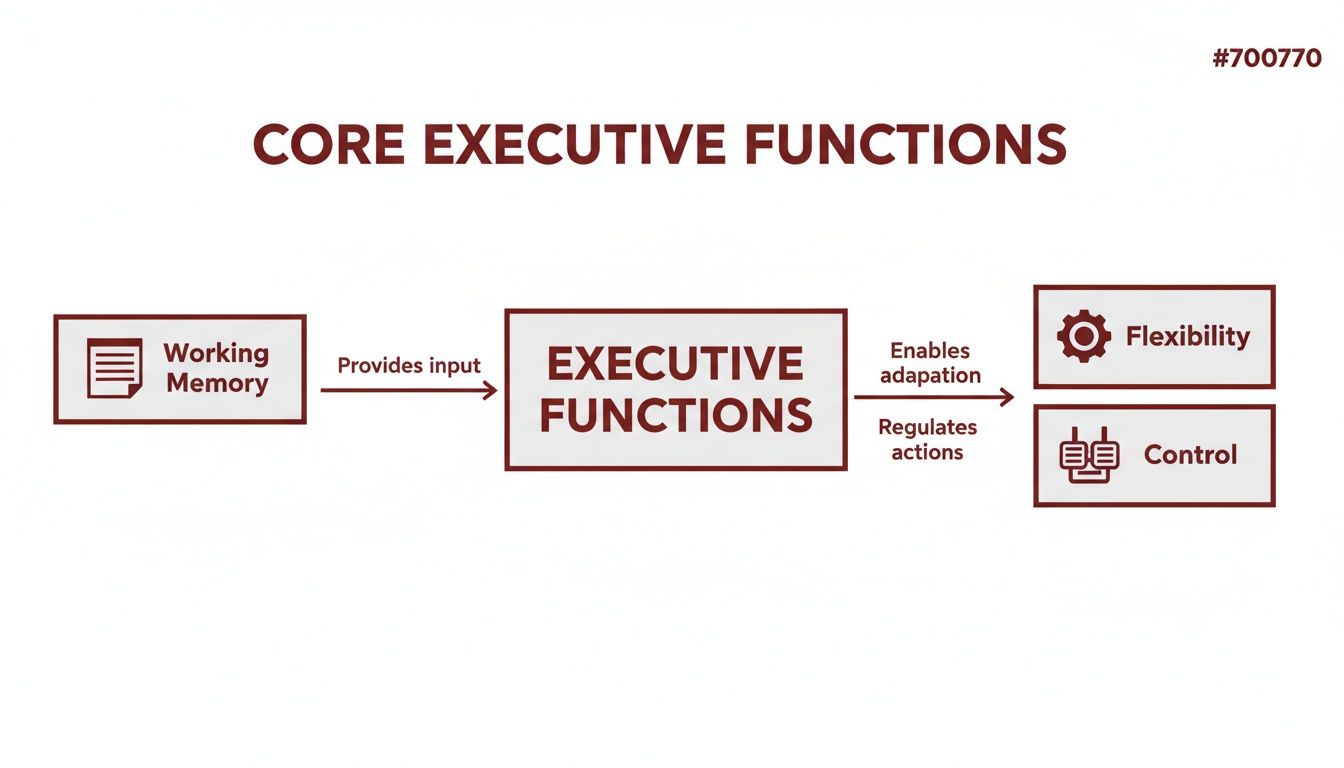
This visual helps show how working memory (your brain's sticky note), cognitive flexibility (the gear shift), and inhibitory control (the brake pedal) all work together as part of one interconnected system.
The Hidden Toll of Masking
Many neurodivergent people, particularly women, girls, and BIPOC individuals, learn to mask their executive functioning struggles. Masking is the conscious or unconscious effort to hide neurodivergent traits to fit in with what's expected in a neurotypical world.
Masking is an exhaustive, full-time job of constant self-monitoring, imitation, and suppression of natural instincts. While it can be a survival strategy, it comes at a tremendous cost to mental health, often leading to burnout, anxiety, and a delayed diagnosis.
Someone who is masking might look highly organized and successful on the outside. They may rely on complex systems of reminders, calendars, and self-imposed rules just to compensate for their internal difficulties. But beneath that polished exterior is a state of constant, high-alert effort.
Recognizing these unique profiles—whether it's the ADHD struggle with getting started, the Autistic need for routine, or the bone-deep exhaustion from masking—is absolutely critical. Good executive functioning training doesn’t try to force a neurodivergent brain into a neurotypical box. Instead, it provides personalized tools and strategies that work with an individual’s unique wiring, building on their strengths to create lasting success and well-being.
Proven Methods for Effective Executive Functioning Training
Let's be clear: there's no single, rigid program for effective executive functioning training. Instead, it’s a compassionate and integrated approach that combines several powerful, evidence-based methods. Everything is tailored to an individual's unique brain wiring and personal goals.
The aim is never to force a neurodivergent brain to operate like a neurotypical one. It’s about building a personalized toolkit of strategies that foster independence and genuine confidence. This process is about moving beyond just managing symptoms to understand the root causes of challenges and developing sustainable skills for the long haul.
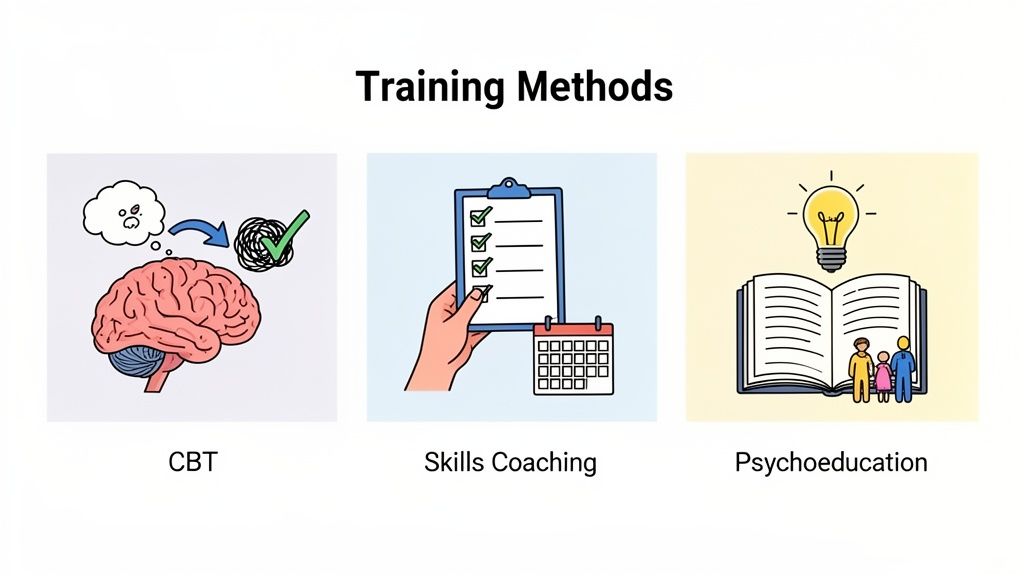
Let’s explore the three foundational pillars that make this training so effective.
Reshaping Your Inner Dialogue with CBT
Cognitive Behavioral Therapy (CBT) is a cornerstone here. It works on a simple but profound principle: our thoughts, feelings, and behaviors are all deeply connected. For many people with executive function challenges, years of struggling can create a negative inner monologue filled with self-criticism and doubt.
Thoughts like "I'll never get this done" or "I always mess things up" can become automatic. This leads to anxiety and overwhelm, which makes it even harder to start or finish a task. CBT helps break this cycle. A therapist works with you to spot these unhelpful thought patterns and actively challenge them.
For example, you might learn to reframe "This project is impossible" to "This project is large, so I'll start with the first small step." This isn't just about "positive thinking"—it's a practical way to dismantle mental roadblocks and reduce the emotional weight that so often leads to procrastination. It empowers you to become an observer of your thoughts, not a victim of them.
Building Practical Skills for Daily Life
While CBT addresses the internal mindset, Skills Coaching focuses on the external, real-world application. This is where the practical side of executive functioning training really comes to life. A coach acts as a supportive partner, helping you develop and implement tangible systems to manage daily demands.
This approach is highly personalized. Instead of offering generic advice, a coach helps you build systems that work specifically for your brain and your life.
Key areas of focus often include:
- Organizational Systems: Finding the right tools—whether it’s digital apps, physical planners, or visual timers—to keep track of appointments, deadlines, and belongings.
- Task Management: Learning how to break down huge, intimidating projects into small, manageable steps to overcome that feeling of being paralyzed and unable to start.
- Time Awareness: Developing strategies to combat "time blindness," like setting interval alarms or using visual countdowns to better sense the passage of time.
This hands-on coaching provides the structure and accountability needed to turn goals into consistent habits. If you're looking for a structured starting point, resources like an Executive Function Repair Step-by-Step Guide can offer additional strategies for overwhelmed adults.
The true power of skills coaching lies in its collaborative nature. It’s not about being told what to do; it's about co-creating strategies, experimenting with what works, and building confidence with every small success.
This method bridges the gap between knowing what you need to do and actually being able to do it. You can learn more about specific techniques in our guide to executive function strategies.
The Power of Understanding Through Psychoeducation
The third crucial element is Psychoeducation. This is the process of learning about your own neurotype—finally understanding the "why" behind your challenges. For so many people, getting a diagnosis of ADHD or Autism is the first time their lifelong struggles are given a name and a neurological explanation.
This knowledge is incredibly empowering. It shifts the narrative from personal failure ("I'm lazy" or "I'm not trying hard enough") to one of neurological difference ("My brain is wired differently, and I need different tools").
Psychoeducation involves:
- Explaining the Diagnosis: Clearly breaking down what ADHD or Autism means in terms of how the brain functions.
- Identifying Strengths: Highlighting the unique advantages that often accompany neurodivergence, like creativity, hyperfocus, and sharp pattern recognition.
- Involving Family: Educating loved ones so they can provide more effective and empathetic support, creating a healthier environment for everyone.
By demystifying the condition, psychoeducation reduces shame and stigma, fostering self-compassion and acceptance. When you understand how your brain works, you can finally stop fighting against it and start working with it. This integrated approach—combining CBT, skills coaching, and psychoeducation—creates a robust framework for lasting change.
Navigating Your Telehealth Training Journey
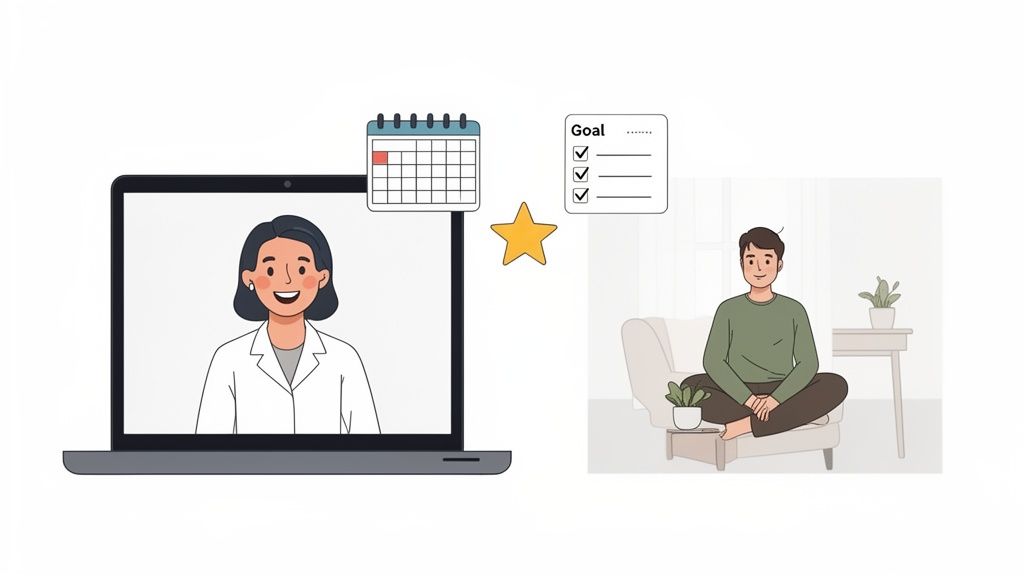
Stepping into executive functioning training can feel like a big decision. We’ve designed the process to be clear, supportive, and convenient right from the start. Telehealth makes expert care more accessible than ever, allowing you to build essential skills from the comfort and familiarity of your own home. This modern approach removes many traditional barriers to care, making it an especially good fit for neurodivergent individuals who often thrive in predictable environments.
The entire journey begins with a comprehensive initial assessment. This isn’t just a quick checklist; it’s a deep dive into your unique strengths, challenges, and personal history, all conducted online via a secure video call. Think of it as creating a detailed map before a road trip—it ensures we know exactly where you’re starting from so we can chart the most effective course forward.
What to Expect in Your First Session
Your first official training session is all about building a collaborative partnership. It’s a dedicated time to connect with your therapist on Zoom, go over the findings from your assessment, and start outlining what success really looks like for you. The focus is on setting small, achievable goals that build momentum and confidence right away.
Instead of vague ambitions like "get more organized," your goals will be concrete and actionable.
- For a student, a starting goal might be to use a digital planner to track homework for one class every single day for a week.
- For an adult, it could mean breaking down a massive work project into three smaller steps and then scheduling time to complete just the first one.
This approach transforms overwhelming challenges into manageable tasks. It makes progress feel not just possible, but inevitable. You can discover more about the depth of our virtual evaluation process and how we conduct our telehealth neuropsychological testing to gain a complete picture of your cognitive profile.
The Structure of a Typical Training Session
Once you get going, your telehealth sessions will follow a consistent, supportive structure designed to maximize your progress. While every session is personalized to you, it generally flows through a few key phases. This predictability helps reduce anxiety and allows you to focus your mental energy where it matters—on building skills.
A typical session often looks something like this:
- Check-In and Review: You’ll start by talking about the past week, celebrating wins (no matter how small!), and troubleshooting any hurdles you hit while trying out new strategies.
- Skill Introduction: Your therapist will introduce a new concept or technique that’s directly related to your goals, using clear language, analogies, and real-world examples.
- Collaborative Practice: You'll work together to apply the new skill in real time. This might involve setting up a new organizational system, role-playing a tricky conversation, or planning out your upcoming week.
- Action Plan: The session wraps up by creating a clear, simple plan for you to put the new strategy into practice before your next meeting.
The real power of telehealth lies in its immediacy. You're not learning skills in a sterile office to use later; you are developing them in the very environment where you need them most—your home, your workspace, your life.
This direct application is what helps turn learned strategies into lasting habits. The convenience of meeting online also means fewer logistical hurdles, like traffic or travel time, which can drain the very executive function resources you’re working to strengthen. It’s a smarter, more sustainable path to building the skills you need to thrive.
Tailoring Support for Different Life Stages
Executive functioning skills aren’t a one-and-done deal. They have to grow and adapt right alongside us as we move through life. Think about it: the mental toolkit a five-year-old needs is worlds away from what a teenager or a corporate professional requires.
That’s why effective executive functioning training isn’t a rigid formula. It’s a dynamic approach that meets you exactly where you are, whether you're learning to tie your shoes or manage a team.
Building Skills in Childhood
For young kids, learning and play are the same thing. You can't sit them down for a lecture on inhibitory control. Instead, you build these foundational skills through fun, engaging activities that feel like a game, not a chore.
The goal is to create a world with gentle structure and predictability. This helps their developing brains feel safe, secure, and ready to learn.
We weave these strategies right into their daily lives, turning everyday moments into powerful learning opportunities. This could look like:
- Playful Learning: Using classic games like Simon Says or Red Light, Green Light to practice hitting the mental brakes.
- Visual Routines: Creating simple, picture-based checklists for getting ready in the morning or for bed. This helps them build working memory and learn sequences without nagging.
- Emotional Literacy: Using emotion cards or stories to help them name and manage those big, overwhelming feelings—a core part of self-regulation.
These early interventions are so powerful because they build a foundation of competence and confidence that kids will carry with them for years to come.
Navigating the Teen Years
When the teenage years hit, the whole landscape shifts. School gets harder, social circles become way more complicated, and the push for independence is in full force. Executive functioning coaching for teens has to tackle these new, high-stakes challenges head-on.
This is where we transition from parent-led support to self-driven strategies. A coach works with the teen to build the internal skills they need to handle more responsibility. We focus on things like planning long-term school projects, navigating tricky social situations, and actually managing their own schedules. It's all about empowering them to become the CEO of their own life.
Thriving in Adulthood
For adults, the stakes feel even higher. Executive functioning challenges can show up as missed deadlines at work, a chaotic household, or feeling stuck in your personal goals. The issues are more complex, and the consequences can feel much more significant.
Executive functioning training for adults is intensely practical and results-oriented. It’s all about creating sustainable, real-world systems for managing a career, running a household, and actually making progress on long-term ambitions. We might work on anything from creating a foolproof system for paying bills on time to breaking down a massive career goal into small, actionable steps.
The good news is that the brain’s capacity for change doesn’t end with childhood. The prefrontal cortex—the region governing executive functions—maintains its ability to adapt and grow throughout our entire lives.
This lifelong neuroplasticity is a game-changer. It means that it's never too late to strengthen these skills. As research shows, this flexibility is a double-edged sword: while training can strengthen executive functions at any age, negative experiences and chronic stress can also weaken them. You can explore more about how the brain develops over a lifetime.
Most importantly, this tailored support must go deeper than age. For women, girls, and BIPOC individuals who have spent years masking their struggles to fit in, a one-size-fits-all approach simply won't work. We need culturally sensitive care that recognizes these subtle presentations to provide support that is not only effective but also affirming and genuinely personal.
Ready to Take the Next Step?
Figuring out how your brain's executive functions work can feel like a huge puzzle, but I want to leave you with a message of real hope. With the right support, it's absolutely possible to strengthen your brain's management skills. This isn't about changing who you are; it's about building a toolkit that helps you live with less friction and more confidence.
The path forward is actually more straightforward than you might imagine. It all starts with getting a clear picture of your unique cognitive profile.
A comprehensive diagnostic evaluation for ADHD, Autism, or both is the essential first step. Think of it as creating a detailed map that shows us exactly where your strengths are and pinpoints the areas where executive functioning training will have the biggest impact.
Your Path to a More Confident Life Starts Here
From that starting point, we can begin ongoing coaching and therapy to help you build practical, real-world skills, one step at a time. The whole process is designed by experts who get the nuances of neurodivergence, ensuring it's accessible, compassionate, and truly effective. We're here to support you in a way that respects your experience and helps you get where you want to go.
Ready to get started? We've made it simple.
- Book an Evaluation: You can schedule your comprehensive diagnostic assessment for ADHD or Autism today. Our virtual process is designed for your comfort and convenience.
- Learn More About Us: Explore our services and meet our team of dedicated specialists who are experts in neurodivergent care.
Taking this step is a powerful investment in yourself and your future. We believe everyone deserves expert care that is both affirming and life-changing. Let us help you unlock your full potential.
Your Questions, Answered
Jumping into the world of executive functioning training can feel like a big step, and it’s natural to have questions. We’ve gathered some of the most common ones we hear to give you the clarity you need about our services, the process, and what telehealth coaching really looks like.
How Long Does Executive Functioning Training Take to Work?
There’s no magic number here—it’s a highly personal journey. How quickly someone sees progress really depends on the specific challenges they’re facing, their age, and how consistently they can practice new strategies between our sessions. That said, many clients start noticing small but significant shifts within the first couple of months.
For instance, a student might finally start using a planner to keep track of homework after just four to six weeks. An adult might feel a greater sense of control over their work schedule in a similar amount of time. The goal isn't a quick fix; it's about steadily building skills and confidence that last. Real, lasting change comes from consistent effort and the right support over time.
Is Executive Functioning Training Only for People with ADHD or Autism?
Absolutely not. While this kind of training is a game-changer for many with ADHD and Autism, it’s not exclusive to them. Anyone who feels like they’re constantly fighting a losing battle with planning, organization, time management, or just getting started on tasks can find huge benefits.
We work with many people who don't have a formal diagnosis but feel completely overwhelmed by the demands of their job, school, or home life. Executive functioning coaching gives you a practical, real-world toolkit to manage your daily responsibilities with a whole lot less stress.
Executive function skills are life skills. Whether you have a diagnosis or simply want to sharpen your ability to manage a complex life, this training offers a clear path toward greater efficiency and well-being.
What Is the Difference Between Therapy and Executive Functioning Coaching?
This is a fantastic question because the two often work together beautifully but serve very different roles. Think of it like this: traditional therapy often dives into the "why"—processing emotions, healing past experiences, and exploring the roots of your feelings and behaviors. It’s focused on your internal, emotional world.
Executive functioning coaching, on the other hand, is all about action. It’s intensely practical and focuses on the "how." How do you break down that overwhelming project? How can you manage your time without feeling frantic? How do you build systems that actually work with your brain, not against it? While our coaches are incredibly supportive, the primary goal is to build tangible, everyday skills. At the Sachs Center, we often find that integrating both approaches creates the most powerful support system.
Can Telehealth Really Be as Effective as In-Person Sessions?
Yes, without a doubt. And for many neurodivergent kids and adults, we’ve found it can be even more effective. Telehealth removes common barriers that can drain the very mental resources we're trying to build, like the stress of a commute or navigating an unfamiliar office.
Learning and practicing these skills in your own home—the exact place you need to use them—makes the strategies immediately relevant and easier to stick with. Both research and our own clinical experience show that for services like cognitive behavioral therapy and skills coaching, telehealth delivers outcomes that are just as strong as in-person care. It offers expert support with maximum comfort and convenience.
Are you ready to build the skills you need to manage your life with more confidence and less stress? At the Sachs Center, our expert team specializes in telehealth-based diagnostic evaluations and personalized executive functioning training for children, teens, and adults. Book your evaluation today and start your journey toward a more organized and empowered future.
