

When you hear the term “slow processing speed,” it's easy to jump to the wrong conclusion. But let’s be clear: it is not a measure of intelligence.
A great way to think about it is like having a powerful computer with a slow internet connection. All the data gets there, it’s understood perfectly, and the computer itself is top-of-the-line. It just takes a few extra moments for everything to download.
What Does Slow Processing Speed Actually Mean?

Simply put, slow processing speed is about the pace at which a person can take in information, make sense of it, and then formulate a response. It’s that brief time lag between seeing, hearing, or feeling something and mentally reacting to it.
This cognitive trait can affect how quickly someone gets through tasks, whether it's doing simple math in their head or tackling a complex problem at work. But it's crucial to see this as a measure of efficiency, not capability.
Someone with a slower processing speed has the exact same potential for deep thinking and incredible insight as anyone else. Their brain just operates at a more deliberate, methodical pace.
It Is Not a Reflection of Intelligence
One of the biggest and most harmful myths is that processing speed is tied to IQ. Decades of research and clinical experience tell us this just isn't true. A person can be exceptionally bright, creative, and insightful and still process information more slowly.
To help clear up any confusion, let's break down what slow processing speed is—and what it isn't.
Breaking Down Slow Processing Speed
| What It Is | What It Is NOT |
|---|---|
| A difference in the speed of thinking | A reflection of intelligence or ability |
| The time it takes to perceive and respond | A lack of understanding or knowledge |
| A neurodevelopmental trait | Laziness or a lack of motivation |
| A measure of cognitive efficiency | A measure of how smart someone is |
Understanding this distinction is fundamental. It’s the key to providing the right kind of support and, just as importantly, avoiding unfair judgments about a person's abilities or even their motivation.
The core issue isn't a lack of understanding but rather a delay in the cognitive workflow. It’s like being a step behind in a fast-paced conversation—you understand everything being said, but by the time you've formulated your response, the topic has already moved on.
This delay can pop up in all kinds of places, from the classroom to the boardroom to social gatherings. A student might struggle to finish a timed test even when they know all the answers. An adult might feel overwhelmed in meetings where decisions are made on the fly.
But this deliberate thinking style can also come with some serious strengths. Taking that extra time can foster:
- Methodical Analysis: Slower processing often allows for a more thorough consideration of all the variables before making a decision.
- Deep Thinking: That extra time can lead to more profound insights and a richer understanding of complex topics.
- Reduced Impulsivity: A natural pause before acting can prevent hasty mistakes and lead to more thoughtful, well-reasoned outcomes.
Ultimately, challenges with processing speed are closely connected to executive functions. Essential skills like getting started on tasks and holding information in your mind (working memory) are often affected. Recognizing slow processing speed is the first step toward building a toolkit for success, and you can learn more by exploring different strategies for improving working memory.
Recognizing the Signs at Different Stages of Life

Slow processing speed isn't a one-size-fits-all experience. Its impact shifts and evolves as life’s demands change, looking very different for a seven-year-old learning to read than for a thirty-seven-year-old navigating a fast-paced career.
Understanding how this trait appears across the lifespan is the first step toward recognizing it in yourself or a loved one. While the core challenge—the time it takes to process information—remains the same, the context and consequences vary in a big way.
This cognitive trait often first becomes obvious in the structured, fast-paced environment of school. Catching these signs early is crucial for providing the right support before a child’s confidence takes a hit.
Common Signs in Children
For young kids, the world is a constant stream of new instructions, rules, and concepts. When processing speed is slow, just keeping up can feel like an impossible task, often leading to frustration and anxiety.
Common indicators include:
- Difficulty Following Instructions: A child might struggle with multi-step directions like, "Put your toys away, wash your hands, and come to the table." They might only remember the first or last part of the instruction.
- Slow Task Completion: Homework that should take 20 minutes might stretch into an hour. Simple routines like getting dressed or finishing a meal can also take much longer than for their peers.
- Trouble with Timed Activities: Math fact drills, timed reading tests, or even simple classroom races can be a huge source of stress. The child often knows the material but can’t perform under pressure.
- Delayed Verbal Responses: When you ask a question, they might pause for several seconds before answering. It’s not because they don't know the answer, but because their brain is still working on formulating it.
The impact in the classroom is often substantial. Processing speed deficits are a significant clinical concern, and studies show that 77% of children with these weaknesses receive services under an Individualized Education Program (IEP) or 504 plan. This highlights just how necessary formal school support can be. Discover more insights about the academic impact of processing speed on NCBI.
Challenges for Teenagers
As academics get more complex and social dynamics intensify, the challenges tied to slow processing speed often become more pronounced. The need to quickly analyze abstract concepts in class and navigate rapid social banter can be totally overwhelming.
Watch for these signs in adolescents:
- Academic Overwhelm: They might have a hard time keeping up with fast-paced lectures, taking good notes, or completing lengthy reading assignments on time.
- Social Awkwardness: Struggling to jump into fast-moving group conversations or missing the nuances of jokes and sarcasm can lead to social withdrawal.
- Decision-Making Paralysis: Choosing a topic for a paper or even deciding what to do on a weekend can become a lengthy, stressful process.
How It Appears in Adults
In adulthood, the relentless demands of the workplace and personal responsibilities can magnify the strain of slow processing speed. The constant pressure to be efficient and responsive can lead to significant mental exhaustion.
Adults may experience:
- Workplace Struggles: Feeling consistently behind on projects, having trouble contributing in fast-paced meetings, and missing deadlines despite putting in long hours.
- Feeling Overwhelmed by Data: Difficulty synthesizing information from multiple sources—like emails, reports, and team messages—to make timely decisions.
- Mental Burnout: The constant effort to keep up is draining. It often leads to chronic stress and a feeling of always being one step behind everyone else.
Recognizing these patterns isn’t about labeling a weakness. It’s about understanding a fundamental aspect of how a person's brain works. This clarity opens the door to effective strategies and accommodations that can transform daily struggles into manageable tasks.
Untangling Slow Processing Speed, ADHD, and Autism
Figuring out the link between slow processing speed, ADHD, and Autism can feel like solving a puzzle for parents, adults, and even clinicians. While this cognitive trait shows up frequently in both of these neurodevelopmental conditions, it's critical to know that it can also exist all on its own.
Think of it as a transdiagnostic challenge—a core cognitive trait that cuts across different diagnoses instead of belonging to just one. This means someone can absolutely have slow processing speed without having ADHD or Autism, and the other way around. Still, the overlap is significant, and understanding how it all works together is the key to getting a clear picture.
The Overlap with ADHD and Autism
When slow processing speed shows up alongside ADHD or Autism, it tends to get tangled up with the main features of each condition.
- In ADHD: The connection is often tied to executive function struggles. When you're distractible and can't stay focused, your brain's ability to take in and respond to information naturally slows down. This makes it tough to tell if the issue is attention, processing speed, or both.
- In Autism: The link can be related to sensory processing differences or the sheer mental effort it takes to figure out complex social cues. The brain might be working overtime just to interpret body language or tone of voice, which puts the brakes on response time.
Because these traits are so intertwined, it takes a real expert to pinpoint the root cause of a processing delay. This is especially true for people with both ADHD and Autism—often called AuDHD—where untangling the layers of overlapping traits requires a deeply nuanced approach.
A slower processing speed doesn't just add another symptom; it acts as a magnifying glass for the core challenges of ADHD and Autism, amplifying difficulties with getting started on tasks, social interaction, and managing emotions.
Why This Connection Matters for Mental Health
This overlap isn't just a clinical detail; it has a real impact on a person's well-being. We're learning more and more that slower processing speed is a major factor in broader mental health.
Research highlights a strong link between processing speed and overall psychopathology symptoms in young people, showing that as processing speed slows, mental health challenges tend to get worse. This connection turned out to be a more powerful indicator than IQ or executive function alone, cementing processing speed as a vital piece of the mental health puzzle. You can learn more about these important findings on processing speed's role in mental health.
This is exactly why getting an accurate diagnosis is so important. When processing speed issues are brushed off as laziness or a lack of effort—without looking for a possible underlying neurodevelopmental condition—it can lead to the wrong kind of support and really damage a person's self-esteem. A skilled diagnostician can see the whole picture, paving the way for targeted strategies that address the true source of the challenge.
How to Get a Formal Diagnosis and Why It Matters
Living with slow processing speed without a clear diagnosis can feel like trying to solve a puzzle with half the pieces missing. Getting a formal evaluation isn't about getting a label; it's about finally getting the full picture. It gives you the clarity to understand the root of the challenges and, most importantly, unlocks the door to real, meaningful support.
A professional assessment is the first concrete step in turning daily frustrations into a clear plan for success. A qualified psychologist can dig deep into an individual's unique cognitive profile to see what's really going on. This process is critical for figuring out if slow processing speed is the main issue or if it's tangled up with other conditions like ADHD or Autism, ensuring any strategies are aimed at the right target.
This decision tree helps visualize that pathway, showing how we determine if slow processing speed stands on its own or is part of a bigger picture.
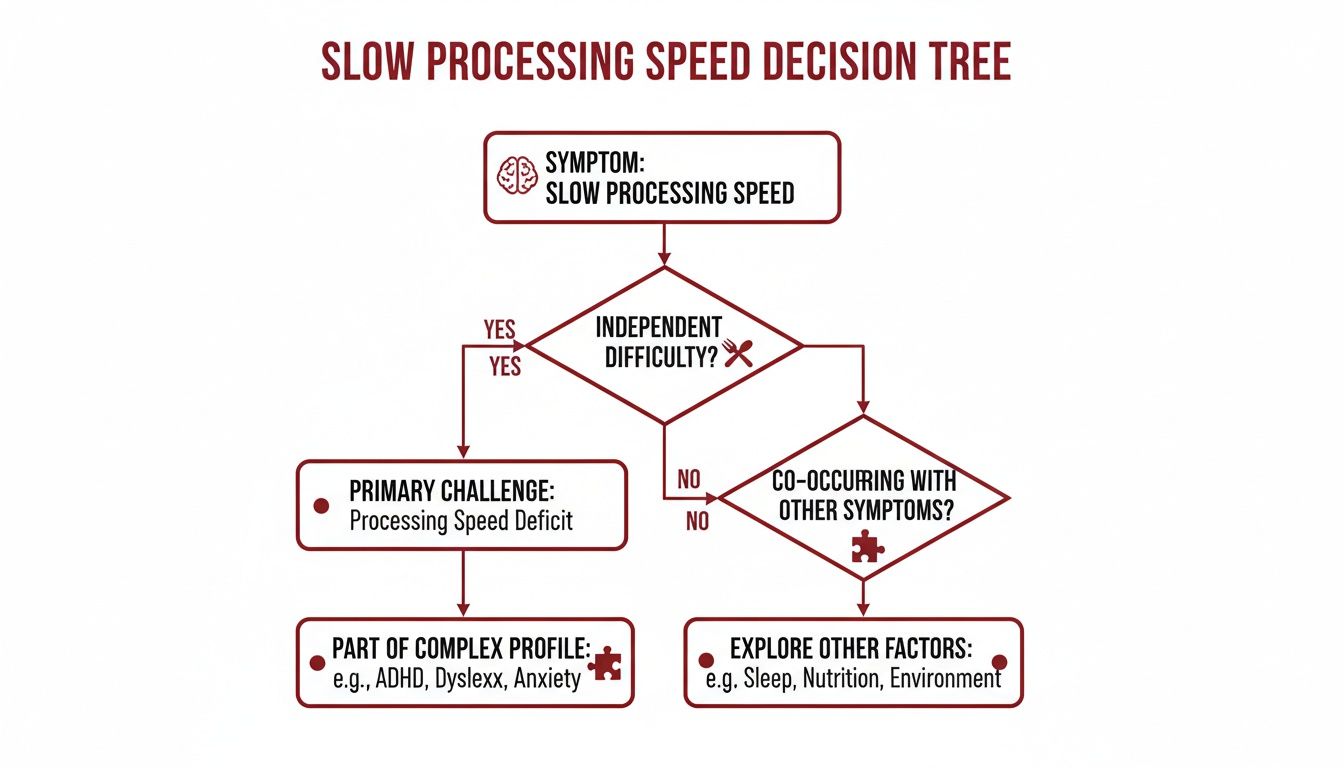
As you can see, it all starts with identifying the symptoms. From there, a professional evaluation helps untangle whether this cognitive trait is an independent challenge or if it overlaps with other neurodevelopmental profiles.
Different Assessments for Different Needs
Not all diagnostic journeys look the same. The right evaluation really depends on what you hope to achieve and what kind of support you need. Knowing your options is the key to making the right choice.
- Diagnostic Testing: This is a focused and efficient evaluation that usually takes just a few hours. It’s a great fit for adults who need a formal diagnosis to get workplace accommodations, like more flexible deadlines or getting meeting materials ahead of time.
- Neuropsychological Testing: This is the deep dive. It's a much more comprehensive assessment required for academic settings. This is the key that unlocks accommodations for standardized tests like the SAT, GRE, or GMAT and is often the basis for an IEP or 504 plan in school.
If you want to get a better sense of the depth and scope of these evaluations, you can learn more about what a neuropsychological assessment entails. It can really help clarify the purpose and process behind this kind of comprehensive testing.
Think of a formal diagnosis as your official documentation. It’s the proof you need to advocate for yourself or your child, ensuring schools and employers provide the legally required supports to level the playing field.
The Rise of Accessible Telehealth Evaluations
In the past, getting one of these critical evaluations often meant long waitlists and stressful, in-person appointments. Thankfully, technology has made the entire process far more accessible and comfortable. Telehealth has completely changed the game, offering a powerful and convenient way to get a clear diagnosis right from home.
For many neurodivergent individuals, being in a familiar environment makes all the difference, reducing the anxiety that can get in the way of accurate testing. Virtual assessments offer a less stressful path to getting answers. The Sachs Center offers expert telehealth neuropsychological testing, making high-quality evaluations available to people everywhere. This approach removes geographic barriers and makes scheduling a whole lot simpler, which means more people can get the formal diagnosis they need to start advocating for themselves.
Practical Strategies for Everyday Life

Moving from a diagnosis to daily action is where real change begins. Understanding your cognitive profile is the first step, but the real power comes from building a toolkit of practical strategies that help you navigate your day with more confidence. These techniques are all about working with your brain, not against it, to create a life that feels more manageable and less stressful.
Many of these strategies are grounded in evidence-based approaches like Cognitive Behavioral Therapy (CBT). The idea is to break down overwhelming situations into smaller, bite-sized pieces and better manage the anxiety that so often comes with processing challenges. The goal? To give you concrete solutions you can start using today.
Adopt Structural and Organizational Systems
One of the most powerful things you can do to manage a slower processing speed is to reduce your mental load. By creating external structures to lean on, you free up precious cognitive energy to focus on what really matters.
- Task Chunking: Break down big projects into smaller, more approachable steps. Instead of staring at a to-do list item like "clean the kitchen," break it down into "clear counters," "load dishwasher," and "wipe surfaces." This simple shift makes it so much easier to just get started.
- Time Blocking: Dedicate specific blocks of time to specific tasks in your calendar. This helps you manage your own expectations and prevents you from feeling rushed by building in the extra time you might need from the get-go.
- Visual Aids: Get that to-do list out of your head and onto paper (or a screen!). Using checklists, planners, and calendars to see your tasks laid out visually can make them feel far less intimidating.
These are foundational habits. If you want to dive deeper into structuring your day, our guide on effective executive function strategies is a great next step.
Leverage Technology and Accommodations
In this day and age, technology offers some fantastic tools to help bridge processing gaps. At the same time, formal accommodations at school or work aren't a crutch—they're a necessary support system that levels the playing field.
Advocating for your needs is a crucial skill. Accommodations like extended time on tests or receiving meeting agendas in advance are reasonable adjustments that allow you to demonstrate your true capabilities without the barrier of speed.
Even simple tech can make a world of difference:
- Reminder Apps: Use apps like Google Keep or Todoist to set alerts for appointments and deadlines so you don't have to keep it all in your head.
- Speech-to-Text Software: If you find typing to be a slow and frustrating process, exploring the best talking-to-writing helper software can be a game-changer for your productivity and energy levels.
It’s also important to understand that these strategies aren't just about getting through today. Longitudinal research shows that slow processing speed is a significant risk factor for social difficulties later in life for children. While medication alone may not directly impact processing speed, studies show that combining behavioral interventions with targeted organizational skills training can boost academic efficiency and lessen the negative fallout. By actively using these strategies, you’re not just managing the present; you're building a stronger foundation for the future.
Finding the Right Professional Support
Figuring out who can help you navigate slow processing speed is a huge step. It’s even more critical when you suspect traits might overlap with ADHD or Autism, because you need an expert who can see the whole, complex picture.
It’s so important to find specialists who can look past the obvious labels and understand how neurodivergence can be masked, especially in adults. The right professional won’t just focus on managing deficits; they’ll take a holistic, person-centered approach that builds on your individual strengths. This is about creating personalized coping strategies that actually work for you in the long run.
Your Path to Comprehensive Care
Getting a diagnosis isn't the finish line—it's the starting point. A complete care plan involves ongoing support that’s tailored to your unique brain.
- Therapy: Evidence-based approaches like CBT can be a game-changer for managing the anxiety and frustration that so often come with processing challenges.
- Executive Function Coaching: This is where the rubber meets the road. One-on-one guidance helps you build practical skills in things like organization, time management, and just getting started on tasks.
Finding a compassionate, expert partner is key. Modern telehealth services make this easier than ever, offering a comfortable and convenient way for neurodivergent individuals to get high-quality care right from home.
With this kind of specialized support, a diagnosis stops being a label and becomes a clear, actionable roadmap for your neurodiversity journey.
A Few Common Questions
When you start digging into the world of neurodiversity, a lot of questions pop up. It’s completely normal. Let’s walk through some of the most common ones we hear about slow processing speed and what the diagnostic journey looks like.
If I Have a Slow Processing Speed, Does That Automatically Mean I Have ADHD or Autism?
Not at all. Think of slow processing speed as a common trait, not a diagnosis in itself. While it frequently shows up in both ADHD and Autism, it can absolutely exist on its own as an independent cognitive style.
The only way to know for sure if it’s part of a larger neurodevelopmental profile is through a comprehensive evaluation with a specialist. Getting that clarity is the first step toward finding the right kind of support for your unique brain.
Can I Get Accommodations at Work or School Without a Formal Diagnosis?
Honestly, it’s incredibly difficult. Most schools and workplaces need to see official documentation from a qualified professional before they’ll grant accommodations like extended time on tests or more flexible deadlines.
A formal diagnostic or neuropsychological report is the evidence you need to advocate for these supports, which are often legally recognized. Without that paperwork, your requests are likely to be denied, leaving you to manage without the tools that could help you succeed.
An official diagnosis is more than just a label. It validates your struggles, turning them from things you might see as personal failings into documented challenges that deserve real, actionable support. It’s the key to unlocking a more fair and understanding environment.
Is a Full Neuropsychological Evaluation Always Necessary?
No, not always. For many people seeking a diagnosis for workplace accommodations or simply for their own personal understanding, a focused diagnostic evaluation for ADHD or Autism can be very efficient and just as accurate.
Neuropsychological testing is a much deeper and more intensive assessment. It’s usually required for specific situations, like when you’re seeking academic accommodations on standardized tests (think the SAT or GRE) or when a school district requires it for an IEP or 504 plan.
At the Sachs Center, our specialists are experts in understanding the nuances of neurodiversity. If you’re ready to get clear answers and find a path forward, book a comprehensive evaluation with our team today. Find out more at https://sachscenter.com.
