

An affordable autism diagnosis doesn't have to break the bank. You can find pathways beyond expensive private clinics by looking into your insurance benefits, university training programs, community health centers, and even telehealth services. These routes can bring costs down from thousands of dollars to just a few hundred, making clarity and support feel much more within reach.
The High Cost of Clarity and How to Find It
The search for an autism diagnosis often starts with a desperate need for answers, but that search can hit a wall pretty fast: the staggering cost. If you've felt sticker shock seeing evaluation prices ranging from $1,500 to over $5,000, you're definitely not alone. It’s a financial hurdle that can feel completely defeating, leaving so many people and their families stuck in limbo.
But your journey doesn't have to end there. This guide is built on real-world experience, designed to cut through all that confusion and show you that affordable, accessible pathways truly do exist.
A Growing Need for Accessible Options
The demand for diagnostic services has never been higher. Autism diagnosis has seen a major shift in the United States, with prevalence rates climbing from 1 in 150 children back in 2000 to an estimated 1 in 31 children by 2025. This isn't an epidemic—it’s the result of better screening tools and much greater public awareness. More people are simply seeking the clarity a diagnosis can bring.
This growing awareness shines a light on a critical need for cost-effective solutions. And fortunately, the landscape of diagnostic services is changing to meet that demand.
The key takeaway is this: High price tags are not the only option. By being strategic and informed, you can find a reputable, affordable autism diagnosis that fits your budget and provides the validation you need.
Charting Your Path Forward
Our goal here is to replace that financial anxiety with a clear, actionable plan. We'll walk through practical strategies for navigating insurance, tapping into community resources, and using modern solutions like telehealth.
A big part of seeking clarity often involves understanding the developmental journey. To learn more, it can be helpful to explore resources on childhood development milestones.
Getting a handle on the full financial picture is the first step. For a deeper dive into what influences these expenses, check out our detailed guide on the cost of autism diagnosis. This guide will give you the tools you need to find the answers for yourself or your loved one without the overwhelming financial strain.
Exploring Pathways to a Low Cost Evaluation
Finding an affordable autism diagnosis can feel like trying to navigate a maze without a map. When costs are high, it’s easy to feel stuck. But the good news is, several practical, low-cost pathways exist that can lead you to the clarity you’re looking for. Think of this as your roadmap to move past the overwhelm and find an evaluation that actually fits your budget.
This decision tree can help you visualize which path might be the best starting point for your unique situation.
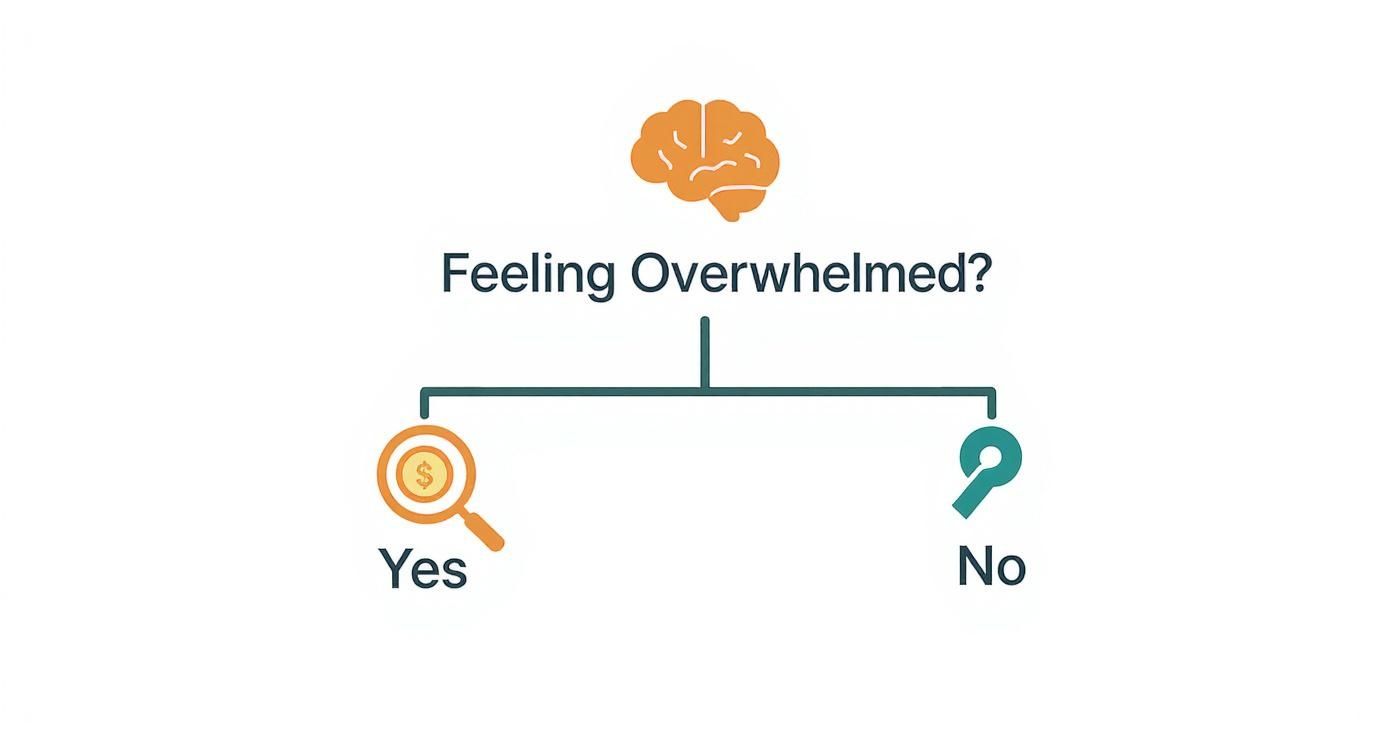
Whether you’re feeling completely overwhelmed by the potential cost or just need a little direction, there are clear, accessible options out there. Let's break them down.
Comparing Your Affordable Diagnosis Options
This table gives you a quick, side-by-side look at the different pathways. It’s designed to help you quickly spot the best fit for your situation, comparing everything from cost to wait times.
| Pathway | Typical Cost Range | Average Wait Time | Best For |
|---|---|---|---|
| Insurance (In-Network) | Varies widely (copays/deductibles) | 3-9+ months | Individuals with good insurance coverage who can navigate the system. |
| University Clinics | $200 – $800 | 6-18+ months | People with flexibility on timing who need a comprehensive, low-cost evaluation. |
| Community Clinics | Sliding scale ($0 – $500+) | 3-12+ months | Low-income individuals and families needing community-based support. |
| Public Schools (K-12) | Free | 1-3 months | Children whose suspected autism impacts their educational experience. |
| Telehealth | $600 – $2,000 | 1-4 weeks | Adults seeking convenience, faster results, and transparent pricing. |
Each option has its own set of pros and cons. Your best choice really depends on your specific needs—like how urgently you need an evaluation, what your budget looks like, and what resources are available in your area.
Maximize Your Insurance Benefits
Your health insurance plan should always be your first stop. While it’s true that coverage varies wildly, many plans do cover diagnostic evaluations if they’re deemed medically necessary. The trick is knowing how to advocate for yourself effectively.
Start by calling your insurance provider. Don’t just ask if they cover "autism testing." Get specific. Ask for a list of in-network psychologists or neuropsychologists who perform autism assessments for your age group.
Then, you’ll want to ask about coverage for specific CPT codes (Current Procedural Terminology). These are the billing codes every clinician uses. Knowing them helps you have a much more productive conversation.
Key codes to mention for an autism evaluation include:
- 90791: Psychiatric diagnostic evaluation
- 96116: Neurobehavioral status exam
- 96132 & 96133: Neuropsychological testing evaluation services
- 96136 & 96137: Psychological test evaluation services
Jotting these down before you call can prevent a lot of headaches and surprise bills later on.
If your claim gets denied, don't just accept it. You have the right to appeal the decision. Often, getting a letter of medical necessity from your primary care physician can be the key to getting the evaluation approved.
University Training Clinics
Here’s one of the best-kept secrets for finding an affordable autism diagnosis: local universities with psychology or medical programs. These schools often run training clinics where graduate students provide assessments at a tiny fraction of the usual cost.
And don't worry—they are always under the direct supervision of a licensed clinical psychologist. The evaluations are thorough and follow the latest best practices. The main trade-off? The waitlists can be long because demand is so high. But if you have time to spare, the savings can be massive, with fees often based on a sliding scale tied to your income. A quick Google search for "psychology training clinic near me" or "university autism clinic" is a great way to find options in your area.
Community and State Resources
Beyond your insurance or a local university, there’s a whole world of community-based support out there. These organizations are specifically designed to provide accessible care.
Community Health Centers and Non-Profits: Federally qualified health centers (FQHCs) and other local non-profits are fantastic resources. They frequently offer mental health services, including diagnostic evaluations, on a sliding-scale fee basis. Their entire mission is to serve the community, regardless of someone's ability to pay.
State and School District Services: For children, the public school system is required by the Individuals with Disabilities Education Act (IDEA) to provide evaluations at no cost if a disability is suspected of impacting their education. The first step is to contact your child’s school and submit a request for an evaluation in writing. For little ones, your state's early intervention program can also provide free evaluations for any child under the age of three.
Thanks to better early identification systems, we're getting much better at providing accessible diagnoses. While specialists can now reliably diagnose autism by age 2, the average diagnosis age in the U.S. is still hovering around 5 years old. The good news is that data shows incredible progress, with identification by 48 months improving dramatically. This proves how these affordable frameworks are paving the way for earlier, life-changing support. You can dive deeper into these autism statistics and their implications on Autism Speaks.
Using Telehealth to Lower Diagnostic Costs
In recent years, telehealth has completely changed the game for getting an affordable autism diagnosis. Virtual evaluations knock down many of the old barriers, making the whole process more accessible and, frankly, a lot less expensive for families.
When providers shift their assessments online, they cut down on massive overhead costs—think expensive office leases and administrative staff. Those savings often get passed directly to you, the client, which means a much more manageable final price without ever compromising the quality of care.

How Virtual Assessments Work
I get this question all the time: can a virtual assessment really be as accurate as an in-person one? The answer is a clear and confident yes. Reputable telehealth practices use the exact same validated diagnostic tools and clinical interview methods that are the gold standard in traditional clinics.
The process is refreshingly straightforward and designed to be comfortable for you:
- Initial Consultation: You'll have a one-on-one meeting with a licensed psychologist on a secure video call. This is where you'll talk through your history, current struggles, and what led you to seek an evaluation.
- Self-Report Measures: You’ll fill out standardized, evidence-based questionnaires online. These are the same industry-standard assessments used in clinics around the world.
- Clinical Observation: During your video sessions, the clinician gets to see you in your natural environment—your home. This allows them to observe communication styles, social interactions, and other behavioral indicators in a truly authentic setting.
This approach gives us a comprehensive, real-life picture of how you navigate your world. It's not just convenient; it's a highly effective way to get the clarity you’re looking for.
The Clear Benefits of Telehealth
Beyond the lower price tag, telehealth offers some serious practical advantages that make it a truly affordable option. You get to sidestep all the extra expenses and logistical nightmares that come with in-person appointments.
Telehealth isn't just a budget-friendly alternative; it's a modern approach that prioritizes convenience, speed, and access to specialized care, regardless of where you live.
Think about all the hidden costs of a traditional evaluation that telehealth simply erases:
- No Travel Expenses: Forget about spending money on gas, parking, tolls, or public transit.
- Reduced Time Off Work: Virtual appointments mean flexible scheduling, so you don't have to burn through your precious paid time off.
- Access to Specialists: Your options are no longer limited by your zip code. You can connect with top specialists in autism diagnosis from anywhere.
For instance, a family living in a rural area might have to drive for hours to reach a specialist in the city, maybe even needing an overnight stay. A telehealth evaluation removes that entire financial and logistical burden. It just works.
At the Sachs Center, we specialize in telehealth autism diagnosis for this very reason. We provide a clear, accessible path for both adults and children seeking answers, all from the comfort of their own home. This approach puts high-quality care within reach for more people than ever before.
How to Prepare for Your Evaluation
Walking into an evaluation well-prepared can make a world of difference. It saves you time, money, and the stress of needing follow-up appointments. A little prep work goes a long way in making the process smoother and ensuring the outcome is as accurate as possible.

Think of it this way: the more context your clinician has, the clearer the diagnostic picture becomes. Your job is to provide them with a rich, detailed history to work with.
Gather Your Essential Documents
Before your appointment, pull together a folder—digital or physical—with all your key historical records. This isn’t just busywork. It provides concrete evidence of lifelong patterns, which is absolutely crucial for an accurate autism diagnosis.
Here’s what to look for:
- School Records: Old report cards, individualized education plans (IEPs), or 504 plans can be a goldmine. Teacher comments, in particular, often reveal early social or learning challenges that you might have forgotten.
- Medical and Therapeutic History: Collect any notes from previous therapists, pediatricians, or specialists. If you’ve had past evaluations for things like learning disabilities or ADHD, be sure to include those too.
- Personal Notes: Try to jot down key developmental milestones. When did you or your child start talking? How did you handle social interactions as a kid? Every little detail helps.
Document Your Experiences
Your lived experiences are the most important piece of the puzzle. Don't just show up and expect the clinician to pull all the right information out of you. Come prepared with specific examples of your challenges and strengths.
It helps to organize your thoughts by different areas of your life. Write down a few examples related to:
- Social Communication: Think about any difficulties with small talk, understanding sarcasm, making eye contact, or maintaining friendships.
- Sensory Sensitivities: Do certain lights, sounds, or textures bother you? Write down what they are and how they make you feel.
- Routines and Repetitive Behaviors: Describe your attachment to routines, any special interests you pour your energy into, or any repetitive movements you do (stimming).
- Executive Functioning: Detail any challenges you have with organization, planning, or just getting started on tasks.
This isn't about fitting a stereotype. It's about giving an authentic, detailed account of your life so the clinician can see the full picture. Your personal stories are the most powerful data you can provide.
Choose the Right Type of Report
Not all diagnostic reports are the same, and you don’t always need the most expensive, comprehensive option. The key to keeping costs down is knowing what you need the report for. To get a better sense of what’s involved, you can explore our guide on the autism diagnosis process.
Here’s a quick breakdown of the common options:
- Diagnostic Letter: This is a simple, one-page document that confirms a diagnosis. It’s perfect for things like requesting workplace accommodations or as a starting point for talking to a psychiatrist about medication.
- Short Diagnostic Report: Usually around four to five pages, this report offers more detail about your history and includes specific recommendations. It's great for sharing with your therapist or other healthcare providers.
- Full Neuropsychological Report: At 20+ pages, this is the most extensive and expensive option. It’s typically only required for securing academic accommodations on major standardized tests like the SAT or GRE.
And a quick technical tip: if you’re doing a telehealth evaluation, make sure you have a solid internet connection. Nothing is more frustrating than a choppy video call. It’s a good idea to know some basics for troubleshooting internet lag just in case.
Navigating Waitlists Without Losing Momentum
Finally finding an affordable path to an autism diagnosis is a huge relief. But then comes the next hurdle: the waitlist. Whether you've landed a spot at a university clinic or with an in-network provider, the wait can stretch on for months, sometimes even over a year. When you're searching for answers, that kind of delay can feel incredibly disheartening.
But this waiting period doesn't have to be a passive, frustrating experience. Think of it as a time to be strategic. With the right approach, you can take control, manage this time effectively, and maybe even get seen sooner.
Be Proactive and Persistent
The single best thing you can do? Get on multiple waitlists. Don't just pick one and hope for the best. Research every single low-cost option you can find—university clinics, community health centers, in-network doctors—and get your name on all their lists. There's absolutely no penalty for this, and it dramatically increases your odds of an earlier appointment opening up.
When you call these offices, go one step further. Don't just ask to be put on the waitlist.
Be direct and ask, "Do you have a cancellation list I can be added to?" This simple question shows you're serious and flexible, which can put you at the top of their minds when another patient has to reschedule. You might just get to jump the queue.
Your own flexibility is also a huge asset here. If you can make a weekday morning or afternoon appointment work, you'll have far more opportunities than someone limited to evenings or weekends.
A Hybrid Strategy for Faster Support
While you're waiting for that comprehensive, publicly-funded evaluation, you don't have to be stuck in limbo. Consider a hybrid approach: getting a faster, lower-cost initial diagnosis through a telehealth provider while you wait. This can be a game-changer for getting the ball rolling on immediate support.
Here’s how this two-pronged strategy works:
- Get an Initial Telehealth Diagnosis First. A virtual assessment can often deliver a diagnostic letter within weeks, not months. This letter is a powerful tool. You can use it to request workplace accommodations or start building your support team with therapists who understand your needs.
- Stay on the Comprehensive Waitlist. Don't give up your spot for the more in-depth evaluation. That future assessment, often a full neuropsychological workup, might be essential for securing things like long-term disability services or more extensive academic support down the road.
This method truly gives you the best of both worlds. You get the immediate validation and access to resources you need right now, all while keeping your place in line for the comprehensive report you may need later. It turns a frustrating waiting game into a period of proactive progress, putting you back in the driver's seat.
What to Do After Your Diagnosis
Getting an official diagnosis is often a huge moment of clarity. It’s not the end of the story, though—it’s really just the beginning of a new chapter.
The road to finding an affordable autism diagnosis can feel like a marathon. But as we’ve walked through, it’s absolutely an achievable goal. By using your insurance, checking out university and community clinics, or exploring telehealth options, you can get the answers you need without breaking the bank.
Think of this diagnosis as a powerful tool. It’s validation for everything you’ve experienced and the key to unlocking support that’s actually designed for you.
Looking Forward with Confidence
So, what comes next? It’s all about building an environment where you can truly thrive.
Your diagnostic report is the official document you'll need to request accommodations at school or work, making sure you have the right setup to succeed. It's also worth connecting with other autistic people, whether online or in your local area. Finding your community and sharing experiences can be incredibly validating.
Remember, a diagnosis doesn't change who you are. It simply offers a new lens through which to understand yourself, empowering you to advocate for your needs and celebrate your strengths.
Now you can start exploring therapy options that feel right, like those that specialize in neurodiversity-affirming care. You finally have the clarity to move forward, feeling validated and better equipped for whatever comes next.
Your Questions, Answered
Getting an autism evaluation can feel like stepping into a whole new world, and it's natural to have a lot of questions. Here are some clear, straightforward answers to the things people ask us most often when they're looking for an affordable diagnosis.
Can I Really Get a Diagnosis Online?
Yes, absolutely. A telehealth autism diagnosis is a completely valid and reliable way to get answers. Reputable online evaluations are always done by licensed psychologists who use the exact same clinically-proven assessment tools you'd find in a traditional clinic.
The big difference is that the process, which involves in-depth interviews and standardized questionnaires, happens from the comfort of your own home. Many people find this actually gives a more authentic picture of their daily life and challenges. The key is to find a provider whose clinicians are experienced specialists in neurodiversity.
What's the Difference Between a Screening and a Full Evaluation?
This is a crucial distinction. A screening is not a diagnosis. Think of it as a preliminary check—often just a quick questionnaire—that simply suggests whether a full evaluation might be a good idea. It points to the possibility of autism, nothing more.
A full evaluation, on the other hand, is the comprehensive, in-depth process needed for an official diagnosis. It involves detailed clinical interviews, a deep dive into your developmental history, and the use of standardized diagnostic tools to see if the criteria for Autism Spectrum Disorder are met.
A screening is like seeing smoke on the horizon. A full evaluation is sending in the firefighters to find the source of the fire and understand exactly what's going on.
Will My Insurance Cover an Adult Autism Diagnosis?
Navigating insurance for an adult autism diagnosis can be tricky, but it's definitely not impossible. Many insurance plans will provide coverage if the evaluation is considered "medically necessary."
Your first move should be to call your insurance provider directly. Ask them specifically about coverage for CPT codes like 90791 (which is for a diagnostic evaluation) and 96132 (for neuropsychological testing).
If they deny your claim, don't give up. You have the right to appeal their decision. A great way to strengthen your case is by getting a letter of medical necessity from your primary care doctor.
At the Sachs Center, our focus is on providing clear, accessible, and affordable telehealth evaluations for both ADHD and Autism. If you feel like it's time to get some real answers, you can learn more about our process and book an assessment right on our site. Find your clarity today at https://sachscenter.com.
