

If you've been wondering what a new treatment for ADHD looks like these days, you’re not alone. The great news is that care has moved far beyond a one-size-fits-all model. We’re now seeing a much more personalized landscape, filled with smarter long-acting medications, practical skill-building therapies, and even innovative digital tools you can use right from home.
The Shifting Landscape of ADHD Care
For decades, ADHD treatment followed a fairly standard playbook. While that traditional path was effective for many, it often left others feeling stuck, grappling with inconsistent results or frustrating side effects. But today, the entire field is shifting toward a more nuanced and holistic understanding of what it means to manage ADHD well.
This change comes from a deeper appreciation for neurodiversity and the simple fact that no two brains are exactly alike. Instead of just trying to suppress symptoms, modern approaches focus on building a complete support system around you. The goal is to combine multiple strategies that work together, creating a plan that fits your life.
What’s Driving This Evolution?
Several key factors are pushing ADHD care forward, creating more options and better outcomes for both kids and adults.
- Greater Awareness and Diagnosis: More people are recognizing ADHD symptoms in themselves and finally seeking help. With better diagnostic tools and less stigma, individuals who were previously overlooked—especially women and adults—are now getting the support they need.
- Advances in Pharmacology: Pharmaceutical research has given us new medications with improved delivery systems and different ways of working in the brain. This offers real alternatives to traditional short-acting stimulants.
- Integration of Therapy: There’s a growing understanding that medication is often most effective when paired with skill-based therapies. Cognitive Behavioral Therapy (CBT), for example, provides practical tools for managing daily life.
- Technological Breakthroughs: The rise of digital therapeutics and neuromodulation is opening up entirely new, non-invasive ways to improve focus and executive function.
This evolution is reflected in treatment trends worldwide. In Sweden, for instance, the percentage of children on ADHD medication grew nearly five-fold between 2006 and 2020, while adult use shot up more than tenfold. This surge isn’t just about more prescriptions; it signals a broader acceptance and a demand for more sophisticated, comprehensive treatment strategies that go beyond a single pill. You can read the full research about these medication trends here.
This new era of ADHD care is about empowerment. It's about giving you a diverse toolkit of options—medications, therapies, and technologies—so you can build a personalized plan that helps you not just cope, but truly thrive.
The goal is no longer just symptom management but creating sustainable, long-term success. By understanding these advancements, you can take a more active role in your own care and find the new treatment for ADHD that finally fits your unique needs.
Innovations in ADHD Medication
For many people with ADHD, traditional medication can feel like a rollercoaster. Short-acting stimulants, while helpful, often create a frustrating cycle of peaks and valleys in focus throughout the day. That up-and-down experience makes it tough to maintain consistent productivity and emotional balance from morning to night.
Recognizing this common struggle, pharmaceutical research has zeroed in on creating a more stable, predictable experience. The result is a new generation of medications designed to provide smooth, all-day coverage, finally moving away from the abrupt jolts of older formulas. This is a huge step forward.
Modern medication strategies are also just one piece of a much bigger, more holistic puzzle. This model shows how different pillars of treatment—medication, therapies, and digital tools—can work together for comprehensive support.

As you can see, while medication is often a cornerstone, it’s most powerful when combined with skill-building therapies and supportive technologies.
The Shift to Long-Acting Formulations
The most significant leap forward has been the development of long-acting stimulant medications. Think of them as a sophisticated, time-release system for your brain. Instead of dumping a single dose that wears off in a few hours, these formulas release the medication gradually over 8 to 12 hours.
This steady delivery helps maintain consistent levels of key neurotransmitters like dopamine and norepinephrine, which are critical for attention. The result? A much smoother, more predictable day without the jarring "rebound effect"—that wave of irritability or fatigue that hits when a short-acting dose wears off.
This consistency allows you to focus on your work, studies, and relationships without constantly clock-watching for your next dose. It just simplifies everything and provides a more reliable foundation to build your day on.
The Rise of Non-Stimulant Alternatives
While stimulants work wonders for many, they aren’t the right fit for everyone. Some people struggle with side effects like anxiety, insomnia, or appetite loss. For others, pre-existing health conditions or concerns about substance misuse make stimulants a non-starter. This is where non-stimulant medications have become a true game-changer.
Non-stimulants work differently, mostly by increasing levels of norepinephrine in the brain. Unlike stimulants, they don't provide an immediate "kick" of focus. Instead, their effects build up in your system over several weeks to offer continuous, 24/7 symptom management.
Non-stimulant medications offer a valuable alternative for those who need a different approach. They provide a steady, around-the-clock effect that can be particularly helpful for managing emotional regulation and sleep issues alongside attention problems.
These medications are often a great option for people who also have anxiety, as they tend to have a calming effect. They provide a completely different pathway to symptom control, which has really broadened the options for personalized care. For a deeper dive into specific drugs, you can check out our in-depth guide to the newest ADHD medication for adults.
Comparing Modern Medication Pathways
Deciding on the right medication isn't something you do alone; it's a collaborative conversation with your doctor. The best choice depends on your specific symptoms, your lifestyle, and your unique brain chemistry. To help clarify the options, this table breaks down the key differences between the major medication classes.
Comparing Modern ADHD Medication Classes
| Medication Class | How It Works | Primary Benefits | Best For Individuals Who… |
|---|---|---|---|
| Long-Acting Stimulants | Gradually increases dopamine and norepinephrine levels over 8-12 hours. | Provides strong, consistent focus during key hours (work/school); reduces daily peaks and valleys. | Need powerful, immediate improvement in focus and have previously tolerated stimulants well. |
| Non-Stimulant Medications | Slowly builds up norepinephrine levels for 24/7 coverage. | Offers steady, around-the-clock symptom control; can also help with emotional regulation and anxiety. | Experience negative side effects from stimulants, have co-occurring anxiety, or have a history of substance use. |
Ultimately, the goal is to find a treatment that integrates seamlessly into your life, supporting you without causing new problems. By having both extended-release stimulants and effective non-stimulant options on the table, clinicians can now create a much more personalized and effective plan that truly fits the individual.
Building Skills with Modern ADHD Therapy
While medication can adjust brain chemistry to improve focus, it doesn’t teach you how to organize a project or manage your time. That's where modern, skill-based therapies come in. Think of them as an essential partner in any new treatment plan for ADHD.
These approaches provide the practical tools you need to navigate the daily challenges that medication alone can't solve. It’s like this: medication is the high-performance fuel for your car, but therapy is what teaches you how to drive it skillfully. It gives you the strategies, habits, and mindset shifts necessary for long-term success.
Using CBT as a Mental Toolkit
When people hear "therapy," they might picture abstract discussions about childhood. But for ADHD, the most effective approach is often far more practical and hands-on. Cognitive Behavioral Therapy (CBT), specifically adapted for ADHD, acts less like traditional talk therapy and more like a coaching program for your brain.
CBT works on a simple principle: your thoughts, feelings, and behaviors are all connected. By changing unhelpful thought patterns, you can change your actions and, ultimately, your outcomes. For someone with ADHD, this means directly targeting the mental habits that lead to procrastination, disorganization, and feeling overwhelmed.
Instead of just talking about feeling scattered, an ADHD-informed CBT therapist helps you build a "mental toolkit" filled with concrete strategies.
- Breaking Down Tasks: You'll learn how to deconstruct huge, intimidating projects into small, manageable steps. This makes it much easier to get started and avoid feeling paralyzed.
- Time Management Systems: This involves creating and testing practical systems like time-blocking or using visual timers to make time feel more tangible and less abstract.
- Emotional Regulation Skills: CBT provides techniques to spot emotional triggers and develop healthier responses—crucial for managing the rejection sensitivity and frustration so common with ADHD.
This form of therapy is incredibly action-oriented. The goal isn't just insight; it's about building real-world skills that make a noticeable difference in your daily life, from meeting deadlines at work to keeping your home organized.
CBT for ADHD isn't about "fixing" your brain. It's about understanding its unique operating system and then giving you the right user manual and software to help it run at its best.
This skill-building approach empowers you to take control, providing sustainable strategies that last long after a therapy session ends.
The Power of Coaching and Psychoeducation
Beyond structured therapy like CBT, two other powerful supports have become central to modern ADHD care: ADHD coaching and psychoeducation. While they're different, they both work to empower you with knowledge and practical systems for success.
ADHD coaching is forward-facing and all about your goals. A coach works with you to identify what you want to achieve, personally and professionally. Then, they help you design the specific systems, routines, and accountability structures you need to get there. It’s highly personalized support focused on building executive function skills in the context of your actual life.
Psychoeducation, on the other hand, is the foundational process of learning about your own brain. Understanding the "why" behind your ADHD challenges—why you struggle with motivation, why you misplace things, why you feel emotions so intensely—is incredibly validating.
This knowledge reframes these struggles not as moral failures but as predictable traits of an ADHD brain. It allows you to stop blaming yourself and start finding effective, compassionate solutions. By deeply understanding how your brain works, you can finally build a life that honors your strengths while supporting your challenges, making it a critical part of any new treatment for ADHD.
The Rise of Digital Therapeutics and Brain Tech
Welcome to the future of ADHD care—a future where effective treatment can be as engaging and accessible as an app on your phone. Beyond medication and therapy, technology is forging powerful new pathways for managing symptoms. Two of the most promising frontiers are digital therapeutics (DTx) and neuromodulation.
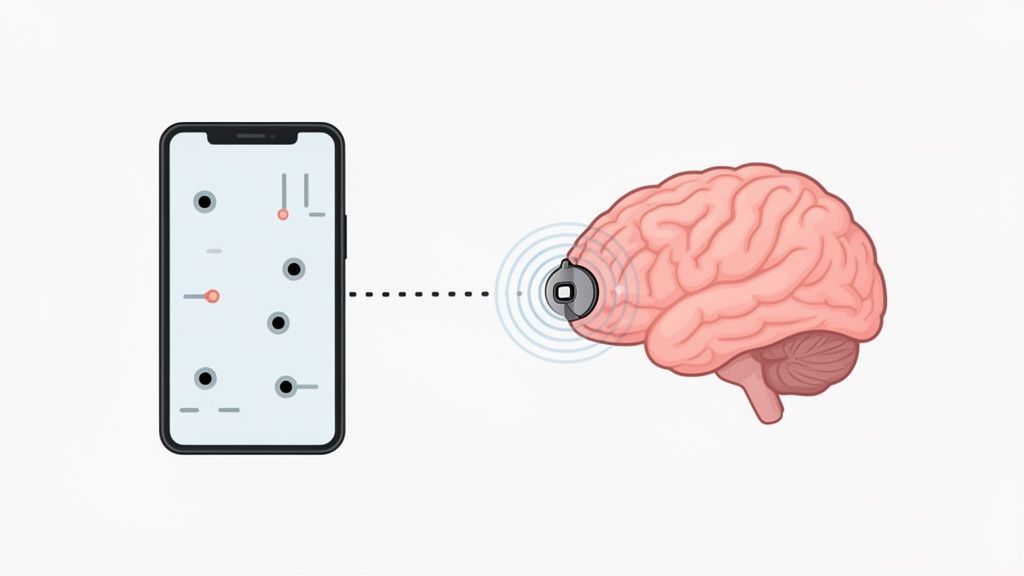
These approaches use technology to directly train and stimulate the brain. They offer non-invasive, skill-building alternatives that can work alongside—or even in place of—traditional treatments, representing a major shift toward personalized, on-demand support that fits into modern life.
What Are Digital Therapeutics?
Imagine your doctor prescribing a video game. That’s the core idea behind digital therapeutics. DTx are essentially "prescription apps"—software-based interventions that have been seriously tested in clinical trials and cleared by bodies like the FDA to treat specific conditions.
For ADHD, these aren't your average brain-training games from the app store. They are carefully designed programs that target and strengthen the neural networks responsible for attention. For example, the first FDA-approved game-based treatment for kids with ADHD challenges them with specific sensory and motor tasks that look and feel like a game.
By tackling these challenges, the user's brain is basically doing a targeted workout. Over time, this consistent training can improve cognitive control and lessen ADHD symptoms. It’s an approach that turns treatment into an interactive, rewarding experience on a tablet or smartphone.
Digital therapeutics transform treatment from a passive pill you take into an active skill you build. They offer a structured, evidence-based way to exercise your brain's attention systems, track your progress, and gain a real sense of mastery over your focus.
This makes DTx a fantastic option for families looking for non-medication alternatives or for adults who want a flexible, data-driven tool to boost their existing treatment plan.
How Does Neuromodulation Work?
Neuromodulation takes a more direct route to influencing brain activity. You can think of it as a highly targeted personal training session for the specific brain regions that manage executive function. Techniques like Transcranial Magnetic Stimulation (TMS) use magnetic fields to gently stimulate nerve cells in parts of the brain that tend to be underactive in people with ADHD.
Another key method is neurofeedback, which is a bit like giving your brain a mirror. During a session, sensors track your brainwave activity while you do something like watch a video or play a simple game. The screen gives you real-time feedback—the video plays smoothly when your brain is producing focused brainwaves but dims or stops when you get distracted.
This instant feedback loop teaches your brain to recognize and regulate its own states of attention. After multiple sessions, you learn how to produce and sustain the brainwave patterns associated with focus and calm. You can get a deeper look at how this works in our guide on neurofeedback therapy for ADHD.
These brain tech tools offer some clear advantages:
- Non-Invasive: Both TMS and neurofeedback are done externally, with no surgery or medication required.
- Targeted Action: They can zero in on the specific neural circuits underlying ADHD symptoms.
- Lasting Change: The goal is to create durable changes in brain function, helping you build skills that stick around.
Who Is a Good Candidate for These Technologies?
Digital therapeutics and neuromodulation aren't a one-size-fits-all fix, but they can be an excellent new treatment for ADHD for the right person.
A good candidate might be someone who:
- Prefers to avoid or reduce medication.
- Has struggled with side effects from ADHD medications.
- Wants to add another tool to their existing medication or therapy plan.
- Learns well with structured, technology-based feedback.
As these tools become more advanced and accessible, they are changing the game for ADHD care. They give individuals more control and more options than ever before to actively shape their brain's performance and build a life with better focus.
Getting an Accurate Diagnosis to Unlock New Treatments
All the exciting breakthroughs in medication, therapy, and technology hinge on one critical first step: an accurate diagnosis. Pursuing a new treatment for ADHD without a proper evaluation is like trying to use a sophisticated GPS without knowing your starting point. A quick online quiz might point you in a general direction, but a comprehensive assessment provides the precise coordinates needed for a successful journey.
This process is far more than a formality. It’s a deep, collaborative exploration of your life experiences, challenges, and strengths. A proper diagnosis validates your struggles, gives you a clear framework for understanding your brain, and most importantly, unlocks the door to personalized, effective support. It’s the key that allows you to access everything from medication to vital workplace accommodations.
The Modern Diagnostic Process
Forget the old stereotype of a quick checklist in a doctor's office. A modern, thorough ADHD evaluation is a detailed investigation conducted by a qualified psychologist. The goal isn't just to check boxes; it's to build a complete picture of who you are, how your brain works, and how your symptoms show up in the real world.
This process usually involves a few key components:
- In-Depth Clinical Interviews: This is simply a guided conversation about your history, from early childhood experiences to current challenges at work, school, or home. Your clinician will ask about your patterns of attention, organization, emotional regulation, and impulsivity.
- Validated Screening Tools: You'll complete standardized, evidence-based questionnaires. These self-report measures provide objective data that helps the clinician compare your experiences to established diagnostic criteria.
- Review of External Records: Sometimes, looking at old report cards or getting feedback from a trusted partner or family member can add valuable context to the evaluation.
A skilled diagnostician pieces all this information together to see the full picture. They also make sure other conditions that can mimic ADHD symptoms, like anxiety or trauma, are carefully considered. For a detailed breakdown, explore our guide on how to get diagnosed with ADHD.
Why Telehealth Evaluations Are So Effective
In the past, getting this level of assessment often meant long waits and multiple trips to a specialist's office. Today, telehealth has made high-quality diagnostic services more accessible than ever before. Conducting evaluations via secure video calls offers tremendous benefits, especially for the ADHD community.
A virtual evaluation allows you to be assessed in the comfort and familiarity of your own home. This significantly reduces the stress and anxiety that can come with a clinical setting, leading to a more relaxed and authentic conversation with your psychologist.
This convenience is a game-changer for busy parents, professionals, and anyone who finds new environments overwhelming. For instance, the Sachs Center’s comprehensive two-hour virtual evaluations ($790) are designed to fit into your life, removing barriers that have historically kept people from seeking the clarity they deserve.
This shift toward accessible care is right on time. Projections show that by 2025, over 404 million adults worldwide will be navigating ADHD symptoms, an increase from 366 million in 2020. This growth isn't an "epidemic" but a reflection of better awareness and improved diagnostic tools, especially for underserved groups. Discover more insights about these ADHD statistics on jilljohnsoncoaching.com.
Diagnosing Masked ADHD in Adults
One of the biggest hurdles in adult ADHD diagnosis is "masking." This is especially common in women and BIPOC individuals, who often develop sophisticated coping mechanisms to hide their symptoms and fit in. They might look highly organized on the surface, but underneath lies a constant, exhausting effort to keep everything from falling apart.
A specialist trained in neurodiversity knows how to look beyond the surface. They recognize that for many adults, ADHD doesn't look like classic hyperactivity. Instead, it might show up as:
- Intense internal restlessness and anxiety.
- Chronic feelings of being overwhelmed.
- Severe procrastination followed by frantic bursts of effort.
- Difficulty with emotional regulation and rejection sensitivity.
Identifying these nuanced presentations requires real expertise. At the Sachs Center, our psychologists specialize in recognizing these highly masked profiles, ensuring everyone receives an accurate diagnosis that truly reflects their lived experience. Following an evaluation, a detailed diagnostic report ($1170) can serve as your official document to secure medication, therapy, or the workplace accommodations you need to thrive.
Creating Your Personalized ADHD Treatment Plan
Finally getting an ADHD diagnosis can feel like a huge moment of clarity. It puts a name to experiences you’ve lived with for years and, most importantly, gives you a starting point. With this new understanding, you can start building a strategy that combines the most effective new ADHD treatments into a plan that actually works for you.
This isn't about finding a single magic bullet. Think of it more like assembling a personalized support team where every member has a specific, crucial role. Your plan might pair a long-acting medication to create a stable foundation of focus with CBT to build practical skills for organization and emotional regulation.

The goal is to create a dynamic, multimodal approach that addresses your unique challenges and empowers you to build on your strengths.
Advocating for Your Needs
When you meet with your doctor, remember you’re not just a passive recipient of care—you're an active partner. To make this conversation as productive as possible, it helps to come prepared to advocate for yourself and explore the full range of possibilities.
Here are a few tips to help guide that discussion:
- Document Your Symptoms: Keep a simple log of your biggest daily struggles. Make a note of when you have a hard time with focus, organization, or emotional frustration.
- Discuss Your Lifestyle: Be open about your work demands, family life, and daily routines. A medication that needs multiple doses a day just might not work for a busy professional's schedule.
- Ask Specific Questions: Don't be shy. Ask directly about the pros and cons of long-acting stimulants versus non-stimulants, or how therapy could complement medication.
- Share Your Goals: Explain what you hope to get out of treatment. Is your main goal to perform better at work, have calmer interactions at home, or simply feel less overwhelmed by life?
When you clearly communicate your experiences and what you're aiming for, you help your provider tailor a plan that fits your real-world needs.
Your treatment plan should be a living document, not something set in stone. It should evolve as you learn what works for you, with regular check-ins to adjust the strategy as your life and needs change.
The Role of Comprehensive Testing for Accommodations
For many students and professionals, thriving with ADHD also means getting the right academic or testing accommodations. While a standard diagnostic report is often enough to get support at work, high-stakes exams like the SAT, GRE, or GMAT require a much higher level of documentation.
This is where comprehensive neuropsychological testing becomes essential. Here at the Sachs Center, this in-depth evaluation (costing $5995) goes far beyond a standard diagnosis. It assesses cognitive abilities, processing speed, and executive functioning in great detail, giving you the robust evidence that testing boards require to grant accommodations like extended time.
This kind of testing is a specific tool for a specific job. It provides the official key needed to unlock a level playing field, ensuring your performance reflects your knowledge, not your neurotype. Armed with the right diagnosis and a personalized plan, you can build a life where you not only manage ADHD but truly thrive.
Your Questions About New ADHD Treatments, Answered
Thinking about modern ADHD care can bring up a lot of questions. It's totally normal. Let's walk through some of the most common ones we hear about the latest, most effective treatments available today.
Are New Digital Therapeutics for ADHD Covered by Insurance?
This is a big one, and the honest answer is: it’s still a mixed bag. The good news is that coverage for digital therapeutics (DTx) is getting better all the time. Some insurance providers are starting to cover certain FDA-approved options, but you absolutely have to check with your specific plan to be sure.
Many DTx companies know this is a hurdle, so they often offer direct pricing or have assistance programs to make their tools more accessible.
How Do I Choose Between a Stimulant and a Non-Stimulant?
This is a deeply personal decision, and one you'll make in partnership with your doctor. For many people, long-acting stimulants are highly effective and are often considered a first-line treatment. They just work well.
However, a non-stimulant might be a much better fit if stimulants give you intense side effects, if you also deal with anxiety, or if you have a history of substance use.
The key takeaway here is that both medication types are valid tools in your ADHD toolkit. The right one for you comes down to your unique brain chemistry, lifestyle, and what you want to achieve with treatment. This is exactly why a thorough, professional diagnostic evaluation is so critical.
Can I Get a Reliable ADHD Diagnosis and Treatment Entirely Online?
Yes, you absolutely can. Reputable telehealth providers, like us here at the Sachs Center, use licensed psychologists and clinically validated assessment tools to conduct comprehensive evaluations completely online.
Once you have a diagnosis, you can use your diagnostic report to work with online prescribers and therapists. It’s a game-changer for making quality care accessible, no matter where you are.
As new ADHD treatments become available, getting the word out to patients is crucial. If you're curious about how healthcare providers connect with their communities, you can explore patient-focused digital marketing strategies for healthcare.
What Is the Difference Between ADHD Coaching and Therapy?
While they can feel similar, they have different goals. Therapy—especially Cognitive Behavioral Therapy (CBT)—is fantastic for digging into the emotional and psychological side of ADHD. It helps with things like anxiety, rejection sensitivity, and building healthy coping mechanisms.
ADHD coaching, on the other hand, is usually more forward-looking and action-oriented. The focus is on setting practical goals and creating real-world systems for things like organization, time management, and productivity. Both are incredibly valuable supports.
If you're ready to get clear on your own journey, the specialists at Sachs Center are here to help. Our telehealth evaluations provide the accurate diagnosis you need to unlock the new ADHD treatment that's right for you. Book your virtual evaluation today.
