

A telehealth ADHD diagnosis is a complete clinical evaluation done remotely by a licensed professional. Using a mix of video calls, proven digital questionnaires, and structured interviews, it offers a real and accessible way to finally get clarity on adult ADHD. This guide will walk you through the process, how accurate it is, and what you can do to prepare.
The Shift to Online ADHD Diagnosis
The way we get mental healthcare has changed in a big way, and virtual services have become a lifeline for many. A telehealth ADHD diagnosis isn't some niche alternative anymore; it's a mainstream path for people who want to understand their neurotype. This approach takes all the essential parts of a traditional, in-person assessment and delivers them through a secure and convenient digital platform.
You can think of it as bringing the specialist's office right to your living room. Instead of dealing with traffic and sitting in waiting rooms, you connect with a qualified psychologist from a place where you feel comfortable. But this shift isn't just about making things easier—it's about making care accessible. For lots of people, especially those living in rural areas or juggling hectic schedules, telehealth removes huge barriers to getting a proper evaluation.
Why Virtual Assessments Are Gaining Momentum
The growing demand for more flexible mental health services has really pushed this trend forward. The latest data shows just how big this change has become.
According to CDC data from 2023, around 46% of US adults with ADHD have used telehealth services to manage their condition. It's telling that about 8.9% received their entire diagnosis just through telehealth, while another 9.5% used a hybrid of online and in-person care. You can find more on these trends directly from the CDC.
These numbers make it clear: a huge number of people now depend on virtual care for both diagnosis and ongoing treatment. The process is built to be just as in-depth as an in-person one, focusing on getting a full picture of your life experiences, symptoms, and challenges. At the Sachs Center, our telehealth evaluations are specifically designed to be comprehensive, ensuring that we can accurately identify even highly masked presentations of ADHD.
The journey toward a telehealth ADHD diagnosis usually follows a well-defined path, from your initial questions to long-term support.
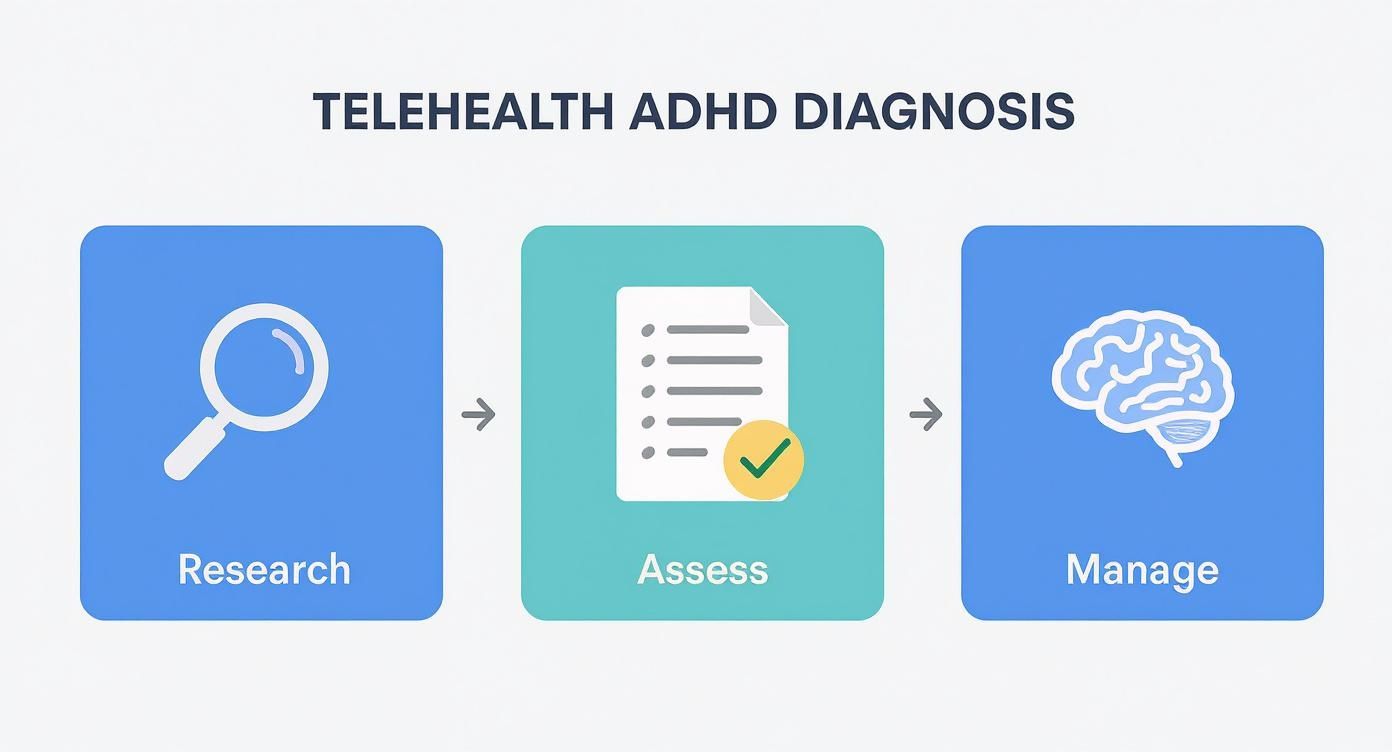
This workflow makes sure that every step, from the first contact to post-diagnosis guidance, is handled with clinical precision and genuine care.
Understanding the Broader Context of Neurodiversity
It’s also really important to know that ADHD often shows up alongside other conditions, like Autism Spectrum Disorder (ASD). The principles of a solid telehealth evaluation can be applied to other neurodevelopmental assessments, too. For example, the same structured, evidence-based method we use for an ADHD diagnosis is also at the core of identifying ASD remotely. This consistency means we maintain high standards across different types of neurodivergent evaluations, offering reliable and compassionate care no matter the focus.
If you're interested, you can learn more about our approach to a telehealth autism diagnosis, which is built on many of these same foundational elements.
What to Expect in a Virtual ADHD Assessment

Starting a telehealth ADHD diagnosis can feel a little mysterious, but the process is surprisingly straightforward and thorough. Think of it like a detective carefully gathering clues to solve a case. Each step is designed to build a complete and accurate picture of your experiences, making sure the final conclusion is solid.
The journey begins simply, with logistics. You'll start by filling out some initial intake forms online and scheduling your virtual appointment. This first step helps the clinical team get a sense of your main concerns and gather key background info before you even meet.
The Foundation: Gathering Evidence
After you're scheduled, the next step involves completing a series of digital questionnaires. These aren't your average online quizzes; they are evidence-based, validated assessment tools used by clinicians all over the world.
A couple of common ones you might see include:
- The Adult ADHD Self-Report Scale (ASRS): This is a questionnaire built to screen for adult ADHD symptoms based on the official criteria in the Diagnostic and Statistical Manual of Mental Disorders (DSM-5).
- The DIVA-5 (Diagnostic Interview for ADHD in Adults): This is a more structured interview tool that helps explore symptoms and how they've impacted you across different life stages, from childhood right up to today.
These tools give us the crucial quantitative data—the "what" and "how often" of your symptoms. They create a solid foundation of evidence, helping the psychologist spot patterns that might not pop up in a regular conversation. This data-driven approach is a big part of what makes a professional telehealth ADHD diagnosis so thorough and reliable.
The Core of the Assessment: The Clinical Interview
The heart of the entire evaluation is the live clinical interview, held over a secure video call. This isn't just a casual chat. It's a deep, structured conversation with a licensed psychologist or psychiatrist who specializes in neurodiversity.
During this session, which usually lasts about two hours, the clinician will dive into your life experiences. They’ll ask about your childhood, school history, work performance, and social relationships. The goal is to understand how potential ADHD traits have shown up and impacted you throughout your entire life.
A skilled clinician pieces together the story from your intake forms, validated measures, and the live interview to form a diagnostic impression. This approach ensures that the diagnosis isn't based on a single data point but on a convergence of evidence.
This conversation provides the essential context—the "why" and "how"—that questionnaires just can't capture. The psychologist is trained to pick up on the subtleties in your answers and connect dots you may not have noticed yourself. For anyone looking for a comprehensive ADHD assessment for adults, this live interaction is absolutely the most critical piece.
Synthesizing the Clues and Delivering the Report
Once the interview wraps up, the clinician's work isn't done. They head behind the scenes to integrate all the information they've gathered: your self-reported history from the intake forms, the scores from the validated questionnaires, and the rich, detailed story from the clinical interview.
This is where the diagnostic picture really comes into focus. The psychologist analyzes all the "clues" to see if your experiences line up with the established criteria for ADHD. They also rule out other possible explanations for your challenges to land on an accurate conclusion. For clinicians, keeping meticulous records here is vital; tools like healthcare documentation automation solutions can help make this critical part of the evaluation more efficient.
Finally, you’ll receive the results of your assessment. At the Sachs Center, we provide this as either a formal diagnostic letter or a more detailed four-page report, depending on what you need. This document sums up the findings and gives you the official diagnostic clarity you might need for treatment, medication, or accommodations at work. It's the final piece of the puzzle, giving you a clear path forward.
How Accurate Are Online ADHD Diagnoses?
It’s the biggest question on everyone’s mind: can a telehealth ADHD diagnosis really be as accurate as an in-person one? It’s a completely fair question, especially when you’re looking for definitive answers about your own neurotype.
The good news is that a well-structured virtual assessment isn’t just a convenient alternative—it’s a clinically validated method. The secret lies in understanding the difference between a superficial online quiz and a comprehensive clinical evaluation conducted by an expert.
A legitimate telehealth assessment holds itself to the same rigorous standards as a traditional one. It combines validated questionnaires, a deep dive into your personal history, and a live, in-depth interview with a licensed psychologist. This layered approach ensures the diagnosis is built on a convergence of evidence, not just a single, isolated data point.
Separating Clinical Rigor from Online Quizzes
The accuracy of an online ADHD diagnosis depends entirely on the process. Think of it this way: a simple online screener is like a weather app telling you there’s a chance of rain. It gives you a hint, but it’s far from a detailed meteorological report.
A comprehensive telehealth evaluation, on the other hand, is that full report from the meteorologist. It involves:
- Validated Measures: Using scientifically tested and reliable tools like the ASRS and DIVA-5.
- Clinical Expertise: A licensed psychologist doesn't just collect data; they interpret it, ask clarifying questions, and use their clinical judgment to see the complete picture.
- Longitudinal History: The clinician pieces together your entire life story—from childhood school reports to current workplace challenges—to spot the long-standing patterns consistent with ADHD.
This thorough methodology is what separates a real medical diagnosis from a quick self-assessment. It’s designed to be just as robust as an office visit, giving you a conclusion that’s both reliable and defensible.
Scientific Evidence Backs Virtual Assessments
It’s not just a matter of opinion—recent research confirms that modern telehealth protocols stand up to scientific scrutiny. Far from being a less-effective option, studies show that virtual assessments can be highly accurate in identifying ADHD. This is often measured using two key concepts: sensitivity (correctly identifying who has ADHD) and specificity (correctly identifying who does not).
A landmark 2025 peer-reviewed study put an asynchronous online ADHD diagnostic tool to the test against traditional face-to-face clinical interviews. The results were compelling. The online assessment showed a sensitivity rate of 80.6% and an impressive positive predictive value of 94.9%, meaning a positive diagnosis was extremely likely to be correct.
Perhaps most striking, its false-positive rate was just 12%, which was significantly lower than the 56% false-positive rate found in the standard in-person interviews used in the study. You can explore the full findings of this pivotal study for more details.
This kind of evidence is critical. It shows that a structured, evidence-based telehealth ADHD diagnosis isn't just a matter of convenience; it’s a clinically sound process that can deliver results with a high degree of confidence.
At the Sachs Center, our virtual evaluations are built on these exact principles. We combine validated instruments with expert clinical interviews to ensure every diagnosis is as thorough and accurate as it can be. We specialize in identifying ADHD even in highly masked individuals, where picking up on subtle patterns is key—a task that demands a precise and detailed methodology, whether it's happening online or in person. Our commitment is to give you the diagnostic clarity you deserve, backed by a process you can trust.
Deciding between a telehealth ADHD diagnosis and a traditional in-person assessment can feel like a big choice. There's no single "right" answer—it really comes down to your unique situation, your needs, and even your comfort level with technology.
For many, the sheer flexibility of telehealth is a game-changer. If you're a busy professional, a parent juggling a dozen schedules, or live somewhere with few local specialists, a virtual evaluation removes huge barriers. It can turn what might have been an entire day of travel and waiting room time into a focused, two-hour video call from your own living room.
When Telehealth Is an Ideal Fit
So, when does a telehealth evaluation really shine? It's a powerful and effective option for a lot of people. See if any of these scenarios sound familiar.
You might be a great candidate for a telehealth ADHD diagnosis if:
- Your schedule is already packed: Professionals and parents often can't just find a random four-hour block for an in-person appointment. Telehealth offers the kind of scheduling flexibility that actually fits into a busy life.
- You live in a rural or underserved area: Access to specialists in neurodiversity can be pretty thin outside of major cities. Virtual care brings that expertise right to your doorstep, no matter your zip code.
- In-person visits feel stressful: For some, a clinical office environment is just plain overwhelming. Getting assessed in a familiar, comfortable space can lower the anxiety and lead to a much more open and honest conversation.
This approach is also especially well-suited for adults who suspect their ADHD symptoms have gone unnoticed for years.
Many adults—particularly women and BIPOC individuals—have become masters at "masking" their symptoms to get by. A skilled telehealth psychologist who is trained to spot these nuanced presentations can effectively identify these subtle patterns during a structured virtual interview.
At the Sachs Center, our clinicians are experts at recognizing these highly masked presentations. We make sure your life experiences are understood with the depth and sensitivity they deserve. Frankly, the virtual format often helps people feel more at ease, making it easier to open up about these personal and often long-hidden struggles.
When an In-Person Evaluation Is a Better Choice
While telehealth is a fantastic option, it isn't the perfect solution for every single person. Some situations just require the specific tools and environment that only an in-person assessment can offer.
An in-person evaluation is probably the better way to go if:
- You have a complex medical history: If there are co-occurring conditions like a past traumatic brain injury, seizure disorders, or other complex neurological issues in the mix, an in-person assessment allows for a more hands-on medical examination to rule out other causes for your symptoms.
- You need extensive neuropsychological testing: If you're seeking accommodations for standardized tests like the SAT, GRE, or GMAT, a full neuropsychological battery is often required. While some parts of this can be done remotely, these comprehensive evaluations are typically done in person to make sure the administration is standardized.
- Technology is a major hurdle: You really do need a stable internet connection and to be comfortable with video calls for a telehealth appointment to work well. If reliable tech is a concern, an in-person visit will be a much smoother and less frustrating experience.
Ultimately, choosing a telehealth ADHD diagnosis comes down to balancing accessibility and comfort against the need for specialized, in-person testing. By thinking through these factors, you can pick the diagnostic path that best aligns with your personal and medical needs, setting yourself up for a successful and insightful evaluation.
Comparing Telehealth and In-Person Assessments
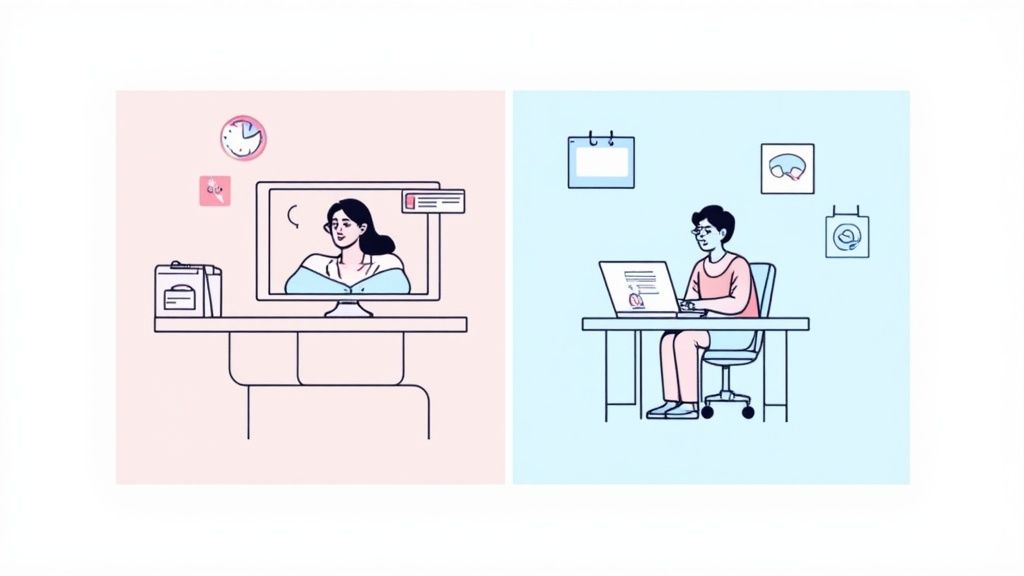
Choosing between a telehealth ADHD diagnosis and a traditional in-person assessment can feel like a huge decision. The truth is, there's no single "best" answer that fits everyone. The right choice really comes down to your unique circumstances, needs, and what you're most comfortable with.
Let’s move beyond a simple pros-and-cons list and really dig into the key differences. This will help you make a choice that feels right for you. The big factors that usually tip the scales are convenience, cost, wait times, and the nature of the evaluation itself.
A virtual assessment gives you incredible flexibility, turning what could be a full day of travel and waiting rooms into a focused appointment from your own home. On the other hand, an in-person visit might feel more personal or be necessary for certain kinds of in-depth testing.
Accessibility and Convenience
For most people, the biggest draw of telehealth is its sheer convenience. It completely eliminates travel time, the need for childcare, and taking a whole day off work. This kind of accessibility is more important than ever as more and more adults are seeking answers about ADHD.
By 2025, it's estimated that 16.13 million adults in the United States will have ADHD, and over half of those cases are diagnosed in adulthood. This rising awareness really underscores the need for easier ways to get a diagnosis. You can explore more on the growing prevalence of adult ADHD to see the full picture.
Telehealth meets this demand head-on. It brings specialists directly to people in rural or underserved areas who might otherwise have no access to expert care. It tears down geographical barriers, making sure quality diagnostic services are available to more people than ever before.
The core trade-off often comes down to the unmatched convenience of telehealth versus the subtle, non-verbal cues that can sometimes be easier to pick up in person. For a standard evaluation, though, a skilled telehealth clinician is more than capable of building rapport and gathering all the necessary information through a well-structured virtual interview.
The goal is to weigh these things against your own life. Does the idea of a clinical setting make you anxious? Is your schedule already packed to the brim? Answering these questions can point you toward the best path.
Evaluation Depth and Clinical Nuance
A common worry is whether a virtual assessment can really capture the same depth as a face-to-face meeting. For a standard ADHD diagnosis, the answer is yes—a well-designed telehealth process is just as thorough. It uses the exact same validated questionnaires and structured clinical interview methods that are used in traditional settings.
Where it can feel different is in the personal connection. Some clinicians argue that being in the same room allows them to observe subtle non-verbal communication more easily, like a parent's fleeting look of frustration, which can add important context.
Of course, a trained telehealth psychologist is skilled at picking up on virtual cues, but the dynamic is different. This really is a personal preference. Some people feel more comfortable and open up more when speaking from their own space, while others prefer the traditional office dynamic.
Telehealth vs In-Person ADHD Diagnosis at a Glance
To help you decide which diagnostic path is right for you, we've created a direct comparison of the key factors. This table breaks things down to help you see where each method shines.
| Factor | Telehealth Diagnosis | In-Person Diagnosis |
|---|---|---|
| Convenience | High—no travel, flexible scheduling. | Low—requires travel and time off work. |
| Wait Times | Generally shorter; easier to book appointments. | Often longer, with waitlists for specialists. |
| Cost | Can be more affordable due to lower overhead. | May be more expensive; can vary widely. |
| Accessibility | Excellent for rural areas and those with mobility issues. | Limited to specialist availability in your geographic area. |
| Personal Connection | Strong rapport is possible but depends on the clinician and patient. | Can facilitate easier observation of non-verbal cues. |
| Best For | Standard ADHD evaluations, busy adults, those in remote areas. | Complex cases with co-occurring medical issues or neuropsychological testing needs. |
Ultimately, both telehealth and in-person assessments are valid paths to getting an accurate ADHD diagnosis, as long as they are conducted by qualified professionals. The "right" choice is simply the one that aligns with your practical needs, comfort level, and specific diagnostic requirements.
How to Prepare for Your Virtual Assessment
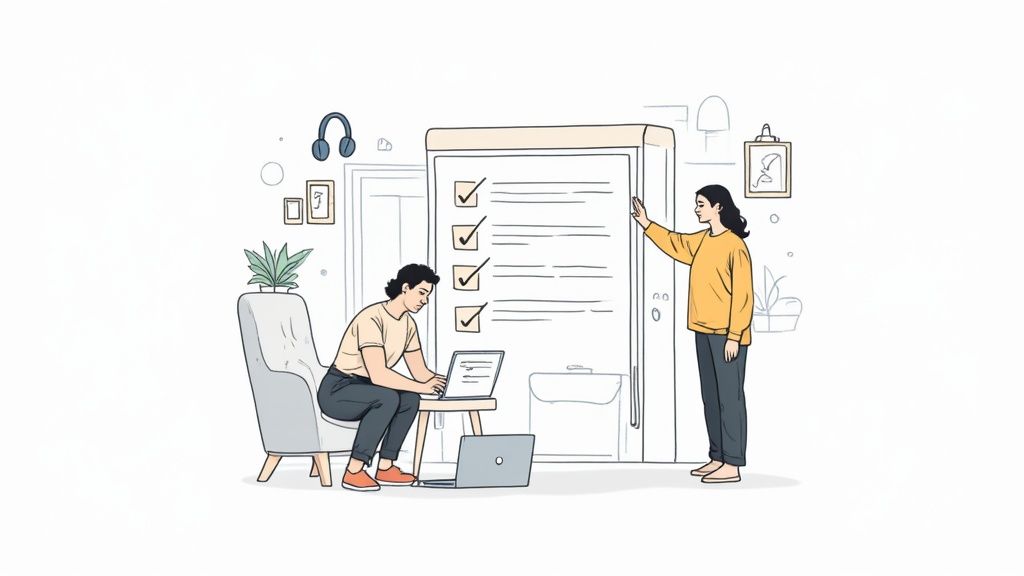
A successful telehealth ADHD diagnosis really is a team effort. While your psychologist will guide the session, a little prep work on your end can make a huge difference. It helps cut down on anxiety and ensures you get the most out of your appointment.
Think of it like gathering your notes before meeting with a detective. The more organized and clear your information is, the easier it is for the clinician to see the full picture. This way, you become an active participant in your own diagnostic journey.
Create Your Optimal Environment
It might sound surprising, but your physical space plays a massive role in the quality of a virtual assessment. The goal is to create a space that feels as private and focused as a clinical office, but with the comfort of being at home.
Before your appointment, try to:
- Find a private, quiet space. Pick a room where you can shut the door and won't be interrupted by family, pets, or roommates. Confidentiality is key to having an open, honest conversation.
- Minimize distractions. Silence notifications on your phone and computer, close out of extra browser tabs, and just make sure you won't be disturbed for the full two-hour evaluation.
- Test your tech. A day or two beforehand, do a quick check to make sure your internet connection is solid and your camera and mic are working on whatever platform you’ll be using, like Zoom or Google Meet.
A calm, reliable setup means you can focus completely on the conversation with your psychologist, without stressing about technical glitches or who might walk in.
Gather Your Personal History
To build a complete diagnostic picture, your clinician needs to understand your story. Having some key documents and notes ready beforehand can help you recall important details when you’re on the spot.
Your personal history provides the context for your current challenges. Things like old school reports, performance reviews, and even journals can offer objective evidence of long-standing patterns related to focus, organization, and impulsivity.
Start by collecting any relevant materials you can get your hands on. This could include:
- Childhood school report cards or any notes from teachers.
- Past psychological evaluations or notes from previous therapy.
- Work performance reviews, especially any that mention struggles with deadlines, organization, or similar issues.
- A personal timeline of when you first noticed symptoms and how they've affected different parts of your life (school, work, relationships).
It’s also incredibly helpful to spend some time just reflecting on your experiences. Jot down specific, real-world examples of how you see suspected ADHD traits showing up day-to-day. Instead of just saying, "I'm disorganized," think of an example like, "Last week, I missed a credit card payment because I forgot where I put the bill, even with three reminders." That kind of detail is gold for an accurate diagnosis. For a deeper dive into the evaluation itself, our guide on how to get tested for ADHD offers more insights.
Of course. Here is the rewritten section, crafted to sound like a human expert while following all your specific requirements.
Frequently Asked Questions About Telehealth ADHD Diagnosis
Thinking about a virtual ADHD evaluation is a big step, and it's totally normal to have practical questions. Let's walk through some of the most common ones we hear, so you can feel clear and confident about what to expect.
How Much Does a Telehealth ADHD Diagnosis Cost?
The price for a virtual ADHD evaluation can swing quite a bit, generally landing somewhere between $790 and over $1,200. The final number really depends on the provider and how comprehensive their process is.
The most important thing is to know exactly what you’re getting for that fee. Before you commit, ask if the price tag includes everything:
- The one-on-one clinical interview with the psychologist.
- All the time it takes to score and interpret the assessment tools.
- A formal diagnostic letter or a more detailed report.
- A follow-up appointment to go over the results and talk about what comes next.
Since most in-depth evaluations are paid out-of-pocket, it’s a good idea to call your insurance company first. You’ll want to find out what, if anything, they might reimburse.
Will I Receive a Formal Report for School or Work?
Absolutely. Any legitimate provider offering a telehealth ADHD diagnosis will provide you with a formal document. At the Sachs Center, for example, this could be a diagnostic letter or a more thorough four-page report.
This document breaks down the entire evaluation process, your history, the clinical findings, and the final diagnostic conclusion based on official DSM-5 criteria. This is usually all you need to request accommodations, but it never hurts to double-check with your school or employer about their specific documentation rules beforehand.
What Happens After a Diagnosis Is Confirmed?
Getting a diagnosis is a huge first step, but it’s definitely not the end of the road. Once it's confirmed, your provider should sit down with you to map out a personalized plan.
A diagnosis isn't just a label; it's a roadmap. The goal is to build a support system that helps you leverage your strengths and manage your challenges effectively.
This plan is rarely just one thing. It’s usually a mix of different strategies tailored to you. Common next steps often include medication management (which might mean getting a referral), specialized therapy like Cognitive Behavioral Therapy (CBT) for ADHD, executive function coaching, and finding practical, everyday lifestyle adjustments that work for you.
Ready to gain clarity and take the next step on your neurodivergent journey? The specialists at Sachs Center are experts in telehealth ADHD and Autism evaluations. Book your comprehensive virtual assessment today and get the answers you deserve.
