

If you or someone you care about has ADHD, you already know that friendships can feel… complicated. It’s not about being a "bad friend." It’s about learning to navigate the world with a brain that’s wired a bit differently. The first real step toward building stronger, more authentic connections is understanding exactly how core ADHD traits impact social interactions.
Why Friendships Feel Different with ADHD
For so many people with ADHD, friendships can be a strange mix of intense connection and baffling disconnection. This isn't because of a lack of caring—it's a direct result of how the brain functions.
Imagine the ADHD brain as a high-performance engine that doesn't have a predictable regulator. It can be incredibly fast and brilliant one moment, but it’s also prone to sudden stalls and unexpected surges. This neurological wiring has a direct impact on the very skills we need for friendships to run smoothly. These challenges are not character flaws; they are symptoms of neurodivergence.
Core ADHD Traits in Social Settings
Several key traits of ADHD create noticeable patterns in friendships:
- Impulsivity: This might look like interrupting a friend mid-story. It's not rudeness—it's a sudden surge of excitement and a fear of losing the thought before it vanishes. Impulsivity can also lead to enthusiastically making plans and then completely forgetting about them later.
- Emotional Intensity: With ADHD, emotions often feel bigger and arrive much faster. A minor disagreement could trigger a surprisingly strong reaction, which can be confusing for friends who experience their emotions on a more moderate scale. This is often tied to a heightened sensitivity to perceived criticism, which you can learn more about in our guide to Rejection Sensitive Dysphoria.
- Inattentiveness: This isn’t a choice to not listen. It’s the brain’s struggle to filter out all the other stimuli in the environment. This can cause someone to zone out during a conversation or miss an important detail, like a friend’s birthday, even when they deeply value the relationship.
When we reframe these behaviors as the outcome of a person's neurology instead of personal failings, we create space for empathy and genuine connection. The focus shifts from blame to understanding and, ultimately, to problem-solving.
Recognizing this foundation is everything. For a deeper look into the emotional experiences that can affect social skills, you might find valuable insights in resources focused on understanding emotions for neurodivergent children and SEN learners.
Once we see things through this compassionate lens, we can start exploring actionable strategies that work with the ADHD brain, not against it. This is how we build friendships that are not only sustainable but also deeply rewarding.
Navigating Social Worlds in Childhood and Teen Years
The path to building lasting friendships is rarely a straight line. For kids and teens with ADHD, it can feel more like navigating a maze without a map. The unwritten rules, lightning-fast social cues, and back-and-forth of conversation are tough when your brain is wired differently. This isn't about not wanting to connect; it's about facing unique hurdles during some of the most critical years of development.
On the playground, a young child with ADHD might be the one who gets so swept up in the excitement of a game that they barrel past the nuances of taking turns. Their incredible enthusiasm, a true gift, can sometimes lead to impulsive actions that disrupt the group's flow and leave peers feeling frustrated.
As they grow into teenagers, the social world gets even more complicated. So much communication becomes unspoken, relying on things like tone in a text message or the complex dynamics of a group chat. A teen with ADHD might struggle to track multiple conversations or miss the subtle cue that a one-word answer comes across as cold, creating friction they never intended.
How ADHD Friendship Challenges Evolve
The core challenges of ADHD don't go away, but they certainly change their appearance as kids get older. What looks like physical impulsivity in a seven-year-old might look like interrupting a friend's story in a seventeen-year-old.
This table breaks down how those challenges often shift between childhood and the teen years.
ADHD Friendship Challenges by Age Group
| Challenge Area | How It Appears in Childhood | How It Appears in Teen Years |
|---|---|---|
| Impulsivity | Physically interrupting games, grabbing toys, difficulty waiting for a turn to speak. | Verbally interrupting conversations, sending impulsive texts, making social plans without thinking through consequences. |
| Inattentiveness | Seeming to "zone out" during play, missing instructions for a game, easily distracted by the environment. | Drifting off during one-on-one conversations, forgetting important dates or details a friend shared, difficulty following group chat threads. |
| Emotional Regulation | Having big, explosive reactions to small problems like losing a game or feeling left out. | Experiencing intense mood swings, overreacting to perceived slights, struggling with Rejection Sensitivity Dysphoria (RSD). |
| Executive Function | Forgetting to bring things for a playdate, difficulty organizing a shared activity, struggling with multi-step games. | Trouble initiating hangouts, being consistently late, forgetting to reply to messages, leading to friends feeling ignored. |
Understanding this progression is key. It helps us see that a teen's "flakiness" isn't a character flaw—it's often the same executive function challenge that made them forget their lunchbox in second grade, just showing up in a new, more complex social context.
The Amplified Sting of Rejection
For many with ADHD, social missteps don't just sting—they can feel absolutely devastating. This is often because of something called Rejection Sensitivity Dysphoria (RSD), an intense emotional pain triggered by the perception of being rejected, teased, or criticized.
A small thing, like not being invited to a weekend plan or seeing friends hanging out on Instagram without you, can unleash a tidal wave of shame and sadness. This isn't "being overly dramatic"; it’s a real and powerful neurological response that can make teens intensely afraid of social failure. This fear often leads them to withdraw or get defensive, which only complicates their efforts to build and maintain ADHD and friendships.
The Exhausting Work of Masking
To sidestep the pain of rejection, many kids and teens start masking. This is the conscious or subconscious effort they make to hide their ADHD traits so they can blend in with their neurotypical peers.
Masking can look like:
- Forcing themselves to stay quiet, even when their mind is buzzing with ideas.
- Carefully mimicking the social behaviors of others to seem "normal"—a process that takes a huge amount of mental energy.
- Suppressing their natural enthusiasm and energy to avoid being labeled "annoying" or "too much."
While masking might feel like a good short-term strategy, it comes at a steep price. It’s emotionally and mentally draining, often leading to burnout and a deep sense of not being your true self. The friendships formed can feel hollow, because they’re built on a carefully constructed persona, not the real person underneath. Finding practical tools is essential, which is why exploring effective social skills activities for teens can offer much-needed support.
A child with ADHD might have a deep desire to connect, but their brain's impulsivity, focus challenges, and emotional intensity can create persistent social barriers. Recognizing these are neurological differences, not character flaws, is the first step toward providing effective support.
This diagram helps visualize how these core ADHD traits directly impact social experiences.
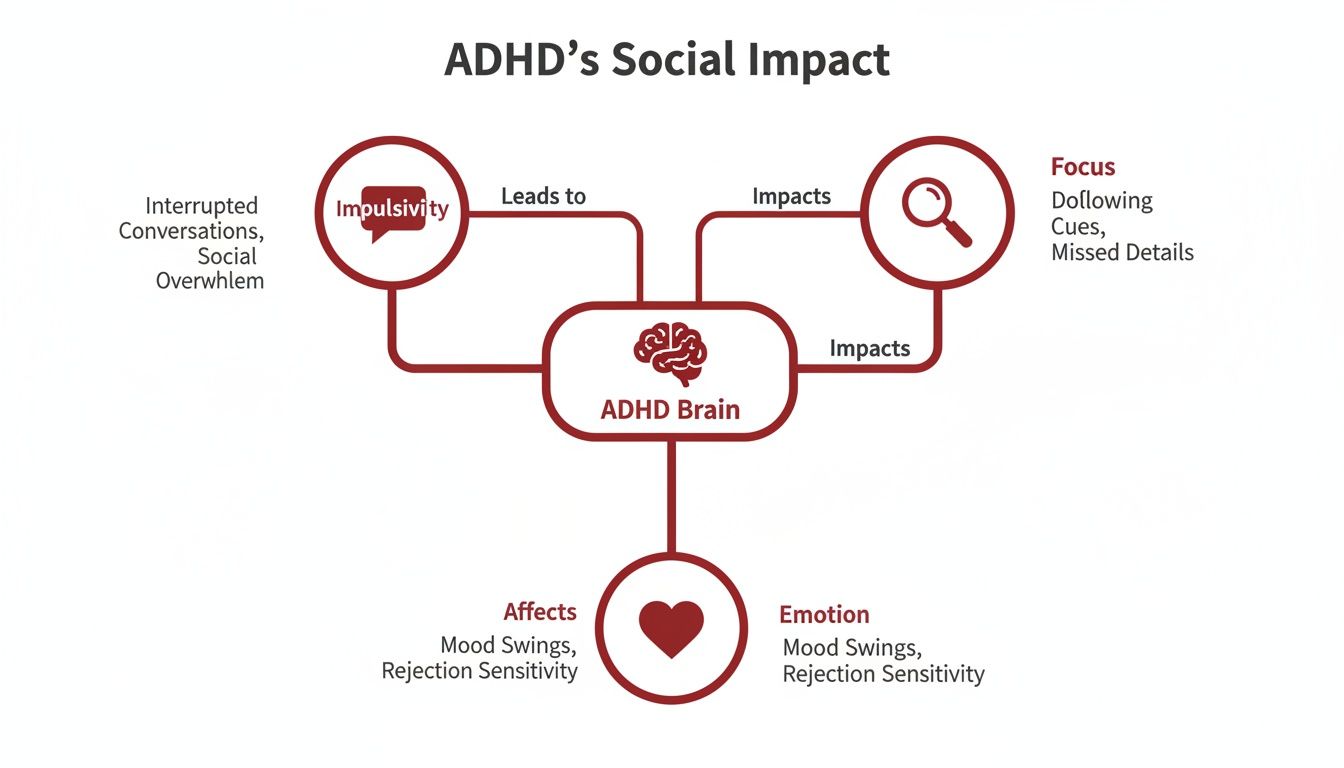
This shows how the ADHD brain's wiring for impulsivity, focus, and emotion isn't just one thing—it's a ripple effect that touches everything from conversational skills to relationship stability. These aren't isolated incidents; they are deeply interconnected patterns that shape the social world of a young person with ADHD.
Sadly, these patterns have a real, measurable impact. A meta-analysis of 24 studies found that children with ADHD consistently have fewer friends and face more peer conflict. In one stark finding, 56% of children with ADHD had no reciprocal friendships, compared to just 32% of their peers without the diagnosis. This data highlights just how critical it is to provide understanding and targeted support to help these kids build the meaningful connections they absolutely deserve.
Understanding Adult ADHD Friendship Patterns
When we leave the predictable structure of school and step into the messy reality of adult life, friendships change. They just do. But for adults with ADHD, the social struggles they faced as kids don't just disappear; they morph into new, more complex patterns that can put a strain on even the strongest bonds. Juggling careers, family, and just trying to keep it all together adds a whole new level of difficulty.
The friendship challenges tied to ADHD aren't something you simply outgrow. Research has shown that ADHD symptoms often go hand-in-hand with having fewer, lower-quality friendships. This social strain can even contribute to the higher rates of depression we see in adults with ADHD. When you throw in the pressures of work and home life, it can feel like a constant uphill battle. You can find more data on ADHD's impact on adult life at additudemag.com.
The Cycle of Intense Connection and Burnout
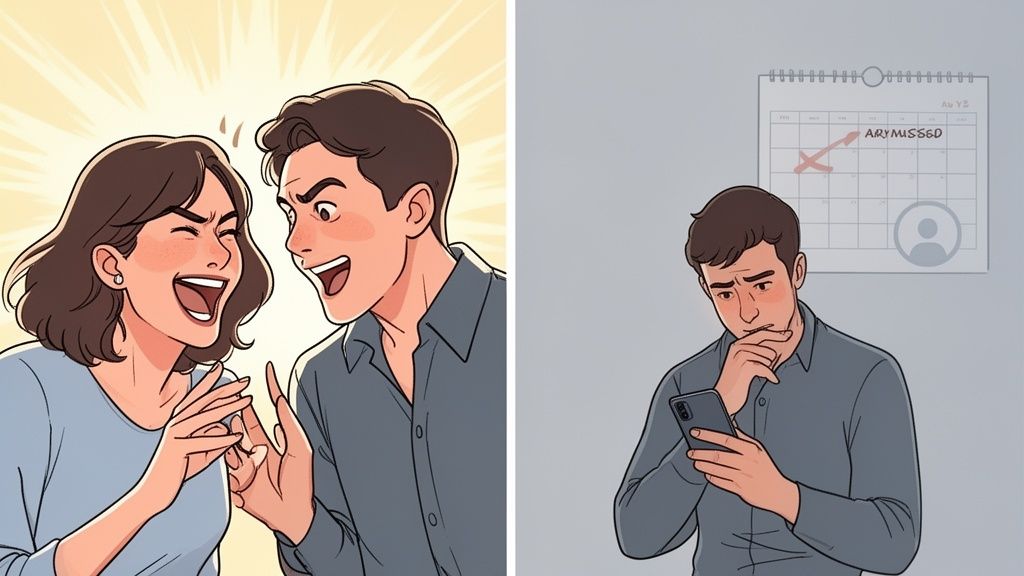
There’s a common, and often heartbreaking, pattern many adults with ADHD experience: a whirlwind of intense connection followed by a slow, confusing fade-out. When a new friendship clicks, the excitement can trigger hyperfocus—a classic ADHD trait. This leads to those amazing, deep conversations that last for hours, constant hangouts, and the feeling that you’ve finally found your person.
But once that initial rush of novelty fades, the executive function demands of ADHD creep in. Keeping up that level of contact takes consistent effort, planning, and follow-through. For the ADHD brain, those skills are often already stretched thin. The result? An unintentional withdrawal that can leave the other person feeling baffled, hurt, and abandoned.
This isn't about being insincere or not caring. It's the ADHD brain's natural rhythm: periods of intense engagement followed by a need to recharge or a shift in focus. It creates a painful "friendship burnout" cycle for everyone involved.
How Executive Function Impacts Friendships
Think of executive functions as the brain's CEO—the part in charge of planning, organizing, and managing your actions. When that CEO is inconsistent, it creates very specific and frequently misunderstood challenges in friendships.
- "Out of Sight, Out of Mind": This is a huge one. It’s a struggle with what’s sometimes called “object permanence” for people. If a friend isn’t right there in front of you or actively in your inbox, the ADHD brain might not generate the cue to reach out. It’s not that you’ve forgotten they exist; it’s that the prompt to initiate contact just doesn't fire.
- Time Blindness and Punctuality: Many adults with ADHD live with "time blindness," a genuine inability to feel the passage of time. This isn't an excuse; it's a neurological reality that leads to chronic lateness, which friends can easily misread as disrespect or a sign you don't value their time.
- Financial Impulsivity: Impulsive spending or just having a hard time tracking money can also create friction. This can show up as trouble splitting a dinner bill, forgetting to pay someone back, or making spontaneous plans that affect a friend's budget.
These patterns are especially confusing for adults who get diagnosed later in life. A late diagnosis can suddenly provide a compassionate new lens for a lifetime of social stumbles and broken connections. It reframes what felt like personal failings into understandable brain-based patterns. For many, this lightbulb moment is the first step toward building healthier relationships and may be what prompts them to look into options like social skills training for adults.
Emotional Impulses and Misunderstandings
Beyond the logistics, emotional regulation is a major piece of the puzzle in adult ADHD and friendships. Emotional impulsivity can mean saying something without thinking it through or having a reaction that seems way out of proportion to a minor issue. For the person with ADHD, that emotional storm might blow over quickly, but it can leave a friend feeling confused and rattled.
Getting a handle on these ingrained patterns isn't about making excuses. It’s about building self-awareness and self-compassion. When you can recognize how the ADHD brain shapes social behavior, you can start creating strategies that work with your neurology, not against it, to build the deep, meaningful friendships you truly want and deserve.
Actionable Strategies for Stronger Social Connections
Understanding why ADHD makes friendships tricky is the first step. Now, let’s get into the how—the practical, evidence-based tools you can start using today to build the meaningful connections you deserve.
These strategies are designed to work with your ADHD brain, not against it. Think of them as scaffolding for your executive functions and a clear roadmap for navigating communication hurdles.

This isn’t about trying to be someone you're not. It’s about building systems that let your best qualities—your empathy, creativity, and passion—shine through more consistently.
Taming the Executive Function Hurdles
Let's be honest: many of the most common friendship pain points, like forgetting to text back or missing a birthday, come down to executive function struggles. The solution is to get these tasks out of your overworked brain and into a reliable external system.
- Create Themed Calendar Alerts: Don't just set one reminder for a friend's birthday. A week before, create an alert that says, "Brainstorm gift for Sarah." Three days before, another one pops up: "Mail Sarah's gift." This turns a vague, overwhelming task into small, concrete steps.
- Use a "Body Double" for Social Admin: Drowning in 50 unread texts? Schedule a 30-minute video call with a trusted friend where you both just silently work on your own "life admin" tasks. The simple, quiet presence of another person can be just the spark of focus you need to get it done.
- Automate Your Intentions: Set recurring, low-pressure reminders to check in. A bi-weekly phone alert saying, "Send a meme to David" is way more doable than the vague, guilt-inducing mental note, "I really should reach out more."
The goal is not to achieve perfect memory but to build a reliable external brain. This frees up your mental energy for the part of friendship that truly matters: the actual connection.
By building these simple but powerful habits, you start to chip away at the shame and anxiety that comes from unintentionally letting people down. This creates more space for positive interactions and strengthens the foundation of your ADHD and friendships.
Mastering Mindful Communication
Communication blips, like interrupting or having an outsized emotional reaction, often stem from impulsivity. The trick is to build in a deliberate pause, just a tiny moment to let your thinking brain catch up with your fast-acting one.
One of the most effective ways to do this is with a simple acronym that acts as a mental speed bump.
The WAIT method is a cognitive-behavioral tool you can practice in any conversation:
- W – Why Am I Talking? (Am I adding value, asking a question, or just filling silence out of nervousness?)
- A – Am I interrupting? (Has the other person completely finished their thought?)
- I – Is what I'm about to say relevant and kind? (Will this contribute positively?)
- T – Think about the timing. (Is this the right moment, or should I hold this thought for a bit?)
Practicing this internal checklist helps train your brain to insert that micro-pause between the impulse and the action. It feels a little clunky at first, but over time, it becomes a much more natural part of your conversational rhythm.
The following table breaks down how to apply these kinds of evidence-based strategies to specific social challenges you might face.
Practical Social Strategies for ADHD Management
This table summarizes a few actionable techniques to address common ADHD-related friendship challenges, linking the problem directly to a specific, evidence-based solution.
| Common Challenge | CBT-Informed Strategy | Practical Application |
|---|---|---|
| Interrupting Others | Cognitive Rehearsal | Before a conversation, mentally rehearse pausing and letting the other person finish. Use a physical cue, like tapping your leg, as a reminder to wait. |
| Forgetting Important Dates | External Scaffolding | Use a digital calendar with multiple, advance reminders for birthdays and events. Break down tasks like "buy gift" into smaller, scheduled steps. |
| Emotional Overreactions | Self-Monitoring & Labeling | When you feel a strong emotion rising, pause to name it internally ("I'm feeling rejected right now"). This simple act of labeling can reduce its intensity and give you a moment to choose your response. |
| "Out of Sight, Out of Mind" | Structured Check-ins | Schedule a recurring, low-effort reminder to text a specific friend. For example, "Text Sarah every other Tuesday." This automates connection and keeps the friendship top-of-mind. |
Putting these strategies into practice helps bridge the gap between your intentions and your actions, making your social life feel much more manageable and rewarding.
Scripts for Explaining Your ADHD Brain
Telling friends about your ADHD can feel vulnerable, but it’s a game-changer for building real understanding. The key is to frame it as an explanation, not an excuse.
Here's a simple framework you can make your own:
- Acknowledge Their Feeling: "I totally get why you'd feel hurt when I don't respond for a few days."
- State Your Intention: "First, I want you to know our friendship means the world to me."
- Explain the ADHD Pattern (Briefly): "Sometimes my ADHD brain struggles with 'object permanence' with texts, and I get really overwhelmed. It's never about how I feel about you."
- State Your Commitment: "It's something I'm actively working on with reminders, and I really appreciate your patience with me."
This approach validates your friend’s experience while giving them context for your behavior. It opens the door for empathy instead of resentment.
Nurturing Neurodivergent-Friendly Friendships
Finally, one of the most powerful things you can do is invest your social energy wisely. While building bridges with neurotypical friends is important, there is incredible relief and joy in finding your "neurotribe"—people who just get it.
These friendships often run on a different, more flexible operating system:
- Unspoken Understanding: You don't have to explain—again—why you lost your keys or went on a 20-minute tangent about your latest hyperfixation. They've been there.
- Shared Communication Styles: Info-dumping is often a love language. Conversations can leap between five different topics and back again without anyone getting lost or judgmental.
- Reciprocal Grace: There’s a mutual, unspoken agreement that a long silence between texts isn't a friendship-ending crisis. It’s just life.
Actively look for these connections, whether through local ADHD support groups, online communities, or hobbies that attract creative minds. When you find people who appreciate your brain exactly as it is, you can stop spending so much energy on masking and start pouring it into building genuine, supportive friendships that last.
How to Support a Friend or Loved One with ADHD
Being a friend, partner, or parent to someone with ADHD is a journey. It’s one that asks for a lot of empathy, patience, and a willingness to see the world from a completely different angle. Your support can be an incredibly powerful anchor in their life, helping them navigate social hurdles and build real confidence.
The journey starts with a mental shift: learning not to take their behaviors personally. That text they forgot to reply to? The last-minute cancellation? It’s almost never a reflection of how much they value you. More often than not, it’s a symptom of an executive function challenge—like time blindness or a working memory that’s just hit its limit. Getting this distinction is the single most important step toward building a stronger, more resilient relationship.
For Friends and Partners
When it comes to adult friendships and partnerships, supporting someone with ADHD isn’t about "fixing" them. It’s about working together to create a dynamic that honors both of your needs. That means open communication and a whole lot of grace.
- Offer Explanations, Not Judgments: Instead of saying, "You're always late," which can feel like an attack, try framing it collaboratively. "I feel frustrated when I have to wait. Can we plan for you to arrive 15 minutes earlier than we need to leave?"
- Externalize Reminders: Think of yourself as an ally to their executive functions. A simple text like, "Hey, looking forward to seeing you in an hour!" isn't nagging. It’s a helpful, low-pressure cue that bridges the gap between their intention to be there and the action of getting there.
- Celebrate Their Strengths: Don’t forget what drew you to them in the first place—that incredible passion, creativity, or ability to hyperfocus on things they love. When you actively acknowledge and appreciate these unique gifts, you reinforce their value far beyond their challenges.
For Parents as Social Coaches
For parents, supporting a child with ADHD in their friendships often means taking on the role of a "social coach." Your job is to create a safe space where they can practice social skills and get a few "wins" under their belt, building their confidence one playdate at a time.
Shifting your perspective is key. A forgotten birthday isn't a personal attack; it's a symptom. An interruption isn't disrespect; it's an impulse. Seeing the neurology behind the behavior allows for compassion over conflict.
This kind of proactive coaching helps your child learn crucial skills without feeling shamed. Before a friend comes over, you can offer simple, clear instructions: "Remember to ask Liam what he wants to play first."
Afterward, you can debrief with gentle, curious questions: "What was the most fun part of playing today?" This helps them process social cues and build self-awareness, laying a strong foundation for healthy ADHD and friendships for years to come.
How Specialized Support Can Transform Social Success
Trying to navigate the complex world of friendships with ADHD can feel like you’re solving a puzzle without all the pieces. While self-help strategies are a great start, sometimes the biggest leaps forward come from targeted, professional support. This is where you find the missing pieces—the clarity, the right tools, and a community that just gets it.
Getting a formal diagnosis is often the first, most crucial step. A thorough evaluation, like the telehealth-based ADHD testing we offer at the Sachs Center, does more than just put a name to your struggles. It gives you a detailed roadmap of your specific neurological wiring. This insight is a game-changer; it helps you shift from asking, "What's wrong with me?" to understanding, "This is how my brain works, and here's what I can do about it."
With that understanding in hand, you can start building a support plan that’s actually built for you.
Tailored Therapeutic Approaches
One of the most powerful tools for improving social skills is Cognitive Behavioral Therapy (CBT). This evidence-based therapy helps you spot and reframe the negative thought patterns that so often get tangled up with social anxiety.
For someone with ADHD, that might look like challenging the belief, "If I don't get a text back immediately, my friend is mad at me." CBT gives you concrete techniques to press pause, look at the evidence, and replace that catastrophic thought with a more balanced one, like, "They could just be busy. Their response time doesn't define our friendship."
This mental shift helps dial down the anxiety and knee-jerk emotional reactions, creating more space for positive, stable friendships to grow.
Finding Your Neurotribe Through Group Support
While individual therapy is essential, there’s a unique power in shared experience. After years of feeling different, connecting with others who have similar brains can be incredibly validating. This is why specialized group programs and support circles are so important.
- For Children: Programs like 'Dragon Masters' create a structured yet fun online space where kids can practice social skills—like taking turns and reading cues—with peers who are navigating the same challenges.
- For Adults: Adult support groups, often called "neurotribes," offer a place to talk through the specific nuances of ADHD and friendships. It's where you can share strategies and feel the profound relief of being understood without having to over-explain yourself.
Finding your community isn't just about shared challenges. It’s about discovering a place where your neurodivergent traits—your creativity, passion, and unique perspective—are finally seen as strengths.
These groups are a powerful antidote to the isolation that comes with masking your true self. They provide a space to be authentic and build genuine confidence. For adults with ADHD looking for practical tools, discovering the best apps for ADHD adults can also be a big help in managing daily life, which in turn supports social connections.
A Compassionate and Strengths-Based Philosophy
Ultimately, the best kind of support is rooted in a compassionate, strengths-based approach. At the Sachs Center, our specialists understand the nuances of neurodiversity, including how ADHD can present in highly masked individuals, particularly women and girls.
We believe in looking beyond just managing deficits. Our goal is to help you understand and harness your unique strengths. This person-centered philosophy ensures that you feel seen, heard, and empowered. By combining an accurate diagnosis with targeted therapy and supportive community programs, we help people build not just better social skills, but a stronger, more authentic sense of self.
And that foundation is the key to developing the thriving, genuine friendships you deserve.
Frequently Asked Questions About ADHD and Friendships
Trying to figure out the world of ADHD and friendships can feel complicated. Whether you're an adult looking back on your own social patterns or a parent trying to help your child, getting clear answers is the first step. Here are some of the most common questions we hear.
Is It Common for People with ADHD to Have Intense but Short-Lived Friendships?
Yes, this pattern is incredibly common. It often comes down to two classic ADHD traits: hyperfocus and a constant search for novelty. A new friendship can bring a huge rush of excitement and stimulation, leading to a connection that feels deep and moves very fast.
But once that initial novelty wears off, or when executive function challenges make it hard to keep in consistent contact, the friendship can fizzle out. This isn't because the person doesn't care; it's a direct result of how the ADHD brain is wired. Using simple strategies, like scheduling a recurring "check-in" text, can help build connections that last.
How Can an Adult with ADHD Explain Their Struggles Without Making Excuses?
The goal is to offer an explanation, not just an apology. It’s about building understanding and empathy while still validating your friend’s feelings, rather than sounding like you're avoiding responsibility.
"My friendship with you means a lot to me. I want to explain that my ADHD can make it very hard to respond to texts, even when I'm thinking of you. It's something I'm actively working on, and I really value your patience."
This kind of statement is effective for a few reasons:
- It starts by affirming how important the friendship is.
- It gives a clear, brain-based reason for the behavior.
- It shows you're taking ownership and trying to improve.
How Do I Know If My Child's Social Issues Are from ADHD or Shyness?
This is a really important distinction for parents. Shyness is usually rooted in social anxiety, which causes a child to hold back or hesitate in social situations. On the other hand, social difficulties related to ADHD often stem from challenges with impulse control and self-regulation.
A shy child might stand on the sidelines and watch a game, feeling nervous about joining. A child with ADHD, however, might impulsively jump into the middle of the game without asking or have a hard time following the rules. If you see a consistent pattern of social missteps even though your child clearly wants to make friends, it's a strong sign that ADHD could be playing a role.
If these questions hit close to home for you or your child, getting clarity is the best next step. At the Sachs Center, our telehealth evaluations provide the expert insight needed to understand your unique neurotype and build a path toward stronger, more authentic connections. Learn more and book your evaluation today.
