

It’s no secret that adult ADHD is finally getting the recognition it deserves, and with that, more and more people are looking for treatments that actually work for them. The world of ADHD care is moving beyond the same old pills we’ve known for decades. We're now seeing the newest ADHD medication for adults hit the market—options designed with better side effect profiles, different ways of working with the brain, and much more convenient dosing schedules.
The Growing Need for Modern ADHD Treatment
The old "one-size-fits-all" medication strategy just doesn't cut it anymore, not in a world where we understand adult ADHD with more nuance than ever before. As awareness skyrockets, so does the demand for more personalized and effective treatments.
The numbers back this up. In England, for example, the number of adults prescribed ADHD medication shot up by 24.3% in a single year. That figure has more than tripled since 2015. You can get the full story on this major trend in adult ADHD diagnosis from the Pharmaceutical Journal.
This guide is your map to this new era of personalized ADHD care, where scientific progress isn’t just about making stronger pills, but smarter ones.
What Has Changed in Adult ADHD Care
The conversation around ADHD treatment is finally expanding beyond a singular focus on stimulants. While they’re a lifeline for many, they simply aren’t the right fit for everyone. The latest advancements give clinicians and patients a much broader toolkit, one that emphasizes a tailored approach that considers your unique biology, your lifestyle, and any other conditions you might be managing.
This shift isn't just about quieting symptoms; it's about improving your overall quality of life.
Here are the key developments shaping this new landscape:
- Novel Mechanisms of Action: New medications are targeting different neurotransmitter pathways in the brain. This provides real alternatives for people who don't respond well to the usual options.
- Improved Side Effect Profiles: Many of the newer drugs were specifically designed to minimize common side effects like appetite loss, sleep problems, and anxiety.
- Convenient Dosing Schedules: Advanced delivery systems now offer smoother, all-day coverage. This helps eliminate the need for midday doses and that dreaded "afternoon crash."
Think of this guide as your resource for making sense of these exciting changes. We’ll break down recently approved drugs, look at promising treatments still on the horizon, and explain why all this innovation offers more hope than ever before. Arming yourself with this knowledge is the first and most important step toward having a more informed conversation about your care.
How ADHD Medications Restore Brain Balance
To really get a handle on the newest ADHD medications for adults, it helps to first understand what any ADHD treatment is trying to accomplish: restoring a sense of balance.
Picture your brain's focus and executive function centers as a chaotic, high-stakes command center. For everything to run smoothly, vital messages have to get delivered instantly and accurately between departments. In the ADHD brain, the messengers carrying these critical instructions are neurotransmitters—mostly dopamine and norepinephrine.
These chemical messengers carry the memos that say things like, "Focus on this report," "Don't forget that 3 PM meeting," or "Maybe don't interrupt your boss right now." When you have ADHD, it's as if those messengers are getting lost, stuck in traffic, or just not showing up in large enough numbers. The result? A system-wide communication breakdown that shows up as inattention, impulsivity, and that feeling of inner restlessness.
ADHD medications step in to fix this communication gridlock. They don't add anything foreign to your brain; they just help your brain make better use of the messengers it already has. Generally, they do this in two very different ways, falling into two main categories: stimulants and non-stimulants.
The Two Main Approaches to Medication
Getting the difference between these two medication types is crucial. Each one takes a unique path to the same destination—better brain communication—and knowing how they work explains why one might be a much better fit for you than the other.
Stimulants: The Express Delivery Service
Stimulants are the classic, first-line treatment for ADHD and what most people think of when they hear "ADHD medication." Medications in this class, like those containing methylphenidate or amphetamine, are like giving the command center's messengers a powerful shot of espresso.
They work primarily by ramping up the available supply of dopamine and norepinephrine in the tiny gaps between your brain cells (the synapses). This surge makes communication faster and much more efficient, leading to a quick improvement in focus and a reduction in hyperactivity. You can dive deeper into the differences between popular stimulants in our detailed comparison of Concerta vs. Ritalin.
The upside is that the effects are usually felt within an hour. The downside? Just like a caffeine buzz, they wear off, which can sometimes lead to that dreaded afternoon "crash."
By rapidly boosting neurotransmitter levels, stimulants give many people an immediate and obvious improvement in their focus and impulse control. Think of it as a direct, potent, but short-term upgrade to the brain’s communication network.
Non-Stimulants: The System-Wide Upgrade
Non-stimulant medications are a whole different ballgame. Instead of giving the system a quick jolt, they're more like upgrading the entire office communication network—a long-term investment in steady, reliable performance.
These medications, like atomoxetine or viloxazine, often work by selectively preventing the reabsorption of norepinephrine. This clever mechanism allows the messenger to hang around in the synapse longer, strengthening the signal consistently throughout the day.
Because they don't directly cause a spike in dopamine in the brain's reward centers, they have zero potential for abuse. Their effects are much smoother, without the noticeable peaks and valleys you can get with stimulants. The trade-off, however, is that it can take several weeks of taking them every day to feel their full benefits.
Exploring Recently Approved ADHD Medications
The world of ADHD treatment is always evolving, which is great news for adults who haven't quite clicked with the older, more traditional medications. Recent FDA approvals have brought some promising new options to the table, each with its own unique way of working. These aren't just minor tweaks to old formulas; they represent fundamentally different approaches to helping the ADHD brain find its balance.
Let's take a closer look at two of the most significant recent arrivals: Qelbree, a powerful non-stimulant, and Azstarys, a stimulant with a clever delivery system. Getting to know what makes them different is the first step toward having a more informed chat with your doctor about what might be right for you.
This image gives a simple visual breakdown of the two main categories of ADHD medications.
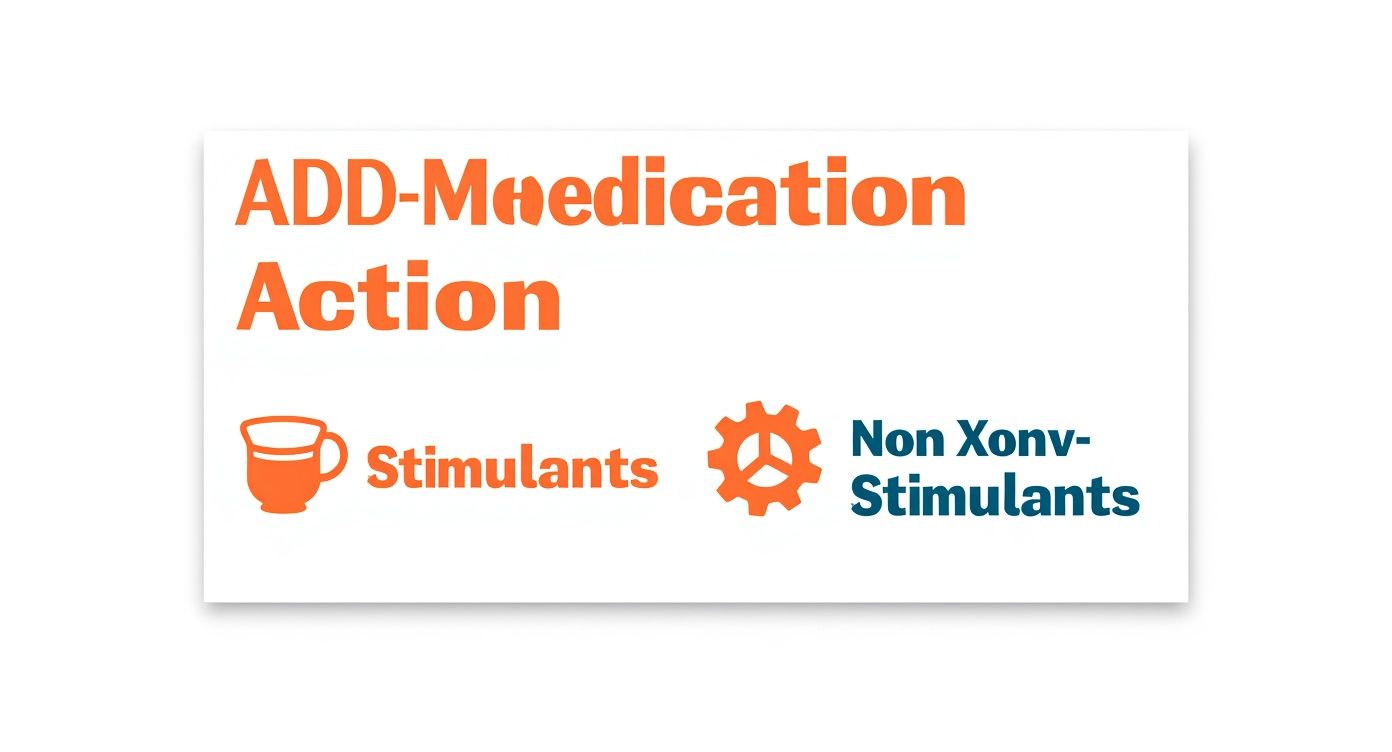
The main takeaway here is the difference in approach. Stimulants are like a shot of espresso for your brain's focus centers, offering a quick boost. Non-stimulants are more like a long-term system upgrade, working behind the scenes to create a more stable foundation.
Qelbree: A Modern Non-Stimulant Option
Qelbree (viloxazine) has been getting a lot of attention as a newer non-stimulant approved for adults. It’s a selective norepinephrine reuptake inhibitor (SNRI), which is a fancy way of saying it helps keep more of the neurotransmitter norepinephrine available in the brain. Think of it as turning up the volume on your brain's internal communication system, which helps sharpen focus and improve executive function.
A huge plus for many is its 24-hour coverage from a single daily dose. This provides a smooth, steady level of symptom management, avoiding the "peaks and valleys" that some people feel with stimulants.
Qelbree’s non-stimulant status is a game-changer for people who can't take controlled substances or simply prefer not to. This is especially helpful for those with a history of substance use, certain heart conditions, or who find stimulants make them too anxious or unable to sleep.
Because it works differently, Qelbree's effects build up over time. It can take four to six weeks to feel the full benefits, so a little patience is required compared to the instant kick of a stimulant. The most common side effects are things like insomnia, fatigue, decreased appetite, and nausea.
Azstarys: A New Twist on a Classic Stimulant
Azstarys represents a different kind of innovation. It cleverly combines dexmethylphenidate—a proven and effective stimulant—with a new compound called serdexmethylphenidate. This pairing is designed to deliver a one-two punch for symptom relief.
Here’s the breakdown of how it works:
- Immediate Action: The dexmethylphenidate part gets to work right away, usually within 30 to 60 minutes, providing that initial boost in focus and impulse control.
- Extended Release: The serdexmethylphenidate is a "prodrug," meaning it's inactive until your body gradually metabolizes it over several hours. This process slowly releases more of the active medication, ensuring symptoms stay managed all day long.
This smart delivery system aims for the best of both worlds: a fast start without a harsh jolt, followed by sustained coverage that can last up to 13 hours. For many, this means no more afternoon crash and no need for a midday booster dose.
Comparison of New vs Traditional ADHD Medications
To really see where these newer options fit in, it helps to compare them side-by-side with the treatments you might be more familiar with. The table below lays out the key differences between a new non-stimulant like Qelbree, a classic stimulant like Adderall, and a classic non-stimulant, Strattera.
| Feature | New Medication (e.g., Qelbree) | Traditional Stimulant (e.g., Adderall) | Traditional Non-Stimulant (e.g., Strattera) |
|---|---|---|---|
| Mechanism of Action | Selective Norepinephrine Reuptake Inhibitor (SNRI) | Increases dopamine & norepinephrine | Selective Norepinephrine Reuptake Inhibitor (SNRI) |
| Onset of Action | Gradual (4-6 weeks) | Rapid (30-60 minutes) | Gradual (4-6 weeks) |
| Duration of Effect | 24 hours | 4-12 hours (depending on IR/XR) | 24 hours |
| Abuse Potential | None (Not a controlled substance) | High (Schedule II controlled substance) | None (Not a controlled substance) |
| Common Side Effects | Insomnia, fatigue, nausea | Anxiety, appetite loss, increased heart rate | Nausea, dry mouth, fatigue |
| Who It's Good For | Adults needing 24/7 coverage or those who cannot or prefer not to take stimulants. | Adults needing a fast, strong effect who have previously responded well to stimulants. | Adults who prefer a non-stimulant option but may need a more established alternative. |
As you can see, the "best" medication really depends on the individual. Newer drugs like Qelbree and Azstarys are expanding the toolkit, offering solutions that address common complaints with older medications, like inconsistent coverage or the potential for abuse. Your personal health history, lifestyle, and treatment goals will all play a part in finding the right fit.
What's Next in ADHD Medication Development
The world of adult ADHD treatment is always moving forward, and the innovation doesn't stop with the medications you see on pharmacy shelves today. Researchers are constantly exploring new molecules and new ways of working with brain chemistry to create more refined and effective options. This work is absolutely vital, as it aims to fill the gaps for adults who still haven't found the right fit with existing treatments.
When we look at the pipeline of drugs in development, we're getting a sneak peek into the future of ADHD care. These are the medications currently moving through the final, intense stages of clinical trials. It’s here that scientists gather the last bits of data needed before they can even think about asking for FDA approval. Many of these potential new drugs target the brain in totally new ways, which could open up a world of benefits for symptom management.
Centanafadine: A Promising Triple-Action Non-Stimulant
One of the most talked-about drugs in the late-stage pipeline right now is centanafadine. What makes it so interesting is its unique approach. If it gets the green light, it would be the very first triple reuptake inhibitor designed specifically for ADHD. That means it works on three of the brain's most important chemical messengers at once: norepinephrine, dopamine, and serotonin.
This is a big step away from the medications we have now. Think back to your brain's communication system. Most non-stimulants focus on boosting norepinephrine, while stimulants primarily hit norepinephrine and dopamine. Centanafadine does all three. This multi-pronged strategy could offer a much broader spectrum of symptom control. The dopamine action is expected to provide a stimulant-like boost in focus, while the norepinephrine and serotonin components could help with emotional regulation and mood—two areas that are often a huge struggle for adults with ADHD.
The hope with a drug like centanafadine is to finally create a non-stimulant that kicks in quickly and works as powerfully as a stimulant, but without being a controlled substance. This could be a game-changer for adults who need serious symptom relief but either can't take or prefer to avoid traditional stimulants.
Translating Clinical Trial Data into Real-World Potential
So, what’s the early evidence telling us? So far, so good. Phase 3 trials have shown that centanafadine can lead to major improvements in ADHD symptoms. In one key study, about 50% of adult participants saw their symptoms cut in half or more, as measured by the standard ADHD Rating Scale. That suggests a strong, lasting effect on core issues like inattention and hyperactivity. You can dive deeper into the clinical trial results on ADHD Evidence.
What's more, the data suggests its effects start to show up pretty quickly, sometimes within the first week. This is a huge potential advantage over other non-stimulants, which can often take a month or even longer to really get going.
As for side effects, the profile seems to be manageable and in line with other ADHD medications, including things like decreased appetite and headaches. As centanafadine and other drugs in the pipeline inch closer to becoming a reality, they represent a massive, ongoing effort to create more personalized and effective treatments. This continuous development ensures that the toolkit for managing adult ADHD will only get better, offering more specialized options for every unique brain.
Innovations Beyond the Pill Itself
Real progress in treating adult ADHD isn't just about discovering brand-new molecules. A huge part of the story is finding smarter, more practical ways to deliver the medications we already know work well. The focus has shifted toward making treatments fit more seamlessly into your life, reducing the hassle and boosting consistency.
Think of the older, instant-release stimulants like a series of short, intense sprints. They give you a quick burst of focus but force you to restart the race several times a day. Newer delivery systems aim to turn those sprints into a smooth, steady marathon, providing stable symptom management from morning until evening.
This evolution is a direct answer to common frustrations, like forgetting a midday dose or hitting that dreaded "afternoon crash" as the medication wears off. These advanced systems are engineered to release medication slowly and predictably over many hours.
Smarter Delivery for a Smoother Day
Modern extended-release (ER) formulations are leading this charge. They use sophisticated technologies, like special beads or prodrugs, to ensure a medication’s effects don't just last longer but also feel much more even. The benefits are very real:
- No More Rollercoaster: Consistent symptom control without the jarring peaks and valleys.
- Easier to Stick With: A single morning dose is much easier to remember than juggling multiple pills throughout the day.
- Fewer Side Effects: For some people, a gradual release can soften the intensity of side effects like anxiety or appetite loss.
Alongside these pharmaceutical advances, there's also growing interest in various supplements for energy and focus, which some people use to complement their overall cognitive wellness plan.
New Forms for Better Access
Innovation is also changing how medication gets into your system. For adults who struggle with swallowing pills, transdermal patches are a game-changer. A simple patch worn on the skin delivers a continuous, controlled dose of medication right into the bloodstream.
These advancements in how the newest ADHD medication for adults is delivered are just as important as the drugs themselves. They offer a more stable, predictable, and user-friendly experience, helping you feel in control of your symptoms all day long.
Talking to Your Doctor About New Medications
Walking into your doctor’s office prepared to discuss new medication options is one of the most empowering things you can do for your health. It shifts the dynamic from simply asking for a prescription to building a genuine partnership with your provider.
Before your appointment, try to create a clear snapshot of your day-to-day life with ADHD. Think of yourself as a detective gathering clues. For a week or two, keep a simple log of your symptoms. Note when your focus drifts off, when impulsivity trips you up, or how your current medication feels at different points in the day. This isn't about creating a perfect report; it's about giving your doctor real-world data to work with.
How to Have a Productive Conversation
The more specific you can be, the better your doctor can tailor their advice to your life, not just your diagnosis. The goal is to paint a full picture so you can explore every appropriate option together.
Here are a few key areas to think about beforehand:
- Your Current Medication Experience: What’s working and what’s not? Be honest. Does your current med crash hard in the afternoon? Are side effects like anxiety or a nonexistent appetite making your days harder?
- Your Symptom Patterns: Pinpoint which ADHD symptoms are causing the most friction. Is emotional regulation the biggest hurdle in your relationships? Is time management derailing your career?
- Your Lifestyle: Think about your daily rhythm. Do you need rock-solid, all-day coverage for a high-stakes job? Or would a non-stimulant be a better fit to protect your sleep schedule?
A solid treatment plan always starts with a solid diagnosis. If you're still seeking clarity or need to get re-evaluated, understanding how to get tested for ADHD is an excellent place to start.
Key Questions to Ask Your Provider
Once you're in the room, use your notes to guide the conversation. This is your chance to ask direct questions and make sure you have all the information you need to make a choice you feel good about.
The best treatment plan is one you actively help create. Your lived experience is just as important as clinical data, so use your voice to ensure your needs are met.
Don’t be afraid to ask things like:
- "Given the side effects I’m having with my current med, could one of these newer options be a better fit for me?"
- "How would a non-stimulant like Qelbree actually work with my lifestyle, compared to what I’m used to with stimulants?"
- "If I start this new medication, what’s a realistic timeline for seeing a difference, and what specific changes should I be looking for?"
Common Questions About New ADHD Medications
Whenever new treatments emerge, it's only natural to have a lot of practical questions. Getting a clear picture of the real-world cost, safety, and effectiveness helps you manage your expectations and have more productive conversations with your doctor.
Are Newer Medications Safer?
"Safer" isn't quite the right word; it's more about having different risk and benefit profiles. For instance, the newest non-stimulant ADHD medication for adults side-steps the potential for abuse tied to traditional stimulants. For some people, that’s a massive safety win.
But ultimately, whether a medication is "safe" for you comes down to your personal health history.
Will Insurance Cover These New Drugs?
This is a big one. Coverage for the newest ADHD medication for adults can be all over the map, depending on your insurance plan. Brand-name drugs are almost always more expensive and often get flagged for "prior authorization," which means your doctor has to make a special case for it to your insurer.
Don't be surprised if your plan requires you to try older, generic medications first before they'll even consider a newer, pricier option.
It’s always a good idea to check your insurance plan's approved drug list (often called a formulary) before you and your doctor decide on a new prescription. A quick check can save you from a surprise bill at the pharmacy.
Many adults with ADHD find that medication can sometimes mess with their sleep. Looking into ways to improve sleep quality naturally can be a great addition to your overall treatment plan. You can also get a deeper understanding of how to handle potential ADHD medication side effects in our detailed guide.
At the Sachs Center, our experts specialize in providing accurate ADHD and Autism evaluations via telehealth, helping you get the diagnostic clarity needed to access the right treatment. Book your virtual evaluation today.
