
Online social skills groups are basically structured virtual meetups. They’re designed to help kids, teens, and adults—especially those with ADHD or Autism—practice and sharpen their social skills in a safe, guided setting. It’s a modern way to build real-world confidence, all from the comfort of home.
How Do Online Social Skills Groups Build Real-World Connections?
In a world that’s more online than ever, it can feel like real, genuine social connections are getting harder to find. For many neurodivergent kids and teens, trying to navigate unspoken social rules is confusing and stressful, often leading to anxiety and isolation. This is where online social skills groups come in—they offer a structured, supportive answer to this very modern problem.
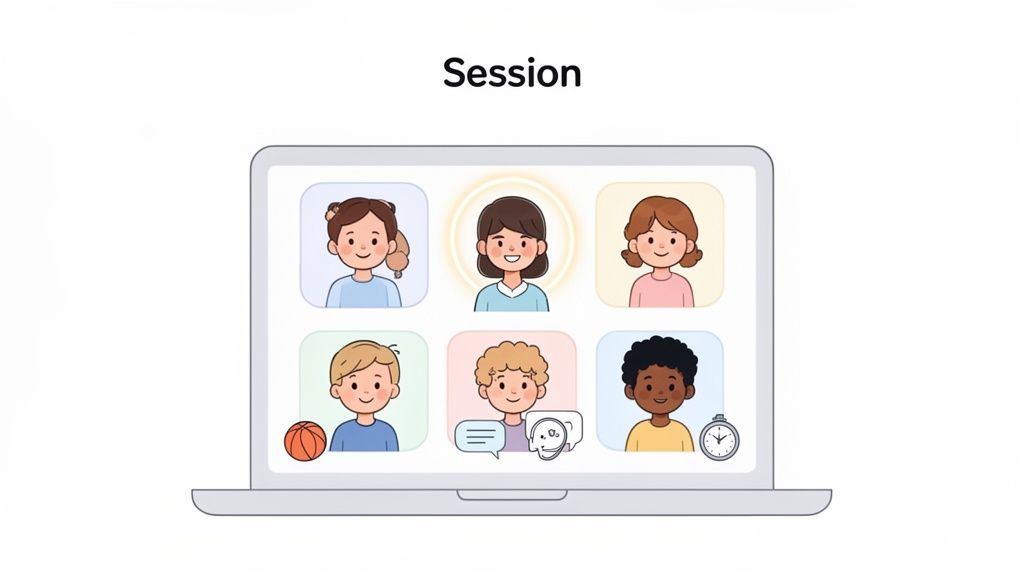
Think of these groups as a guided playground for social learning. Instead of the chaotic, often overwhelming free-for-all of typical social situations, each session provides a predictable framework. Led by a trained facilitator, participants get to learn and practice essential skills in a low-pressure environment where mistakes aren’t failures—they’re just opportunities for growth.
This kind of structured support is becoming more and more vital. One study found that face-to-face hangouts among teenagers dropped by a staggering 45% between 2003 and 2022. It's a significant gap that technology helped create, but it’s one that technology can also help fill. Online groups directly teach crucial skills like empathy, emotional regulation, and how to hold a conversation, tackling this trend head-on.
A Safe Harbor for Social Practice
For a child with ADHD or Autism, a typical classroom or playground can feel like pure chaos with far too many things happening at once. An online group strips away many of these stressors, creating a focused space where learning can actually happen. This digital format allows for:
- A Controlled Environment: The facilitator can manage group dynamics, making sure everyone gets a chance to speak and that interactions stay positive and constructive.
- Reduced Sensory Overload: The virtual setting minimizes the unpredictable noises, movements, and other stimuli that can quickly become overwhelming for a neurodivergent child.
- Accessible Learning: Families can get expert-led support without the logistical headaches of traffic and travel, which makes it so much easier to attend consistently.
Our groups focus on practical strategies for positive interaction, reflecting the benefits seen in studies on methods for promoting social skills in group settings. The goal isn't just to talk about social skills in theory but to build practical, real-world abilities. You can read more about how social skills groups can open new doors for neurodivergent kids and teens in our related article.
Online vs. In-Person Groups at a Glance
So, how do you choose? The right format really depends on your child's specific needs and your family's circumstances. Both online and in-person groups have their own unique strengths.
An online social skills group isn't just another video call; it's a purposefully designed therapeutic space. It uses technology to create a safe, repeatable, and accessible arena for building the social muscles needed for real-world success.
To help you see the key differences, we've put together a quick comparison.
Online Groups vs In-Person Groups at a Glance
| Feature | Online Social Skills Groups | Traditional In-Person Groups |
|---|---|---|
| Accessibility | Available from anywhere with internet. This eliminates travel time and geographical barriers. | Requires physical travel to a specific location, which can be a real hurdle for some families. |
| Comfort Level | Often much less intimidating. Kids can participate from the familiar comfort of their own home. | Can feel overwhelming due to new environments and direct, face-to-face social pressure. |
| Focus | A controlled environment allows for highly focused, distraction-free practice on specific skills. | Involves navigating real-time, unpredictable physical and social dynamics. |
| Technology Use | Directly teaches modern digital citizenship and appropriate online communication skills. | Focuses solely on in-person interaction, which may not always translate to online contexts. |
Ultimately, both paths are designed to build confidence and connection. The best choice is the one that sets your child up for the most consistent practice and the greatest chance of success.
A Look Inside a Virtual Social Skills Session
Wondering what actually happens in an online social skills group? It’s a fair question. Far from being just another video call, these sessions are structured, therapeutic experiences—especially for kids and teens with ADHD and Autism.
Think of it like a ‘social gymnasium.’ It's a safe, dedicated space to practice communication, build up social stamina, and get real-time coaching from a trained professional. Every game, conversation, and activity is chosen with a specific goal in mind, designed to strengthen the skills needed for real-world friendships.
This simple flow shows how these groups turn social hurdles into genuine growth and connection.
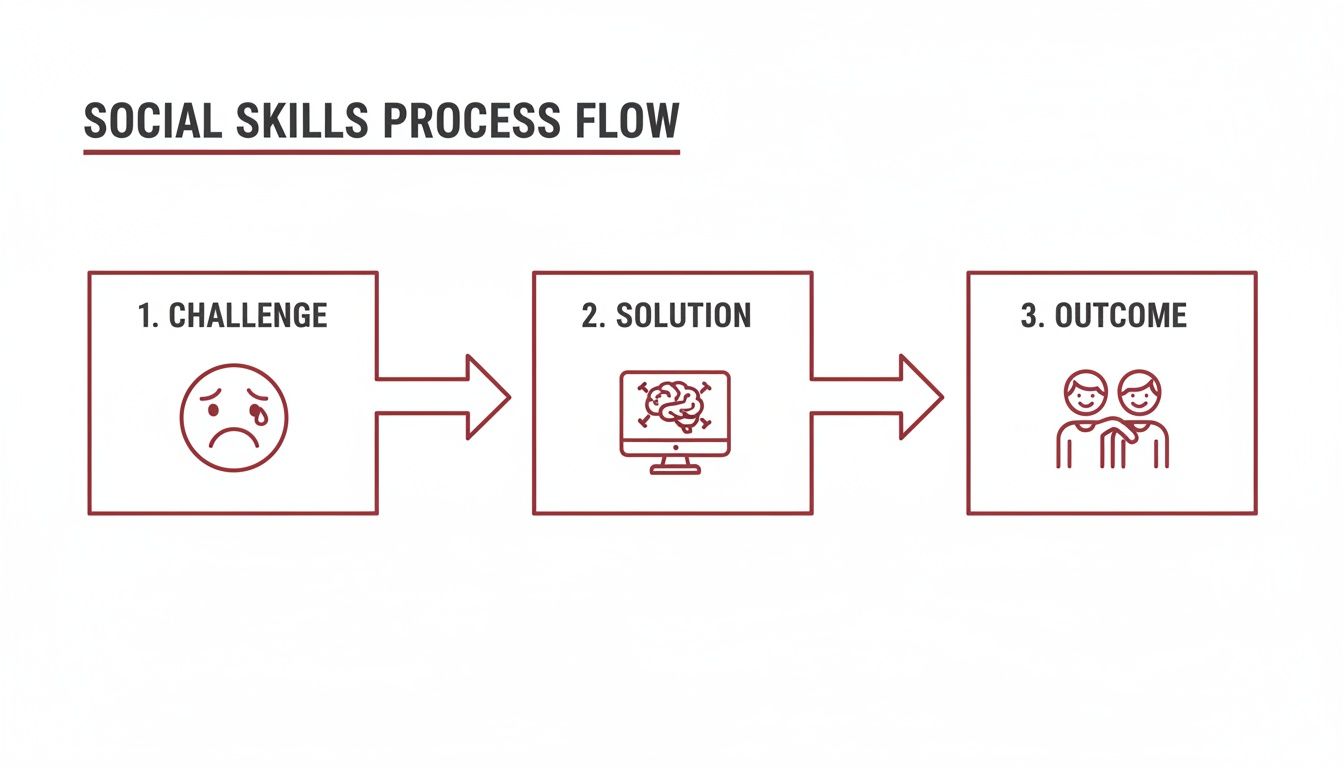
As you can see, the path is clear: a child starts with a social challenge, engages in the group's structured learning environment, and moves toward the rewarding outcome of confident, happy interactions.
The Anatomy of a Typical Session
While every program adds its own flavor, most well-run online social skills groups follow a predictable and comforting structure. That consistency is gold for neurodivergent kids, as it lowers anxiety and lets them focus on learning. A typical session is usually broken into a few key parts.
Warm-Up & Icebreaker (5-10 minutes): Things kick off with a light, engaging activity. This isn’t just for fun—it helps everyone settle in, get comfortable, and shift into a social mindset. It might be a quick game of "two truths and a lie" or just sharing one good thing that happened during the week.
Skill Introduction (10-15 minutes): The facilitator introduces the main skill of the day. This could be anything from "how to join a conversation already in progress" to "figuring out sarcasm." The concept is explained in a clear, easy-to-grasp way, often with visuals or short video clips.
Guided Practice & Activities (20-25 minutes): This is where the magic happens. Group members get to try out the new skill in structured activities. They might play collaborative online games, solve a digital escape room together, or walk through guided role-playing scenarios.
Feedback & Reinforcement (5-10 minutes): After practicing, the facilitator leads a gentle discussion. They'll point out what went well and offer specific, constructive tips for improvement. Positive reinforcement is huge here—it’s all about building confidence.
Wrap-Up & Generalization (5 minutes): The session winds down by reviewing the skill and brainstorming how members can use it in their daily lives before the next meeting. This is a crucial step for taking skills out of the virtual "gym" and into the real world.
Key Elements That Make It Work
Beyond that basic flow, a few practical details are critical for making an online group truly effective.
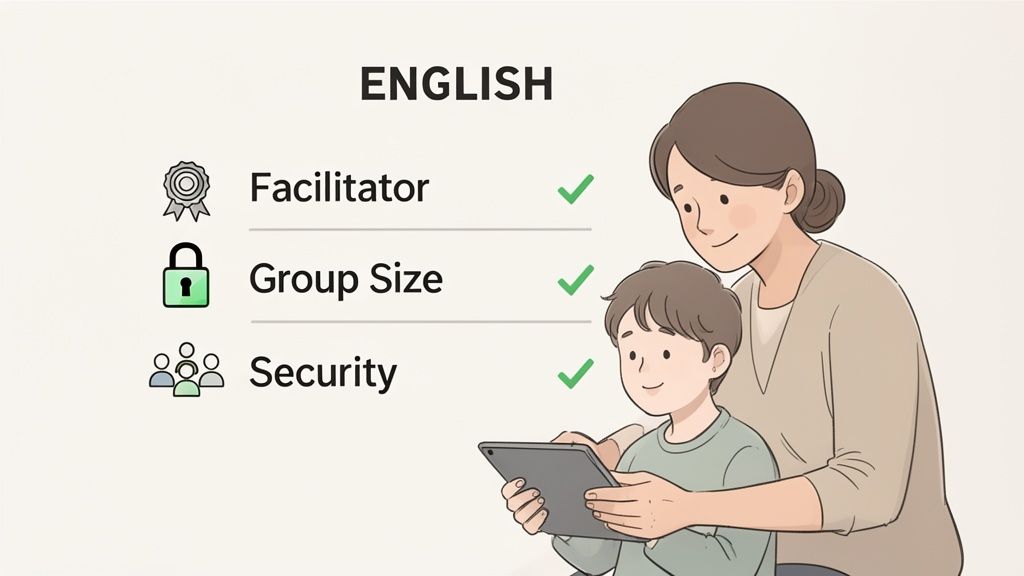
First, group size is deliberately small, usually just four to eight members. This intimate setting makes sure every child gets a chance to speak and receives personalized attention. No one gets lost in the crowd, which is often what happens in bigger, less structured social environments.
An effective online social skills session isn't about forcing interaction. It's about creating a safe, predictable, and engaging container where authentic social learning can naturally unfold.
Session length is also carefully planned. Most run between 45 to 60 minutes—long enough for meaningful practice but short enough to hold attention without causing screen fatigue, which is especially important for individuals with ADHD.
Finally, the technology is always chosen to be secure and easy to use. The platforms are intuitive, which cuts down on technical glitches so the focus can stay on social learning. Features like breakout rooms for smaller practice groups and interactive whiteboards are often used to keep the sessions dynamic and fun.
Unlocking Confidence Through Virtual Social Learning
The benefits of online social skills groups go way beyond just being convenient. While being able to log in from home is a huge plus, the real magic of the virtual format is how it creates a uniquely supportive space where social confidence can actually grow. For a lot of kids and teens, especially those who are neurodivergent, this digital space becomes the perfect training ground for real-world interactions.
This whole setup is based on a solid understanding of social learning. To really get why these groups work, it helps to understand what is social learning and how observing and interacting in a controlled setting helps build skills. The online format lets us carefully manage social variables, so participants can focus on one thing at a time without getting completely overwhelmed.
Building Skills From a Safe Space
Imagine a child with social anxiety or sensory sensitivities. For them, walking into a room full of other kids can feel like being pushed onto a chaotic stage without a script. The online setting brings that barrier way, way down.
When kids can join in from the comfort and familiarity of their own home, that initial wave of anxiety that often sinks in-person attempts just doesn't hit as hard. This feeling of safety encourages them to take small, manageable social risks they might otherwise avoid. They can practice starting a conversation or sharing an opinion without the intense, face-to-face pressure. It’s a space designed to build competence before asking for confidence.
The virtual environment acts as a 'social simulator,' allowing kids to practice, pause, and receive guidance in a low-stakes setting. This repeated, positive practice is the foundation of lasting self-esteem and social skillfulness.
This controlled environment also happens to be a natural training ground for a skill set that's now absolutely essential: digital etiquette.
Mastering Modern Digital Etiquette
So much of today’s social world happens through a screen. Knowing how to communicate respectfully and effectively online isn’t an optional skill anymore—it’s a basic part of being socially competent. Online social skills groups tackle this head-on by modeling and teaching healthy digital interactions.
Problematic social media use among teens has been on the rise, jumping from 7% in 2018 to 11% in 2022. This trend really underscores the urgent need for guided online socialization to protect kids’ mental health. In a structured group, participants learn firsthand how to handle group chats, figure out tone without physical cues, and work together on digital projects, setting them up for more positive online experiences from the get-go.
The skills they learn here provide a crucial foundation for navigating the much bigger, often unpredictable digital world safely and confidently.
Fostering Genuine Self-Esteem and Authenticity
One of the most powerful benefits of a well-run online group is the space it gives kids to finally unmask. Masking—hiding your true self just to fit in—is mentally exhausting and can crush a person's self-worth, especially for neurodivergent individuals. The focused, supportive vibe of these groups dials down the pressure to perform.
When a child feels safe enough to just be themself, they can start building connections based on their actual interests and personality. This leads to a much stronger, more authentic kind of self-esteem that isn’t built on trying to meet everyone else’s expectations. The facilitator is key here, championing a neurodiversity-affirming approach that celebrates each child’s unique communication style. To dig deeper into this, check out our guide on how to develop social skills while honoring who you are.
In the end, online social skills groups unlock confidence by providing:
- A Low-Anxiety Entry Point: Making it much easier to start practicing.
- Personalized Feedback: Tailoring guidance to what each participant actually needs.
- A Place for Authenticity: Encouraging kids to build skills as their true selves.
This blend of safety, relevant skill-building, and authentic connection makes virtual learning a uniquely powerful path toward social success.
Is an Online Social Skills Group the Right Fit?
Deciding on the right support for your child can feel like putting together a complex puzzle. It’s completely natural to wonder if a virtual group is the right piece for their unique needs. An online social skills group isn’t a magical solution for everyone, but for a specific profile of kids and teens, it can be an incredibly effective—and comfortable—place to start their social growth.
The key is matching the environment to the child’s personality, goals, and comfort level. For many, especially those with ADHD, Autism, or social anxiety, these groups offer a structured, predictable setting that feels much safer than the chaotic dynamics of in-person interactions. A child who gets easily overwhelmed in a noisy classroom or freezes up at a crowded birthday party might find the focused, facilitator-led nature of an online session to be a breath of fresh air. It strikes the perfect balance between social interaction and personal space.
Who Thrives in a Virtual Group Setting?
The ideal candidate for an online social skills group is often a child or teen who is comfortable with technology and ready to engage, even if they’re a bit hesitant at first. Their goals can range from foundational skills, like learning how to start a conversation, to more complex challenges, like navigating the nuances of group chats and digital friendships.
These are the kids who often find great success in a virtual format:
- The Anxious Participant: For a child whose social anxiety makes even leaving the house a challenge, online groups remove a massive barrier. They can practice vital skills from a familiar, low-stress environment.
- The Tech-Savvy Kid: Many neurodivergent kids are naturally drawn to technology. These groups meet them where they are, using a medium they already enjoy to teach skills that translate offline.
- The Geographically Isolated: For families in rural areas or without access to specialized local services, online groups are a lifeline, connecting them with expert-led support that would otherwise be out of reach.
In our digital world, where social media's influence is immense, these groups offer a healthy counter-narrative. With 4.8 billion global users, the digital sphere has reshaped social norms, but it has also created tools for positive connection. Research shows that frequent, high-quality interactions with a smaller circle of online friends can significantly boost perceived social support—a vital factor for well-being. This is where telehealth programs like those at Sachs Center provide evidence-based, structured support that turns screen time into skill time. You can discover more insights about how social media impacts connection on mastermindbehavior.com.
The Unique Power for Kids Who Mask
One of the most profound benefits of online social skills groups is the space they create for kids who "mask." Masking—hiding one's authentic neurodivergent traits to fit in—is an exhausting and often damaging coping mechanism. It can lead to burnout and a fractured sense of self.
In a supportive online group, the pressure to perform social norms "correctly" is significantly reduced. This allows a child to unmask, experiment with genuine self-expression, and build connections based on who they truly are, not who they think they should be.
The facilitator plays a crucial role here, fostering a neurodiversity-affirming culture where different communication styles are not just tolerated but celebrated. When a child realizes they don’t have to hide their stims or special interests to be accepted, they can finally focus their energy on learning and connecting authentically. This experience isn’t just about skill-building; it’s about building a positive identity.
A Quick Checklist for Parents
To help you sort through whether this is the right path, here’s a simple checklist. Think about your child as you go through each point.
Is an Online Social Skills Group Right for Your Child?
| Consideration | Yes/No | Notes |
|---|---|---|
| Comfort with Technology | Is your child generally comfortable using a computer or tablet for video calls? | |
| Social Anxiety Levels | Does your child find in-person social situations highly overwhelming or intimidating? | |
| Specific Social Goals | Do you have clear goals, like making one friend or learning to join conversations? | |
| Need for Structure | Does your child do better in predictable environments with clear rules and guidance? | |
| Tendency to Mask | Do you suspect your child hides their true personality to try and fit in with peers? | |
| Family Logistics | Is attending a weekly in-person group difficult due to location, schedule, or transport? |
If you found yourself answering "yes" to several of these questions, an online social skills group could be an excellent fit. It offers a unique pathway for children to build confidence, develop practical social abilities, and connect with others in a way that honors their neurotype.
How to Choose the Right Online Program
Finding a high-quality online social skills program can feel like searching for a needle in a haystack. With so many options out there, how do you know which one is the right fit and will genuinely support your child’s growth? It means you have to look past the shiny homepage and start asking some specific, thoughtful questions.
This isn't just about finding a program that fits your schedule. It’s about vetting the very heart of the program—its philosophy, its leaders, and how it puts everything into practice. A truly great program is built on expertise, empathy, and a solid commitment to creating a safe, affirming space for every single person who joins.
Vetting Facilitator Credentials and Approach
The person leading the group is, without a doubt, the most important part of the entire experience. Their background and approach set the tone for every session and will directly impact how safe and supported your child feels.
When you're talking to a potential provider, don't be shy about asking direct questions about who runs the sessions. You want to hear a clear, confident answer that points to specialized training and a real, lived-in understanding of neurodiversity.
Here are a few essential questions to get you started:
- What are the facilitator’s credentials? You should be looking for licensed professionals like psychologists, social workers, or speech-language pathologists. Critically, they need to have specific training in child development and neurodiversity.
- What therapeutic methods do they use? Many effective groups use evidence-based practices like Cognitive Behavioral Therapy (CBT), but the real question is how they use it. The focus should always be on building skills, not forcing compliance.
- Is the program neurodiversity-affirming? This is a non-negotiable. Ask them what that term actually means to them in practice. A quality program will celebrate different ways of communicating and will never try to "fix" or erase autistic or ADHD traits.
A neurodiversity-affirming approach is the difference between teaching a child to mask their true self and empowering them to build connections authentically. The right program celebrates who your child is, providing tools that honor their unique strengths.
Evaluating Program Structure and Safety
Once you feel good about the facilitator, it’s time to look at the nuts and bolts of the program itself. The structure, the group dynamics, and even the technology they use all play a huge role in creating an environment where kids can learn and feel secure.
A well-designed program is intentional about every little detail, from how they build their groups to the security of their video platform. For example, a program that just throws kids of the same age together without thinking about their social goals or personalities might not be setting them up for success.
Key areas to investigate include:
- Group Composition: How are groups formed? A reputable provider will carefully consider age, developmental stage, and specific social goals to create a balanced, supportive group of peers.
- Platform and Privacy: What technology do they use? Make sure their platform is secure, easy to use, and HIPAA-compliant to protect your child’s privacy.
- Conflict Resolution: How do they handle disagreements or bullying within the group? They need to have a clear, proactive plan for managing conflict in a constructive way.
Understanding Costs and Logistics
Finally, it’s time to talk about the practical side of things: cost and insurance. Transparency here is a huge green flag—it signals a professional and trustworthy organization. Be cautious of any provider that’s vague about their fees or how they handle billing.
Make sure to ask about the total cost per session or for the whole program. You should also ask if they provide a "superbill" or other paperwork you can submit to your insurance for potential out-of-network reimbursement. Finding the right fit also means finding a program that works for your family’s budget.
For those interested, you can explore the Sachs Center’s approach to social skills training online and see how our programs are structured. Armed with these questions, you can confidently choose an online social skills group that will be a truly positive and empowering experience.
Frequently Asked Questions About Online Social Skills Groups
Even when you have a good handle on how online social skills groups work, it’s completely normal to still have questions. Choosing the right support for your child is a huge decision, after all. We’ve put together some of the most common questions we hear from parents, with straightforward answers to help you feel confident about what to expect.
Our aim is to give you all the information you need to move forward with clarity and peace of mind.
How Is Progress Measured in an Online Group?
Measuring growth in social skills isn't like grading a math test. It’s far more nuanced and really comes down to how skills are showing up in the real world. A good program will use a few different methods to track progress in a meaningful way.
Most groups start with some kind of baseline assessment. This helps the facilitator get a clear picture of a child's starting point, whether through observation in the first session or maybe a brief questionnaire. From there, progress is tracked in a few key ways:
- Behavioral Observation: The facilitator is always taking detailed notes. They're looking for specific, concrete improvements. For example, is a child who was hesitant to speak now initiating conversations? Are they using the coping strategies they learned when they start to feel frustrated?
- Parent and Child Feedback: You see your child in their natural environment, so your perspective is invaluable. Regular check-ins or feedback forms allow you to share the changes you’re noticing at home or at school. Just as important is the child's own sense of confidence and comfort—that’s a huge indicator of success.
- Goal Attainment: Progress is often tied directly to the goals set at the very beginning. If a child’s goal was to learn how to join a game at recess, successfully doing that—even just once—is a massive win and a clear sign of progress.
It helps to think of it less like a final grade and more like a collection of small but powerful victories that build on each other over time.
What If My Child Is Hesitant to Participate?
This is probably one of the most common—and understandable—concerns parents have. Many kids who need social skills support are naturally anxious in new social situations, and a screen doesn't necessarily change that. A well-trained facilitator is absolutely prepared for this.
The key is a gentle, no-pressure approach. A child should never be forced to speak or turn on their camera if they aren’t ready. Instead, a skilled facilitator has a toolbox of strategies to build comfort and trust.
A child’s initial hesitation isn't a sign of failure; it's an opportunity for the group to practice one of its core principles—patience and acceptance. The goal is to make the space feel so safe that participation becomes a natural choice, not a demand.
They might start by letting a child participate in non-verbal ways, like using the chat, sending an emoji, or answering a poll. They’ll often praise small steps, like a child simply staying for the whole session. A great facilitator will also find ways to weave in a child’s special interests, turning activities into something that feels more like play than work. As the child observes the positive and predictable dynamic of the group, their comfort level almost always grows, and they start to join in more on their own terms.
How Long Does It Take to See Results?
The timeline for seeing noticeable changes really varies from child to child. Social learning is a marathon, not a sprint. Progress depends on a lot of things, like the child’s age, their specific challenges, how consistently they attend, and whether they have opportunities to practice their new skills outside of the group.
Some parents might see small shifts within a few weeks—maybe their child starts talking more about friends or shows more interest in social events. For others, it might take several months before significant, lasting changes become clear.
It’s much more helpful to look for patterns of growth rather than expecting a sudden, overnight transformation. A child who learns a new way to manage frustration in one session might not nail it the next day, but over time, you should see them using that skill more and more consistently. Patience is everything, and so is celebrating every small step forward. The skills learned in these groups are foundational and designed to serve your child for a lifetime.
At the Sachs Center, we know that finding the right support for your neurodivergent child is a journey. Our online social skills groups are led by expert clinicians who create a safe, engaging, and neurodiversity-affirming space for children and teens to build confidence and form real connections. If you're ready to learn more about how our programs can help your child thrive, we invite you to explore our services.
