
Let’s get one of the biggest points of confusion out of the way first: ADD is an outdated term. What was once called ADD is now officially known as Attention-Deficit/Hyperactivity Disorder, Predominantly Inattentive Presentation. So, the question isn't about choosing between two different disorders, but about understanding which specific presentation of ADHD might apply.
Untangling the Terms ADHD and ADD
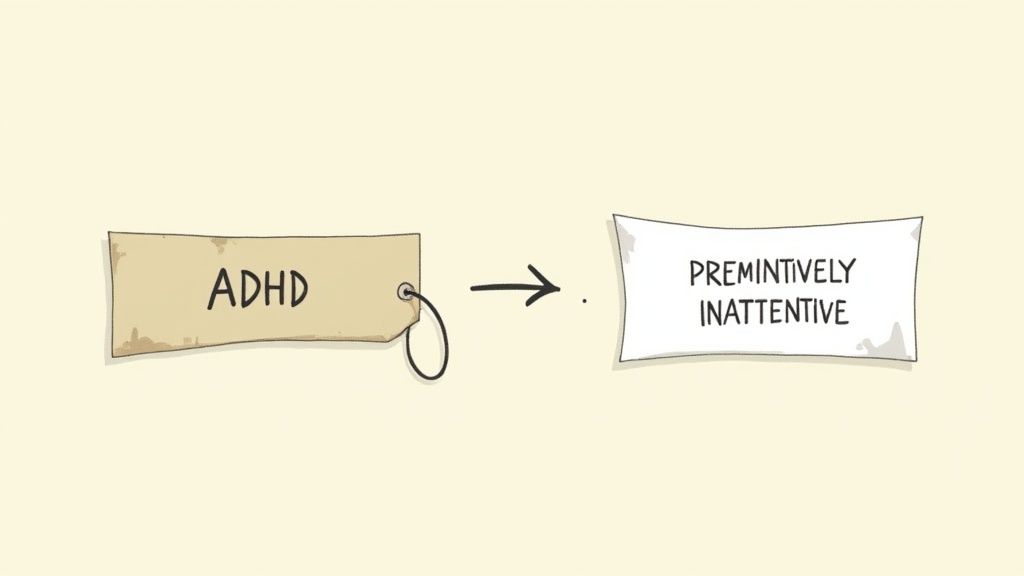
If you've heard people use "ADHD" and "ADD" interchangeably, you're definitely not alone. It's a common source of confusion that leaves many wondering if they're two separate conditions. The simple truth is, they aren’t. While the historical back-and-forth between terms caused a lot of misunderstanding, the medical community has since brought much-needed clarity to the diagnosis.
Today, Attention-Deficit/Hyperactivity Disorder (ADHD) is the one, official clinical name for the condition. The term "ADD" was retired to better capture our modern understanding of this complex neurodevelopmental disorder. Experts now know that ADHD exists on a spectrum and doesn't always come with the classic, visible signs of hyperactivity.
A Shift in Diagnostic Understanding
This major change happened in 2013 when the American Psychiatric Association published the fifth edition of the Diagnostic and Statistical Manual of Mental Disorders (DSM-5). This update officially brought all forms of the condition under the single umbrella of ADHD.
The core reason for this shift was a deeper recognition that hyperactivity isn't a mandatory symptom. Instead, ADHD is defined by persistent patterns of inattention, hyperactivity, and impulsivity that can combine in different ways for each person.
While ADHD and ADD were used almost synonymously in the past, the current criteria classify ADHD into three distinct presentations based on which symptoms are most dominant. What many people still call ADD is now ADHD, Predominantly Inattentive Presentation. The other two are Predominantly Hyperactive/Impulsive Presentation and Combined Presentation. This framework gives us a far more accurate way to diagnose and support individuals. You can read more about the evolution of these diagnostic criteria on pubmed.ncbi.nlm.nih.gov.
Comparing Old and New Terminology
To help clear up any lingering confusion, here’s a simple breakdown of how the old terms map to the new, official ones. This table should help translate the outdated language into the current, accurate medical classifications.
| Outdated Term | Current Official Term (DSM-5) | Primary Characteristics |
|---|---|---|
| ADD (Attention Deficit Disorder) | ADHD, Predominantly Inattentive Presentation | Difficulty sustaining attention, forgetfulness, poor organization, easily distracted |
| ADHD (Attention-Deficit/Hyperactivity Disorder) | ADHD, Predominantly Hyperactive-Impulsive or Combined Presentation | Restlessness, impulsivity, constant fidgeting, excessive talking, and/or a mix of inattentive symptoms |
The Clinical Journey from ADD to ADHD
For a long time, the terms ADD and ADHD were used almost interchangeably, but they weren't the same. The dividing line was hyperactivity. This distinction, however, created more confusion than clarity and, more importantly, left a lot of people without the right diagnosis.
This wasn’t just a random change in terminology. It was the result of years of compelling research showing that inattention, hyperactivity, and impulsivity weren't separate conditions. Instead, they were all interconnected symptoms of a single neurodevelopmental disorder. The real difference wasn't the disorder itself, but how it showed up in a person’s behavior.
The big breakthrough was realizing ADHD is a spectrum. Just like a color spectrum has many different shades, ADHD has a wide range of symptoms and severities, all coming from the same neurological roots tied to executive function and self-regulation.
This new understanding moved the psychiatric community away from a simple "hyperactive or not" checkbox. Clinicians needed a more nuanced way to describe the diverse ways people experience ADHD, which led to the diagnostic model we use today.
The Rise of the Three Presentations
The official shift happened in 2013 with the publication of the DSM-5. This is when all variations were officially brought under the single umbrella diagnosis of ADHD. To make sense of the different ways ADHD can look, the DSM-5 introduced three specific "presentations," or subtypes.
This new model gave clinicians a much more precise language. It finally acknowledged that someone could be struggling immensely with focus and organization without ever climbing the walls—a reality the old ADD/ADHD split completely missed.
The three presentations are:
- Predominantly Inattentive Presentation: This is what most people used to call ADD. It’s marked by major challenges with focus, organization, memory, and finishing tasks.
- Predominantly Hyperactive-Impulsive Presentation: This presentation is defined by restlessness, an inability to sit still, talking excessively, and acting on impulse.
- Combined Presentation: This is diagnosed when a person has enough symptoms to meet the criteria for both the inattentive and hyperactive-impulsive presentations.
This was more than just a name change; it was a fundamental shift in how we think about ADHD. It validated the experiences of millions who felt their struggles with inattention were invisible because they didn't fit the hyperactive stereotype, opening the door for better diagnosis and treatment.
Why This Diagnostic Shift Matters
Moving to a single, unified model has had a huge real-world impact. It has helped reduce the stigma around hyperactivity while making sure that the quieter, inattentive individuals get the recognition and support they deserve. Now, the child who daydreams in class and the adult who can’t stop fidgeting in meetings can both be understood within the same framework.
This unified approach also gives us a clearer picture of prevalence. We now know these aren't separate conditions with different rates. According to the CDC, as of 2022, about 11.4% of children aged 3 to 17 in the United States have been diagnosed with ADHD. This number includes all presentations. For adults, global estimates put ADHD prevalence at around 3.1%, showing that these challenges don’t just disappear after childhood. You can find more ADHD statistics on additudemag.com.
Ultimately, this clinical evolution means we can provide more accurate assessments and create truly personalized treatment plans that recognize how unique each person's experience with ADHD really is.
A Detailed Comparison of the Three ADHD Presentations
Understanding the three official presentations of ADHD is so important because it gets us past the outdated and confusing "ADHD vs. ADD" debate. Each presentation comes with its own unique cluster of symptoms, daily challenges, and internal experiences. Getting the identification right is the first, most critical step toward finding strategies that actually work.
This breakdown will explore each presentation based on the diagnostic criteria from the DSM-5. It's important to remember that for a diagnosis, a person has to show a certain number of symptoms that consistently get in the way of daily life across different settings—like at home, school, or work.
ADHD Predominantly Inattentive Presentation
This is what people used to call ADD. It’s defined by major challenges with executive functions—those core mental skills that manage working memory, flexible thinking, and self-control. People with this presentation really struggle to hold focus, follow through with tasks, and keep things organized.
The classic hyperactivity is mostly missing, which is why it often feels like a more "internalized" kind of ADHD. The struggles are less obvious to an outsider, leading to unfair judgments that the person is lazy, unmotivated, or just doesn't care. This is a story we hear all the time, especially from girls and women who are more often diagnosed with this presentation.
Common behaviors and internal experiences include:
- Difficulty Sustaining Attention: It’s incredibly hard to stay locked in during lectures, meetings, or long reading sessions. The mind just drifts, even when you genuinely want to pay attention.
- Forgetfulness in Daily Activities: Constantly misplacing keys, your wallet, or your phone. You might forget appointments or deadlines, not because you're careless, but because your working memory is letting you down.
- Trouble with Organization: The desk, backpack, or room is in a state of chronic chaos. This messiness bleeds into digital life too, with disorganized computer files and an inbox that’s overflowing. Trying to plan and execute a project with multiple steps can feel completely overwhelming.
- Appearing Not to Listen: Even when someone is talking directly to you, you might seem distant or lost in another world. This isn't disrespect; it's a problem with regulating attention.
We often see this presentation missed in childhood because the symptoms aren't disruptive. A kid might just be called a "daydreamer" instead of being properly evaluated for ADHD, leading to years of silent struggles with school and low self-esteem.
ADHD Predominantly Hyperactive-Impulsive Presentation
This presentation is the one that fits the classic ADHD stereotype. It’s marked by what feels like near-constant motion, a deep sense of restlessness, and a habit of acting on impulse without thinking about what happens next. The hyperactivity isn't just physical; it's often described as an internal feeling of being "driven by a motor."
While hyperactivity is pretty obvious in kids (think running, climbing, and bouncing off the walls), it can look different in adults. An adult with this presentation probably isn't climbing on the furniture, but they might be fidgeting constantly, tapping their feet, or just feeling an intense internal buzz that makes it impossible to relax.
Key signs include:
- Physical Restlessness: Fidgeting with hands or feet, squirming in their seat, or feeling a powerful need to get up and move around all the time.
- Excessive Talking: Taking over conversations, interrupting others, or blurting out answers before a question is even finished.
- Impulsive Actions: Making snap decisions without thinking them through, like making a big purchase on a whim or jumping into a new hobby without any real plan. It can also show up as having a really hard time waiting in line or taking turns.
- Internal Feeling of Urgency: A constant, nagging sense that you need to be doing something, which can make quiet activities like reading a book or watching a movie feel almost agitating.
ADHD Combined Presentation
Just like the name says, someone with a Combined Presentation meets the criteria for both the inattentive and the hyperactive-impulsive types. This means they're dealing with a significant number of symptoms from each category, which creates a very broad and challenging set of difficulties.
This is actually the most common presentation of ADHD we diagnose. The experience can feel like a relentless tug-of-war between a brain that won't focus and a body that won't sit still. The mix of inattention and impulsivity can cause major problems in school, at work, and in social relationships.
Comparing the Three Presentations of ADHD
To make these distinctions even clearer, it helps to see them side-by-side. The table below breaks down how the core symptom clusters show up differently across the three presentations, offering a snapshot of both the diagnostic criteria and how these traits appear in the real world.
| Symptom Cluster | Predominantly Inattentive Presentation | Predominantly Hyperactive-Impulsive Presentation | Combined Presentation |
|---|---|---|---|
| Attention & Focus | The core challenge. Difficulty sustaining focus, easily sidetracked by internal thoughts. | Distraction is often driven by an urge for new stimulation or an inability to sit still. | Experiences both internal distractibility and external restlessness, making focus extremely difficult. |
| Physical Activity | Typically not hyperactive. May even appear sluggish or slow-moving. | Constant motion, fidgeting, and feeling "driven by a motor" are hallmark signs. | Exhibits clear signs of both physical restlessness and significant inattentive struggles. |
| Impulsivity | Less common. May show up as "tuning out" of conversations rather than interrupting. | A primary feature. Interrupting, acting without thinking, and struggling with patience are common. | Shows both verbal impulsivity (interrupting) and cognitive inattention (losing track of the conversation). |
| Task Management | Struggles with starting tasks (procrastination) and seeing them through to the end. | May jump into tasks impulsively without a plan, then abandon them out of boredom. | A mix of both: difficulty starting tasks due to inattention and trouble finishing them due to a need for novelty. |
| Common Misconception | Labeled as "lazy," "a daydreamer," or "unmotivated." | Seen as "disruptive," "a class clown," or having "behavioral problems." | Often seen as chaotic, unpredictable, or struggling in all areas at once. |
In the end, recognizing which presentation a person has is vital. It clarifies the fundamental differences between ADHD and what was once just called ADD, giving us a far more accurate and compassionate way to understand these complex neurodevelopmental experiences.
How ADHD Manifests Differently in Women and Girls
For decades, the classic image of ADHD was a little boy who couldn't sit still in class. This stereotype has done a massive disservice to countless girls and women whose experiences look entirely different, often leading to years of missed diagnoses and private struggle.
The main difference between ADHD and ADD, in this context, really comes down to presentation. While boys more often show the external, hyperactive-impulsive symptoms everyone recognizes, girls and women tend to have the inattentive type—what people used to call ADD. Their challenges are almost always quieter and more internalized.
Instead of bouncing off the walls, a girl with ADHD is more likely to be staring out the window, lost in a daydream. Her very real struggles with focus, organization, and emotional regulation are often brushed off as personality flaws. She's just "spacey," "too sensitive," or "lazy."
The Pressure to Mask and Its Consequences
From a very young age, girls are socialized to be people-pleasers and not to cause a fuss. This immense societal pressure leads many with ADHD to develop sophisticated coping skills to hide—or "mask"—their symptoms. It's an exhausting, full-time job of trying to appear neurotypical.
Common masking behaviors include:
- Perfectionism: Overcompensating for a brain that struggles with details by pouring excessive time and energy into tasks, trying to make them flawless.
- Social Mimicry: Carefully watching and copying the social behaviors of peers to fit in. This requires an incredible amount of mental energy.
- Internalizing Struggles: Hiding overwhelming feelings of anxiety or inadequacy behind a calm, capable exterior, even when falling apart inside.
Masking isn’t a solution; it’s a survival strategy that comes at a tremendous cost. The constant effort to suppress natural tendencies and maintain a facade of control often leads to severe anxiety, depression, and burnout.
This infographic helps visualize the different presentations of ADHD, which is crucial for understanding how symptoms can vary so much from person to person.
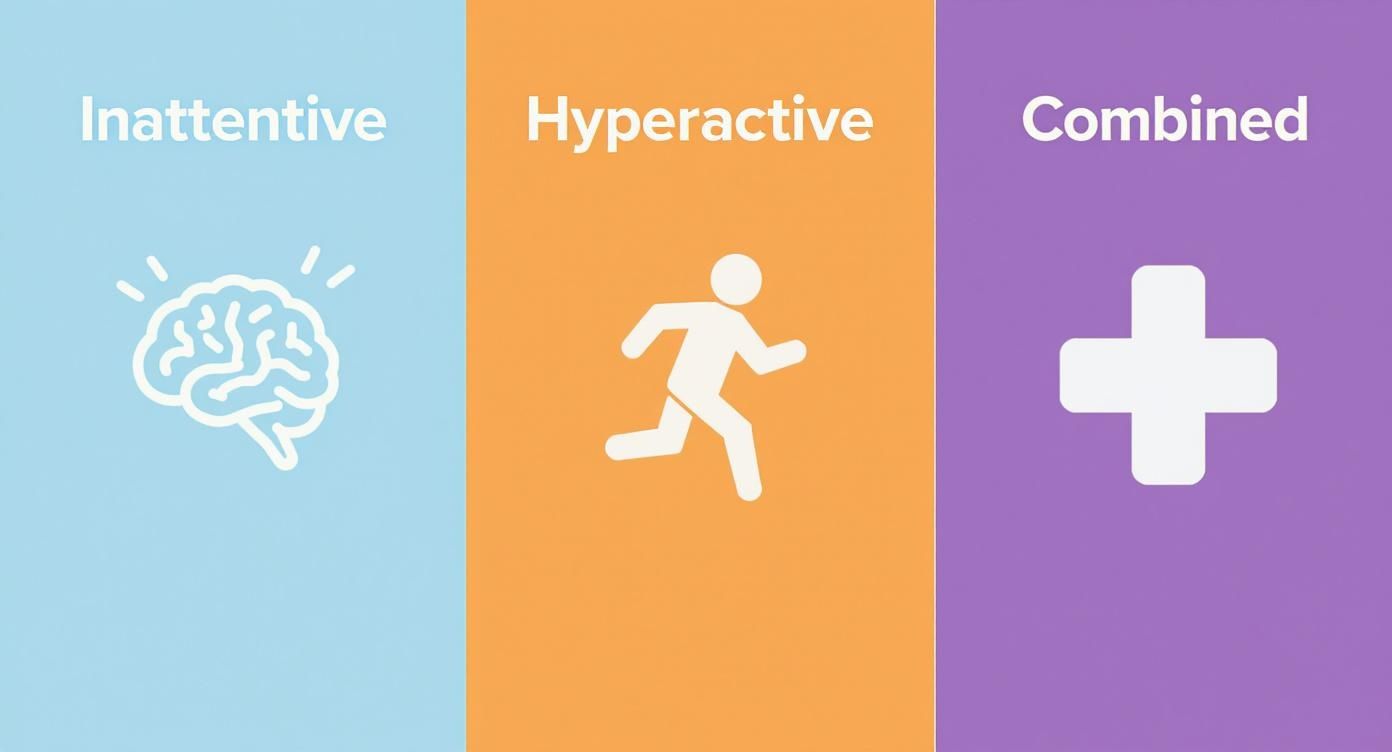
As the visualization shows, while hyperactivity is a key feature of one presentation, inattentiveness is the core struggle of another—and that's the one we see far more often in women.
How Inattentive Symptoms Appear in Women
Because obvious hyperactivity is less common, the challenges women face are usually rooted in executive dysfunction. It’s important to remember these are not character failings but neurological differences in how the brain manages tasks, emotions, and thoughts.
For example, a woman with ADHD might:
- Struggle with "Object Permanence": This isn't the developmental kind babies have, but the adult reality of "out of sight, out of mind." If a bill isn't right in front of her, it might not get paid. If a friend doesn't reach out first, she may forget to maintain the relationship.
- Experience Time Blindness: An inability to accurately feel the passage of time. This leads to chronic lateness or wildly underestimating how long tasks will actually take.
- Face Rejection Sensitive Dysphoria (RSD): Experiencing crushing emotional pain from perceived criticism or rejection, which can wreak havoc on relationships and self-worth.
These subtle but powerful symptoms are often missed in standard diagnostic evaluations that were designed around the classic male presentation of ADHD. The Sachs Center specializes in recognizing these highly masked ADHD symptoms in women, ensuring a far more accurate and compassionate diagnostic process.
By understanding these gender-based differences, we can finally move past outdated stereotypes. Recognizing that inattentive ADHD is just as real and debilitating as its hyperactive counterpart is the first step toward ensuring women get the validation, diagnosis, and support they deserve.
Navigating the ADHD Diagnostic Process
Getting an accurate ADHD diagnosis is the essential first step toward finding the right support, but the path can often feel confusing and overwhelming. A proper evaluation isn't just a quick checklist. It’s a detailed, multi-faceted process designed to build a complete picture of who you are—including your unique challenges and strengths.
The journey almost always begins with a comprehensive clinical interview. During this conversation, a psychologist will dive into your developmental history, asking about everything from your experiences in early childhood to your current struggles at work, school, or home. This is critical for establishing a timeline of symptoms and truly understanding their impact on your day-to-day life.
From there, clinicians use standardized rating scales and other validated self-report measures. These tools are far from generic quizzes; they provide objective data by comparing your responses to those of a neurotypical population. This helps quantify the severity and frequency of your symptoms, ensuring the entire assessment is grounded in solid, evidence-based practice.
Ruling Out Other Conditions
A huge part of any good diagnostic process is differentiation. So many other conditions have symptoms that overlap with ADHD, which can really muddy the waters. For instance, the inattention common in ADHD can look a lot like the mental fog caused by anxiety or the cognitive hurdles that come with a learning disability.
A skilled clinician knows how to carefully tease these possibilities apart to avoid a misdiagnosis. They’ll look to see if your challenges with focus are persistent across different situations—a hallmark of ADHD—or if they’re mostly triggered by specific stressors, which might point more toward an anxiety disorder. To see what they're looking for, you can review the official ADHD diagnostic criteria that guide these evaluations.
A thorough diagnosis isn't just about identifying what a person has; it's also about clarifying what they don't have. Ruling out conditions like anxiety, depression, or learning disabilities is critical for creating a treatment plan that targets the true source of the challenges.
The Role of Neuropsychological Testing
For some people, especially students seeking academic accommodations or adults with more complex symptoms, neuropsychological testing might be the next step. This is a much deeper evaluation that assesses a wide range of cognitive functions, including:
- Executive Functioning: Skills like planning, organization, and working memory.
- Attention and Concentration: Your ability to sustain focus over time.
- Processing Speed: How quickly you can take in and respond to information.
- Memory: Both your short-term and long-term recall abilities.
This level of testing provides an incredibly detailed cognitive profile. It offers invaluable insights that can guide personalized support strategies, whether that means setting up an Individualized Education Program (IEP) at school or getting accommodations for standardized tests like the SAT or GRE.
The Rise of Telehealth for ADHD Assessment
In the last few years, telehealth has completely changed the game for diagnostic accessibility. Virtual evaluations, conducted over secure platforms like Zoom or Google Meet, offer a convenient and highly effective way to get a diagnosis right from the comfort of your own home.
At the Sachs Center, our specialists are experts at conducting these comprehensive remote assessments. We use the same validated tools and maintain the same clinical rigor you'd find in an in-person visit. This modern approach not only reduces the stress that often comes with clinical appointments but also makes expert care available to everyone, no matter where they're located.
Finding the Right Treatment Path for ADHD
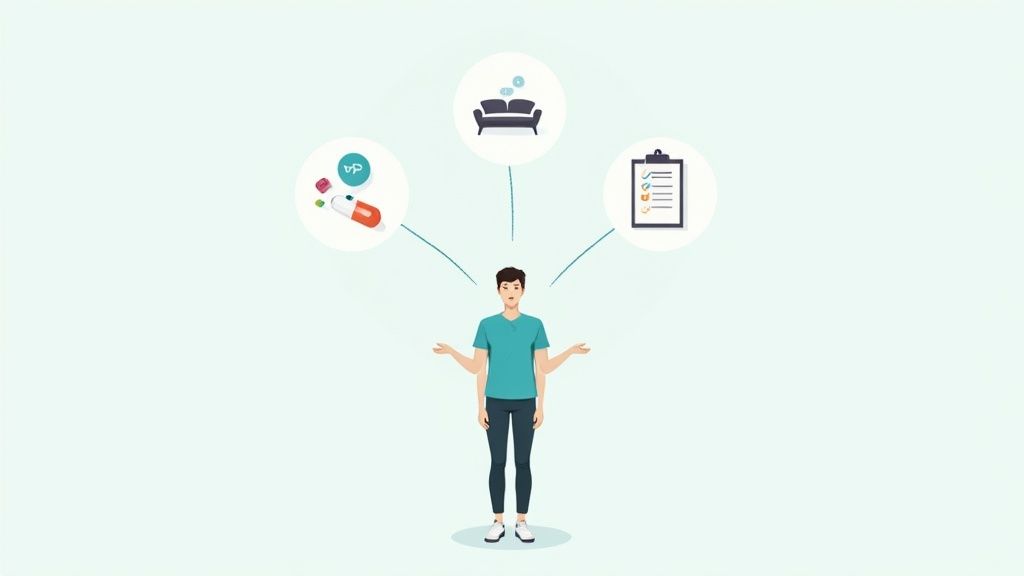
Getting an accurate ADHD diagnosis is a huge first step, but it's really just the beginning. The most effective treatment plans aren't cookie-cutter; they're built around your specific presentation, your unique challenges, and what you want to achieve. This personalized approach usually involves a mix of medication and therapy.
For many, medication is a cornerstone of managing ADHD. The goal is to help balance brain chemistry, which can sharpen focus and dial down impulsivity.
Medication Options for ADHD
When it comes to ADHD medication, there are two main categories: stimulants and non-stimulants. Both are proven to be effective, but they work differently and are suited for different people.
- Stimulant Medications: These are the most prescribed and, for many, the most effective at managing core ADHD symptoms. They work by boosting levels of key neurotransmitters like dopamine, which is a major player in attention and motivation.
- Non-Stimulant Medications: These are a fantastic alternative for anyone who doesn't respond well to stimulants or deals with side effects. They can take a bit longer to kick in, but once they do, they often provide smooth, 24-hour symptom coverage.
It's a common myth that medication "cures" ADHD. Instead, think of it as a tool—like glasses for poor vision. It doesn't fix the underlying neurological differences, but it provides the necessary support to manage symptoms and function more effectively.
Figuring out the right medication is a collaborative process between you and your doctor. It's an ongoing conversation to make sure the approach fits your health and your life. Looking into the newest ADHD medication for adults can also give you a sense of the evolving treatment landscape.
Beyond Medication: Therapeutic Support
While medication can be a game-changer, it works best when it's part of a bigger picture. Building skills and coping mechanisms through therapy and coaching is what makes a treatment plan truly robust.
Cognitive Behavioral Therapy (CBT) is a powerful, evidence-based approach that helps people with ADHD identify and shift negative thought patterns and behaviors. For instance, if you're stuck in a procrastination loop, CBT can help you reframe how you think about a task and develop practical strategies to just get started.
Executive function coaching offers another layer of real-world support. A coach can help you build the essential life skills that ADHD often disrupts, such as:
- Developing time management systems that actually work for you
- Creating effective organizational strategies for home and work
- Learning how to break down huge, overwhelming projects into manageable steps
Lifestyle tweaks also make a huge difference. Things like consistent exercise, a balanced diet, and getting enough sleep can have a profound impact on managing ADHD symptoms. Plus, tons of people find digital tools helpful for day-to-day organization. Resources like the best apps for ADHD adults offer structured support for everything from managing tasks to staying focused.
Ultimately, the key is to find a balanced combination of treatments that feels right for you. A holistic plan that integrates medication, therapy, coaching, and healthy habits empowers you to not just manage symptoms, but to truly thrive.
A Few Common Questions About ADHD and ADD
Trying to get a handle on the right terminology and what it all means can bring up a lot of questions. Here are some straightforward answers to what people often ask when they're figuring out the difference between ADHD and ADD.
Is It Okay to Still Use the Term ADD?
You’ll still hear “ADD” used in casual conversation, and most people know what it means, but it's officially an outdated term. For the sake of clarity, especially when you're talking with doctors, therapists, or teachers, it’s best to stick with the official name: ADHD, Predominately Inattentive Presentation.
Using the current terminology just gets everyone on the same page. It helps make sure you’re getting the most accurate information and the right kind of support for inattentive symptoms.
Is One ADHD Presentation More Serious Than Another?
No, not at all. One presentation isn't inherently more "severe" than another. Severity is all about how much the symptoms get in the way of a person's daily life—their work, their relationships, and their general well-being.
The goal of a diagnosis isn't to rank presentations by seriousness. Instead, it is to accurately identify the unique challenges a person faces to guide effective, personalized treatment strategies that improve their quality of life.
Someone with severe inattentiveness can face challenges just as debilitating as someone with severe hyperactivity. Each presentation comes with its own set of hurdles that deserve equal attention and care.
Can Your ADHD Presentation Change Over Time?
Absolutely. It’s actually quite common for someone's ADHD presentation to shift as they go through life. The symptoms that are front-and-center can change as a person gets older and their world changes with them.
For instance:
- The classic hyperactivity you see in a child might fade or turn inward in adulthood. Instead of bouncing off the walls, it can feel more like an internal buzz of restlessness or a mind that just won't quit.
- Inattentive symptoms might not seem like a big deal in youth but can become a major obstacle as adult responsibilities pile up. Juggling a career, a household, and a social life demands a whole new level of executive functioning.
This is why regular check-ins with a provider are so important. They can help tweak your strategies to make sure they still fit, no matter where life takes you.
If you're looking for clarity on your own symptoms or those of someone you care about, Sachs Center offers comprehensive virtual evaluations for ADHD and Autism. Our specialists provide accurate diagnoses and personalized treatment plans, all from the comfort of your own home. Learn more and book your evaluation at sachscenter.com.
