

For adults with ADHD, the concept of a "daily routine" can feel like an impossible standard, a rigid framework that clashes with a brain wired for novelty and non-linear thinking. Standard productivity advice often backfires, leading to a cycle of frustration, overwhelm, and burnout. The truth is, an effective daily routine for ADHD adults isn't about forcing conformity; it’s about creating external structures and flexible systems that support your brain's unique wiring. It’s a method for reducing decision fatigue, managing fluctuating energy levels, and working with your neurotype, not against it.
This guide moves beyond generic, one-size-fits-all tips to offer eight distinct, actionable frameworks you can adapt, combine, and personalize. We will explore evidence-based strategies that directly address core ADHD challenges like task initiation, time blindness, and emotional dysregulation. From leveraging your physical environment to strategically managing your dopamine levels, these templates provide the building blocks for a sustainable routine that finally works for you. To truly build a routine that supports an ADHD brain, it’s essential to also explore how to improve cognitive function with actionable strategies, as these habits work in tandem with a well-designed schedule. You will learn practical methods to create consistency without sacrificing the flexibility your brain needs to thrive, turning the idea of a routine from a source of stress into a powerful tool for self-management and well-being.
1. Time Blocking and Structured Scheduling: Creating an External 'Clock'
A common challenge with ADHD is "time blindness," the persistent difficulty in perceiving the passage of time. A simple to-do list can feel like an endless, untethered string of tasks with no clear beginning or end. This is why time blocking is a foundational element in an effective daily routine for ADHD adults. It externalizes time management, turning abstract tasks into concrete, scheduled appointments with yourself.
Time blocking involves dividing your entire day into specific blocks of time dedicated to particular tasks or activities. Instead of a daunting list, your calendar becomes a visual roadmap. This structured approach reduces decision fatigue because you've already decided what to focus on and when. By assigning each task a home on your calendar, you create predictability and an external 'clock' to guide you through the day.
How to Implement Time Blocking
Getting started with time blocking doesn't have to be overwhelming. The goal is structure, not rigidity.
- Start Broad, Then Refine: Begin by scheduling just 3-4 major blocks for your day. For example, a morning "Deep Work" block, a midday "Admin & Communication" block, and an afternoon "Project Work" block. Once this feels comfortable, you can add more detailed tasks within those larger chunks.
- Buffer Your Blocks: One of the biggest mistakes is scheduling tasks back-to-back. The ADHD brain needs transition time. Always add 10-15 minute buffers between blocks to stretch, grab water, or simply reset your focus before diving into the next thing.
- Schedule Your Energy, Not Just Your Time: Identify your peak energy hours. Are you sharpest in the morning? Schedule your most mentally demanding "deep work" then. Save lower-energy tasks like answering emails or tidying up for your afternoon slump.
A sample time-blocked morning might look like this:
- 8:00 – 9:00 AM: Morning Routine (breakfast, medication, get dressed)
- 9:00 – 10:30 AM: Deep Work Block 1 (Phone on 'Do Not Disturb')
- 10:30 – 10:45 AM: Movement Break (Walk around, stretch)
- 10:45 AM – 12:00 PM: Deep Work Block 2
To help structure your work periods and breaks effectively, consider how you can utilize a Pomodoro Timer. This technique naturally complements time blocking by breaking down your larger blocks into manageable, focused intervals. For more insights on this and other strategies, you can explore various resources on time management for adults with ADHD. Remember to also build in a "flex block" for the unexpected tasks that inevitably pop up, preventing one disruption from derailing your entire day.
2. The Two-Minute Rule and Task Batching: Taming the 'Small Stuff'
A common ADHD roadblock is the accumulation of small, seemingly insignificant tasks that eventually morph into an overwhelming mountain of "should-dos." This is where a powerful two-part strategy comes in: combining David Allen's Two-Minute Rule with the efficiency of task batching. This approach directly combats task initiation struggles and the mental fatigue caused by constant context switching.
The Two-Minute Rule is simple: if a task appears and you know it will take less than two minutes to complete, do it immediately. This prevents tiny items from clogging your to-do list and mental bandwidth. Task batching complements this by grouping similar, longer tasks together to be completed in one dedicated session. For the ADHD brain, this minimizes the jarring gear-shifts between different types of thinking, creating a smoother, more focused workflow and building momentum.
How to Implement This Combo Strategy
The goal is to create a system that both clears away quick clutter and streamlines deeper work.
- Designate 'Batching Blocks': Look at your schedule and dedicate specific, recurring times for similar tasks. This isn't just for work; it can apply to life admin, chores, and communication. By creating a routine for these batches, you remove the daily decision of when to do them.
- Create a 'Quick Capture' Point: You need a single, reliable place to jot down tasks as they come to you. This could be a notes app or a small notebook. When you review this list, you can immediately identify the two-minute tasks to tackle on the spot and see which other items can be grouped into a future batch.
- Use Timers for Focus: Batching sessions can still feel daunting. Set a timer for a short, manageable period, like 25 minutes, to work on a specific batch of tasks. This creates a defined endpoint and makes it easier to start, knowing the session isn't endless.
A sample batching schedule might look like this:
- Two-Minute Rule in Action: A colleague emails a quick question. Instead of marking it to answer later, you reply immediately. You finish a snack and put the dish directly into the dishwasher instead of leaving it on the counter.
- Batching Block Example:
- 11:00 AM – 11:30 AM: Communication Batch (Return all phone calls, respond to non-urgent texts)
- 3:00 PM – 3:45 PM: Admin Batch (Process receipts, file digital documents, clear email inbox)
This combination is a cornerstone of a functional daily routine for ADHD adults because it creates order and reduces cognitive load. For more strategies on enhancing focus, you can find further guidance on productivity tips for those with ADHD. Remember to resist the temptation to "batch" distracting activities like checking social media; keep your batches focused on productive, necessary tasks.
3. Body Doubling and Accountability Partnerships
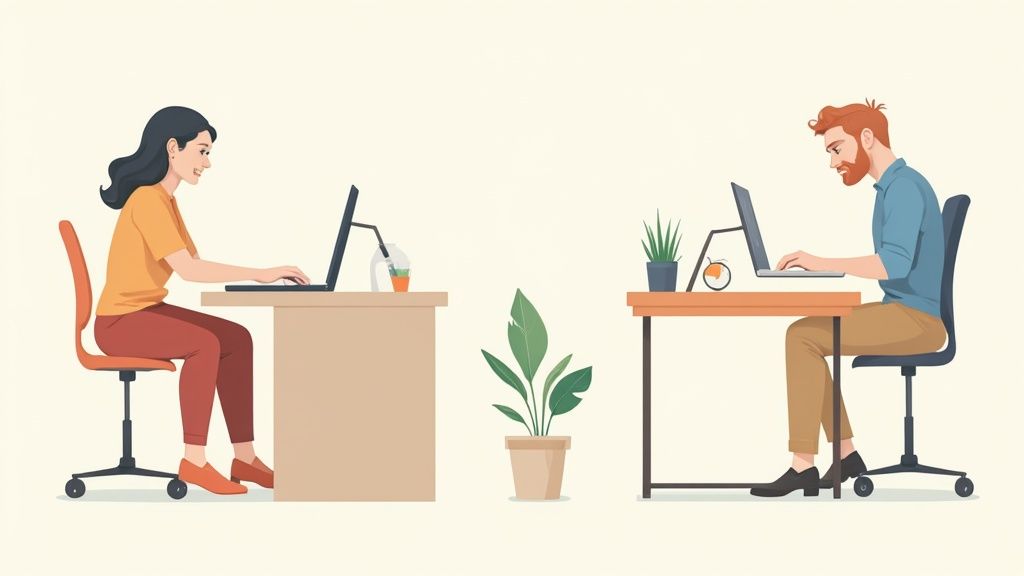
ADHD brains often struggle with task initiation and sustained focus, a challenge rooted in executive function difficulties. An empty room can feel like a vacuum, making it hard to get started. Body doubling is a powerful strategy that leverages social presence to create an environment of gentle accountability. It involves working alongside another person, either physically or virtually, to help you stay on task.
The presence of another person acts as an external motivator and focus anchor. This is believed to stimulate the release of neurotransmitters like norepinephrine, which are involved in focus and attention, essentially providing the brain with the external scaffolding it needs to perform. This technique transforms isolated, daunting tasks into shared, manageable experiences, making it a cornerstone of a successful daily routine for ADHD adults.
How to Implement Body Doubling
Integrating body doubling into your routine can be simple and highly effective. The key is to find what format works best for your specific needs and tasks.
- Start Small and Virtual: If you're new to the concept, begin with short, structured virtual sessions. Use platforms like Focusmate or Flown for 25-minute co-working blocks. This low-commitment approach allows you to experience the benefits without a major adjustment to your schedule.
- Define Clear Intentions: Before any session, state your goal aloud to your partner. Saying, "For the next 45 minutes, I am going to draft the introduction to my report," creates a clear, verbal contract that makes you more likely to follow through.
- Mix Physical and Virtual Environments: Don't limit yourself to one method. You might use a virtual body double for focused work at home, visit a coffee shop or library for creative tasks, and schedule a daily 5-minute text check-in with an accountability partner to confirm you've taken your medication.
A sample body doubling schedule might look like this:
- 9:00 – 9:05 AM: Accountability Check-in (Text partner: "Morning! Goal for the next 2 hours is finishing this proposal. You?")
- 10:00 – 10:50 AM: Virtual Body Doubling Session (Using Focusmate for a specific work task)
- 1:30 – 3:00 PM: "Parallel Play" at a Cafe (Working quietly alongside a friend on separate projects)
- 4:30 – 4:45 PM: End-of-Day Debrief (Quick call with partner to review what you accomplished)
Finding the right community and support is crucial for making accountability partnerships stick. Exploring different options can help you discover what works for you, and you can find more information about the power of peer connection by reading about ADHD support groups. Remember that the goal isn't constant supervision; it's about creating a supportive presence that helps your brain engage and stay on track.
4. Dopamine Menu and Reward Systems: Strategically Fueling Motivation
The ADHD brain operates on an interest-based nervous system, constantly seeking activities that release dopamine, a key neurotransmitter related to motivation and reward. Standard to-do lists often fail because the tasks themselves don't provide this necessary chemical feedback, leading to procrastination. A Dopamine Menu is a personalized, curated list of rewarding activities used strategically to fuel motivation and overcome the activation energy required for less stimulating tasks.
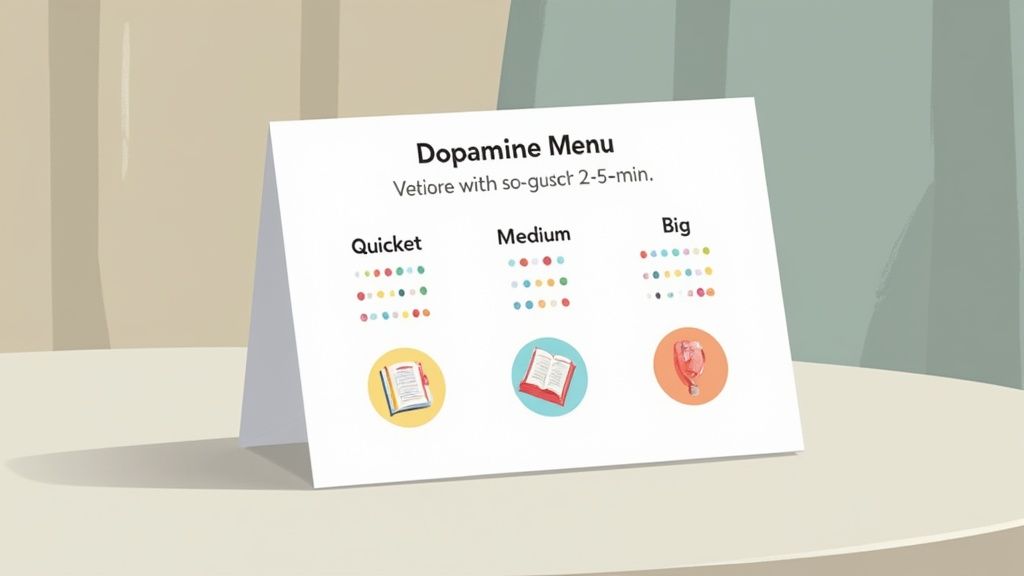
This concept, popularized by ADHD experts and communities, turns reward into a proactive tool rather than a reactive afterthought. Instead of vaguely promising yourself a "break," you have a tangible menu of appealing options to choose from. This externalizes the reward process, making it a reliable part of your daily routine for ADHD adults and helping you push through moments of low executive function.
How to Implement a Dopamine Menu
Creating and using your menu is about making rewards accessible, visible, and varied. The goal is to build a toolkit of motivators that you can deploy at a moment's notice.
- Categorize Your Rewards: Group activities by the time and energy they require. This prevents decision fatigue when you need a quick boost. Create categories like "Quick Hits" (under 5 mins), "Medium Breaks" (15-30 mins), and "Big Rewards" (1+ hour).
- Make It Visible: Don't just keep this list in your head or buried in a notes app. Write or print your Dopamine Menu and post it where you'll see it daily, like on your monitor, refrigerator, or by your workspace. Visual cues are critical for the ADHD brain.
- Incorporate Movement: Physical activity is one of the most effective ways to generate dopamine and norepinephrine. Ensure your menu includes movement-based options like a 5-minute dance party, stretching, or a quick walk outside to reset your brain and body.
A sample Dopamine Menu might include:
- Quick Hits (2-5 min): Listen to one favorite song, watch a funny cat video, do 10 jumping jacks, eat a crunchy snack.
- Medium Rewards (15-30 min): Watch one episode of a sitcom, call a friend, work on a craft or hobby, read a chapter of a book.
- Large Rewards (1+ hour): Play a video game, go for a long walk in a park, cook a special meal, dedicate time to a passion project.
Use this menu to "sandwich" difficult tasks; plan a small dopamine activity before you start to get motivated and a slightly bigger one as a reward for completion. This system provides the immediate gratification the ADHD brain craves, helping you build momentum and consistency. You can find more ideas for building your menu and other executive function supports by exploring resources focused on practical ADHD life skills. Remember to rotate the items on your menu to maintain novelty and prevent them from becoming stale.
5. Environmental Design and External Structure (Reducing Decision Load)
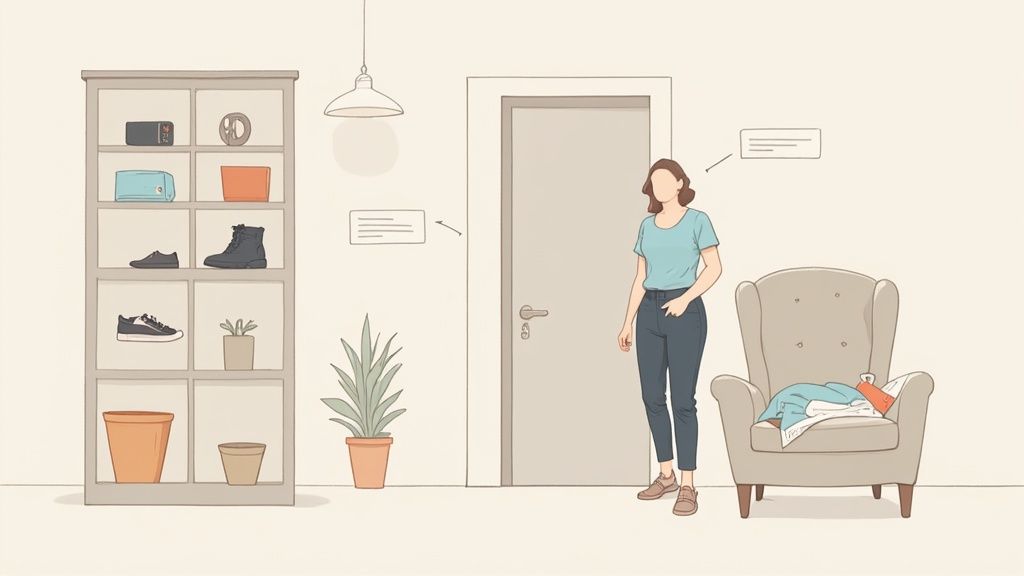
Executive dysfunction, a core feature of ADHD, makes every small decision feel monumental. The constant need to decide what to do next, where to find things, and how to start a task drains mental energy. Environmental design is the practice of strategically organizing your physical space to offload these decisions. It’s about creating an external structure that guides your actions, making desired behaviors easier and undesired ones harder.
For an ADHD brain, a supportive environment acts as an external executive function, reducing the cognitive load required to navigate daily life. When your space is set up to support your routine, you rely less on willpower and memory, which are often inconsistent resources. By intentionally curating your surroundings, you build a foundation for a more seamless and less stressful daily routine for adhd adults.
How to Implement Environmental Design
The goal is to remove friction between you and your goals. Start by identifying the biggest bottlenecks and points of frustration in your day and redesigning the environment around them.
- Create a 'Launch Pad': Designate a specific spot by the door for essential items: keys, wallet, phone, and work bag. Place a bowl or tray there and make it a non-negotiable habit to put these items in it the moment you walk in. This eliminates the frantic morning search.
- Set Up 'Stations' for Routines: Group all items for a specific routine in one place. Create a coffee station with mugs, coffee, and sugar all together. Have a medication station with your pill organizer, a glass, and a water bottle right next to your coffeemaker or toothbrush.
- Reduce Barriers to Good Habits: Do you want to work out in the morning? Lay out your workout clothes, shoes, and water bottle the night before. Want to drink more water? Keep a filled water bottle on your desk at all times.
- Add Friction to Distractions: Make it harder to engage in distracting behaviors. Log out of social media accounts after each use, keep the TV remote in a drawer in another room, or put your phone in a charging station across the room when you need to focus.
A simple yet powerful example is preparing for the next day:
- Evening: Lay out clothes for tomorrow, including accessories and shoes.
- Evening: Pack your lunch and place it at the front of the fridge.
- Evening: Place your work bag, with laptop and notebook inside, on the 'launch pad' by the door.
By making these small adjustments, you are pre-making dozens of decisions, freeing up your brainpower for more complex tasks. This approach isn't about being perfectly organized; it's about creating a system of external cues and supports that work with your ADHD brain, not against it.
6. Movement-Based Routines and Exercise Integration: Fueling the ADHD Brain
The connection between movement and the ADHD brain is profound. Physical activity is not just good for health; it's a powerful tool for managing core ADHD symptoms like inattention, impulsivity, and emotional dysregulation. Exercise boosts key neurotransmitters like dopamine and norepinephrine, which are often lower in individuals with ADHD, essentially acting as a natural stimulant to improve focus and mood.
Integrating deliberate movement into a daily routine for ADHD adults turns this neurological benefit into a consistent support system. Rather than viewing exercise as a separate, often daunting task, this approach weaves it into the fabric of the day. This creates opportunities to reset focus, burn off excess energy, and regulate the nervous system, making it easier to tackle cognitive demands and navigate daily challenges with greater stability.
How to Implement Movement-Based Routines
The key is to find movement you genuinely enjoy, which removes the friction of forcing yourself to do something you dislike. Consistency over intensity is the goal.
- Start the Day with a Dopamine Boost: Begin your morning with a 20-minute brisk walk outside. The combination of physical activity and natural light can significantly improve your mood and set a positive tone for the day's focus.
- Integrate 'Movement Snacks': Sitting still can be draining for the ADHD brain. Set a timer to take a 5-minute movement break every 45-50 minutes. This could be stretching, doing jumping jacks, or having a quick dance party.
- Pair Movement with Chores: Turn mundane tasks into energizing activities. Put on your favorite upbeat music and dance while you do the dishes, fold laundry, or tidy up. This strategy, known as "temptation bundling," pairs a less desirable task with an enjoyable one.
- Make Work More Kinesthetic: If your job involves a lot of sitting, consider a standing desk or an under-desk elliptical. Take calls while walking around your office or home. This keeps your body engaged and can prevent the mental fatigue that comes with prolonged stillness.
A sample movement-integrated work block might look like this:
- 1:00 PM – 1:45 PM: Focused Work Session (Project Task)
- 1:45 PM – 1:50 PM: Movement Snack (Stretching, walk to get water)
- 1:50 PM – 2:30 PM: Focused Work Session (Email Responses)
- 2:30 PM – 2:45 PM: Afternoon Walk (Listen to a podcast)
Remember, the best exercise is the one you'll actually do. By choosing enjoyable activities and scheduling them as non-negotiable appointments, you create a sustainable routine. For those who thrive on social connection, a group fitness class or a workout buddy can provide the "body doubling" effect, adding accountability and making the experience more engaging. For more guidance on finding support that fits your needs, exploring options like ADHD coaching can offer personalized strategies for building these habits.
7. The Evening Wind-Down Ritual and Sleep Hygiene Protocol
For many with ADHD, the brain’s "off" switch seems to be missing, especially at night. Racing thoughts, lingering hyperfocus from a late-night project, or a burst of creative energy can make the transition to sleep feel impossible. This is why a structured evening wind-down ritual is a non-negotiable part of an effective daily routine for ADHD adults. It creates a predictable sequence that signals to your brain that it's time to shift from high-gear to rest-mode.
An evening wind-down ritual is a series of calming, low-stimulation activities performed in the same order every night, starting 60-90 minutes before your desired bedtime. This routine helps regulate your circadian rhythm and quiets the mental chatter that often sabotages sleep. Because poor sleep is known to significantly worsen ADHD symptoms like inattention and emotional dysregulation the next day, mastering this transition is crucial for overall management.
How to Implement an Evening Wind-Down
The key is to create a sensory runway that guides your mind and body toward sleep. Consistency is more important than perfection.
- Go Screen-Free: This is the most critical step. The blue light from phones, tablets, and computers suppresses melatonin production, the hormone that tells your body it's time to sleep. Put all devices away in another room at least one hour before bed.
- Create a Sensory Shift: Engage your senses to signal the transition. Dim the lights, play calming music or a podcast, or use an essential oil diffuser with lavender. A warm bath or shower can also help by lowering your core body temperature afterward, which promotes sleep.
- Empty Your Brain: Racing thoughts often stem from unprocessed ideas or worries. Spend 10-15 minutes journaling, writing down tomorrow’s to-do list, or simply scribbling whatever is on your mind. This "brain dump" externalizes the thoughts, so you don't have to hold onto them.
A sample wind-down protocol might look like this:
- 9:30 PM: All screens off. Plug phone in across the room.
- 9:45 PM: Tidy up living space for 15 minutes (sets a calm environment for the morning).
- 10:00 PM: Warm shower and change into pajamas.
- 10:20 PM: Read a physical book (not an e-reader) in a dimly lit room.
- 10:45 PM: Head to the bedroom, which is cool, dark, and quiet.
- 10:50 PM: 10-minute guided meditation or deep breathing exercises.
To keep this a consistent part of your daily routine for ADHD adults, set a recurring alarm that reminds you to start your wind-down, not just to go to bed. If you struggle with racing thoughts even after these steps, consider using a white noise machine or a sleep app like Calm to provide a soothing, non-distracting auditory focus.
8. The 'Getting Started' Protocol and Hyperfocus Channeling
One of the most profound paradoxes of the ADHD brain is the simultaneous struggle with task initiation paralysis and the superpower of hyperfocus. The "Getting Started" Protocol is designed to directly combat the inertia that makes starting tasks feel impossible, while hyperfocus channeling provides a designated, productive outlet for that intense, single-minded concentration once it kicks in. This strategy turns a common ADHD challenge into a powerful asset within a daily routine.
This dual approach works by first lowering the barrier to entry for any given task to an almost trivial level. By defining the absolute smallest first step, you trick your brain into moving before executive dysfunction can raise its defenses. Once that initial momentum is built, you can then intentionally direct the resulting flow state, or hyperfocus, towards your most important projects, preventing it from being accidentally "wasted" on a less critical activity.
How to Implement This Protocol
The key is to separate the act of starting from the act of doing. Treat them as two distinct, equally important tasks.
- Define Your 'Launch Sequence': For any daunting task, create a "Getting Started" protocol. This is a micro-list of 2-4 tiny, physical actions. For writing a report, the protocol might be: 1. Clear desk space. 2. Sit down with water. 3. Open the document. 4. Write one single sentence.
- Use the 'Just 5 Minutes' Rule: Commit to working on the task for only five minutes. This is a low-stakes agreement with yourself. The magic is that starting is the hardest part; after five minutes, hyperfocus often takes over, and you'll want to continue.
- Schedule Hyperfocus Windows: Just like you time block tasks, schedule time for potential hyperfocus. Dedicate a 90-minute block to a passion project or a critical work assignment. Prepare everything you need in advance (a "start kit") so when the time comes, you can dive right in. This planned approach helps channel that intense energy where you want it to go.
A sample protocol for a dreaded task like "organize finances" might look like this:
- 7:00 PM: Prepare "Start Kit" (Laptop, login info, favorite drink)
- 7:30 PM: Initiate "Getting Started" Protocol:
- Sit at desk.
- Open budgeting spreadsheet.
- Set a timer for 5 minutes.
- 7:35 PM: Timer goes off. Decide whether to continue or stop.
This method is a core component of an effective daily routine for ADHD adults because it builds momentum and self-trust. By consistently proving to yourself that you can start, the dread associated with task initiation begins to fade. Celebrating the completion of just the first step can be incredibly motivating, reinforcing the habit and making it easier to tackle the next challenge.
8-Point ADHD Daily Routine Comparison
| Strategy | 🔄 Implementation complexity | ⚡ Resources & efficiency | 📊 Expected outcomes (effectiveness) | Ideal use cases | 💡 Key advantages |
|---|---|---|---|---|---|
| Time Blocking and Structured Scheduling | Medium — requires upfront planning and regular adjustment | Calendar app or paper planner; time to plan; moderate setup time | Improves time awareness, reduces decision fatigue — ⭐⭐⭐ | Daily work routines, projects needing sustained focus, preventing hyperfocus derailment | Creates external structure; anchors tasks to time; use 3–4 major blocks first |
| The Two-Minute Rule and Task Batching | Low — simple rules but needs discipline to avoid interruption | Timer, quick-capture list, set batching windows; very low barrier | Clears small tasks quickly and reduces context-switching — ⭐⭐/⭐⭐⭐ | Email processing, errands, admin tasks, short recurring chores | Produces quick wins; schedule batching windows and celebrate completion |
| Body Doubling and Accountability Partnerships | Low–Medium — depends on finding and coordinating partners | Partner or platform (Focusmate), scheduling; modest time cost | Boosts initiation and completion via external accountability — ⭐⭐⭐ | Tasks with initiation paralysis, remote work, study sessions | Leverages social motivation; start with 20–25 min sessions and set clear goals |
| Dopamine Menu and Reward Systems | Medium — requires self-awareness and periodic updates | Written menu, small rewards, tracking; low-cost resources | Sustains motivation and reduces unhealthy stimulation — ⭐⭐/⭐⭐⭐ | Long projects, routine maintenance, managing cravings and reward-seeking | Personalized rewards; rotate options and use strategically after tasks |
| Environmental Design and External Structure | Medium–High — initial setup and periodic maintenance | Time to reorganize, storage, labels, duplicate items; one-time effort with upkeep | Reduces decision load and makes desired behaviors automatic — ⭐⭐⭐ | Morning/evening routines, household management, medication adherence | Lowers executive demand long-term; apply one-touch rule and create stations |
| Movement-Based Routines and Exercise Integration | Low–Medium — schedule and consistency needed | Space/gear optional, short time blocks; scalable to available resources | Improves attention, mood, sleep, and executive function — ⭐⭐⭐ | Focus boosts, emotional regulation, transition between tasks | Increases dopamine/norepinephrine naturally; choose enjoyable movement and schedule it |
| Evening Wind-Down Ritual and Sleep Hygiene Protocol | Medium — habit formation and discipline required | Time window before bed, environment adjustments, apps or rituals | Better sleep quality and reduced next-day ADHD symptoms — ⭐⭐⭐ | People with insomnia, evening hyperfocus, inconsistent sleep schedules | Signals brain to stop; start wind-down 60–90 min before bedtime and limit devices |
| Getting Started Protocol and Hyperfocus Channeling | Low — simple microsteps but requires prep and consistency | Timer, "start kit", environment prep; minimal resource needs | Improves task initiation and harnesses hyperfocus productively — ⭐⭐⭐ | Tasks with initiation paralysis, creative deep work, project kickoffs | Lowers activation energy with “just 5 minutes”; identify smallest first step and prepare environment |
Your Routine, Your Rules: When and How to Get Professional Support
Building a functional daily routine for ADHD adults is not a one-time event; it's a dynamic, ongoing process of self-discovery, compassionate experimentation, and strategic adjustment. The tools we’ve explored, from Time Blocking and the Two-Minute Rule to Body Doubling and Dopamine Menus, are not rigid prescriptions but a collection of powerful ingredients. Your job is to be the chef, selecting, combining, and refining them to create a recipe that works for your unique brain and lifestyle.
The ultimate goal isn't to achieve a flawless, robotically perfect schedule. It's to build a supportive structure that reduces friction, conserves your finite executive function resources, and creates more space for you to engage with what truly matters. Remember, consistency is far more valuable than perfection. A "good enough" routine that you can stick with 80% of the time will always outperform a "perfect" routine that you abandon after three days.
Recapping Your ADHD Routine Toolkit
Let's distill the core principles from this guide into actionable takeaways. Think of these as the foundational pillars upon which your personalized system rests:
- Externalize Everything: Your brain is for generating ideas, not storing them. Use calendars, apps, whiteboards, and timers to offload the mental burden of remembering. This principle is the backbone of Time Blocking and Environmental Design.
- Lower the Barrier to Entry: The biggest hurdle is often just starting. The 'Getting Started' Protocol and the Two-Minute Rule are designed specifically to overcome that initial inertia, making tasks feel less daunting and more achievable.
- Work With Your Brain, Not Against It: Instead of fighting your need for stimulation, build it into your day. A Dopamine Menu provides healthy, strategic rewards, while Movement-Based Routines fulfill your brain's craving for physical activity, which in turn boosts focus and mood.
- Leverage Social Scaffolding: ADHD doesn't exist in a vacuum. Techniques like Body Doubling and finding an accountability partner transform solitary struggles into collaborative efforts, providing the external structure and motivation that can be difficult to generate internally.
- Protect Your Bookends: Your day is anchored by its start and end. A consistent Evening Wind-Down Ritual directly impacts your sleep quality, which is critical for emotional regulation and cognitive function the next day. A structured morning routine sets a proactive, intentional tone, preventing the day from getting derailed before it even begins.
When Self-Help Isn't Enough
Implementing these strategies can be life-changing. However, sometimes, the challenges associated with ADHD are too significant to manage with behavioral tools alone. If you find that, despite consistent effort, you're still facing major obstacles, it may be time to seek professional guidance.
Consider reaching out for support if you experience the following:
- Persistent Overwhelm: You consistently feel that daily demands are unmanageable, leading to chronic stress, anxiety, or burnout.
- Significant Impact on Life Domains: Your struggles with task management, emotional regulation, or focus are negatively affecting your career, academic performance, key relationships, or financial stability.
- Co-occurring Challenges: You suspect you may also be dealing with anxiety, depression, learning disabilities, or Autism (AuDHD), which can complicate ADHD symptoms and require a more specialized approach.
- Diagnostic Uncertainty: You've long suspected you have ADHD but have never received a formal evaluation. A comprehensive diagnosis is the first step toward accessing targeted treatments, including medication and therapeutic support.
A qualified professional can provide a thorough diagnostic evaluation, help you explore medication options, and offer specialized therapy (like CBT for ADHD) or coaching. They can act as a knowledgeable guide, helping you understand your unique neurotype and co-creating a support system that integrates both behavioral strategies and clinical interventions. Building your ideal daily routine for ADHD adults is a journey, and you don't have to navigate it alone.
If you recognize yourself in these challenges and are ready to seek a clear diagnosis and a personalized treatment plan, the experts at Sachs Center are here to help. We specialize in comprehensive, culturally sensitive testing and support for ADHD, Autism, and AuDHD in adults, providing the clarity you need to build a life that truly works for you. Explore our services at Sachs Center to take the next step.
