

You remind your partner about the dinner plans, the bill, and the task that needed finishing. They agree, sincerely, and then the evening arrives with none of it done. You feel abandoned. They feel ashamed, confused about how a promise they meant to keep became another piece of evidence against them. The argument may begin with a forgotten appointment, but it often ends with both of you wondering whether love can survive the pattern.
These add relationship problems aren't proof that ADHD makes someone selfish or that a non-ADHD partner is controlling. They often reflect a mismatch between executive functioning, emotional regulation, memory, stress, and the systems a couple uses to share a life. Understanding that mismatch creates room for accountability without humiliation, and for support without turning one partner into the other's parent.
When ADHD Changes the Shape of Love
Many couples don't identify a relationship crisis through one dramatic event. They notice a slow accumulation of missed bids for connection, unfinished responsibilities, interrupted conversations, and apologies that don't prevent the next rupture. One partner starts using reminders as protection against disappointment. The other starts hearing every reminder as criticism. Both become experts at anticipating the next failure.
Relationship distress is common even when couples remain committed. The American Psychological Association's marital therapy fact sheet estimates that approximately 20% of married couples experience marital distress at any given time in its discussion of marital distress and relationship treatment. ADHD can intensify ordinary differences in attention, planning, and emotional response, but it doesn't create every problem in a partnership.
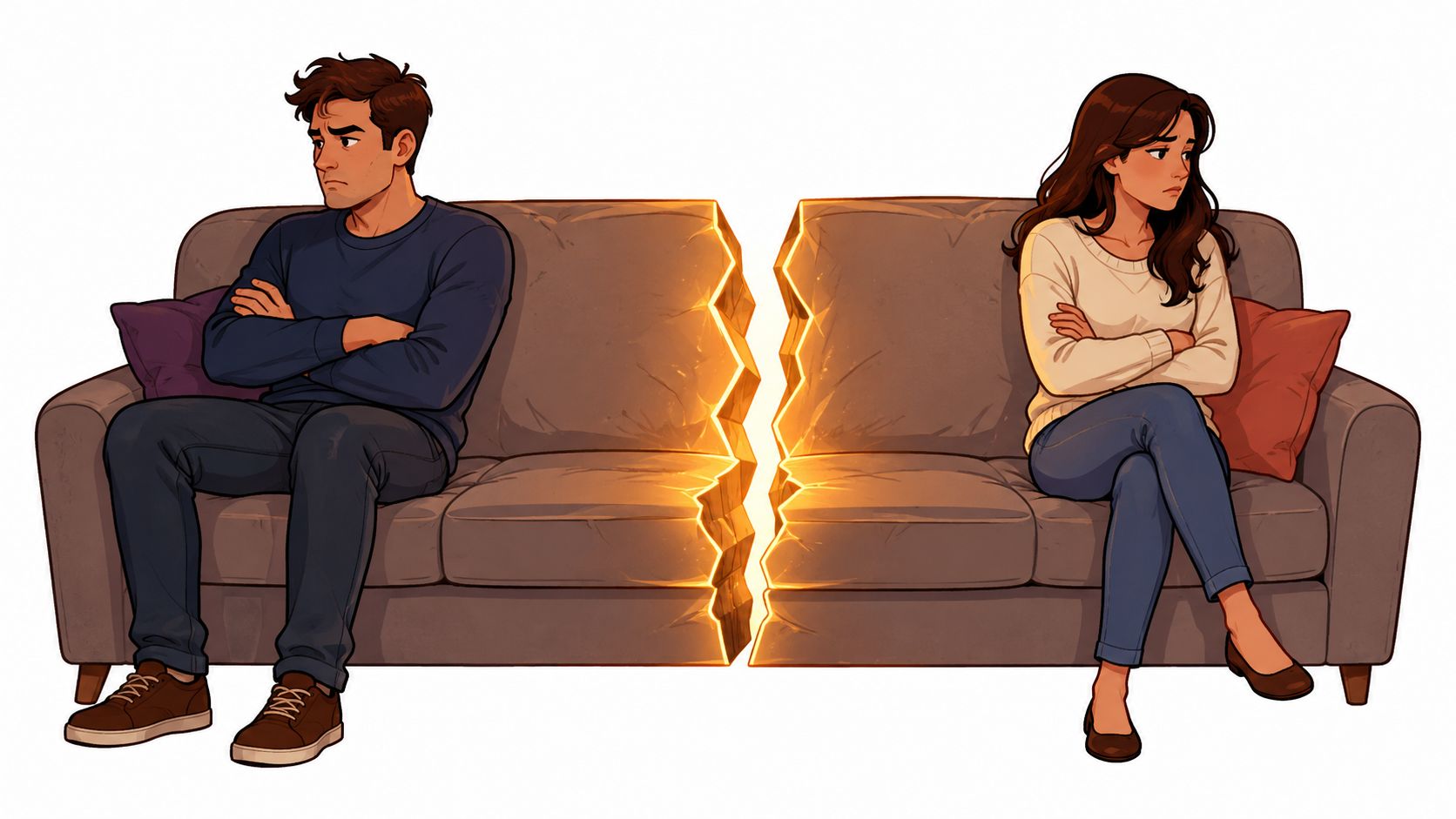
The conflict is rarely about one forgotten task
Research on divorced individuals shows how rarely relationship breakdown has a single cause. In a 2013 study, the most frequently cited contributors included lack of commitment, infidelity, conflict and arguing, marrying young, financial problems, substance abuse, and domestic violence. The study found that husbands reported an average of 7.8 contributing problems, while wives reported 10.7, supporting a multi-causal view of relationship distress rather than a simple explanation based on one diagnosis or behavior. The findings are available in this peer-reviewed study of divorce contributors.
That distinction matters clinically. If a couple treats every missed deadline as evidence of bad character, they lose the opportunity to examine sleep, overload, unclear expectations, shame, medication needs, or an unsustainable division of labor. If they blame ADHD for everything, they may overlook incompatibility, unresolved betrayal, coercion, or the non-ADHD partner's legitimate need for reliability.
Practical rule: Explain the mechanism, name the impact, and still require repair.
ADHD-related patterns are treatable. Treatment doesn't mean removing responsibility from the person with ADHD. It means replacing moral judgment with accurate observation, then building supports that make follow-through more likely.
How ADHD Really Creates Friction
ADHD creates friction through a chain reaction, not a single personality flaw. An attention gap may lead to a missed detail. The missed detail creates a practical consequence. The consequence triggers criticism, which activates shame or defensiveness. That emotional surge consumes more self-control, making thoughtful communication even harder.
Stress-state dependence is central to this pattern. Adults with ADHD may communicate effectively when rested, regulated, and adequately supported, then become more negative or reactive when their self-control resources are depleted. The problem isn't that their communication ability vanished permanently. Their access to that ability changed with stress, fatigue, overload, and emotional threat. Research on stress, self-control, and partner communication in adults with ADHD provides background for this more context-sensitive understanding.
The visible behavior is only the final link
Time blindness can disrupt shared routines. Working memory limitations can make verbal agreements unreliable unless the couple records them. Emotional dysregulation can turn a small correction into an experience of rejection. Hyperfocus may make the ADHD partner highly attentive at one moment and apparently unreachable at another.
Those differences affect both people. The non-ADHD partner may carry more planning, tracking, and emotional labor. The ADHD partner may live under constant suspicion, with each mistake interpreted as proof that they don't care. Over time, both partners can become less generous in their interpretations.
A 2025 survey study described in the same research source found no difference in overall satisfaction between ADHD and non-ADHD relationships, even though some ADHD couples used destructive conflict styles more often. It also found that ADHD couples could be less distressed by those styles when affection was low. That doesn't make destructive conflict safe. It challenges the assumption that ADHD automatically determines poor relationship quality.
Ask what state the couple was in
Before concluding that a partner is inconsiderate, ask:
- Resource level: Had either person slept poorly, worked beyond capacity, or managed prolonged sensory or emotional demands?
- Task design: Did the agreement exist only in conversation, or was it visible in a shared system?
- Meaning assigned: Did a missed task become “you don't love me,” or could the couple describe the event without a character verdict?
- Repair capacity: Could either partner pause, take responsibility, and return to the conversation?
This framework doesn't excuse hurtful conduct. It helps couples intervene earlier, before depletion turns a solvable problem into an entrenched conflict cycle.
Communication Techniques That Actually Work
Good communication advice often fails ADHD couples because it assumes both people can hold several points in working memory while emotionally activated. A more useful approach makes the message shorter, visible, time-limited, and specific. Psychoeducational interventions such as PEGASUS improved ADHD knowledge, relationship quality, psychological well-being, and subjective stress, while significant others reported lower care burden. The central lesson from research on the PEGASUS psychoeducational intervention is that ADHD education works better when paired with relationship skills.
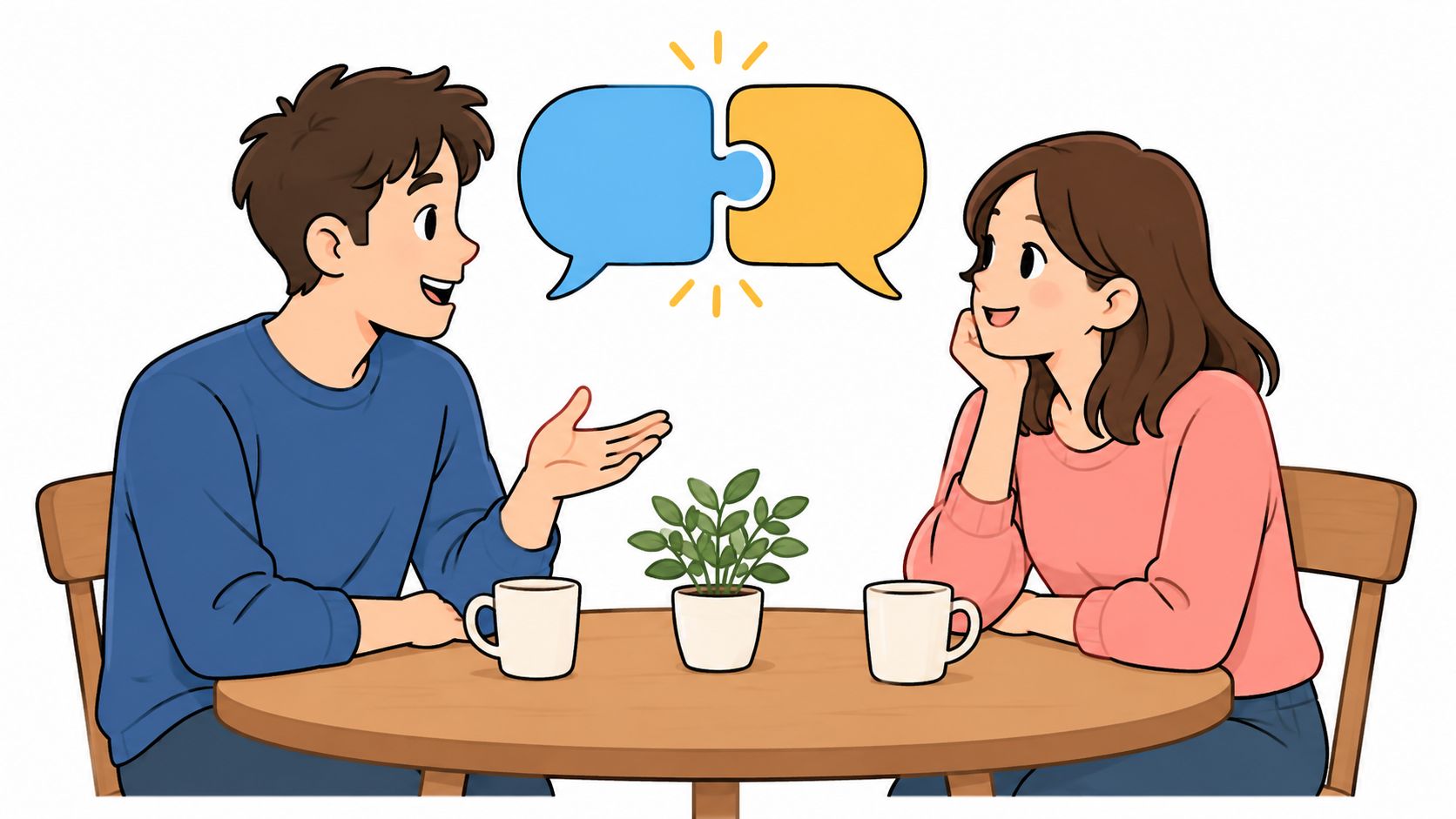
Make conversations concrete
Use a shared calendar such as Google Calendar, a visible whiteboard, or a task app that both partners can access. Don't rely on one person to remember what was agreed verbally. Write the task, owner, deadline, and definition of done.
A structured check-in can stay brief:
- Connection: Name one thing that felt supportive.
- Logistics: Review upcoming commitments and assign ownership.
- Friction: Choose one issue, not the entire relationship history.
- Request: State the specific change needed.
- Repair: Agree on when you'll revisit the issue.
For an immediate concern, use a short conversation rather than launching an unplanned hour-long confrontation. “Can we take two minutes to decide who will call the plumber?” is easier to process than “You never help with anything.” If either person is overstimulated, schedule decompression before discussion. A pause should include a return time, not function as disappearance.
Separate the person from the pattern
Externalizing language doesn't deny responsibility. It identifies the problem as a shared target.
- “The working-memory gap got us again. Let's put the appointment in the calendar now.”
- “I can see the overload state is here. I need ten minutes, then I'll come back.”
- “When the reminder becomes criticism, I shut down. Can you ask me for a status update instead?”
The couple can also use a bid-for-connection framework to notice small moments of reaching out rather than responding only to failures. This guide to bids for connection can help partners identify whether a comment is seeking information, reassurance, affection, or practical help.
Use CBT-style problem solving
A CBT-informed conversation distinguishes the event from the automatic interpretation. “The dishes weren't done” is observable. “You don't respect me” is an interpretation that may contain real hurt but won't produce a workable plan by itself.
Try this sequence: identify the event, name the emotional impact, test the interpretation, and choose one behavioral experiment. The experiment might be a phone reminder, a written handoff, a reduced task, or a different conversation time. Review whether it helped without treating an imperfect result as proof that the relationship is doomed.
Building Routines, Boundaries, and External Support
Communication can't compensate for a daily structure that repeatedly exceeds one partner's executive capacity. Couples need systems that reduce negotiation, make responsibilities visible, and preserve each person's right to rest. The aim isn't to create a perfectly optimized household. It's to stop relying on affection and memory to perform the work of infrastructure.
Start with recurring anchors. Morning medication, school preparation, meals, bills, laundry, and bedtime can each have a consistent cue, location, and backup. A shared digital calendar handles dates. Automatic bill payment handles recurring transactions. Timers, labeled storage, grocery templates, and recurring deliveries can reduce the number of decisions the couple must make under pressure.
The Sachs Center's guidance on ADHD and routines offers one example of how external structure can support executive functioning without treating the person as deficient.
Support should not turn into supervision
Research on adult ADHD support preferences links greater inattention, hyperactivity, and emotional dysregulation with a greater desire for support, while also indicating that romantic partners may not fully meet that support. That mismatch creates a difficult choice. The ADHD partner needs help, but the relationship suffers when help becomes monitoring, correcting, or parental management. The non-ADHD partner needs relief, but may feel guilty for setting limits.
Create a support map with three categories:
- Partner support: Emotional reassurance, shared decisions, and agreed household responsibilities.
- External support: Therapy, coaching, trusted family, workplace accommodations, or community resources.
- Self-managed systems: Reminders, checklists, medication routines, visual cues, and automated payments.
Protect attention as a limited resource
An “attention budget” can make invisible limits discussable. Perhaps one partner can't have a serious conversation immediately after work, while the other needs daily connection before bed. Rather than treating either need as unreasonable, schedule protected times and define what counts as urgent.
Boundaries should describe what each person will do, not what they can force the other person to do. “I won't continue a conversation when we are insulting each other. I'll take a break and return at the agreed time” is a boundary. “You must calm down now” is an attempt at control.
A sustainable relationship gives both partners more than one source of regulation, care, and practical assistance. That approach reduces resentment while preserving intimacy.
Treatment Options and When to Seek Help
Medication, individual therapy, couples therapy, and psychoeducation address different parts of the problem. Medication may reduce core ADHD symptoms for some people, but it doesn't automatically teach conflict repair, redistribute emotional labor, or heal accumulated resentment. Couples therapy can improve interaction patterns, yet it may stall if untreated ADHD continues to undermine follow-through between sessions.
The strongest practical approach is often complementary. A pilot open trial combining CBT for adult ADHD with couples-based prevention used six weekly 90-minute sessions with 15 couples. It reported no dropouts, improved partner-reported ADHD symptoms, and small reductions in relationship negativity and conflict-inducing behaviors, although the ADHD partners' self-ratings didn't show meaningful change in conflict behavior. The findings from this pilot study of CBT and couples-based ADHD intervention also illustrate why partners may notice progress at different speeds.
Match the intervention to the problem
| Primary need | Useful starting point | What it won't solve alone |
|---|---|---|
| Unclear diagnosis or lifelong confusion | Comprehensive ADHD evaluation | It won't repair a hostile conflict pattern by itself |
| Missed tasks, disorganization, and time problems | ADHD treatment, coaching, and external systems | It won't resolve betrayal or coercive behavior |
| Repeating arguments and emotional distance | Neurodiversity-informed couples therapy | It may be ineffective if one partner can't participate safely |
| Shame, burnout, or emotional dysregulation | Individual CBT or another appropriate therapy | It doesn't replace practical household agreements |
| Both partners lack ADHD knowledge | Psychoeducation for the couple | Information alone won't create new habits |
Seek professional help when arguments include contempt, intimidation, threats, violence, repeated stonewalling, or fear. Safety comes before joint problem solving, and couples therapy isn't appropriate in every abusive dynamic.
For adults who were missed in childhood, evaluation should examine developmental history, current impairment, masking, cultural context, and overlapping conditions. A provider who understands women, BIPOC adults, and highly masked presentations should ask how the person compensates, not only whether they appear outwardly organized.
Hidden Struggles of Underserved Communities
A person can look successful and still be paying an unsustainable price for compensation. Women and highly masked adults may organize every detail through elaborate systems, overprepare, imitate expected social behavior, or collapse privately after maintaining control in public. Their partners may see competence in one setting and exhaustion, forgetfulness, or emotional flooding at home, where the masking effort finally ends.
BIPOC adults can face additional barriers when clinicians interpret attention differences through cultural stereotypes, minimize distress, or lack familiarity with how racism, family expectations, economic pressure, and healthcare distrust affect disclosure. Delayed recognition can leave couples arguing about behavior without understanding the neurodevelopmental context. It can also make the person with ADHD doubt their own account.
Shame changes the conflict
Emerging qualitative work in adults with ADHD describes feeling like a burden. That experience matters because shame doesn't reliably produce better follow-through. It often produces concealment, avoidance, defensiveness, or frantic overcompensation followed by exhaustion. A partner who says “you need to try harder” may intend to motivate action but reinforce the identity that the ADHD partner is defective.
Supportive care asks different questions:
- Compensation: What systems keep this person functioning, and what happens when they fail?
- Culture: What beliefs about responsibility, gender, family duty, or respect shape the conflict?
- Access: Can the person obtain assessment, therapy, medication, or accommodations?
- Identity: Does the diagnosis reduce shame, increase it, or both?
The Sachs Center's resource on ADHD in BIPOC adults addresses diagnostic and support considerations for this population. Look for clinicians who invite cultural context, avoid deficit-only language, and understand that a quiet presentation isn't evidence of low impairment.
A relationship plan should treat identity safety as clinical work, not a side issue. People cooperate more effectively when they can tell the truth about their capacity without expecting humiliation.
Taking the Next Step Toward Connection
Start by identifying the pattern you want to change, not the diagnosis you want to blame. Write down a recent conflict using four headings: what happened, what each person felt, what each person assumed, and what support would have changed the outcome. This creates a shared description before either partner proposes a solution.
Use the following decision points:
- Choose individual assessment when ADHD is suspected, symptoms affect work or home life, or one partner doesn't understand their fluctuating capacity.
- Choose individual therapy when shame, anxiety, depression, trauma, emotional dysregulation, or burnout blocks participation in relationship work.
- Choose couples therapy when both partners can speak safely and the central problem is a repeating cycle of criticism, defensiveness, withdrawal, or unmet needs.
- Combine approaches when executive-function problems and relationship injuries reinforce each other.
Test whether your current plan is working
A strategy deserves adjustment if reminders remain verbal, responsibilities remain ambiguous, one partner still acts as a manager, or the same conflict returns without a repair conversation. Progress doesn't require perfect consistency. It should show up as faster recognition, clearer ownership, less escalation, and more reliable repair.
Ask potential providers direct questions. Do you work with adult ADHD and couples? How do you distinguish ADHD-related executive-function problems from unwillingness or abuse? How do you account for masking, gender, race, culture, and shame? What happens when one partner improves faster than the other?
Don't wait for the relationship to become unbearable before seeking help. A clinician can help you determine whether you need diagnostic clarity, ADHD treatment, couples counseling, or a coordinated plan. The evidence and clinical experience point toward a hopeful conclusion: ADHD can shape relationship challenges, but it doesn't dictate relationship quality.
Sachs Center provides telehealth diagnostic evaluations and treatment for ADHD, Autism, and AuDHD, along with individual, family, group, and couples-focused support. If ADHD-related conflict, masking, or shame is affecting your partnership, visit Sachs Center to explore an assessment or therapy option suited to your needs.
