On this page
You may be in one of two places right now. You're a parent trying to understand why your child seems bright, sensitive, and capable in some settings, then overwhelmed, impulsive, or shut down in others. Or you're an adult who has spent years wondering why daily life feels harder than it “should,” even though you've learned how to look competent on the outside.
Often the confusion comes from patterns that don't fit the old stereotypes. Someone can be highly verbal and still be autistic. Someone can look calm and still have ADHD. Someone can be both, and that combination can feel like having one brain that craves structure and another that keeps knocking the structure over.
Good autism and ADHD treatment starts with that reality. The goal isn't to force a person into a neat box. It's to understand how attention, sensory processing, social communication, routines, masking, anxiety, and fatigue interact, then build support around the actual person.
Navigating the Path to Clarity
A common story sounds like this: a woman holds a job, answers emails, and keeps up socially, but by evening she's depleted. She loses track of time, misses small tasks, avoids noisy places, replays conversations, and wonders why everyday functioning takes so much effort. Another version is a child who seems talkative and curious at home, then unravels after school because the day required constant self-control, social decoding, and sensory endurance.
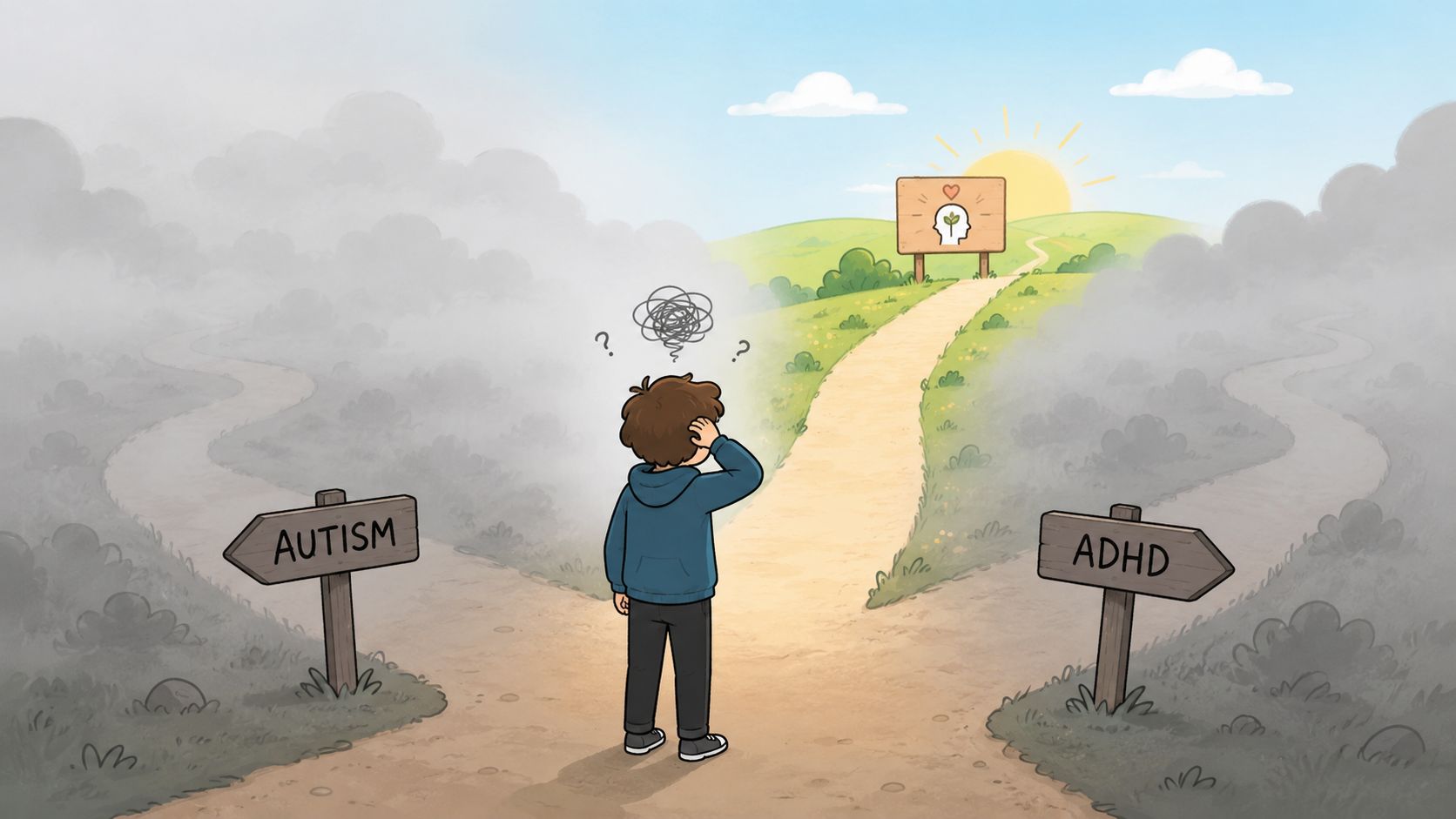
When classic checklists miss the person
People often get stuck. They compare themselves or their child to a narrow picture of autism or ADHD and conclude, “That can't be it.” But many presentations are masked, especially in women, girls, and many BIPOC individuals who have learned to compensate, copy peers, suppress distress, or channel symptoms into perfectionism and overachievement.
That's why the better question isn't only, “Do I have autism or ADHD?” As one clinical discussion puts it, many people are really asking how to tell the difference between masking, anxiety, trauma, and neurodivergence, and why “treatment-resistant” anxiety or depression sometimes improves only when an underlying neurodevelopmental condition is recognized and addressed in this overview of overlapping ADHD and autism presentations.
The problem often isn't a lack of effort. It's that the person has been using the wrong map.
Understanding before fixing
Neurodiversity-affirming care changes the frame. Instead of asking what's wrong with this person, it asks what pattern explains their strengths, strain points, and repeated misfires. That shift matters. It reduces shame, and it leads to more accurate treatment.
A thoughtful evaluation is especially important when someone looks “high functioning” from the outside. Masking can hide social confusion, sensory pain, rigid coping, and severe executive dysfunction. It can also make people appear inconsistent, which others sometimes misread as laziness, drama, or lack of motivation.
When families and clinicians get the formulation right, treatment becomes more targeted. You stop trying random solutions and start matching support to the actual drivers of distress.
Getting an Accurate Diagnosis
An accurate diagnosis is less like taking a quiz and more like assembling a clean clinical picture. With co-occurring autism and ADHD, symptoms overlap enough that shortcuts often lead to muddy conclusions. A robust assessment should combine developmental history, clinical interviews, standardized rating scales, and observational data, while avoiding “double counting” the same symptom under both diagnoses, as described in this consensus paper on assessing co-occurring autism and ADHD.
What a strong evaluation includes
A good evaluation asks questions across time and settings. Childhood patterns matter. Current functioning matters too. So do examples, not just yes-or-no answers.
Look for an assessment that includes:
- Developmental history that tracks early communication, play, routines, attention, sensory patterns, and school functioning
- Clinical interview focused on present-day impairment at work, school, home, and in relationships
- Validated rating scales to capture symptom patterns in a structured way
- Observational data about communication style, flexibility, attention, pacing, and reciprocity
- Contextual formulation that separates autism traits, ADHD symptoms, anxiety, trauma responses, and learned masking
Practical rule: If an evaluation gives you a label without showing how the clinician distinguished overlapping symptoms, it may not be detailed enough to guide treatment well.
For people seeking virtual care, autism and ADHD diagnosis options can be a practical fit when they include those core pieces rather than relying on a simple checklist.
Letter, report, or neuropsych
Many people choose the wrong evaluation because they don't know what each product is for. The right choice depends on what you need to do next.
| Feature | Diagnostic Testing (Letter) | Diagnostic Testing (+ Report) | Neuropsychological Testing |
|---|---|---|---|
| Main purpose | Basic diagnostic clarity | Diagnostic clarity plus fuller clinical picture | In-depth cognitive and academic documentation |
| Typical use | Medication access or workplace accommodations | Coordinated care, therapy planning, workplace support, broader documentation | Standardized test accommodations and school-based support |
| What you receive | Diagnosis letter | Diagnosis letter plus a detailed report | Full testing report with broader assessment data |
| Best fit | You need a formal diagnosis documented simply | You want recommendations that other providers can use | You need documentation for SAT, GRE, GMAT, ACT, IEP, or 504-related needs |
| Depth of functional detail | Limited | Moderate and clinically practical | Most extensive |
How to choose well
A letter is often enough if the main goal is confirming a diagnosis for medication management or workplace accommodation requests.
A report is usually the better choice if you want a roadmap. It gives therapists, prescribers, and other providers a shared summary of patterns, impairment, and next steps.
A neuropsychological evaluation serves a different function. It isn't necessary for every autism or ADHD diagnosis. It's typically the right path when a school, testing agency, or formal accommodation process needs extensive cognitive and academic documentation.
That distinction saves people time, money, and frustration. The question isn't which evaluation is “most thorough” in the abstract. It's which one matches the decision you need to make next.
Evidence-Based Therapies That Build Skills
Therapy for autism and ADHD isn't about erasing personality or teaching someone to act “normal.” It's about helping the person function with less friction. The most useful approaches tend to build skills, reduce avoidable suffering, and support self-understanding.

CBT as a thinking toolbox
Cognitive behavioral therapy, or CBT, works well when the main pain points include anxiety, harsh self-talk, shutdown after mistakes, rejection sensitivity, and rigid thought patterns. I often describe CBT as a toolbox, not a personality transplant. It helps people notice the thought loops that amplify distress and replace them with responses that are more accurate and useful.
For an autistic person, CBT may help with social worry, transition stress, or black-and-white thinking. For someone with ADHD, it may target avoidance, procrastination, and the demoralization that comes from repeated misses. For AuDHD, it often needs adaptation. Concrete language, visual structure, and realistic goals matter.
Behavioral work as scaffolding
Behavioral interventions are the scaffolding around a building that's still being organized. They help when a person knows what to do but can't consistently do it.
That may include:
- Routines that reduce decision load such as a fixed homework start sequence or a set workday shutdown ritual
- External supports like visual schedules, reminders, body doubling, or written task breakdowns
- Emotional regulation practice that teaches how to catch escalation earlier and recover faster
- Parent training or family work so home responses support learning instead of escalating conflict
The goal is practical change. Less chaos in the morning. Fewer unfinished tasks. More predictable recovery after overwhelm.
Psychoeducation as self-understanding
Psychoeducation sounds modest, but it's foundational. When people understand how their brain works, shame often drops. They stop interpreting every difficulty as a character flaw.
The World Health Organization notes that there are no medical treatments for autism itself, but evidence-based psychosocial interventions can improve communication and social skills in autistic people and caregivers in its autism fact sheet. That's the right frame. Treatment is about support, skill-building, and fit.
Some families also benefit from practical community resources outside formal therapy. For local care options, autism spectrum services in Penticton can help people think through counseling and support in a more grounded way. For structured interpersonal practice, autism social skills training is one example of a program designed to build confidence and navigation strategies rather than force mimicry.
The Role of Medication in Treatment
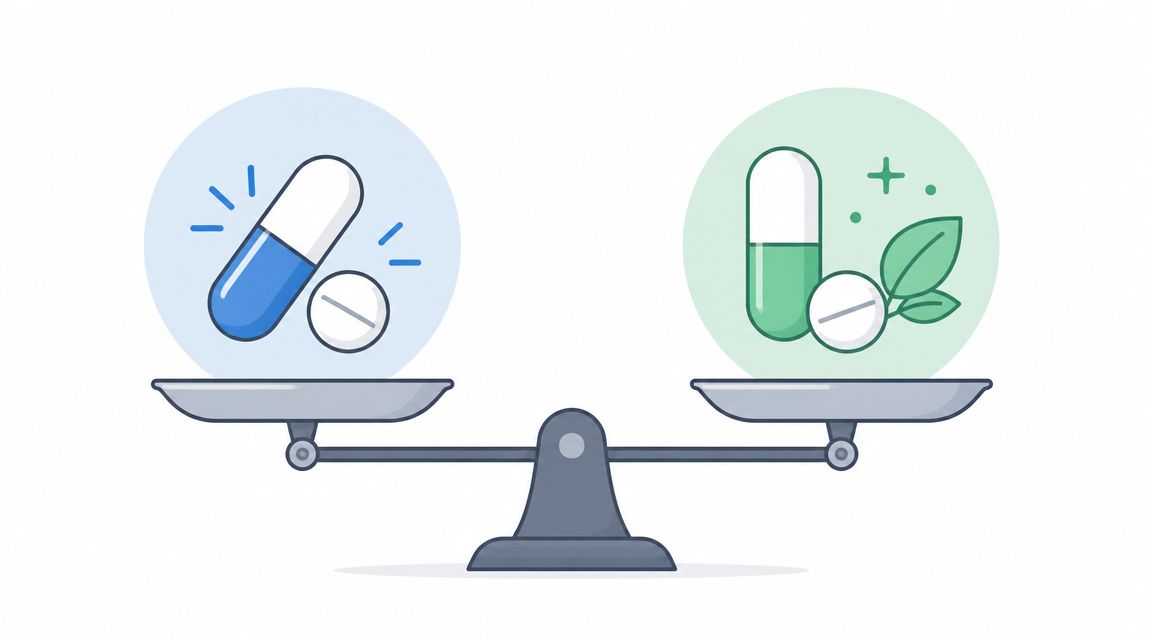
Medication can be a very effective part of autism and ADHD treatment, but it helps to be precise about what it can and can't do. For ADHD symptoms, medication may improve attention, reduce impulsivity, and make it easier to use skills learned in therapy. It does not treat autism itself, and it won't remove sensory sensitivities, social communication differences, or the need for accommodations.
Why AuDHD medication plans need patience
For people with both autism and ADHD, medication is often a stepwise trial. Clinical guidance recommends starting with a methylphenidate product first, using a lower starting dose, titrating gradually, and monitoring sleep and appetite closely because response rates are often lower and side effects more common than in typically developing youth, according to this clinical guidance summary on ADHD medication in autism.
If stimulants don't work well or are poorly tolerated, clinicians may consider alpha-2 agonists such as guanfacine or clonidine. Atomoxetine may also help, and the same guidance notes it may help roughly 40% of children with ASD and ADHD.
Medication should make daily functioning clearer, not make the person feel unlike themselves.
What improvement usually looks like
The changes are often ordinary but meaningful. A person may start tasks with less resistance. They may hold onto a thought long enough to complete it. They may interrupt less, lose fewer essentials, and feel less mentally “skiddy.”
What often remains are autism-related needs. Someone may focus better but still struggle with sensory overload at work, confusion in fast-moving group conversations, or distress when plans change. That's why medication should sit inside a broader treatment plan, not replace one.
For adults comparing options, newer ADHD medication approaches for adults can be useful background before a prescribing visit, especially if prior medication trials were mixed.
Integrated Treatment for AuDHD
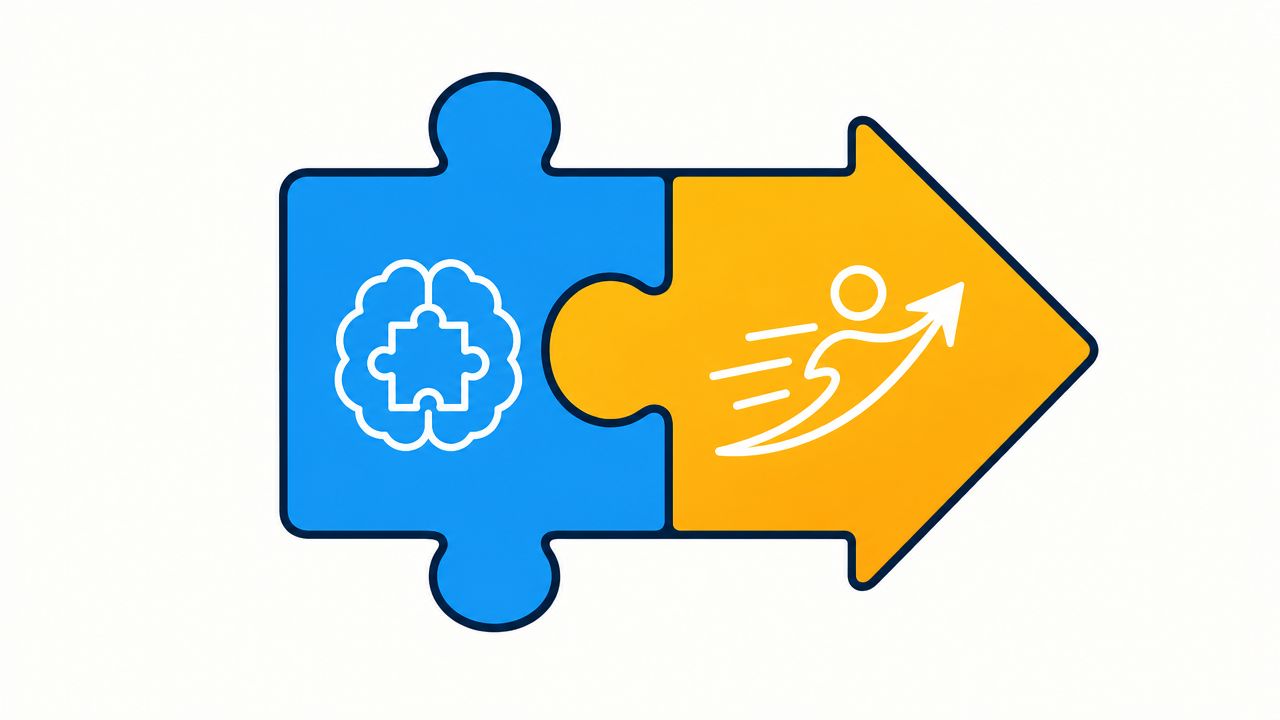
Treating only one half of AuDHD rarely works well. If you treat ADHD alone, the person may focus better but still feel socially lost, sensory overloaded, or exhausted by change. If you address autism-related supports without treating major ADHD symptoms, the person may understand the plan and still be unable to carry it out consistently.
One brain, two treatment targets
A useful analogy is a radio. ADHD treatment can reduce the static. It may make it easier to tune in, sustain attention, and follow through. But autism-specific supports are often what help the person find the right station, especially around sensory fit, communication style, routine needs, and energy management.
This overlap isn't rare. In a U.S. Medicaid cohort of more than 3.5 million adults, 27% of autistic adults without intellectual disability had co-occurring ADHD, about a 10-fold increase over the general population, and ADHD medication prescriptions were generally associated with better health outcomes, as summarized by Children's Hospital of Philadelphia on ADHD rates in autistic adults.
What an integrated plan actually includes
For many people, the plan looks something like this:
- ADHD symptom treatment through medication when appropriate, with careful follow-up
- Autism-informed therapy for social stress, rigidity, self-advocacy, and recovery from chronic masking
- Executive functioning support through coaching, external systems, and environmental design
- Sensory accommodations that lower daily overload instead of asking the person to tolerate more
- Shared communication across settings so family, school, work, and clinicians aren't pulling in opposite directions
A common disappointment happens when medication helps attention but the person still says, “I'm functioning better, but I'm not okay.” That's not failure. It usually means untreated autism-related needs are still driving distress.
For readers trying to understand sensory patterns more clearly, this practical guide to sensory integration gives a helpful plain-language overview of why some people feel under-responsive in one setting and overwhelmed in another.
Essential Support Beyond the Clinic
Treatment succeeds or fails in ordinary life. The office can help you understand the pattern, but the home, classroom, workplace, and schedule are where that pattern either becomes manageable or keeps causing collisions.
Accommodations that reduce friction
Accommodations aren't shortcuts. They are adjustments that remove unnecessary barriers.
At work, that might mean:
- Written instructions instead of verbal-only requests
- Noise reduction through headphones or a quieter workspace
- Protected focus blocks with fewer interruptions
- Clear deadlines and priorities rather than vague expectations
At school, it may involve extended time, reduced-distraction testing environments, seating changes, visual supports, or assignment chunking. The right accommodation depends on the actual bottleneck. A person who melts down from sensory overload needs a different support than someone who loses points because they can't organize written output under time pressure.
Key takeaway: The best accommodation is the one that targets the exact point where functioning breaks down.
Social skills and confidence
Social skills work is often misunderstood. In good care, it isn't about teaching a script for pretending. It's about helping someone read patterns, repair misunderstandings, set boundaries, and manage relationships with less confusion and shame.
Goals might include learning how to enter a group conversation, identify when someone wants more detail versus less, notice overload before shutdown, or recover after a social mistake without spiraling for days.
Coaching and home tools
Coaching differs from therapy. Therapy explores emotions, patterns, and coping. Coaching is more like a practical partnership focused on execution.
Coaching can help with:
- Planning systems for calendars, deadlines, and multi-step tasks
- Task initiation when the problem is starting, not knowing
- Project completion when enthusiasm fades after the first burst
- Accountability through regular check-ins and troubleshooting
Families of younger children sometimes also use sensory tools at home to support regulation. Not every product helps every child, but a thoughtful guide to sensory toys for autism can help parents think more clearly about matching tools to sensory needs instead of buying items at random.
Building Your Personalized Path Forward
There isn't one universal formula for autism and ADHD treatment. That's because there isn't one autism profile, one ADHD profile, or one AuDHD profile. Effective care starts with accurate diagnosis, then builds outward into therapy, medication when appropriate, accommodations, coaching, and daily systems that fit the person's actual life.
For children, this process matters early. The standard of care has moved strongly toward earlier identification. The CDC notes that ASD can sometimes be detected at 18 months or earlier, that a diagnosis by age 2 can be considered reliable when made by an experienced professional, and that early intervention can greatly improve a child's development, as summarized in this review of how autism identification has changed over time.
For adults, timely diagnosis matters just as much. It can change how years of confusion are interpreted. It can explain why effort hasn't matched outcomes. It can also point toward supports that are more effective because they fit the underlying pattern.
The next step doesn't have to be dramatic. It just has to be informed. If the question keeps returning, if symptoms overlap, if masking has blurred the picture, or if prior treatment hasn't fully made sense, a careful evaluation is often the most useful place to begin.
If you're looking for a practical next step, Sachs Center offers telehealth diagnostic assessment and treatment for ADHD, autism, and combined AuDHD in children, teens, and adults. Their services include diagnostic evaluations, reports, neuropsychological testing for formal accommodations, therapy, social skills support, and coaching, which can help people move from uncertainty toward a treatment plan that matches their real needs.