On this page
You're the one who texts first. You remember the dentist appointment, the deadline, the name of your friend's new manager, and you're the person someone calls at 10pm on a bad night. And still, some evenings, a flat question arrives uninvited: am I loved, or am I just useful?
That question doesn't mean something is wrong with your relationships. It usually means you don't yet have a way to read them. Love is easy to feel in a burst and hard to verify on an ordinary Tuesday. Two people can be surrounded by steady, reliable care and not register it. Two others can be flooded with attention that never once lands.
This guide separates the feeling from the evidence. It covers what being loved consists of, the observable signs worth looking for, why loneliness and old wounds can hide love that's already present, how masking changes the picture for autistic and ADHD readers, and what to do when the doubt doesn't lift.
What Being Deeply Loved Really Means
Being loved is a settled conviction that another person understands you, values you, and intends to keep showing up. It works like room temperature: steady enough that you stop monitoring it. The measure is reliability you can feel while doing ordinary things.
That matters because intensity is easy to notice and easy to confuse with safety. A dramatic apology, a late-night declaration, a weekend that feels cinematic can all be real and still say little about next month. What holds up across years is quieter: someone knows how you take your coffee, notices when you go quiet in a group, and checks in without needing a reason.

Researchers describe the core of this as perceived partner responsiveness: the felt belief that someone understands you, cares about you, and values you. Attention alone does not create it. A partner who sends forty messages a day but never asks what you need can leave you lonelier than one who sends three that land.
The health stakes are concrete. In 2023, the World Health Organization reported that people lacking adequate social connection face a 30% higher risk of premature death, placing social disconnection alongside smoking, excessive alcohol use, physical inactivity, obesity and air pollution, as the WHO commentary on connection for health sets out. The same body of evidence links isolation with higher risks of cardiovascular disease, stroke, diabetes, dementia, depression, anxiety and suicide.
A working rule: if you have to study whether you're loved, read the last month of behavior before you read the last hour of feeling.
Loneliness is widespread worldwide, and it can distort the reading. When connection feels scarce, a delayed reply starts to look like indifference, while steady care goes uncounted because it arrives without drama. For autistic and ADHD readers, masking can bend the signal further: love may look like unmasking in your company, choosing parallel quiet, dropping the script, or being direct where performance used to be. Deep love is the condition that lets accuracy replace performance.
Signs You Are Deeply Loved and How to Read Them
Declarations are memorable. Behavior is repetitive and easy to overlook. The six signs below are the ones that survive a year of ordinary Tuesdays, and each has a lookalike that gets mistaken for love.
| Sign | What it looks like | What it does not prove |
|---|---|---|
| Follow-through | They keep small commitments without reminders | That the care is mutual rather than dutiful |
| Accurate listening | They reflect your meaning before offering advice | That you agree on much, or that advice is never needed |
| Protective attention | They check in during stress or illness | That the contact runs deep; messaging is the easiest part to fake |
| Repair after conflict | They come back to a disagreement and apologize where it's owed | That conflict is absent; a fight-free relationship can be a distant one |
| Chosen support | They ask what help you want before acting | That eagerness to fix a problem is the same as care |
| Consistent presence | They stay when nothing much is happening | That early intensity predicts anything lasting |
Read the third column as slowly as the second. Most relationship disappointment comes from a real sign being asked to prove something it never promised.
Much of this plays out in small moves rather than speeches: the text asking how the meeting went, the offer to drive, the question about whether you want solutions or company. Those moves are what bids for connection look like in daily life, and they're far easier to count than to feel.
Three Checks to Run Over a Month
- Does the same person come back to repair? Anyone can be warm when things are easy. Returning after friction is the harder, more informative act.
- Is affection predictable? Steady care you can count on beats intense care you have to earn each time.
- Can you disagree without losing the bond? If a difference of opinion threatens the whole relationship, the affection is conditional on agreement.
No single sign proves love. A pattern across several signs, held over time, is far more reliable than one vivid evening.
When the Signs Look Different
For autistic and ADHD readers, run the same checks through direct language. A partner who says what they mean, asks what help is wanted, and returns to a disagreement is showing protective attention even if they don't send frequent messages or perform emotional display on cue. Read a text-only preference, a need for quiet after work, or a scripted check-in as the same care in a different dialect.
Watch the reverse too: a flood of affection that never asks what you need is intensity, and intensity is not accurate care.
How Attachment and Trauma Shape Feeling Loved
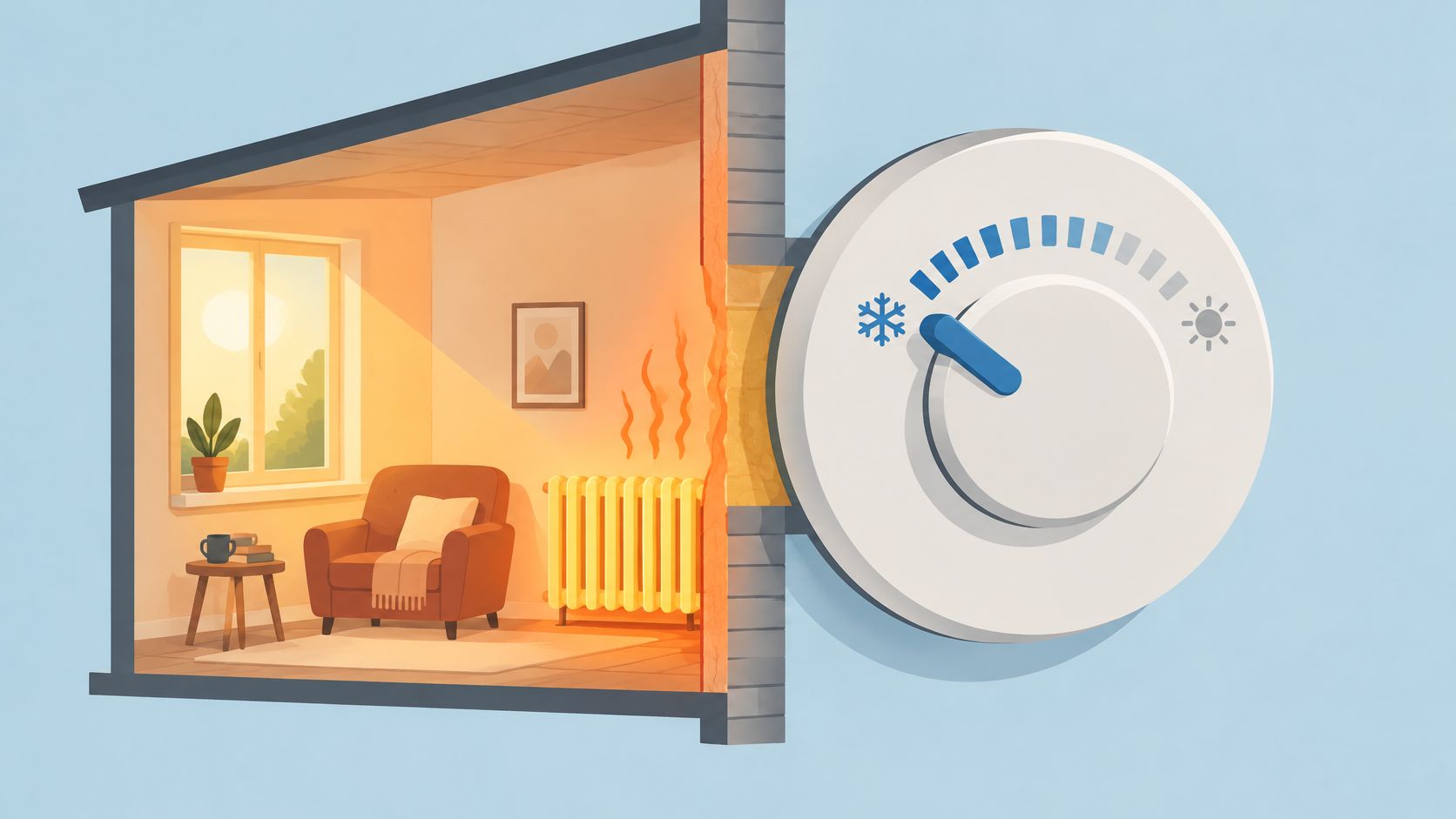
Attachment works like a thermostat calibrated by early experience. The room can be warm while the dial still reads cold, because the setting was fixed in a colder house. Early relationships shape how care is received, not only how it is given.
| Attachment pattern | How love is usually felt | Common gap |
|---|---|---|
| Secure | Care is accepted and expected to continue | Few gaps; occasional misreads under stress |
| Anxious | Love is felt in bursts and checked often | Reassurance-seeking can hide real signs of care |
| Avoidant | Closeness can feel like pressure | Care is offered but not registered or received |
| Disorganized | Affection can feel unsafe | Warmth alternates with fear and withdrawal |
When Closeness Itself Feels Unsafe
Trauma can teach the body to register closeness as danger. Warmth arrives and the stress response fires anyway: the chest tightens, attention narrows, and the impulse is to withdraw, pick a fight, or go blank. Threat signals get amplified while neutral and caring signals get filtered out.
A nervous system produces this pattern based on what it learned to survive. The practical consequence is that someone can be loved well and still feel untouched by it, because their attention stays busy scanning for harm. Hiding the reaction makes it worse. When you mask the flinch, smile through the shutdown, and perform comfort you do not feel, the other person sees acceptance while the inside stays guarded, so both people walk away with a distorted picture of the bond.
Why Loneliness Misreads Care
Loneliness does more than hurt. It changes what you see. Persistent loneliness has been linked to poorer perceptions of a partner's care, even when partners, friends and outside observers can see the care clearly. The misreading then feeds itself: feeling unseen leads to less self-disclosure and fewer requests for support, which produces less visible care to notice next time.
Here is where readers often get confused. Loneliness feels like proof that no one cares, so it gets filed as evidence of absent love. Sometimes it is a lens problem instead. The distinction matters, because the WHO attributes approximately 871,000 deaths each year to loneliness, a figure cited in the WHO launch of its Commission on Social Connection. A persistent sense of being unloved deserves attention, whether the cause is missing care or missed care.
Separating an Absence of Love From a Blind Spot
Pull the question into three separate columns instead of one blurry feeling.
- Observable care: what did this person do in the last 30 days? Kept plans, asked questions, showed up, apologized.
- Felt security: how safe did you feel receiving it? Low felt security alongside high observable care points to a perception problem, not a love problem.
- Behavioral response: did you withdraw, test them, or ask for reassurance? Those moves are data too, because they shape what the other person does next.
Sometimes the columns confirm that care is thin, and no reframing fixes that. Anyone in a neglectful or abusive relationship should hear this clearly: your perception is not the problem, and tracking actual behavior is how you find that out.
How Autistic and ADHD People Experience and Mask Love
A popular picture of deep love involves constant availability, instant chemistry, and unconditional acceptance of everything you do. That picture fails a lot of autistic and ADHD people, not because they're unlovable but because it describes performance rather than care.
Masking is the automatic habit of suppressing natural expression, forcing eye contact, scripting conversation and monitoring your body to pass as neurotypical. Qualitative research on autistic friendship and unmasking in eScholarship's study of autistic adults and friendship found that closer friendships were associated with unmasking and vulnerability, while participants also described difficulty navigating romantic contact, reading others' motives, recognizing their own discomfort, setting boundaries and disclosing their autistic identity. That same page notes a 2025 study of neurodivergent friendships finding autistic masking is strongly associated with poorer well-being, while connection with other neurodivergent people may reduce isolation.
The question most articles skip isn't "how do I know I'm loved?" It's "can I stay fully myself, say no, communicate differently, and still be loved?"
Acceptance Is Not the Same as Tolerance
Tolerance puts up with you. Acceptance works with you. In practice, acceptance looks like respect for sensory needs, direct communication instead of hints, room for fluctuating capacity, freedom to stim, patience with executive dysfunction, and the right to revise a boundary later without it becoming a betrayal.
Three ordinary examples carry more weight than any declaration.
- A partner who reshapes plans around sensory load. The loud restaurant becomes takeout on the sofa, without a lecture about being difficult.
- A friend who accepts a text instead of a call. They keep the friendship in the format you can sustain.
- A colleague who respects a no. You decline the extra project once, and it doesn't become a story about your attitude.
If you're navigating this inside a couple, the recurring patterns are worth naming before they harden, which is what this piece on ADHD and relationships in neurodivergent couples walks through.
Unmasking Is a Choice, Not a Requirement
No one owes anyone disclosure. Safety, employment, culture, gender, race and the power balance in a relationship all affect whether unmasking is wise in a given room. The goal isn't permanent visibility. It's having at least one relationship where the mask can come off without penalty.
This lands differently for women, BIPOC people and adults who have masked for decades, whose affection and distress get misread when conventional relationship norms are treated as universal. A flat face isn't coldness. A delayed reply isn't indifference. Quiet isn't withdrawal.
Practical Steps to Build and Recognize Deep Love
Connection responds to routine more than to resolve. These five moves are small enough to start this week, and each one exists for a reason.
- Name one specific need out loud. "I'd like a check-in after work on Wednesdays" gives someone something to respond to. A vague longing for more closeness can't be met because it can't be seen.
- Ask what kind of support is wanted before assuming. Advice, distraction, practical help, or twenty minutes of silence. Support that matches the need is what makes care land instead of grate.
- Set a recurring ritual of contact. A Sunday call, a Thursday dinner, a monthly walk. Repetition builds the integration that carries the health benefit, and it survives weeks when nobody has energy for spontaneity.
- Tell one trusted person the practical facts. The medication, the upcoming appointment, the thing you're dreading. Being loved includes someone who can act on your behalf when you can't.
- Audit reciprocity once a month. Is support flowing both ways, or has one of you become the permanent helper? Care that turns into control stops being care.

What the Evidence Actually Shows
A meta-analysis of 148 studies involving 308,849 participants found that people with stronger social relationships had roughly 50% greater odds of survival than those with weaker ones (OR = 1.50, 95% CI 1.42 to 1.59), according to the RTI review of social relationships and mortality risk. The association held across age, sex, baseline health, cause of death and follow-up length, and it was strongest for complex measures of social integration rather than living with someone.
These are observational studies, so they show association rather than proof that love extends life. Healthier people may find it easier to sustain relationships, and unmeasured factors could influence both.
How support arrives matters as much as whether it arrives. In a U.S. national sample described in the MIDUS findings on partner responsiveness, emotional support was associated with higher mortality risk among people reporting low partner responsiveness, but not among those reporting high responsiveness. The same work links responsiveness to lower daily negative-affect reactivity, partly because reliable care increases a person's sense of control over stressful events.
The self-check that matters: are you less worried about whether you're loved, and more able to ask for what you need?
Deciding When to Get Professional Help
The feeling of not being loved is worth taking seriously when it persists despite steady care from the people around you, when it changes how you behave, or when it starts costing you sleep, work or relationships. The question isn't whether you're entitled to help. It's which kind fits.
| Situation | Better fit | Why |
|---|---|---|
| Feel unloved despite steady care around you | Therapy | Assesses depression, anxiety or trauma patterns shaping perception |
| Repeated conflict with the same pattern | Relationship coaching | Focuses on communication skills inside the relationship |
| Persistent isolation, burnout or sensory overload | Therapy | Supports emotional regulation with clinical care |
| Suspect autism or ADHD and want clarity | Diagnostic evaluation | Formal assessment, separate from coaching |
| Goals around connection and daily life skills | Coaching | Practical, goal-led work toward specific outcomes |
Therapy is one-to-one work on the challenges and goals that matter to you, including the trauma patterns that make warmth feel suspicious. Relationship coaching is more targeted: it assumes the relationship continues and works on how the two of you talk, repair and ask. A diagnostic evaluation answers a different question entirely, giving formal clarity when autism or ADHD is suspected and you want language for how you process closeness.
Sachs Center provides telehealth assessment and treatment for autism and ADHD, and offers neuro-affirming individual therapy for adults navigating late diagnosis, burnout, sensory overload, communication challenges and emotional regulation. Our psychologists are chosen for compassion, patience and expertise in neurodiversity, and the work happens over video from wherever you are.
Before a first session, write two lists: two situations in the last year where you felt loved, and two where you felt certain you weren't. Bring them. The contrast between those lists tells a clinician more about where the gap sits than any general description of your childhood.
Book when the doubt costs you something: a job, a friendship, a week of sleep, or the ability to ask for what you need.
Sachs Center works with adults who arrive at a first session after years of masking, unsure whether the problem is their relationships or their own reading of them, and that question is exactly what an evaluation or a course of therapy is designed to untangle. If this guide described your week, the next step is to look at the assessment and therapy options and pick the one that matches what you're trying to solve. Visit Sachs Center to see what's available and book a time to talk it through.