
An April evening can leave a family with mixed feelings. A school building glows blue, a landmark changes color, and social media fills with messages about autism awareness. A parent may feel grateful that people are paying attention, while an autistic adult may wonder whether anyone is listening to autistic people themselves. An educator might ask what the display is meant to change after the lights go off.
“Light It Up Blue” is recognizable, simple, and emotionally significant to many families. It's also debated, especially by autistic self-advocates who want campaigns to move beyond visibility toward acceptance, accessibility, and respect. Understanding that debate doesn't require shaming people who have participated. It requires asking what the symbol communicates, who it reaches, and what action should follow.
For parents, autistic adults, teachers, employers, and community organizations, the most useful approach is to treat blue lighting as a possible doorway, not the destination. A doorway can lead to better information, thoughtful accommodations, diagnostic equity, and meaningful relationships. It can also remain only a visual gesture if no one takes the next step. Readers who want a plain-language foundation may find this explanation of autism, social stress, sensory overwhelm, and the need for predictability helpful alongside the discussion below.
A Blue Glow Every April and What It Signals
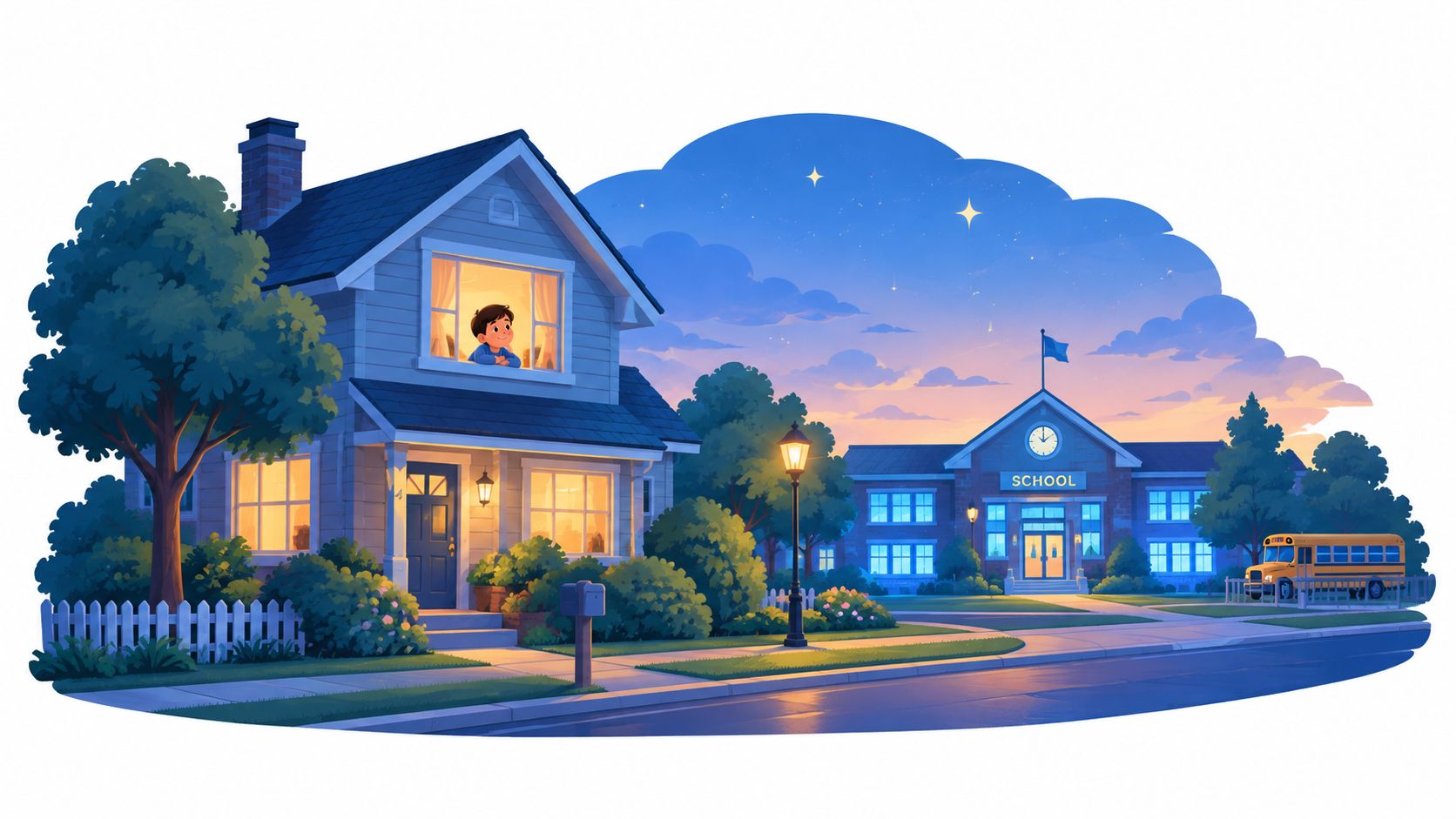
On an April evening, a child may look through a window and notice a familiar building shining an unusual color. A parent might explain that the blue light is connected to autism awareness. The child may then ask a more important question: What are people supposed to understand or do because the building is blue?
That question gets to the heart of the campaign. Light It Up Blue uses a highly visible symbol to place autism in public conversation. The color can prompt curiosity, help a newly concerned family recognize that autism is part of the community, and encourage schools or workplaces to discuss inclusion. For some people, seeing a landmark participate feels affirming because it signals that autistic children and adults haven't been forgotten.
Other people experience the campaign differently. An autistic adult may see a flood of blue posts that contain little information about sensory needs, communication differences, masking, or discrimination. A parent may appreciate awareness but feel frustrated when a school celebrates a color without changing classroom practices. A teacher may support the event yet still need practical guidance about flexible participation, quiet spaces, or respectful communication.
A useful question: After someone sees the blue light, what will help them respond more thoughtfully to an autistic person?
Awareness has value when it opens a conversation that leads somewhere concrete. That might mean learning why a student avoids eye contact, asking before touching someone, offering written instructions, or understanding that a workplace accommodation can support performance rather than provide an unfair advantage. It might also mean recognizing that a person who appears socially capable can still experience intense sensory stress or exhaustion.
The symbol doesn't have to carry every meaning for every person. Families can participate in a way that honors what blue means to them while making room for autistic voices that prefer acceptance-oriented language or different symbols. The most compassionate position holds both truths: some people find blue meaningful, and some autistic people find the campaign incomplete or alienating.
Where Light It Up Blue Came From
Light It Up Blue is a global autism-awareness campaign associated with Autism Speaks and centered on April 2, the United Nations' World Autism Awareness Day. Its history begins with an international observance rather than a single national holiday.
The date behind the campaign
The United Nations General Assembly adopted Resolution 62/139 on December 18, 2007, designating April 2 as the annual observance of World Autism Awareness Day. The first official World Autism Awareness Day took place on April 2, 2008. This date created a shared point on the calendar for governments, institutions, families, and communities to discuss autism.
Autism Speaks began promoting the blue-lighting initiative internationally in 2008. The basic idea was easy to understand and easy to repeat: illuminate prominent structures, public spaces, businesses, and homes in blue around April 2. A building could participate without hosting a large event, and communities in different countries could create a similar visual signal at the same time of year.
How a simple visual traveled
The campaign's strength came partly from its simplicity. A blue-lit landmark is visible from a distance, photographs well, and can attract news coverage. The same action can be recognized in a city center, on a university campus, at a business, or in a private home. According to the campaign history reported by PRWeb, more than 13,000 buildings worldwide had reportedly joined by 2015.
The participating landmarks illustrated the campaign's geographic reach. Examples included the Empire State Building and One World Trade Center in New York, Niagara Falls in Canada, Christ the Redeemer in Brazil, the Great Pyramid of Giza in Egypt, Taipei 101 in Taiwan, Tokyo Tower in Japan, Trafalgar Square in London, and Halley VI Station in Antarctica.

Those examples matter because they show that Light It Up Blue became a multinational public-awareness effort, not a United States event. Its visual language crossed borders and time zones. Governments, universities, corporations, cultural institutions, and families could all take part through the same broad practice.
The campaign's historical importance lies in connecting a UN-recognized international date with a recognizable public display. That connection made autism easier to notice in public life. It didn't, by itself, settle what autism means, which language autistic people prefer, or what services communities need. Understanding the campaign's origin helps explain both its reach and its limits. For a broader reflection on awareness as a starting point for change, see this discussion of developing awareness as a tool for change.
Why Blue Lights Alone Do Not Build Understanding
A family may see a building glowing blue, then leave with the same practical questions they had before. How might autism affect communication, sensory processing, executive functioning, relationships, or daily routines? Visibility creates an opportunity for learning. It isn't proof that learning occurred.
Light It Up Blue uses repeated environmental signals. Landmarks, buildings, businesses, and homes create public exposure through blue lighting, photographs, and media coverage. Autism Speaks reported that the campaign reached landmarks, buildings, and homes in 157 countries in 2016. An earlier activation included more than 100 structures across at least 16 U.S. cities and nine countries, as summarized in the campaign overview on Wikipedia.
Reach and understanding measure different things. A campaign can appear in many places while teachers remain unsure how to support an autistic student during a fire drill, employers overlook accessible meeting practices, or families misunderstand why communication may change under stress. A blue display opens the door. Clear information and practical adjustments help people walk through it.
Awareness needs a next action
A Northern Ireland population survey of 1,204 respondents found that more than 80% had heard of autism, while knowledge about interventions and provider responsibilities remained limited. This pattern shows why recognition alone cannot carry the work. People may know the word autism without knowing how to provide useful support.
Organizations can connect public displays with concrete steps:
- Share accurate information: Explain varied communication styles, sensory accessibility, masking, and the difference between support and forcing conformity.
- Improve accommodations: Give teachers, supervisors, and service providers clear guidance for reducing unnecessary sensory and communication barriers.
- Invite autistic input: Ask autistic people to shape events, training, policies, and educational materials, and compensate them for their expertise.
- Support services: Direct families toward accessible assessment, therapy, coaching, family support, and community programs instead of ending with a photograph of a blue building.
- Measure meaningful outcomes: Review training completion, referral quality, fulfilled accommodations, and autistic participants' reported sense of acceptance.
Diagnostic equity also belongs in this conversation. Girls, women, BIPOC people, and adults can face missed or delayed recognition when services rely on narrow expectations of how autism should look. Better understanding means listening to people whose communication, masking, culture, age, and support needs do not fit a single familiar profile.
A blue light is an invitation to learn. The measure of success is what people do with the invitation.
That learning should also avoid treating neurodivergence as a lesser version of being “normal.” Autistic people may have different sensory, communication, attention, and processing patterns, alongside strengths and substantial support needs. A comparison of neurotypical and neurodivergent experiences can help families and professionals understand those differences without turning them into moral judgments.
Criticisms and Who Feels Left Out by Blue
The strongest criticism of Light It Up Blue isn't that a color can never help. It's that a single color may carry a narrow story about autism, especially when campaigns use images or language that focus on tragedy, burden, or cure rather than on autistic people as whole human beings.
Many self-advocates prefer acceptance-oriented messaging. Acceptance asks communities to make room for autistic communication, sensory needs, movement, routines, and forms of connection. It doesn't mean ignoring disability or pretending that support isn't necessary. It means providing support without treating the autistic person's existence as a problem to eliminate.
The problem with a boy-centered picture
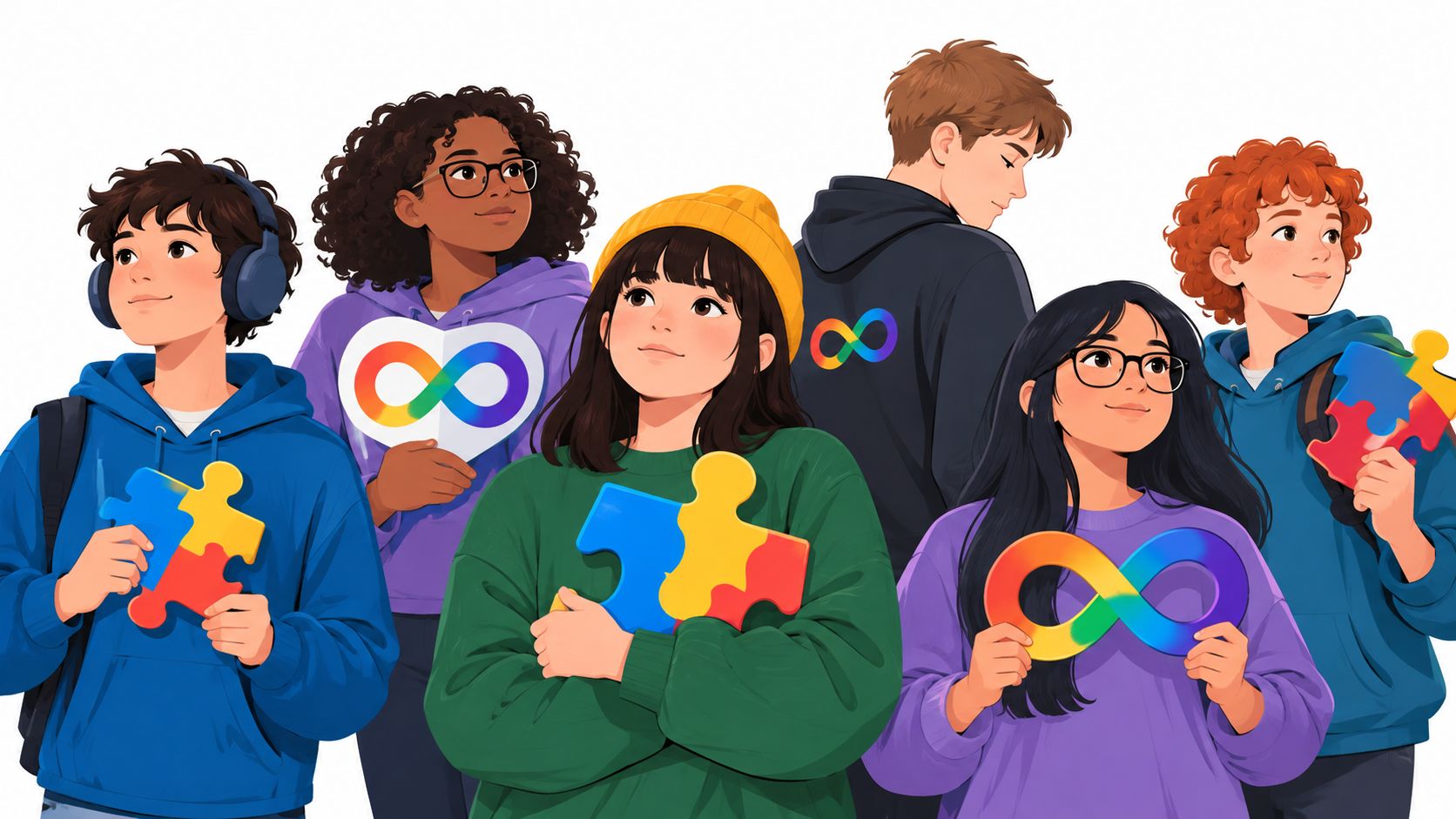
Blue was historically associated with the idea that autism primarily affects boys. That association can obscure autistic girls, women, nonbinary people, and people from racialized or underserved communities. Coverage of autism awareness and diagnostic representation notes that girls and women have been systematically underidentified because of diagnostic bias.
A person who learns to imitate social behavior, suppress movements, rehearse conversations, or hide sensory distress may be missed by systems that look for a narrower presentation. Adults can reach evaluation after years of being labeled anxious, difficult, inattentive, overly sensitive, or socially awkward. Racial and cultural differences can add further barriers when clinicians rely on limited examples of what autism is supposed to look like.
The result is not merely a language problem. Delayed recognition can affect access to accommodations, self-understanding, mental health support, education planning, and workplace stability. A campaign that shows only young boys may unintentionally reinforce the idea that other autistic people are unusual exceptions.
Holding two truths together
Blue isn't harmful. It may help some families recognize autism, find community, or begin looking for information. At the same time, many autistic people prefer symbols and words that emphasize neurodiversity, acceptance, and autistic leadership.
That tension doesn't require a public argument over which color is morally correct. It calls for better participation. Use inclusive images. Include autistic writers and speakers. Discuss adults as well as children. Explain masking and varied communication. Avoid presenting one symbol as universally representative.
A thoughtful campaign can acknowledge the history of blue while expanding the story beyond it. The key question is not whether a building shines blue. It's whether the people represented in the campaign can recognize themselves in its message and feel respected by the action that follows.
From Awareness to Acceptance in Plain Language
Awareness and acceptance overlap, but they ask communities to do different things. Awareness says, “Notice that autism exists.” Acceptance says, “Change the environment so autistic people can participate with dignity.”
Awareness can be a useful first step for someone who knows little about autism. It may prompt a parent to learn about evaluation, a teacher to seek better classroom guidance, or an employer to review workplace practices. Acceptance goes further by treating autistic perspectives as essential to decisions that affect autistic people.
| Choice area | Awareness style | Acceptance style |
|---|---|---|
| Main message | Autism is present in families and communities. | Autistic people belong, and communities must remove barriers. |
| Primary voice | Organizations and public institutions explain autism. | Autistic people help lead the message and define respectful priorities. |
| Common visual | Blue lights, blue clothing, and landmark displays. | Red, gold, rainbow infinity, or another symbol chosen with autistic input. |
| Language | May focus on recognition or concern. | Centers dignity, access, communication differences, and support. |
| Practical result | A person becomes curious. | A school, workplace, or service changes what it does. |
The alternatives aren't a test that families can fail. Some autistic people prefer red, gold, or the rainbow infinity symbol, while others have personal preferences that don't fit a single movement. Ask autistic people in your family or community what feels supportive instead of assuming that one symbol works for everyone.
Language also deserves care. Some people prefer identity-first language, such as “autistic person,” because autism is an integral part of who they are. Others prefer person-first language, such as “person with autism.” Neither preference should be imposed on every individual. When you know someone's preference, follow it. When you don't, use respectful language and remain open to correction.
A school can use any chosen color as the beginning of a lesson about sensory access, communication, and belonging. A workplace can pair a public message with quieter meeting options, written agendas, predictable schedules, and a clear accommodation process. Those choices make acceptance visible in daily life.
The most respectful symbol is the one connected to respectful behavior.
Thoughtful Ways to Participate This April
A blue display has more value when it leads to a clear commitment. A home, school, or organization can pair its message with one practical change, shaped by autistic input and visible after April ends. The goal might be better public understanding, access to a service, or a more welcoming event.
Begin by naming that goal. Educational efforts can explain sensory differences, communication, masking, and accommodations. Support-focused efforts can identify an accessible service or community program. For belonging, ask autistic participants what would help them feel safe and included.
A practical participation checklist
- Use careful language: Avoid describing autism as a tragedy, epidemic, burden, or enemy. Never use someone's distress or private meltdown as promotional content.
- Include autistic voices: Invite autistic speakers, writers, consultants, or employees to shape the message. One person cannot represent every autistic experience.
- Make events accessible: Provide a quiet area, lower-volume options, predictable schedules, visual information, flexible participation, and permission to leave without explanation.
- Teach useful skills: Show staff how to allow processing time, offer choices, communicate clearly, and respond to sensory overload without punishment.
- Review inclusion at school: Examine group work, assemblies, transitions, discipline, playground routines, and how teachers interpret behavior.
- Improve workplace access: Make accommodation requests clear, provide agendas in advance, and avoid treating eye contact, rapid responses, or social performance as automatic measures of competence.
- Continue after April: Keep resource pages, training, and accommodation work available throughout the year.
Research on autism-awareness campaigns suggests that public education can increase basic knowledge, while direct contact with autistic people may influence attitudes more strongly than knowledge alone. In an experimental study summarized in an IOSR journal manuscript on autism-acceptance training, 238 non-autistic adults watched autism-acceptance training, general mental-health training, or no training. The autism-focused group showed improved explicit understanding, greater social interest in autistic adults, and more positive first impressions. Implicit negative associations remained.
That result sets a useful boundary. One training session or April display cannot remove every bias. It can give people a more accurate starting point and a reason to continue learning. A campaign should therefore measure its value by what participants do next, not only by how many people see the lights.
For families, participation can also mean taking a concern seriously before a child struggles further or an adult reaches exhaustion. A respectful evaluation considers varied presentations, developmental history, current support needs, and the possibility that a person has learned to mask. Diagnosis alone does not create acceptance. It can, however, help someone access accommodations, clarify support needs, and choose useful services. For girls, women, BIPOC people, and adults, careful evaluation can also address patterns that standard assumptions have overlooked.
Sachs Center offers telehealth evaluations for autism, ADHD, and combined AuDHD, along with therapy, coaching, social programs, and support for children, teens, and adults. Families and adults seeking diagnostic clarity or practical next steps can visit Sachs Center.
Keeping the Light On After April 2
The blue glow is most helpful when it reminds people to listen after the landmark returns to its usual color. Autism doesn't begin with April, and autistic people don't stop needing accessible classrooms, flexible workplaces, respectful healthcare, and genuine friendship when the awareness month ends.
Families can keep the conversation grounded in everyday choices. Ask what helps a child recover from sensory overload. Believe an adult who describes masking fatigue. Include autistic people in decisions about services, education, employment, and community events. Replace assumptions with curiosity, and replace symbolic support with practical access.
If you've participated in Light It Up Blue before, you don't need to feel ashamed. You can keep what felt meaningful and change what was incomplete. Add autistic-led resources, broaden the people represented, explain concrete accommodations, and choose actions that support acceptance throughout the year.
Awareness can open the door. Acceptance means making sure autistic people can enter, belong, communicate, and receive support once they're inside.
Sachs Center offers telehealth evaluations for autism, ADHD, and combined AuDHD, along with therapy, coaching, social programs, and support for children, teens, and adults. If you're seeking diagnostic clarity or practical next steps for yourself or someone you love, visit Sachs Center to explore compassionate, individualized options.
