
You've got the report open beside a cup of cooling coffee. Maybe you're a parent looking for what will help your child at school, or an adult trying to understand a new ADHD or autism diagnosis. The report names challenges, then mentions strengths: perhaps careful observation, strong visual reasoning, deep knowledge of a favorite subject, or an ability to communicate clearly in writing. You may be wondering whether those words describe real abilities, and what you're supposed to do with them.
They're most useful when they lead to practical support, not pressure to feel grateful or to become a “superpowered” version of yourself. Areas of strength can help families, educators, clinicians, and neurodivergent people understand what makes a task easier, what conditions support performance, and where accommodations still matter.
Why Areas of Strength Change Everything
A parent reading an evaluation might see that their child struggles to begin written assignments but notices patterns quickly and remembers details about topics they care about. An adult might learn that social situations take effort, yet they explain complex ideas clearly in writing. These observations don't cancel out the difficulties. They add information that can change how someone approaches them.
A diagnosis can describe a pattern of needs. A strengths profile adds another question: What helps this person learn, communicate, focus, and recover? That matters because a plan built only around deficits can tell a teacher what's hard without showing how to make the work more accessible. A plan that includes strengths can point toward useful formats, routines, and environments.
Strengths are practical information
Suppose a student understands a science concept but gets stuck when instructions are spoken quickly. A teacher can provide the directions in writing, then let the student use a diagram to organize the answer. The student still gets support with the hard part, but the plan also uses a form of thinking that's already accessible.
The same principle applies at work and at home. Someone who spots small inconsistencies may contribute to quality checks, while still needing a quieter workspace or clear priorities. A person who connects well with one friend may need recovery time after a crowded social event. A strength is not proof that support is unnecessary.
ADHD and autism affect many people, and documented diagnosis rates show why assessment and support are important in schools and communities. In 2022, 11.4% of U.S. children ages 3–17, about 7.1 million, had ever received an ADHD diagnosis, while 10.5%, about 6.5 million, had current ADHD, according to U.S. National Survey of Children's Health data. Those figures describe documented diagnoses, not a measure of any one person's abilities.
Naming strengths isn't cheerleading. It gives a family, clinician, or educator more useful information for making decisions. The aim is not to find a bright side to every challenge. It's to understand the whole person well enough to offer support that fits.
What Areas of Strength Actually Means
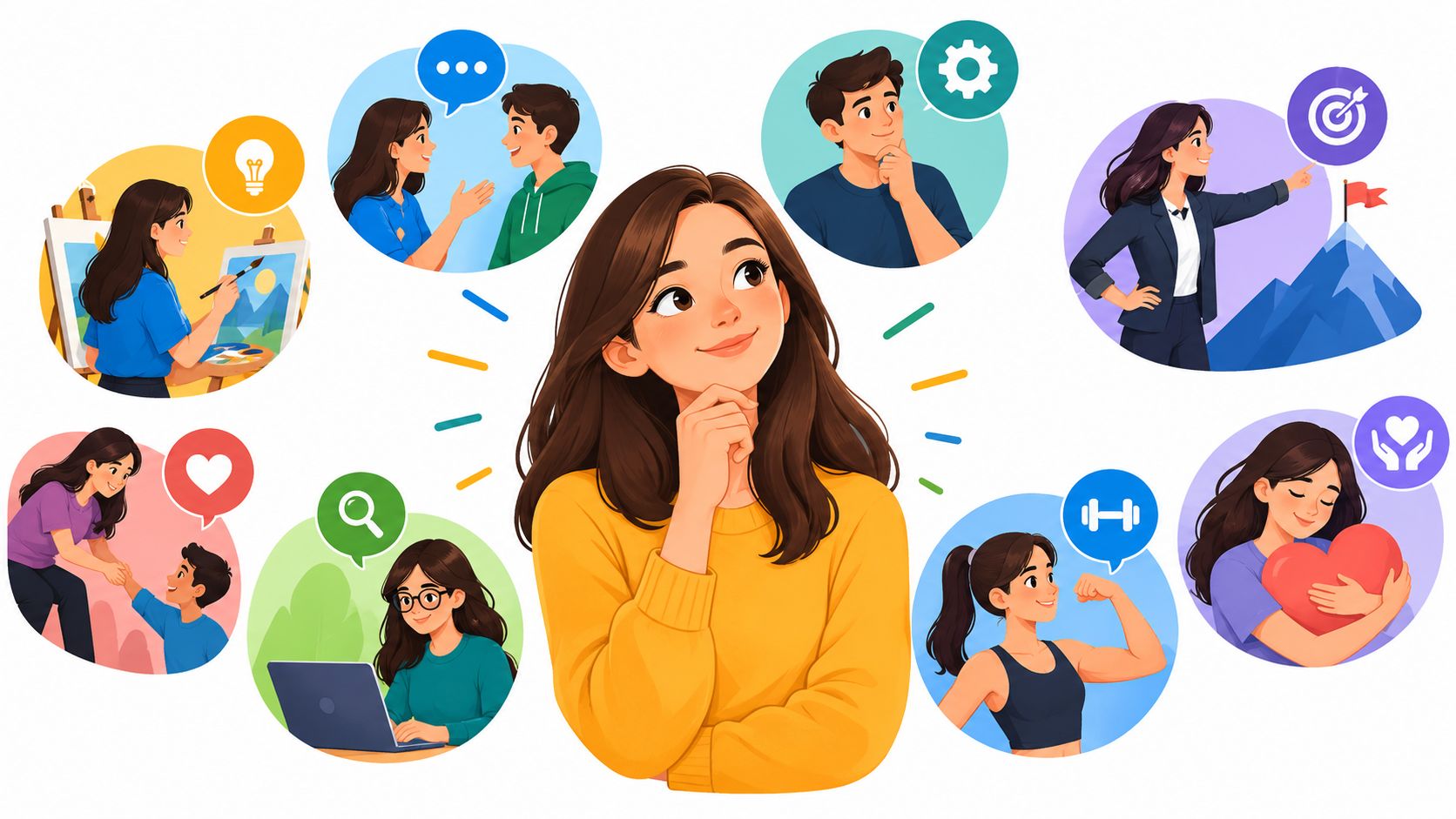
An area of strength is an ability, way of working, or personal resource that helps someone do something well under particular conditions. It might be recognizing patterns, explaining ideas in writing, staying with an interesting task, or following a dependable routine. The important words are under particular conditions.
A report focused only on problems can feel like a checklist: trouble with attention, organization, or social communication. A more complete picture works like a two-sided scale. One side records where a person needs support; the other describes what they can already do and what conditions help them do it. Both sides matter when building a useful plan.
Think about the conditions, not just the label
ADHD, autism, and AuDHD can involve different patterns of attention, communication, sensory experience, learning, and daily functioning. Two people with the same diagnosis may not share the same strengths. A person with ADHD might generate many possible approaches to an open-ended problem but find it hard to choose one and finish it. An autistic person might excel at noticing a small change in a familiar system, yet struggle when expectations are implied rather than stated. Someone with AuDHD may experience both patterns, sometimes in ways that seem to pull in different directions.
That's why strengths shouldn't be treated as fixed personality traits or promised outcomes of a diagnosis. A skill may appear at school but not at home, or during an absorbing project but not when the person is tired. Support, sensory conditions, interest, predictability, and energy can all affect what other people see.
A neurodiversity-affirming approach recognizes that brains work in different ways, while still taking barriers and support needs seriously. It doesn't require calling every trait a gift. A practical definition to share with a teacher or clinician is: "An area of strength is an ability or way of working this person can use effectively in specific conditions, alongside any support they need." That definition keeps the focus on what helps.
Common Cognitive, Social, and Sensory Strengths
Strengths often appear in recognizable groups, but no list describes every autistic person or every person with ADHD. Treat these examples as prompts for observation, not a checklist for confirming a diagnosis.
Cognitive strengths can include spotting patterns, noticing details, remembering information about an absorbing topic, or generating a range of ideas. A student may catch a repeated sequence in a math problem or explain a subject with unusual depth. Some evidence links ADHD symptoms more consistently with divergent thinking, which means generating multiple possible ideas, than with convergent thinking, which means selecting or verifying one answer. That distinction matters: having ideas quickly doesn't necessarily make it easier to plan, choose, or complete a final product. The research on ADHD symptoms and divergent thinking is not a promise that every person with ADHD will be creative.
Autistic strengths can include memory, attention to detail, sustained focus, and visual perception, but their value depends on the task and setting. Precision may help with data review, while frequent interruptions can make it harder to use that same careful approach. For a broader discussion of how imagination can look in autistic people, see autism and imagination.
Notice how a strength works in context
Social and relational strengths may include direct communication, loyalty, advocacy, or a preference for meaningful one-to-one conversation. Some people express themselves more clearly in writing than during fast-moving discussions. A person who needs time to process a conversation may still be thoughtful and perceptive in a quieter setting.
Sensory strengths can involve noticing small changes in sound, visual detail, or texture. That sensitivity may help someone detect an error or notice a change in a familiar environment. It can also become uncomfortable or exhausting when the surroundings are unpredictable, so the same sensitivity may support performance in one situation and create a barrier in another.
Behavioral strengths might include persistence with a personally meaningful project, care with rules, or a dependable routine. These qualities can support steady work when expectations are clear. They shouldn't be mistaken for proof that someone can keep going without breaks or help.
A useful question: What task brings out this ability, and what changes when the environment or energy level changes?
How Testing Surfaces Areas of Strength
An assessment can offer more than a label. The process usually starts by gathering information about the person's history and present-day experience, then comparing that account with structured assessment results. Different kinds of evaluation answer different questions, so it helps to know what each one can and can't show.
From interview to report
In a diagnostic evaluation, a clinician asks about early development, current challenges, and how attention, communication, or sensory experiences affect daily life. A telehealth evaluation at Sachs Center typically lasts two to two and a half hours, and uses clinical interviews and validated self-report measures. A conversation may reveal, for example, that someone loses track of time during preferred activities but can recall detailed information about them, or that a child communicates more easily when given time to answer.
Those observations are useful, but they aren't the same as a full test of cognitive abilities. A diagnostic letter can document a diagnosis, if applicable. A more detailed diagnostic report can describe history, current challenges, and recommendations. Ask the clinician to record specific strengths and the conditions under which they appear, rather than relying on broad labels such as "bright" or "creative."
Neuropsychological testing can build a fuller picture. It may include measures of IQ, academic achievement, memory, executive functioning, and emotional functioning. These measures can show a pattern such as stronger visual reasoning alongside difficulty organizing a written response. For an overview of assessment related to executive functioning, see executive-functioning skills assessment.
Translate report language into daily support
You might see wording such as “relative strength in perceptual reasoning” or “notable capacity for sustained attention on preferred tasks.” “Relative strength” means an ability stands out compared with other areas measured, not that it's effortless in every setting. “On preferred tasks” is a condition, not a footnote: interest may help someone stay engaged, while routine tasks still require prompts or structure.
The assessment type should match the decision you need to make. A diagnostic letter may help someone seeking clarity or workplace accommodations. A more detailed diagnostic report can support coordinated care by giving other providers a fuller picture. Neuropsychological testing is designed to assess cognitive and academic functioning in greater depth and can be relevant when seeking accommodations on standardized tests or school supports such as an IEP or 504 plan. Ask what the receiving school, testing program, or employer requires before choosing an evaluation.
When Strengths Do Not Show Up the Way People Expect
Some people receive a diagnosis and then wonder why the celebrated traits don't sound familiar. They may not feel unusually creative, hyperfocused, analytical, or gifted. A high-achieving student may still need accommodations; an adult may appear composed at work and feel depleted afterward. Neither experience makes the person less neurodivergent.
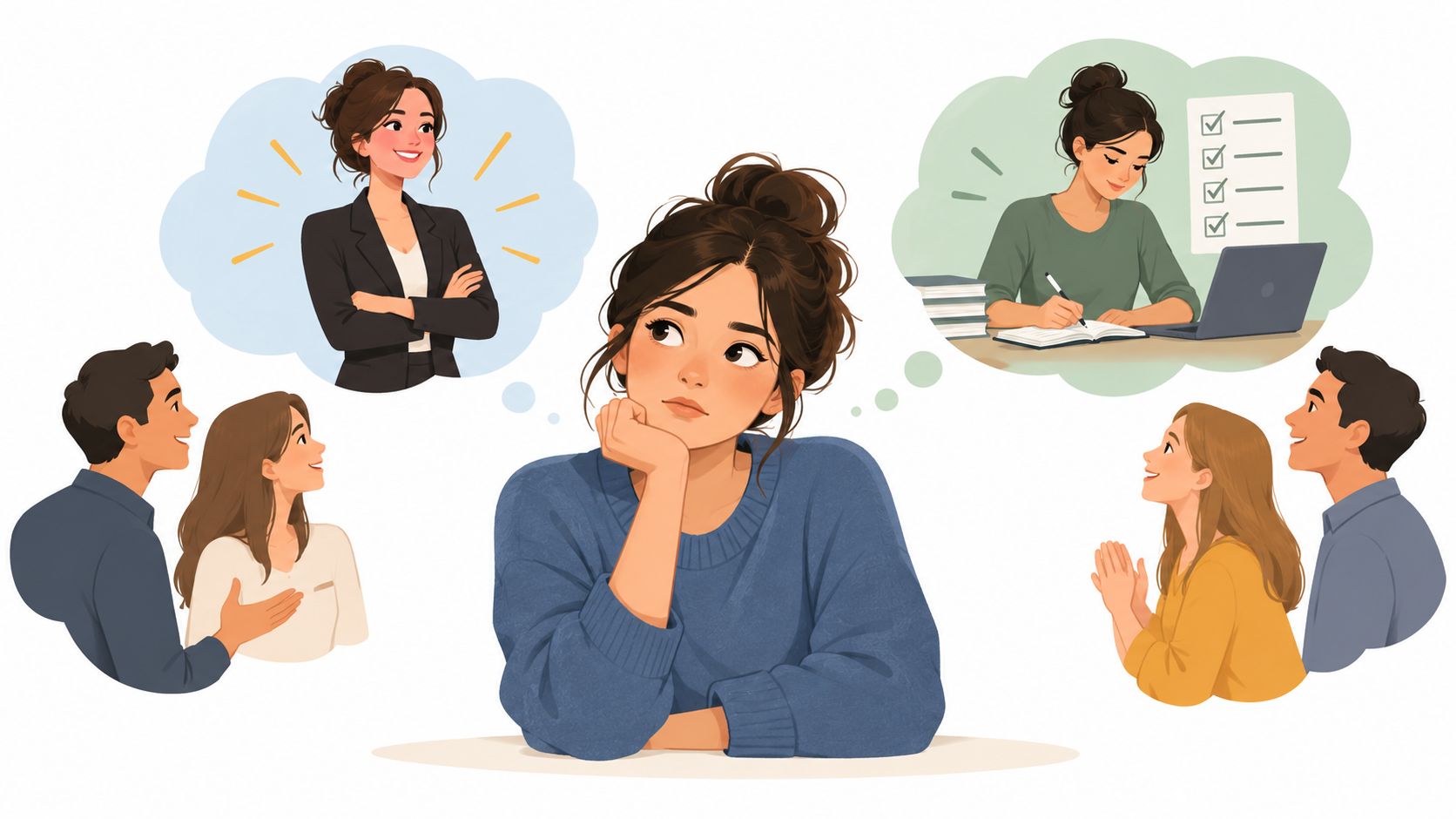
Strengths-based language can become another standard to meet if it implies that a person must excel in a stereotypically neurodivergent way. A higher-education study of 18 neurodivergent students found that all participants described “double masking”: hiding their neurodivergence while also concealing perceived failures to match celebrated strengths such as creativity, mathematics, or hyperfocus. The study on double masking in higher education highlights a risk: positive language can still leave people feeling they're performing a role.
Separate capacity from costly performance
Before describing something as a dependable strength, look at how it feels and what it costs. Consider four questions:
- Energy cost: Does the task leave the person with enough energy for the rest of the day?
- Consistency: Does the ability appear in more than one setting, or only under specific conditions?
- Environmental support: Does it depend on quiet, clear instructions, preparation time, or a familiar routine?
- Recovery time: Does the person need substantial rest afterward?
High output can result from anxiety, perfectionism, or compensatory effort. That performance may be real, but it isn't automatically sustainable. Support needs remain valid even when someone gets good grades, meets deadlines, or seems socially capable.
Identity and environment also influence what others notice. A qualitative study of 40 accounts focused on women, nonbinary people, and people from non-Western ethnocultural backgrounds and examined how gender and cultural expectations shape masking and identity. A separate study described masking as context-dependent, with higher levels in school and family settings. These accounts of masking and identity support a simple caution: behavior that looks like confidence or flexibility to one observer may take considerable effort, or be interpreted differently across cultures and relationships.
Your strengths don't have to match a popular template. Steadiness, careful listening, knowing when to step away, or rebuilding after a difficult period can matter as much as producing ideas quickly. Describe what you do, where it works, and what support makes it sustainable.
Turning Strengths Into Plans That Actually Help
A report becomes useful when someone can turn its observations into actions. In a school plan, that means identifying the barrier, naming a helpful ability, and specifying support the student can use. In a workplace conversation, it means describing the conditions that help someone meet the expectations of a role.
For example, a student who understands visual information well but loses track of multistep spoken directions might benefit from written instructions, a visual schedule, or a graphic organizer. A workplace employee who notices small inconsistencies may be well suited to detail-oriented review, while still benefiting from protected focus time and fewer avoidable interruptions. These supports aren't rewards for having a strength. They help a person access the task.
Write plans that describe conditions
In an IEP or 504 plan, a strength should connect to a concrete support. Instead of writing “good visual learner,” a team could describe the actual task and tool: the student uses a visual schedule to follow transitions or a graphic organizer to plan a response. If starting work is difficult, an externally structured routine may help the student use their knowledge without relying on memory to manage every step.
Treatment plans can also match strengths to goals. A therapist might use a client's interest in a subject to practise planning, or help them use written reflection to prepare for a difficult conversation. At Sachs Center, treatment includes CBT, psychoeducation, and the Sachs Protocol, with an approach that draws on clients' values, goals, and abilities alongside their support needs.
Career planning works best when it considers tasks and working conditions, not just job titles. Detail-focused work may suit quality assurance or data review; deep specialization may fit research or technical writing; visual thinking may support design tasks. ADHD and the workplace offers additional context for thinking about job supports.
| Strength | School or work setting | Accommodation or support |
|---|---|---|
| Pattern recognition | Math, data review, or quality checks | Provide clear criteria and time to check work |
| Strong visual reasoning | Planning, design, or explaining a concept | Offer diagrams, visual schedules, or graphic organizers |
| Deep focus on an interest | Research or a sustained project | Protect uninterrupted work time and clarify deadlines |
| Clear written communication | Coursework, planning, or team updates | Allow written responses and share instructions in writing |
Borrow or adapt these phrases for a school or workplace plan:
- “This student demonstrates relative strength in pattern recognition; environmental supports include written instructions and uninterrupted focus time.”
- “This employee communicates complex ideas clearly in writing; provide meeting agendas in advance and allow written follow-up.”
Exercises and Next Steps for Your Own Strengths Map
A strengths map doesn't need to begin with a formal evaluation. Start by noticing what happens on an ordinary day. The goal isn't to find an impressive trait. It's to identify a useful ability, the conditions that support it, and the cost of using it.
Keep a peak-performance log
For several days, make a brief note when focus, energy, or clarity feels stronger than usual. Record what you were doing, what the environment was like, and what happened beforehand. Was the task interesting? Were instructions written down? Was the room quiet? Did you have enough time to prepare?
Then note what happened afterward. A person may complete a demanding task successfully and still need a long recovery period. That matters when deciding whether the performance is sustainable or whether the task needs changes. Look for patterns rather than trying to make every entry sound positive.
Try a strength interview
Ask a trusted partner, parent, teacher, or therapist to help you answer these prompts:
- What do you notice I do carefully or consistently?
- What kinds of problems do I enjoy solving?
- When do I explain something clearly or help another person?
- What conditions seem to make a task easier?
- What do I do well that takes more energy than people realize?
If you're seeking an evaluation, tell the clinician that you want strengths recorded alongside challenges, and share examples from more than one setting. A diagnostic letter may fit a need for clarity or workplace documentation. A more detailed report may help providers coordinate care. If you need academic accommodations or a clearer account of learning and cognitive functioning, ask whether neuropsychological testing is appropriate and check the requirements of the school or testing organization.
Before an IEP, 504, or workplace meeting, bring examples of what the person can do, what conditions help, and where support is still needed. Ask the team to turn general descriptions into specific steps, such as written directions, predictable routines, or time for focused work. A strengths map is a working document, not a finish line. Revisit it when a person's role, goals, or environment changes, and let the plan change too.
Sachs Center offers telehealth assessments for ADHD, autism, and AuDHD, along with diagnostic reports and neuropsychological evaluations for people seeking a clearer strengths-and-support profile. If you're ready to discuss an evaluation or related support, visit Sachs Center.
