On this page
At first glance, the lines between Autism and ADHD can seem incredibly blurry. It's not uncommon for families, and even individuals themselves, to feel confused by the overlapping symptoms. Both are neurodevelopmental conditions, after all, meaning they shape how the brain grows and processes information. But getting to the heart of their core differences is the critical first step toward clarity, an accurate diagnosis, and getting the right kind of support.
The fundamental distinction comes down to this: Autism Spectrum Disorder (ASD) is primarily about how a person processes the world, especially in terms of social communication and sensory input. In contrast, Attention-Deficit/Hyperactivity Disorder (ADHD) is fundamentally a condition of attention regulation and impulse control. Think of them as two different neurological roadmaps—both lead to unique destinations, but the paths they take are distinct.
Decoding Autism vs ADHD
So, what does this look like in the real world?
At its core, autism shapes a person's entire experience of reality. This often shows up as unique patterns in social interaction, a deep-seated need for routine and predictability, and very specific sensory sensitivities. An autistic person might find casual small talk completely baffling but can dive into a special interest with an incredible, passionate depth that leaves others amazed.
ADHD, on the other hand, is characterized by persistent challenges with what we call executive functions. This directly impacts a person’s ability to manage their attention, control impulses, and regulate their energy levels. Someone with ADHD might desperately want to start a big project but find it impossible (a struggle with task initiation), or they might zone out during a meeting—not because they're disinterested, but because their brain is wired for novelty and struggles to stay engaged with less stimulating tasks.
Quick Comparison of Core Traits in Autism vs ADHD
To make these distinctions even clearer, it helps to put the core traits side-by-side. This table offers a high-level snapshot of how the two conditions typically present before we dive deeper into specific symptoms.
| Core Trait | Autism Spectrum Disorder (ASD) | Attention-Deficit/Hyperactivity Disorder (ADHD) |
|---|---|---|
| Social Interaction | Challenges with social cues, reciprocity, and understanding non-literal language. | May interrupt, talk excessively, or struggle with turn-taking due to impulsivity. |
| Focus & Attention | Intense, narrow focus on special interests (monotropism); difficulty shifting attention. | Difficulty sustaining attention on non-preferred tasks; easily distracted by external stimuli. |
| Behavior & Routine | Strong preference for sameness, routine, and predictability; distress over unexpected changes. | Seeks novelty and stimulation; can be impulsive, restless, and easily bored with routine. |
| Sensory Processing | Often experiences sensory hypersensitivity (overwhelmed) or hyposensitivity (under-responsive). | Seeks sensory stimulation due to restlessness or under-arousal; less defined sensory profile. |
This table provides a great starting point, but the nuances are what truly matter in a diagnostic setting.
A key differentiator lies in the 'why' behind a behavior. An autistic person might avoid a party due to sensory overload and social communication challenges, whereas a person with ADHD might become overwhelmed by the competing conversations and struggle to focus on any single one.
Understanding this foundational difference is crucial, especially since a huge number of people experience traits of both conditions. The co-occurrence of autism and ADHD, which many in the community call AuDHD, creates a unique blend of needs and strengths that makes a specialized, comprehensive evaluation absolutely essential.
Comparing Symptom Expression From Childhood To Adulthood
The way Autism and ADHD show up isn't static. What looks like a classic, textbook case in a young child can morph into something far more subtle and complex in an adult, shaped by years of coping, masking, and just plain living. Getting a handle on these developmental shifts is absolutely critical for an accurate diagnosis and for finding support that actually works.
In childhood, telling the difference between Autism and ADHD often comes down to behaviors you can see. An autistic child might have a hard time with sarcasm or struggle with the back-and-forth of playing a game with a friend. A child with ADHD, on the other hand, might be a social butterfly but can't help interrupting or has a tough time waiting their turn.
This infographic shows just how early the brain's foundations for these conditions are laid.
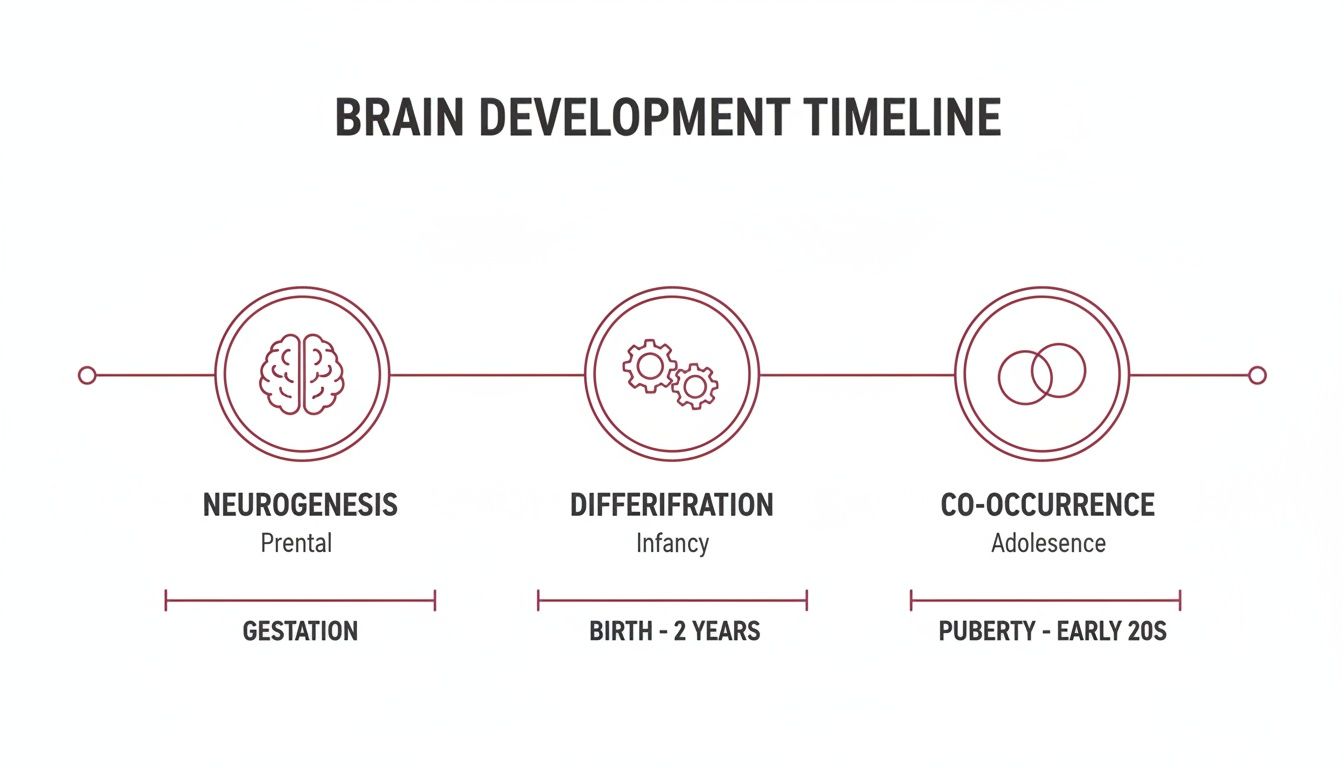
As you can see, the core wiring is established very early on. This is why these are lifelong neurotypes, not just behavioral choices someone can switch off.
Executive Function Differences Across The Lifespan
Trouble with executive function is a huge part of both conditions, but the why behind it is different—and it changes with age.
For a young autistic child, executive function issues often show up as cognitive rigidity. A different route to school can trigger a massive meltdown, not because they're being defiant, but because their brain genuinely struggles to pivot from an expected plan.
For a kid with ADHD, the struggle is more about task initiation and time management. They can have everything they need for a homework assignment laid out in front of them, but there’s an invisible wall keeping them from starting. The problem isn't a need for sameness; it’s a deficit in the internal spark and planning needed to just begin.
As they grow into adults, these challenges evolve.
- An autistic adult might find that same cognitive rigidity makes a last-minute change at work feel catastrophic. They might over-plan every detail of their day to create a buffer against the unexpected, which is mentally exhausting.
- An ADHD adult might find that poor task initiation leads to a constant, stressful cycle of procrastinating on crucial things like paying bills or making doctor's appointments. Their "time blindness" means they're chronically late and misjudging how long things will take, which can really damage their relationships and career.
The Critical Role Of Masking In Women And Girls
The picture gets even more complex when we talk about gender. For decades, the diagnostic rulebook was written based on how ADHD and Autism showed up in young boys, which meant generations of women and girls were completely missed. Many learn to use sophisticated masking strategies to hide their traits and blend in.
A young girl with undiagnosed ADHD probably isn't the boy bouncing off the walls. She might be the "daydreamer" staring out the window or the "chatty" one whose mind is going a mile a minute. Her struggles are often dismissed as personality quirks, and she learns to compensate by becoming a perfectionist or people-pleaser, convinced her difficulties are a personal failing.
Likewise, an autistic girl might become an expert at studying her peers, learning to mimic "normal" social behaviors. She scripts conversations in her head and forces herself to make eye contact even when it feels physically painful. The effort is immense and often leads straight to burnout.
“I often feel like a living contradiction. I want order but cannot maintain it. I want to be systematic and precise but struggle with it, which leaves me constantly feeling not good enough (to my own standards) and like I can never quite ‘get there.’” — Samantha, Australia
This quote is a perfect window into the internal battle that many neurodivergent people face, especially those with both Autism and ADHD (AuDHD). The autistic brain's deep need for order and systems goes to war with the ADHD brain's struggle to create and maintain them.
Social And Emotional Changes Into Adulthood
As we move into adulthood, the social rules get more complicated, and the challenges of Autism and ADHD shift right along with them.
An autistic adult might find the unwritten rules of office politics totally baffling. They could be the most skilled person on the team but find that navigating small talk at the water cooler is more draining than the actual job. Their social difficulty isn't a lack of desire to connect; it comes from a fundamentally different way of processing social information.
For an ADHD adult, social issues often stem from Rejection Sensitive Dysphoria (RSD)—an extreme emotional sensitivity to perceived criticism or rejection. This can cause them to lash out defensively or avoid situations where they might be judged, taking a toll on friendships and professional relationships. For them, the challenge is less about understanding the social playbook and more about regulating the intense emotional fallout from social interactions.
Recognizing these evolving and often hidden presentations is the first step. If any of this sounds familiar, a comprehensive evaluation from a specialist who truly understands masking and adult neurodivergence is essential to finally get clarity on whether your lifelong struggles point to Autism, ADHD, or both.
Understanding the Reality of Co-Occurring AuDHD
If you're exploring the differences between autism and ADHD, you might find the lines don't just feel blurry—they feel completely tangled. This isn't unusual. In fact, it’s the reality for a huge part of the neurodivergent community. The co-occurrence of Autism and ADHD, which many now call AuDHD, isn’t just a possibility; it's a common diagnostic profile.
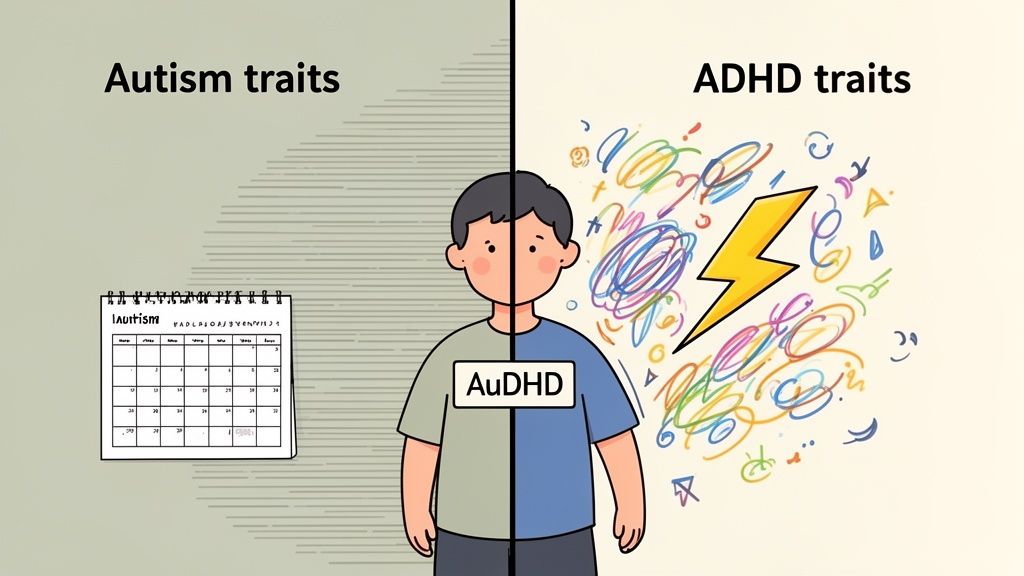
This reality was ignored by diagnostic guidelines for a long time. Until 2013, the Diagnostic and Statistical Manual of Mental Disorders (DSM) actually prevented a dual diagnosis of Autism and ADHD. This created incredible confusion and left countless people feeling invalidated and without proper support simply because they didn't fit neatly into one box.
Thankfully, the criteria have caught up to what clinicians and neurodivergent people have known for years: having one of these neurotypes makes you much more likely to have the other. Research now backs this up with hard data. One large-scale study of US adults, for example, found that ADHD rates were a staggering 10-fold higher in autistic people compared to the general population. That’s how deeply interconnected these conditions can be.
The Internal Tug of War
Living with AuDHD can feel like a constant internal paradox. You're trying to operate two different, and sometimes clashing, neurological systems at the same time. This internal tug of war can make daily life exhausting, and it’s a key reason why a specialized evaluation is so critical.
The classic AuDHD conflict pits the autistic need for structure against the ADHD brain's hunger for novelty.
- Routine vs. Spontaneity: The autistic side of your brain thrives on predictability and detailed plans. It wants to know exactly what’s coming next. But the ADHD brain is a dopamine-seeking machine, always chasing new, exciting, and stimulating experiences. This often results in someone meticulously planning their entire week, only to abandon it on a whim out of sheer boredom or impulse.
- Sensory Needs: An AuDHD individual might have the autistic trait of being easily overwhelmed by loud noises and bright lights. At the same time, their ADHD might leave them feeling understimulated, needing constant sensory input through fidgeting or listening to music. This leads to confusing behaviors, like needing noise-canceling headphones while also needing to pace around the room.
“I often feel like a living contradiction. I want order but cannot maintain it. I want to be systematic and precise but struggle with it, which leaves me constantly feeling not good enough (to my own standards) and like I can never quite ‘get there.’” — Samantha, Australia
Samantha’s words perfectly capture the AuDHD struggle. It's like having one foot on the gas and the other on the brake. This creates a state of perpetual internal friction that can easily lead to burnout and exhaustion.
Why a Specialized AuDHD Evaluation Matters
Because of these conflicting traits, people with AuDHD are often misdiagnosed, or only one of their conditions gets identified. A clinician who isn't familiar with the nuances of this co-occurrence might see the impulsivity of ADHD and completely miss the underlying autistic need for routine, or the other way around.
An incomplete picture leads to ineffective support. For instance, a treatment plan built only for ADHD won't account for the sensory sensitivities or social communication differences that come with autism. You can learn more about the complexities of this dual diagnosis in our guide to autism and adhd.
Getting an accurate AuDHD diagnosis from an experienced specialist offers profound validation and clarity. It confirms that your internal contradictions aren't a personal failing but a genuine neurobiological reality. This understanding is the first, most important step toward building personalized strategies that honor both the autistic and ADHD parts of who you are, leading to more effective support and, ultimately, a greater sense of self-acceptance.
How To Navigate The Diagnostic Process
If you think you or a loved one might have Autism, ADHD, or both, the thought of getting a formal diagnosis can feel like a mix of relief and anxiety. Online quizzes can be a great starting point for self-exploration, but they’re no substitute for a real clinical evaluation. An accurate diagnosis is the critical first step to getting clarity, accessing the right support, and finally understanding the "why" behind challenges you may have faced your whole life.
A proper diagnostic process goes way beyond a simple checklist. It's a deep dive into your personal and developmental history, combined with validated self-report measures and objective assessments from a qualified psychologist. This structured approach is essential for telling the nuanced traits of Autism and ADHD apart—and for spotting a potential co-occurrence of AuDHD.
The Value of Professional Assessment
A formal evaluation gives you something self-assessment can't: a definitive answer. When navigating the diagnostic process for conditions like autism or ADHD, understanding the role of specialized mental health therapy practices can be crucial for obtaining accurate evaluations and ongoing support. And in many cases, a professional diagnosis is the key that unlocks necessary resources.
A formal diagnostic report is a practical tool you can use in a few key ways:
- Workplace Accommodations: Getting reasonable adjustments at work, like flexible hours or a quieter desk, often requires official documentation.
- Academic Support: A diagnosis is necessary for getting accommodations on standardized tests like the SAT, GRE, or GMAT, and for setting up an IEP or 504 plan in school.
- Access to Treatment: If you're considering medication for ADHD, a formal diagnosis from a qualified provider is required.
An accurate diagnosis isn't about getting a label; it's about getting a roadmap. It validates your experiences and gives you a clear, actionable path forward for support, self-advocacy, and personal growth.
This validation can be life-changing. It shifts the narrative from self-blame to self-understanding and empowers you to find communities and strategies that actually work with your unique neurotype.
Why Telehealth Evaluations Are So Effective
The environment where an evaluation takes place can have a huge impact on the outcome. For many neurodivergent people, a traditional in-person clinic can be incredibly stressful. That anxiety can actually mask or change how your traits present, leading to an inaccurate picture. This is where telehealth has been a game-changer.
Being assessed from the comfort of your own home dramatically reduces that stress. When you're relaxed, you can offer a more authentic and accurate representation of your daily life and struggles. This leads to a more reliable diagnosis. The Sachs Center specializes in expert telehealth evaluations for this exact reason, making sure the process is both comfortable and effective.
Choosing the Right Type of Evaluation
Not all assessments are created equal. The right evaluation for you really depends on your goals. Taking a moment to understand the different options helps you invest your time and resources wisely, whether you just need diagnostic clarity for yourself or are seeking specific academic support.
To help, we've put together a guide to the evaluation options we offer at the Sachs Center. Think about what you need the outcome to be as you decide which path is the best fit.
Sachs Center Evaluation Options Which is Right for You?
| Evaluation Type | Best For | Outcome | Cost |
|---|---|---|---|
| Diagnostic Evaluation | Individuals wanting a formal diagnosis for personal clarity, workplace accommodations, or to pursue medication. | A diagnostic letter from a psychologist outlining findings and confirming a diagnosis. | $$$ |
| Diagnostic Evaluation + Report | Those who need a more detailed picture of their neurotype to share with therapists, doctors, or for state disability services. | A diagnostic letter plus a comprehensive eight-page report detailing your history, challenges, and personalized recommendations. | $$$$ |
| Neuropsychological Testing | Students and professionals who need extended time or other accommodations for standardized tests (SAT, GRE, MCAT, etc.). | A highly detailed, multi-page report (approx. 25 pages) covering cognitive abilities, achievement, and emotional functioning. | $$$$$ |
Each path provides a different level of detail tailored to a specific outcome. By understanding these distinctions, you can confidently take the next step.
If you're ready to finally get a deeper understanding of your own neurotype, exploring a specialized autism and adhd diagnosis with an expert can provide the answers you've been looking for.
Comparing Support and Treatment Strategies
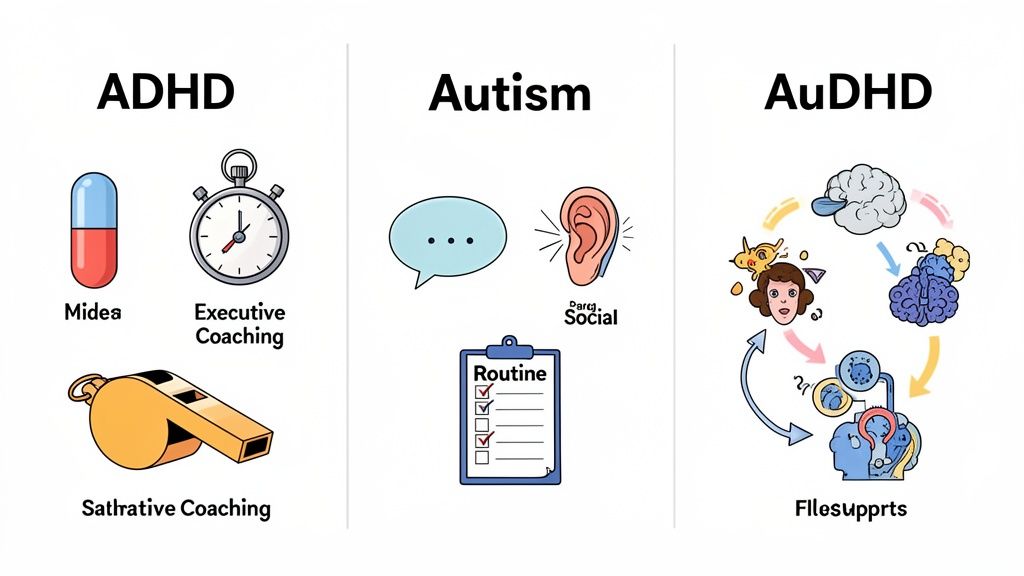
Getting an accurate diagnosis is the critical first step. It's what unlocks effective, personalized support. While both Autism and ADHD are neurodevelopmental conditions, their underlying wiring is different, which means their treatment and management strategies have to be different, too.
A one-size-fits-all approach is almost guaranteed to fail here. Instead, support has to be carefully aligned with an individual's specific neurotype to help them build the tools they need to thrive. The goal is never to "cure" a neurotype but to provide strategies that work with the brain's natural tendencies, reduce challenges, and amplify strengths.
Tailored Approaches For ADHD
For someone with ADHD, support usually zeros in on managing the core symptoms: inattention, hyperactivity, and impulsivity. Since ADHD is fundamentally a condition of regulation, many strategies are designed to improve executive functioning and create external structures to lean on.
A common and effective approach combines medication with behavioral therapies.
- Medication: Stimulant and non-stimulant medications can be game-changers, helping the ADHD brain regulate dopamine and norepinephrine. This often leads to a significant improvement in focus, a reduction in impulsivity, and makes it much easier to get started on tasks.
- Behavioral Therapies: Cognitive Behavioral Therapy (CBT) is a powerful tool that helps people identify and change the negative thought patterns and behaviors that often stem from their ADHD.
- ADHD Coaching: A coach provides practical, hands-on strategies for things like time management, organization, and planning. They act as an accountability partner to help build lasting habits.
The main objective is to manage the regulation challenges of ADHD, giving individuals more control over where their attention and energy go.
Focused Support For Autism
Support for Autism Spectrum Disorder (ASD) goes in a different direction. It focuses less on regulation and more on navigating social communication, managing sensory sensitivities, and learning how to leverage personal strengths. The real emphasis is on building skills and creating environments that accommodate the individual.
Key interventions for autism often include:
- Psychoeducation: This is a foundational step where individuals get to learn about their own autistic brain. Understanding concepts like monotropism (an intense, deep style of focusing) and their personal sensory profile can be incredibly empowering.
- Social Skills Training: In a structured, supportive setting, this training helps autistic individuals learn and practice the unwritten rules of social interaction, which can dramatically reduce social anxiety.
- Sensory Integration Therapy: An occupational therapist can help someone develop a "sensory diet" to manage sensory needs. This could mean avoiding overwhelming things like fluorescent lights or using tools like a weighted blanket to feel more grounded.
The core of effective autism support is accommodation and understanding, not assimilation. It’s about modifying the environment to fit the individual, rather than forcing the individual to fit an environment that wasn’t built for them.
Integrated Strategies For AuDHD
When Autism and ADHD show up together (AuDHD), support has to be flexible and integrated. A strategy designed for only one condition can easily make the other worse. For instance, the rigid routines that can be a lifesaver for an autistic brain can feel painfully stifling to the novelty-seeking ADHD brain.
An effective AuDHD plan requires a delicate balancing act. It might involve using ADHD medication to improve focus just enough to engage in autism-focused therapy. Or it could mean creating a structured daily routine (for the autism side) that also includes blocks of unscheduled "novelty time" (for the ADHD side).
The Sachs Protocol, for example, is an approach that integrates evidence-based methods like CBT with psychoeducation to address the complex interplay of AuDHD. It’s built on the knowledge that you can't treat one condition without considering the other. A practical application of this is learning how to get the right accommodations for ADHD and autism in the workplace—a process that requires this kind of balanced thinking.
Ultimately, whether it's for ADHD, Autism, or AuDHD, the best strategies are always highly personalized. They validate the person's experience and provide practical tools to navigate a world that can often feel challenging, empowering them to build a life that aligns with their unique strengths and needs.
Why an Accurate Diagnosis Is So Empowering
Figuring out the difference between Autism and ADHD isn't just an academic exercise—it's a deeply personal journey toward understanding yourself. Seeking a professional evaluation isn’t about getting a label. It's about getting a roadmap to your own mind, unlocking the right tools and support you need to finally thrive.
With awareness growing, more adults are getting answers to lifelong questions about why they've always felt different. A proper diagnosis validates these experiences, shifting the narrative from self-blame to one of difference and strength. That clarity is the foundation for personal growth, better relationships, and improved mental health.
Moving Forward with Clarity and Confidence
The numbers show just how common these neurotypes are and why getting clarity is so critical. CDC data reveals a significant rise in ASD, from 1 in 150 children back in 2000 to 1 in 36 by 2023. At the same time, ADHD affects around 11% of US children. One study found that 0.6% of children with either diagnosis actually had both (AuDHD), which really highlights why precise, expert-led telehealth evaluations are essential to tell the conditions apart or identify when they co-occur. You can read the full research about these findings to understand the data more deeply.
An official diagnosis is your key to advocating for your needs at school, at work, and in your personal life. It's what you need to secure workplace accommodations, get academic support, and explore treatments that actually align with your unique brain.
A diagnosis isn't a conclusion; it's a beginning. It’s the moment you stop trying to fit into a world not built for you and start building a life that fits who you are.
Ultimately, knowing whether you have Autism, ADHD, or both gives you the power to live more authentically. It’s permission to finally work with your brain instead of against it.
If you’re ready to move from confusion to clarity, the first step is a comprehensive evaluation. The specialists at the Sachs Center are experts in identifying the subtle and masked traits of neurodiversity. We invite you to learn more about our telehealth evaluations and take that first step on your path toward self-empowerment today.
Your Questions About Autism and ADHD, Answered
As you explore the worlds of neurodiversity, it's natural for questions to pop up, especially when trying to figure out the differences between Autism and ADHD. We hear a lot of the same questions from people just starting their journey, so we've answered some of the most common ones here.
Can Someone Have Both Autism and ADHD?
Yes, absolutely. It's not only possible but very common. This co-occurrence is often called AuDHD.
For a long time, diagnostic rules actually prevented doctors from diagnosing both conditions in the same person. Thankfully, this changed in 2013 to reflect what we now know is true for many people. Living with AuDHD can often feel like an internal tug-of-war—for instance, the autistic part of your brain might crave a predictable routine, while the ADHD part is desperately seeking something new and exciting.
Do These Conditions Affect One Gender More Than Another?
Historically, you’d see far more boys getting diagnosed with both Autism and ADHD. We now understand this wasn't because girls were less affected, but because of a deep-seated diagnostic bias.
The classic signs were based on how boys presented, and the unique ways these traits show up in girls and women went completely unrecognized. Many girls learn to use sophisticated "masking" techniques to hide their symptoms and fit in. While boys are still diagnosed with autism more frequently, the gap is closing. For ADHD, diagnoses in adulthood are becoming much more evenly split as awareness grows.
An accurate diagnosis isn’t about getting a label. It’s about finally getting a framework to understand yourself. It validates a lifetime of experiences and gives you the language to ask for what you need, whether that's workplace accommodations or just permission to give yourself more grace.
How Do I Know if It's Time for an Evaluation?
If you're reading this, you've probably wondered. A good rule of thumb is this: if you consistently struggle with social situations, feel overwhelmed by sensory input, or find that executive functions like planning and focusing are a constant battle, an evaluation could be a game-changer.
While exploring resources online is a fantastic start, a professional assessment is what provides the real clarity you need to get effective support and start thriving.
At the Sachs Center, our specialists are experts in recognizing the nuanced traits of Autism, ADHD, and AuDHD, particularly in adults who have gone undiagnosed. If you feel ready for clear answers, we invite you to book an evaluation with our team.