

So, you're wondering how long the entire ADHD testing process takes. From your first call to getting the final report, you can generally expect it to take anywhere from a few weeks to several months.
That's a pretty wide range, I know. The timeline really hinges on a few key factors, like the clinician's availability, what kind of evaluation is needed, and whether the assessment is for a child or an adult.
Understanding the ADHD Testing Timeline
Trying to figure out the timeline for an ADHD diagnosis can feel a bit like planning a trip without a map. You know you want to get to a place of clarity, but the route and the timing are a total mystery.
The length of the process isn't because of one single, marathon-length test. Instead, it’s a series of structured stages, and each one has its own time commitment. Think of it like a detective gathering clues. Each piece—from the first questionnaires to the in-depth interviews—adds a critical bit of information to the overall picture. Rushing it would be like forcing puzzle pieces together; you might finish faster, but the final image won't be accurate.
This visual gives you a great breakdown of the core parts of the assessment, whether they happen in-person or virtually.
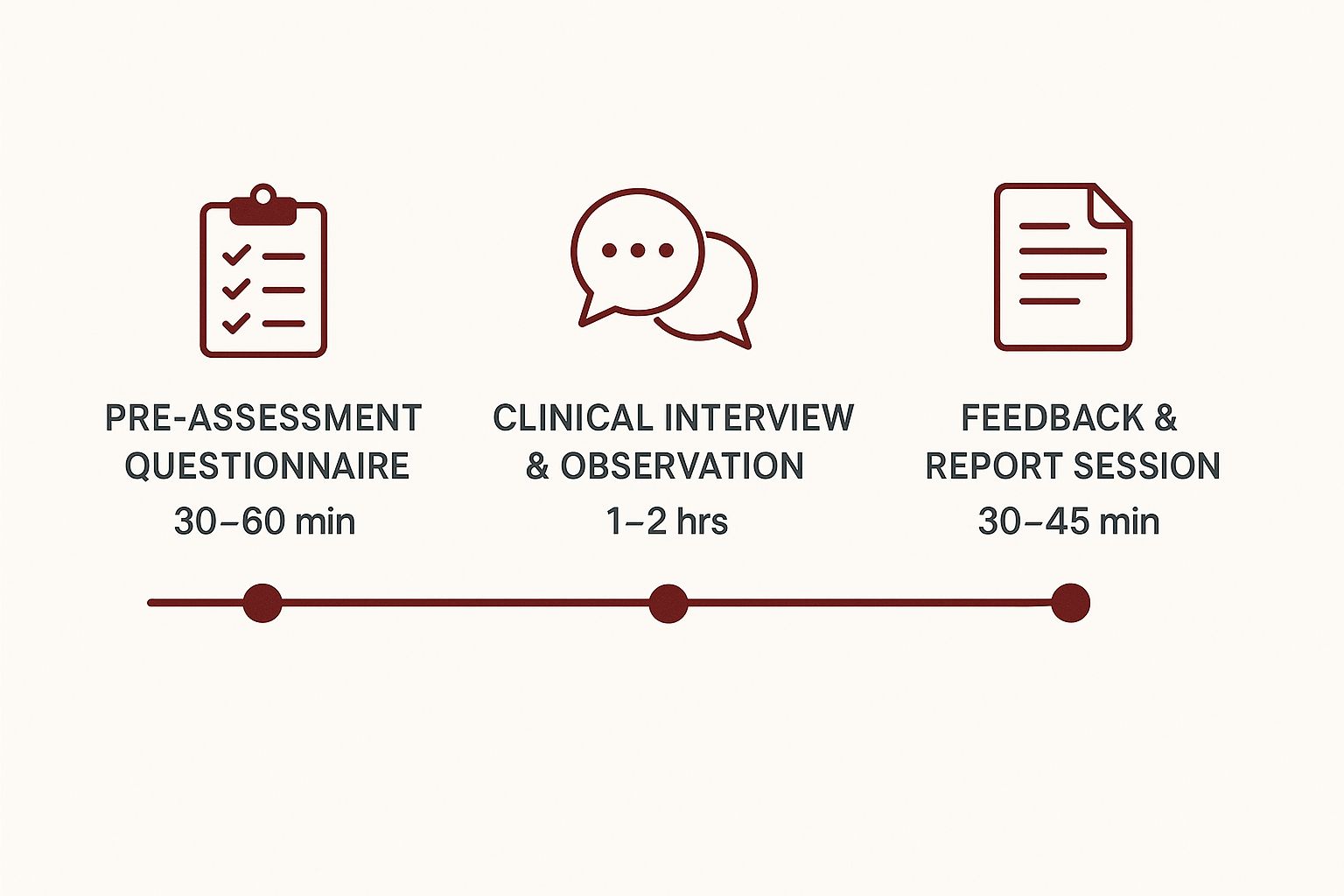
As you can see, the time you spend in direct evaluation is actually pretty short—often just a few hours total. The big takeaway here is that the overall timeline gets stretched out by the steps between those appointments. Things like scheduling, waiting for feedback from teachers or family members, and the time it takes for the clinician to analyze everything are what really determine the total duration.
Your First Steps in the ADHD Assessment Process

Starting the journey toward an ADHD diagnosis can feel like a huge, intimidating step, but the first part of the process is actually pretty straightforward. It’s all about gathering the right information to create a clear picture for the formal evaluation.
Think of your first meeting as a strategy session. This appointment, often called an initial consultation or intake, is really just a detailed conversation with a clinician that usually lasts 60 to 90 minutes. You’ll talk through your symptoms, your personal history, and the specific challenges you’re running into at work, school, or home.
This isn't just a formality—it's where the clinician finds the first clues needed to customize the rest of the assessment to your unique situation.
Preparing Your Background Information
Either before or right after this first meeting, you'll get a handful of forms and questionnaires to fill out. These are incredibly important for building a complete picture of your experiences. Depending on how detailed they are, completing them can take anywhere from 30 minutes to a few hours.
These self-report scales and history forms are your chance to tell your story. They give clinicians an objective framework to connect your real-life experiences with the established diagnostic criteria for ADHD.
Here's the kind of information you'll likely be asked for:
- Self-Report Questionnaires: These are standardized forms, like the Adult ADHD Self-Report Scale (ASRS), that help put a number to your symptoms.
- Developmental History: You'll be asked about your childhood, how you did in school (old report cards are pure gold here!), and your social development over the years.
- Observer Reports: For kids, this means getting input from parents and teachers. For adults, a partner or a close family member might be asked to share what they've observed.
Taking the time to fill these out thoughtfully is one of the best things you can do to move the process forward. To get a better sense of what a full evaluation looks like, you can learn more about an ADHD assessment for adults and see how these initial steps fit into the bigger picture. Doing this prep work really empowers you and helps keep things running smoothly.
Inside the Core Evaluation and Testing Sessions
Once you’ve finished the initial consultation and paperwork, it’s time to move into the core evaluation. This is really the heart of the ADHD testing process, where the real detective work begins.
Think of your clinician as an investigator, carefully piecing together clues from different sources to build a complete and accurate picture of your cognitive and behavioral patterns.
This stage isn't just one long, grueling test. It's actually a series of different activities, each designed to measure specific brain functions. The total time for this direct testing can range from two to five hours, but it's often split across one or two separate appointments. This helps prevent fatigue and ensures the results we get are as reliable as possible.
The Tools of the Trade
To get that full picture, clinicians use a combination of methods. Each tool provides a unique piece of the puzzle, and when put together, they help form a clear and accurate diagnosis. You can expect to encounter a few of the following during your sessions.
A typical evaluation will almost always include:
- Structured Clinical Interviews: This is a guided conversation where the clinician asks specific questions about your symptoms, your history, and how you function day-to-day.
- Behavioral Rating Scales: These are standardized questionnaires that help measure the frequency and severity of ADHD-related behaviors. We often gather these from different perspectives—yours, a parent's, a teacher's, or a partner's.
- Neuropsychological Tests: This is a series of tasks, many of them computer-based, that directly measure cognitive functions like attention, memory, and executive function.
These different components are all essential for a thorough, well-rounded assessment. For a deeper dive into the specific tests used, check out our guide on neuropsychological testing for ADHD and other classroom challenges at https://sachscenter.com/neuropsychological-testing-for-adhd-and-other-classroom-challenges/.
How Long Each Part Takes
The exact duration of the testing sessions really depends on the complexity of your case and the specific tools the clinician decides to use.
For instance, in an adult ADHD diagnosis, the timeline is often shaped by semi-structured clinical interviews based on DSM criteria. While the full assessment takes hours, these interviews usually last between 60 to 90 minutes and are critical for evaluating symptoms that you may have experienced in the past.
The whole point of this multi-faceted approach is to see how your brain works in real-time. It’s not about passing or failing. It’s about identifying patterns of strengths and weaknesses that might align with an ADHD profile.
This comprehensive strategy ensures that the answer to "how long does ADHD testing take?" reflects a process that prioritizes accuracy over speed.
Why the Testing Journey Differs for Children and Adults

The answer to "how long does ADHD testing take?" really depends on who is being evaluated. The process for a child versus an adult can look surprisingly different, and it all comes down to where and how symptoms show up in daily life.
You can think of a child's evaluation as building a case with multiple key witnesses. The clinician needs to get a full 360-degree view by collecting information from different environments. This often extends the timeline because it requires coordinating feedback from parents, teachers, and sometimes other caregivers.
In contrast, an adult’s assessment is more of a deep biographical dive. It relies heavily on self-reporting, piecing together a detailed personal history, and often involves hearing from a spouse or close family member who sees their current struggles firsthand.
Key Differences in Data Collection
The type of information a clinician needs to gather is what really shapes the timeline. For kids, the process usually requires more external data points to create a complete and accurate picture.
- For Children: The evaluation almost always includes direct classroom observations or detailed questionnaires for teachers. This helps the clinician see how symptoms play out in a structured academic setting. A critical—and often time-consuming—part of this process is also ruling out other learning disabilities or behavioral issues that can mimic ADHD.
- For Adults: The focus shifts to looking back in time. A clinician will dig into childhood experiences, old school records, and career history to find a consistent, lifelong pattern of symptoms that points to ADHD.
A key reason for these different approaches is that ADHD symptoms can evolve. What looks like classic hyperactivity in a 7-year-old might present as subtle restlessness, chronic disorganization, or relationship difficulties in a 37-year-old.
Evolving Understanding of Adult ADHD
For a long time, ADHD was seen almost exclusively as a childhood disorder. We now know that's simply not true. Research shows that about 90% of children with ADHD will continue to experience symptoms well into adulthood.
Even more telling, approximately 75% of adults who get an ADHD diagnosis were completely missed as kids. This highlights just how easily symptoms can be masked or misunderstood earlier in life. You can learn more about the complexities of adult ADHD diagnosis in recent studies.
This growing awareness has reshaped the entire diagnostic process. It has turned adult evaluations into a unique field that requires a specialist to dig deep into an individual’s entire life story.
What Can Slow Down (or Speed Up) Your Diagnosis?
Even when you know the steps, the real-world answer to "how long does ADHD testing take?" can be a bit of a moving target. Think of it like a road trip—some routes are smooth sailing, while others are full of detours and unexpected traffic jams.
Knowing what these potential roadblocks are ahead of time helps you set realistic expectations. The most common delays, by far, are logistical hurdles. For instance, finding a clinician who specializes in adult ADHD can be tough, and it's not unusual to face a waitlist that’s three to six months long before you can even get an initial appointment. This is often the single biggest variable in the whole timeline.
Navigating the Paperwork Trail
Beyond just waiting for an appointment, the administrative side of things can easily add weeks or even months to the process. Staying on top of this is one of the best ways to keep things moving.
- Insurance Pre-authorization: Many insurance plans require a green light from them before they’ll agree to cover an evaluation. Getting that approval can take several weeks of back-and-forth.
- Coordinating with Everyone Involved: If you have multiple professionals in the mix—say, a family doctor, a psychologist, and a teacher—getting them all to communicate and share records takes time and persistence.
For kids especially, the time between that first consultation and the final diagnosis can be a long haul. This stretch involves multiple visits and pulling together a lot of different information, which can really draw out the process.
To give you an idea, one study looking at pediatric ADHD diagnosis found that the average time from the first doctor's visit to a confirmed diagnosis was a surprising 20.4 months. That timeframe ranged anywhere from 12 to 32 months, depending on the country. You can find more details in this study on ADHD diagnostic timelines for children.
Ultimately, the best way to speed up your diagnosis is to be your own best advocate. Fill out and return questionnaires right away, make sure teachers or family members know when their feedback is due, and don't be afraid to follow up with the clinic and your insurance provider to keep the ball rolling.
Receiving Your Report and Planning Next Steps
The final phase of your ADHD testing journey is all about getting clarity and a plan. Just because the last assessment is complete doesn't mean the process is over. Now, your clinician begins the most important part: analyzing all the data they’ve collected.
This stage is a bit like a detective putting together all the clues. The clinician scores your tests, pulls in their observations, and reviews your history to build a complete diagnostic picture. This detailed work usually takes one to three weeks and results in a comprehensive written report. This document will lay out all the findings, explain the diagnostic impressions, and offer personalized recommendations.
Understanding Your Results
Once the report is ready, you'll have a feedback session. This is a dedicated meeting, typically lasting 30 to 60 minutes, where your clinician walks you through the results in plain language. It's your chance to ask any questions that have been on your mind.
This session is where all the pieces come together. It’s not just about getting a label; it’s about understanding your unique cognitive profile and creating a clear, actionable plan for the future.
This appointment is where you'll figure out what comes next. Whether the outcome is an ADHD diagnosis or something else, the recommendations will give you clear guidance on potential treatments, therapies, or support strategies.
For a bird's-eye view of the entire process, check out our guide on how to get diagnosed with ADHD. This final step is designed to empower you with the insights you need to move forward with confidence.
Common Questions About the ADHD Testing Process
Thinking about getting tested for ADHD can bring up a lot of questions. It's completely normal. Getting some clear answers upfront can make the whole process feel much less intimidating.
A big question we hear is about those quick online "ADHD tests." While these screeners can be a good starting point, they are no substitute for a formal diagnosis from a qualified clinician. A true, comprehensive evaluation goes much deeper.
Telehealth can be great for initial interviews, but reliable neuropsychological testing really needs a controlled, in-person environment to be accurate. Be cautious of any service that promises an instant diagnosis—a thorough, careful assessment is key to getting it right.
What to Expect Financially and Logistically
Two of the most common concerns are, understandably, about cost and preparation.
-
What is the typical cost of an ADHD evaluation?
The cost can vary quite a bit, often ranging from several hundred to a few thousand dollars. This really depends on your location, the clinician’s specialty, and what your insurance plan covers. Your first step should always be to call your insurance provider to understand your coverage, then ask the testing center for a detailed breakdown of costs. -
What should I bring to my first appointment?
Coming prepared can make your first consultation incredibly productive. It’s helpful to gather things like old school report cards (teacher comments are golden!), any previous psychological evaluations you might have, a list of your current medications, and some notes on the specific challenges you're facing at work or at home. For a child's assessment, a detailed developmental history is invaluable.
At the Sachs Center, we specialize in providing clear, expert diagnostic evaluations for ADHD and Autism from the comfort of your home. If you're ready for answers and a clear path forward, book your virtual assessment with us today.
