
Navigating the path to understanding whether you might be autistic can feel overwhelming, but a reliable autism screener for adults is a crucial first step. This guide is designed to cut through the confusion and provide a clear, curated list of the most credible and widely used online screening tools. We have gathered and analyzed the best resources, from self-administered questionnaires developed by leading research institutions to comprehensive platforms that connect you with clinical professionals.
This article offers a practical overview of each screener, helping you understand its purpose, what to expect, and how to interpret the results cautiously. For each tool, you will find direct links, key details about its format, and important context about its limitations. We will explore well-known assessments like the Autism-Spectrum Quotient (AQ) and the Ritvo Autism Asperger Diagnostic Scale-Revised (RAADS-R), as well as platforms that offer these tools.
Our goal is to equip you with the information needed to take a meaningful step in your self-discovery journey. While these screeners are not a substitute for a formal diagnosis, they provide valuable insights that can help you decide on your next steps, such as pursuing a comprehensive evaluation. This list will help you find the right autism screener for adults to begin exploring your neurotype and determine if a professional assessment is the right path forward for you.
1. Sachs Center
While online questionnaires provide a valuable starting point, the Sachs Center represents the essential next step: a formal, professional diagnostic evaluation conducted by specialists. For adults who have used a preliminary autism screener and identified significant traits, the Sachs Center offers a direct path to diagnostic clarity through a telehealth-first model. Their focused expertise in neurodiversity, particularly in identifying masked presentations common in women and BIPOC clients, makes them a standout choice for those seeking a nuanced and affirming assessment.
The center’s streamlined process moves beyond self-report screeners to provide a definitive diagnosis from licensed PhD/PsyD psychologists. This is critical for anyone needing documentation for workplace accommodations, medication management, or academic support. Their approach combines clinical interviews with validated assessments in an efficient two-hour virtual evaluation, delivering a practical diagnosis without requiring extensive, and often unnecessary, IQ testing.
Key Features and Offerings
The Sachs Center distinguishes itself by integrating diagnosis with a comprehensive, strengths-based treatment pathway. This creates a seamless transition from assessment to ongoing support.
- Specialized Telehealth Evaluations: The core service is a two-hour virtual assessment for Autism (ASD), ADHD, or combined AuDHD. These are conducted by licensed psychologists with deep expertise in neurodivergent presentations.
- Actionable Documentation: Following an evaluation, clients receive diagnostic letters or full clinical reports. These documents are specifically formatted to be used for securing workplace accommodations, university disability services (like IEP/504 plans), and medication management.
- Comprehensive Care Model: Beyond diagnosis, the center offers a full suite of services including evidence-based cognitive behavioral therapy (CBT), psychoeducation, and their proprietary "Sachs Protocol." They also provide ongoing support through individual therapy, adult "neurotribes," and social skills groups.
- Focus on Masked Presentations: A significant advantage is their experience in identifying autism in adults who may have gone undiagnosed for years, particularly women, girls, and individuals from diverse cultural backgrounds whose traits do not fit outdated stereotypes.
Pricing and Access
The Sachs Center operates on a direct-pay model. They do not bill insurance directly, but they provide clients with a superbill to submit for out-of-network reimbursement.
- Diagnostic Testing: $790 (Autism or ADHD) or $890 (AuDHD).
- Testing + Full Clinical Report: $1,190 (single diagnosis) or $1,290 (combined).
- Reimbursement: Clients often report reimbursements ranging from $400 to $800 from their insurance plans.
This structure provides a clear, upfront cost, allowing individuals to invest directly in a specialized evaluation. You can find more details on their approach to adult autism testing and the diagnostic process on their website.
Best For: Adults who have completed a self-screener and are seeking a formal, convenient, and expert-led virtual diagnosis with a clear pathway to practical support and accommodations.
2. Western Psychological Services (WPS)
Western Psychological Services (WPS) is the official publisher for several highly-regarded clinical instruments, making it an essential resource for professionals rather than the general public seeking a quick online test. This platform provides access to purchase and administer validated tools like the Social Responsiveness Scale, Second Edition (SRS-2) and the Autism Diagnostic Observation Schedule, Second Edition (ADOS-2).
For clinicians, researchers, or organizations looking to integrate a formal autism screener for adults into their practice, WPS is the direct source. The site offers the SRS-2 Adult forms (both self-report and other-report) in paper or digital formats through its Online Evaluation System. This system supports telehealth workflows by allowing remote administration and automated scoring, a crucial feature for modern practices.
While not a self-help site, WPS stands out for its authority and commitment to validated measures. It is the place to acquire the "gold standard" tools used in formal diagnostic evaluations.
Key Features and Considerations
- Professional Access: Purchasing most instruments, including the SRS-2 and ADOS-2, requires meeting specific qualification levels (e.g., a master's degree in psychology or a related field).
- Comprehensive Kits: Users can purchase complete kits for the ADOS-2, which is an observational assessment, not a self-report screener. This requires extensive, specialized training, which WPS also offers.
- Telehealth Support: The WPS Online Evaluation System is designed for remote administration, making it a valuable tool for virtual assessments.
Link: https://www.wpspublish.com
3. Cambridge University Autism Research Centre (ARC) — AQ suite
The Cambridge University Autism Research Centre (ARC) is the original source for the widely recognized Autism-Spectrum Quotient (AQ) suite of tests. This academic site is an essential resource for individuals, clinicians, and researchers seeking direct access to the original, validated questionnaires without a paywall or third-party modifications. It provides the foundational tools for an initial self-assessment.
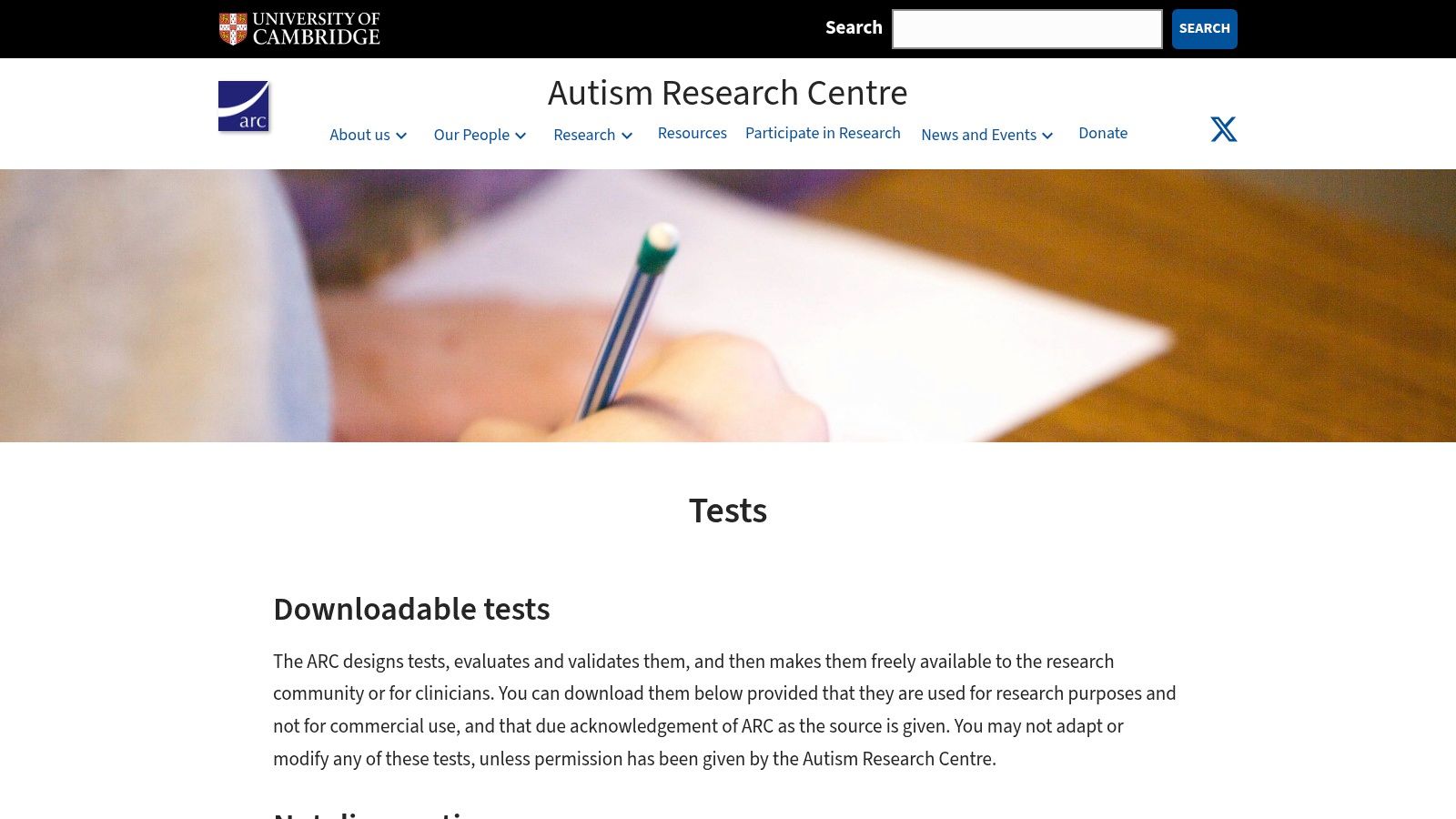
As the primary publisher, the ARC offers free, official downloads of the 50-question AQ and the shorter 10-question version (AQ-10), both of which are common first-line tools. Using this platform ensures you are using the authentic autism screener for adults as developed by the researchers. The site includes multiple translations and versions for different age groups, with clear terms allowing for noncommercial clinical and research use. You can learn more about how to interpret the Autism-Spectrum Quotient and its scoring.
The ARC stands out by providing authoritative, no-cost access to a fundamental screening tool. It democratizes the first step of the assessment journey, offering the actual documents used in many clinical and research settings directly to the public.
Key Features and Considerations
- Official Source: Provides direct, free downloads of the AQ-50 and AQ-10 instruments, ensuring users have the original, validated version.
- No Cost: Unlike commercially published screeners, the AQ tests are available for free for non-commercial clinical, research, and personal use.
- Screener Limitations: The ARC clearly positions these tools as screeners, not diagnostic instruments. A high score suggests further evaluation is warranted but does not confirm a diagnosis.
- Minimalist Interface: The website is academic and research-focused, offering direct downloads and supporting papers rather than an interactive test-taking platform.
Link: https://www.autismresearchcentre.com/tests
4. NICE — AQ-10 resource page
The National Institute for Health and Care Excellence (NICE) in the UK offers an official resource page for the Autism Spectrum Quotient-10 (AQ-10). This site is not an interactive test but a critical source for clinicians, primary care providers, and individuals seeking the original, validated tool as cited in official clinical guidelines. It provides the 10-item questionnaire directly, along with its specific implementation context.
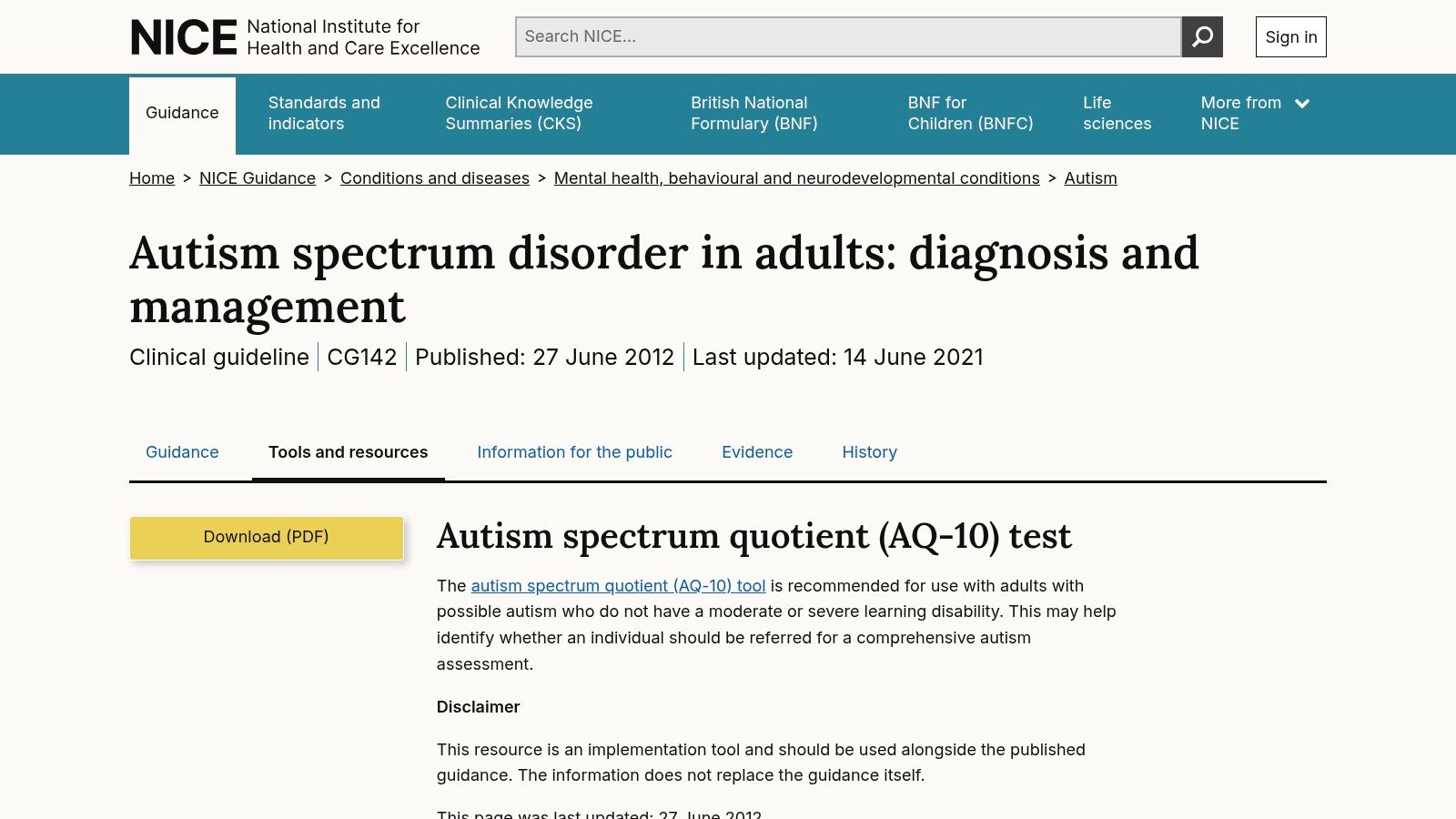
This resource is distinguished by its authority and clarity. It explicitly states the referral threshold from its source guideline (CG142), noting that a score of 6 or above suggests a referral for a comprehensive diagnostic assessment. This makes it an invaluable, ultra-brief autism screener for adults used for initial triage in busy, time-limited settings like general practitioner offices. The downloadable PDF includes the questions and scoring instructions, ensuring fidelity to the original instrument.
While the guidance is specific to the UK's healthcare system, the AQ-10 is referenced and used internationally. The NICE page provides the most direct and authoritative context for its intended clinical use as a first-step screening measure.
Key Features and Considerations
- Official Guideline Context: The page links the AQ-10 directly to its place within the NICE CG142 clinical guideline, explaining its role in the assessment pathway.
- Clear Referral Threshold: It provides an unambiguous score cutoff (≥6) for recommending further evaluation, removing guesswork for practitioners.
- Downloadable Tool: Users can download the AQ-10 questions and scoring key, which is ideal for integration into clinical paperwork or electronic health records.
- UK-Centric Guidance: Although widely respected, the guidance is formally part of the UK's National Health Service (NHS) framework and not a U.S. regulatory document.
5. Autism Speaks — Autism Screening hub
Autism Speaks provides a consumer-focused educational hub about the autism screening process rather than a platform to take a test directly. It is designed to give individuals and families clear, accessible information about what screening entails, what the results might mean, and what to do next. The site is an excellent starting point for those wanting to understand the landscape before or after using an online screener.
For adults exploring a potential diagnosis, this hub contextualizes the role of an autism screener for adults. It highlights tools like the Autism-Spectrum Quotient (AQ) and emphasizes that these are preliminary steps, not diagnostic instruments. The platform’s primary value lies in its extensive resource library, offering toolkits for newly diagnosed adults and guidance on how to pursue a formal evaluation.
While it does not host the screeners, Autism Speaks stands out as a critical informational resource. It helps demystify the journey from initial self-assessment to seeking professional support, making it a valuable educational stop for anyone considering an autism evaluation.
Key Features and Considerations
- Educational Focus: Provides plain-language explanations of screening versus diagnosis and offers age-specific information, including a section for adults.
- Resource and Toolkit Access: Links to a wide range of post-screening resources, such as the "First 100 Days Kit" for newly diagnosed individuals and directories for finding local service providers.
- Guidance on Next Steps: Clearly outlines the path from a positive screener result to seeking a formal clinical evaluation, helping users understand the process.
- No Direct Testing: The platform does not administer any screeners; it links out to other resources and provides information about the tests.
Link: https://www.autismspeaks.org/autism-screening
6. IDRlabs
IDRlabs provides a popular and highly accessible entry point for adults curious about autism traits through its free online self-tests. The platform hosts several versions of screeners, including the 50-question Autism Quotient (AQ) and other long-form tests inspired by instruments like the RAADS-R. Its primary draw is the immediate, no-cost, and private nature of the experience, making it a common first step for individuals exploring their neurotype.
The site is designed for quick self-reflection rather than clinical use. Upon completing a test like the AQ, users receive an instant score and a brief interpretation, which can help determine if pursuing a formal evaluation is warranted. While not an official publisher, IDRlabs provides references to the original studies, offering a path for users to find the source material. It serves as a widely used, low-barrier autism screener for adults to begin their information-gathering process.
This platform stands out for its simplicity and speed. For anyone hesitant to begin a formal diagnostic journey, IDRlabs offers a private, pressure-free way to engage with the types of questions found on validated screeners, making the concept of assessment feel more approachable.
Key Features and Considerations
- Free and Immediate Access: The tests are entirely free, require no login or personal information, and provide results instantly upon completion.
- Inspired-By Instruments: The screeners are based on or inspired by established clinical tools but are not the official, validated versions. Their psychometric properties may differ from the original instruments.
- Not a Diagnostic Tool: The site includes clear disclaimers that its tests are for educational or exploratory purposes only and cannot provide a diagnosis.
Link: https://www.idrlabs.com/autism-quotient/test.php
7. RAADS-R Test (raadsrtest.com)
This website provides immediate, free access to the full 80-item Ritvo Autism Asperger Diagnostic Scale-Revised (RAADS-R). It is designed for adults who suspect they might be on the autism spectrum and want to explore their traits using a widely recognized self-report questionnaire. The platform is straightforward, presenting the questions clearly and providing an instant score upon completion.
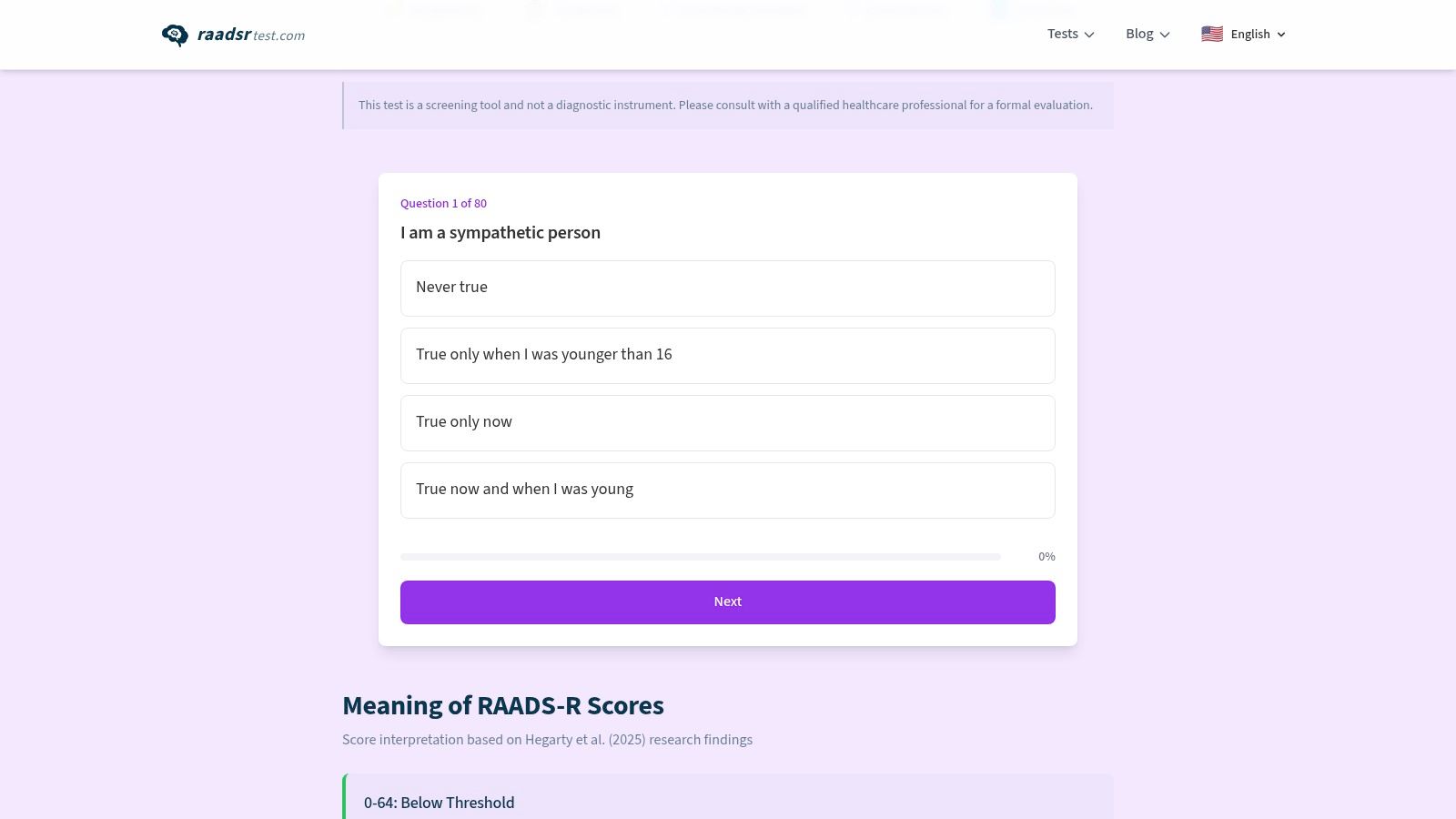
While the test itself is free, the site offers an optional paid "Professional Analysis" PDF report for a small fee. This downloadable summary breaks down the scores across the RAADS-R's four subscales: social relatedness, circumscribed interests, language, and sensory-motor. This feature makes it a useful tool for organizing one's thoughts and experiences before a consultation with a healthcare professional. Although not an official publisher, the site serves as a highly accessible starting point for anyone considering a formal autism screener for adults. To better understand the nuances of this specific tool, you can get a detailed overview of the RAADS-R test and what its scores mean.
Key Features and Considerations
- Full 80-Item Test: Administers the complete RAADS-R, ensuring the scoring reflects the full scope of the screener as it was designed.
- Instant Results: Users receive their total score and subscale scores immediately after finishing the questionnaire, providing prompt feedback.
- Optional Paid Report: For $9.99, users can purchase a downloadable PDF that neatly summarizes their results, which can be a practical document to share with a therapist or doctor.
- Screener Limitations: It is crucial to remember that the RAADS-R is a screening tool, not a diagnostic instrument. A high score suggests that a formal evaluation is warranted but does not confirm an autism diagnosis.
Link: https://raadsrtest.com/autism-test
8. Prosper Health
Prosper Health is a telehealth provider focused on the U.S. that uniquely bundles several free, widely recognized screening tools into a single, accessible platform. It offers an excellent starting point for adults who want to explore their traits by taking multiple screeners and comparing the results before considering a formal evaluation. The platform hosts the AQ, RAADS-R, and the Camouflaging Autistic Traits Questionnaire (CAT-Q), providing a comprehensive initial self-assessment.
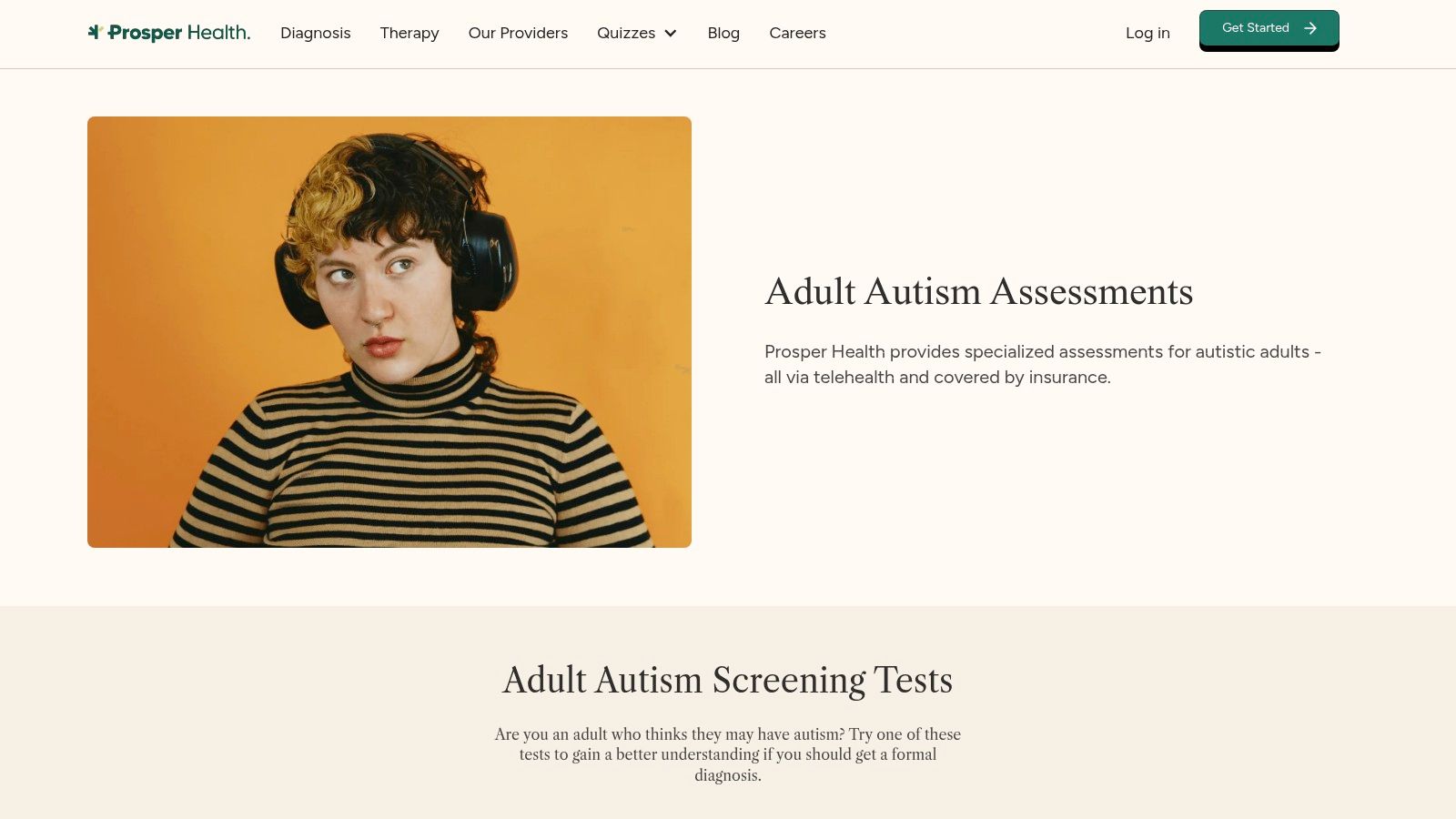
What sets Prosper Health apart is the clear pathway it offers from self-screening to professional services. After completing a screener, users receive clinician-authored content that helps interpret the results and outlines potential next steps. This integrated approach makes it a practical resource for those seeking a one-stop shop for a preliminary autism screener for adults followed by access to insurance-supported telehealth evaluations and therapy, streamlining the journey toward a formal diagnosis and support.
The inclusion of the CAT-Q is particularly valuable for adults, especially women and gender-diverse individuals, who may have developed camouflaging or masking behaviors. By addressing this often-overlooked aspect of the autistic experience, Prosper Health provides a more nuanced screening opportunity.
Key Features and Considerations
- Multiple Free Screeners: Users can take four different screeners (a proprietary quick screener, AQ, RAADS-R, and CAT-Q) in one place at no cost.
- Integrated Care Pathway: The platform directly connects users to its telehealth evaluation and therapy services, many of which may be covered by insurance.
- Focus on Masking: The inclusion of the CAT-Q acknowledges the importance of camouflaging in adult autism presentations.
- U.S.-Based and Insurance-Focused: Services are specific to the United States, and the availability and coverage for evaluations vary significantly by state and insurance plan.
- Screening vs. Diagnosis: The free quizzes are strictly for informational screening and cannot provide a diagnosis; a formal clinical evaluation is required.
Link: https://www.prosperhealth.io/test
9. TherapyDen — Adult autism self-assessment and provider marketplace
TherapyDen provides a unique two-part resource: an informal self-assessment for adult autism coupled with a comprehensive directory of U.S. therapists. Its 20-item quiz is not a clinically validated instrument but was developed with input from clinicians and individuals with lived experience. The questions are intentionally mapped to the DSM-5-TR diagnostic domains, making it an excellent tool for self-reflection.
This platform bridges the gap between initial curiosity and professional support. After completing the free assessment, users are seamlessly guided toward a directory of neurodiversity-affirming clinicians who can provide a formal evaluation. This integrated pathway makes TherapyDen a practical starting point for anyone considering a formal autism screener for adults but unsure of how to find a qualified professional.
TherapyDen stands out by providing a clear and actionable next step. It demystifies the process by linking a preliminary self-exploration tool directly to a marketplace of vetted providers, empowering users to move from questioning to seeking a formal diagnosis.
Key Features and Considerations
- Integrated Directory: The platform’s primary strength is its directory, allowing users to find and filter for therapists who specialize in autism, neurodiversity, and formal assessments in their state.
- Transparent Methodology: While not a validated screener, the site is transparent about the tool’s creation, its limitations, and its purpose as a conversation starter, not a diagnostic instrument.
- Privacy Focused: TherapyDen clearly states that responses to the self-assessment are not stored or tracked, ensuring user privacy during this initial exploratory phase.
Link: https://www.therapyden.com/tests/neurodivergent/autism
10. Blue Tide Therapy
Blue Tide Therapy provides a direct pathway for adults seeking a formal diagnostic evaluation, bypassing the initial self-screening stage for a streamlined assessment process. This telehealth provider offers flat-fee, low-cost adult autism evaluations for residents in a specific set of U.S. states, presenting a more accessible alternative to often lengthy and expensive traditional assessment routes. Their service is not a self-administered autism screener for adults but a complete diagnostic service.
The process begins with pre-appointment questionnaires that function as a comprehensive intake, gathering necessary information before a focused virtual diagnostic interview. This model is designed for individuals who have already self-identified or have strong reasons to suspect they are autistic and want to move directly to a formal diagnosis. For those seeking clarity and an official report without navigating a complex healthcare system, this service provides a clear, structured option.
Blue Tide Therapy stands out for its pricing transparency and its specific focus on shortening the diagnostic wait times that many adults face. It is positioned as a practical next step after an individual has used preliminary online screeners and decided to pursue a professional evaluation.
Key Features and Considerations
- Affordable Flat-Fee Model: Offers a transparent diagnostic evaluation at a fixed cost (currently listed at $400), making it more financially accessible than many comprehensive neuropsychological batteries.
- Geographic Limitations: The service is only available to residents of specific U.S. states, which are clearly listed on their website, so national coverage is not available.
- Streamlined Process: The workflow is designed for efficiency, moving from intake forms to a virtual diagnostic appointment to shorten the overall time from inquiry to diagnosis.
- Focused Evaluation: The assessment is a targeted diagnostic evaluation rather than a full neuropsychological workup, making it a faster but potentially less comprehensive option for complex cases.
Link: https://www.bluetidetherapy.com/autism-evaluation
11. Cambridge Core (Psychological Medicine article on AQ performance)
Cambridge Core hosts a crucial open-access academic article from Psychological Medicine that evaluates the performance of the Autism-Spectrum Quotient (AQ) questionnaire. Rather than offering an interactive test, this resource provides the scientific evidence behind the AQ, allowing users to understand its statistical strengths and weaknesses as a predictive tool for clinical diagnosis. It is an essential read for anyone wanting to contextualize their results from an AQ or AQ-10 screener.
For individuals or professionals using an autism screener for adults, this article provides critical data on sensitivity and specificity. Understanding these metrics helps set realistic expectations about the likelihood of false positives or negatives, ensuring that screener results are seen as a starting point for further inquiry, not a definitive conclusion. It is an invaluable resource for interpreting scores with the nuance they require.
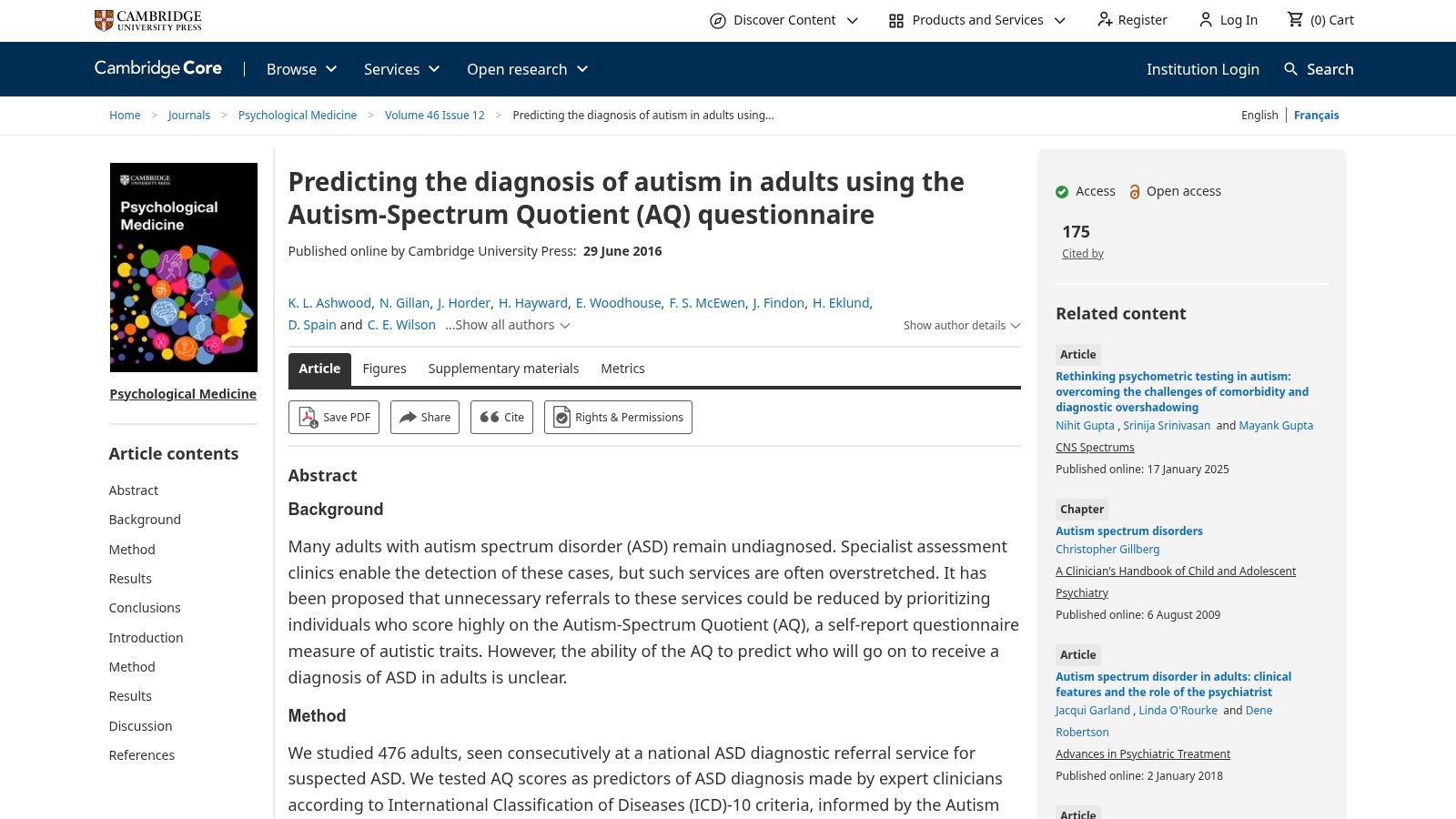
This platform stands out by offering the "why" behind the screening tools. Instead of just providing a score, it delivers the peer-reviewed research needed to make informed decisions about next steps, distinguishing it from platforms that offer only the tests themselves.
Key Features and Considerations
- Evidence-Based Context: Provides detailed sensitivity and specificity data for the AQ and AQ-10, helping users understand the screener's predictive accuracy in a clinical setting.
- Open-Access Research: The article is freely available, removing financial barriers to accessing high-quality academic information about autism screening tools.
- Informative, Not Interactive: This is a source for academic reading and data analysis, not a platform to take a screener. It is best used alongside or after completing an AQ test elsewhere.
- Comparative Data: The research helps users understand how the AQ performs, which can be implicitly compared to other screeners when reviewing similar academic literature.
12. PubMed / Journal of Autism and Developmental Disorders — RAADS-R Validation
While not a testing platform itself, PubMed provides the foundational evidence for why many online screeners exist. This specific entry links to the pivotal 2011 validation study for the Ritvo Autism Asperger Diagnostic Scale-Revised (RAADS-R) published in the Journal of Autism and Developmental Disorders. It serves as an essential resource for understanding the psychometric properties, such as sensitivity and specificity, of one of the most widely used self-report measures.
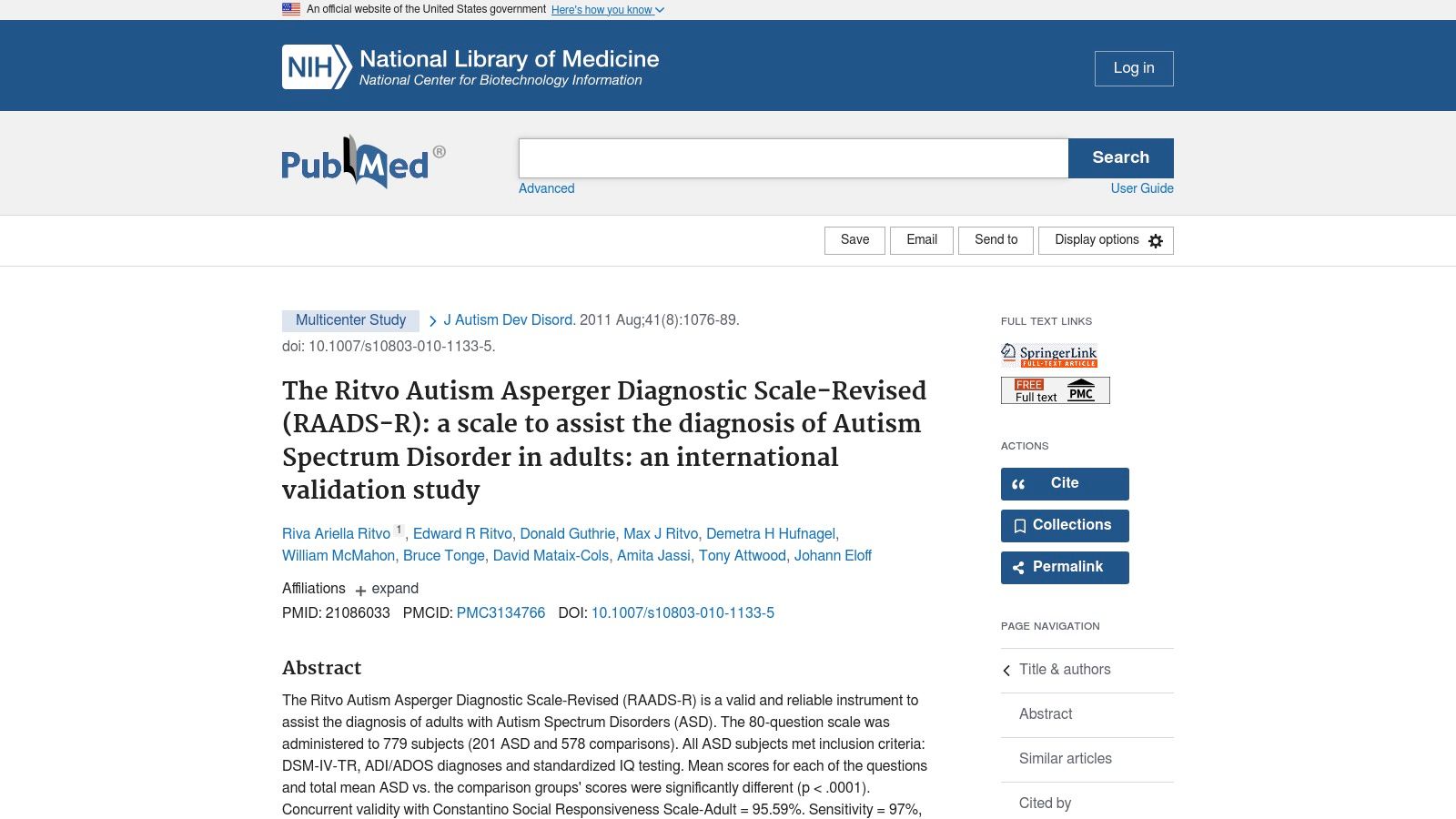
For individuals who have taken a version of the RAADS-R online, this academic paper provides the scientific context for their results. Bringing this research to a conversation with a clinician can demonstrate an informed approach and help guide the discussion about next steps for a formal diagnostic evaluation. It validates the use of the RAADS-R as a credible autism screener for adults in research settings, distinguishing it from unverified online quizzes. This resource empowers users to understand the science behind the tools they use.
This platform is unique because it offers the primary source material, allowing users to move beyond the screener itself and engage with the scientific literature that supports its validity.
Key Features and Considerations
- Evidence-Based Support: The article abstract confirms the RAADS-R's ability to distinguish autistic adults from non-autistic controls with high accuracy in the studied populations.
- Clinical Discussion Tool: Sharing this peer-reviewed study with a healthcare provider can add weight to the results of a self-administered screener and facilitate a more productive conversation about a formal assessment.
- Access Limitations: PubMed provides the abstract for free, but accessing the full text of the article typically requires a subscription to the Journal of Autism and Developmental Disorders or institutional access.
- Not an Interactive Tool: This is a reference link to a scientific paper. You cannot take any tests here; it is purely for informational and research purposes.
Link: https://pubmed.ncbi.nlm.nih.gov/21086033/
12-Resource Comparison: Adult Autism Screeners
| Service / Core offering | Key features (✨) | Target audience (👥) | Price / Access (💰) | Quality / Notable USP (★ 🏆) |
|---|---|---|---|---|
| 🏆 Sachs Center | 2–2.5 hr telehealth ASD/ADHD/AuDHD evaluations; CBT + Sachs Protocol; neuropsych testing | Children, teens, adults; masked presentations; BIPOC & women-focused | 💰 $790 (single) / $890 (combined) · Report packages & neuropsych $5,995 · superbill available | ★★★★★ 🏆 Specialist clinicians; usable diagnostic letters/reports; telehealth-first |
| WPS (Western Psychological Services) | Publisher kits: SRS‑2, ADOS‑2, training & online scoring | Clinicians & organizations requiring validated instruments | 💰 Purchase required; professional qualification for many products | ★★★★ Publisher-authorized validated tools; clinician-grade |
| Cambridge ARC — AQ suite | Official AQ‑50 / AQ‑10 downloads + translations | Researchers, clinicians, adults for quick self-screening | 💰 Free for noncommercial use | ★★★★ Authoritative primary source; fast screeners |
| NICE — AQ‑10 resource page | AQ‑10 tool with guideline CG142 context & referral threshold (≥6) | Primary care / time-limited triage | 💰 Free guideline resource | ★★★★ Clear referral guidance; implementation context |
| Autism Speaks — Screening hub | Plain-language tutorials, next-step toolkits, service links | General public & adults seeking education after screening | 💰 Free educational hub | ★★★★ Accessible guidance; practical next steps |
| IDRlabs | Online AQ-50 & RAADS‑inspired long tests with instant scoring | Individuals seeking quick private self-reflection | 💰 Free, instant results | ★★★ Fast & private; not official publisher |
| RAADS‑R Test (raadsrtest.com) | Full RAADS‑R (80 items) with instant subscales; optional PDF report | Adults seeking RAADS‑R screener and clinician discussion aid | 💰 Free test; $9.99 optional Professional PDF | ★★★ Widely used screener; site not official publisher |
| Prosper Health | Multiple free screeners (AQ, RAADS‑R, CAT‑Q) + pathway to telehealth care | US adults seeking screening then clinical care via insurer | 💰 Free screeners; clinical care varies by insurance | ★★★★ Includes masking tools & care pathway |
| TherapyDen | 20‑item DSM‑mapped self-assessment + therapist directory | Adults starting self-screening and seeking clinicians | 💰 Free assessment; paid therapy via providers | ★★★ Approachable screener + direct clinician search |
| Blue Tide Therapy | Low-cost telehealth adult autism diagnostic evaluations (flat-fee) | Adults in specific US states needing affordable evals | 💰 $400 (state-limited) | ★★★ Affordable & faster access; geographic limits |
| Cambridge Core (Psychological Medicine) | Peer-reviewed AQ performance (sensitivity/specificity) | Clinicians & researchers interpreting AQ results | 💰 Free/open-access article | ★★★★ High-quality evidence to inform interpretation |
| PubMed / JADD — RAADS‑R validation | Validation study & psychometrics for RAADS‑R | Clinicians & researchers using RAADS‑R | 💰 Free abstract / article access varies | ★★★★ Authoritative validation evidence |
Final Thoughts
Navigating the landscape of the adult autism screener can feel both illuminating and overwhelming. Throughout this guide, we've explored a range of tools, from the academically validated Autism-Spectrum Quotient (AQ) and RAADS-R to more accessible online versions and comprehensive resource hubs. The journey to understanding your neurotype is deeply personal, and these instruments are best viewed not as definitive diagnostic labels, but as valuable signposts guiding your path.
The key takeaway is that an autism screener for adults is a starting point, not a conclusion. A high score on the AQ or RAADS-R doesn't automatically mean you are autistic, just as a low score doesn't definitively rule it out. These tools are designed to identify traits and patterns that are commonly associated with autism spectrum disorder (ASD). Their primary function is to help you gather data and determine if pursuing a formal, comprehensive evaluation is a logical next step.
Making Sense of Your Screener Results
After taking one or more of these screeners, it's crucial to approach the results with a balanced perspective. Reflect on how the questions resonated with your lived experiences, both past and present. Consider the limitations we discussed: self-report bias, the potential for masking to influence your answers, and the fact that these questionnaires cannot capture the full, nuanced picture of who you are.
Here are the most important factors to remember when interpreting your results:
- Context is Everything: Your score is a single data point. It should be considered alongside your personal history, daily challenges, strengths, and co-occurring conditions like ADHD, anxiety, or trauma, which can have overlapping traits.
- Screeners vs. Diagnosis: A screening tool flags potential risk or traits. A formal diagnosis is a comprehensive process conducted by a qualified clinician that involves clinical interviews, observational assessments, and a review of developmental history.
- Action Over Labels: The ultimate goal isn't just to acquire a label, but to gain self-understanding that leads to better support, accommodations, and quality of life. Your results can empower you to seek out strategies and communities that align with your neurotype.
Choosing Your Next Step Wisely
Your journey doesn't end with an online quiz. The next step is a critical decision point. If your screener results and personal reflections strongly suggest you may be autistic, a formal diagnostic evaluation is the most reliable path to clarity. This is especially vital if you are seeking workplace or academic accommodations, or if you need a definitive answer to build a tailored support system.
When preparing for a clinical evaluation, documenting your experiences is incredibly helpful. Keeping a journal of specific examples related to social communication, sensory sensitivities, and repetitive behaviors can provide your evaluator with concrete information. For clinicians, maintaining precise records is equally essential for an accurate assessment. In this context, accurate and detailed documentation is paramount for comprehensive adult autism evaluations. Professionals often find great value in services that provide reliable Psychiatry Session Transcription to ensure every detail from clinical interviews is captured accurately for diagnostic reports.
Ultimately, using an autism screener for adults is an act of self-discovery. It’s an invitation to explore your own mind, to understand your unique way of processing the world, and to advocate for the support and acceptance you deserve. Whether you pursue a formal diagnosis or simply use this newfound insight to adapt your life, you have taken a powerful step toward self-awareness and well-being.
If your screener results have prompted you to seek a formal, affirming, and culturally sensitive evaluation, the specialists at Sachs Center are here to help. We provide comprehensive telehealth diagnostic testing for adults, including those exploring an AuDHD profile, with a deep understanding of how autism presents differently across genders and backgrounds. Visit the Sachs Center to learn more about our evaluation process and take the next step toward clarity and validation.
