

Have you ever felt like you're speaking a different language than everyone else? For many adults, the idea of autism testing is the first step toward finding a long-awaited key—a way to finally understand a lifetime of feeling different. It's about getting clarity, and more importantly, validation. This guide is here to walk you through that entire process, from recognizing the signs to finding compassionate care.
Why More Adults Are Seeking an Autism Diagnosis
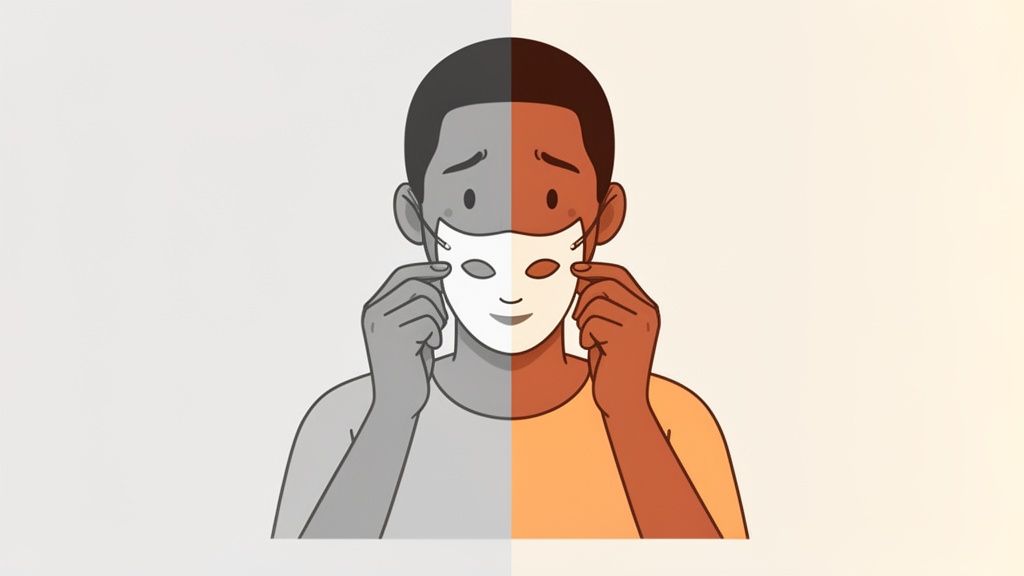
We're seeing a growing wave of adults looking for answers through autism testing, and it’s almost always driven by a deep need for self-understanding. So many have spent years, even decades, navigating the world feeling misunderstood or wrestling with anxiety and depression that never seemed to have a clear source. This journey often leads them to what we call a 'late-diagnosis' experience.
This isn't just a small trend. Between 2011 and 2022, the diagnosis rate for autism spectrum disorder (ASD) among adults in the U.S. jumped dramatically, climbing from 2.3 per 1,000 people to 6.3 per 1,000. The increase was especially sharp in young adults, and the rate for women grew faster than for men, which tells us a lot about how autism can present more subtly in females. You can read the full research on this diagnostic trend to dig deeper into the data.
Moving Beyond Outdated Stereotypes
For a long time, the public's image of autism was shaped by narrow, often male-centric stereotypes. Thankfully, that's changing. There's now a much richer awareness of how autism shows up differently in adults—especially in those who have become masters of masking.
Masking is the often unconscious act of hiding or suppressing natural autistic traits to fit in with neurotypical social expectations. It’s an incredibly draining performance, and it's a common experience for many, particularly:
- Women: Who are often socialized to be more agreeable and emotionally expressive, causing their autistic traits to be missed.
- BIPOC Individuals: Who frequently face extra societal pressures to conform, making their authentic neurodivergent traits even less visible.
This growing awareness means more and more adults are finally seeing their own lives reflected in modern descriptions of autism. They’re realizing that their lifelong challenges with social communication, sensory sensitivities, or intense special interests might be more than just personality quirks.
A diagnosis isn't about finding something 'wrong' with you. It’s about finding the right language to describe a lifetime of experiences. It's the moment the puzzle pieces of your identity finally click into place, offering validation and a path toward self-acceptance.
This guide is designed to be a compassionate and practical resource. We’ll walk you through every step of the autism testing for adults process, from identifying subtle signs to understanding modern, accessible evaluation options like telehealth. Our goal is to give you the clarity you need to take the next step with confidence.
Recognizing the Signs of Undiagnosed Autism
For many adults who start looking into autism testing, the journey doesn't begin with a checklist. It starts with a quiet, lifelong feeling of being just a little bit out of sync with everyone else. This isn't about fitting a stereotype; it’s about finally finding a framework that makes sense of your own unique experience.
The signs of autism in adults who flew under the radar as kids are often subtle and internal. They're easily missed by others because you've spent a lifetime learning how to hide them.
You might feel a profound sense of exhaustion after social events—what many call a "social hangover." While others seem to leave a party feeling energized, you might feel completely depleted, needing a full day or more just to get your mental energy back. This isn't simply being an introvert; it's the cognitive burnout that comes from manually processing every single unwritten social rule in real-time.
That kind of social fatigue is often a stark contrast to the deep, immersive joy you find in your special interests. You could probably talk for hours about a topic you're passionate about, yet find small talk to be painfully awkward and pointless. This isn't about being rude; it's just how a mind wired for depth struggles with surface-level chatter.
The Constant Negotiation with Your Environment
Living as an undiagnosed autistic adult often means you're in a constant state of negotiation with a world that feels too loud, too bright, or just too much. This sensory sensitivity is a huge, often invisible, source of daily stress.
Here’s what that might look like in real life:
- Sensory Overload: Grocery stores are a nightmare of fluorescent lights, beeping scanners, and a dozen conversations happening at once, leaving you feeling frazzled and overwhelmed.
- Tactile Sensitivities: You cut the tags out of all your clothes, or you can't stand the feeling of certain fabrics against your skin.
- Auditory Processing: You struggle to follow a conversation in a busy restaurant because your brain can't seem to filter out the background noise.
Constantly managing this sensory input is exhausting and can leave you feeling perpetually on edge. The need for a quiet, predictable, and controlled environment isn't just a preference—it’s a necessary coping mechanism.
"For years, I just thought I was 'too sensitive' or 'high-maintenance.' Realizing my sensory experiences were a core part of being autistic was a revelation. It wasn't a character flaw; it was my neurology."
Routines, Executive Function, and Masking
A powerful need for routine is another common sign. Unexpected changes to your day, even small ones, can feel deeply jarring and throw your whole system off balance. This isn't about being rigid or inflexible; routines create a predictable structure that lowers anxiety and frees up precious mental energy for everything else.
Many adults also struggle with executive functions—think of it as the brain's project manager. This can show up as difficulty starting tasks (even things you want to do), organizing your thoughts, or shifting from one activity to another. It’s that incredibly frustrating feeling of knowing exactly what to do but not being able to make your brain and body cooperate to do it.
To get by in a world not built for their neurology, many undiagnosed adults become masters of a skill called masking. This is the exhausting, often subconscious, act of performing "normal" social behaviors.
Masking can involve:
- Mimicking Social Behavior: Consciously copying other people’s facial expressions, hand gestures, and tone of voice to seem engaged.
- Suppressing Natural Instincts: Forcing yourself to make eye contact when it feels intense and uncomfortable, or actively stopping yourself from stimming (like fidgeting, rocking, or hand-flapping).
- Scripting Conversations: Mentally rehearsing conversations before they happen to prepare for different social outcomes.
Masking is a survival strategy, plain and simple. But it comes at a tremendous cost, often leading to burnout, anxiety, and a feeling that you've lost touch with your real self. Recognizing these patterns is often the first major step for adults considering autism testing for adults and looking for answers.
Choosing the Right Autism Evaluation for You
Figuring out which type of autism testing for adults you need can feel overwhelming. Should you get a simple diagnostic letter? A detailed report? Or a full neuropsychological evaluation? Understanding what each of these options entails is the first step toward getting the clarity you're looking for.
Think of it like getting a car checked out. Sometimes, you just need a basic inspection to confirm the engine is running properly (that’s your diagnostic letter). Other times, you want a full, multi-point report detailing the condition of every single part (that’s a diagnostic report). And in rare cases, you need a highly specialized, deep-dive analysis for performance tuning (that’s a full neuropsychological evaluation).
Each one serves a different purpose. The right choice really comes down to what you hope to achieve. Are you just seeking self-understanding? Do you need formal documentation for work accommodations? Or are you trying to get support for standardized tests in school? Let’s break down these paths.
Decoding Your Diagnostic Options
For most adults who are seeking confirmation of autism for personal insight or to get support at work, a targeted diagnostic evaluation is the most direct and effective route. This isn't some week-long, intimidating process in a sterile clinic filled with confusing tests. Modern telehealth evaluations are designed to be done from the comfort of your own home and provide clear, actionable results.
These focused assessments usually involve a detailed clinical interview and validated questionnaires. A huge part of any good autism evaluation is collecting rich, personal stories through these conversations and observations. A skilled psychologist excels at analyzing qualitative data to build a complete, nuanced picture of your life experiences, strengths, and challenges.
This flowchart can help you start thinking about how certain social experiences might align with different neurotypes.
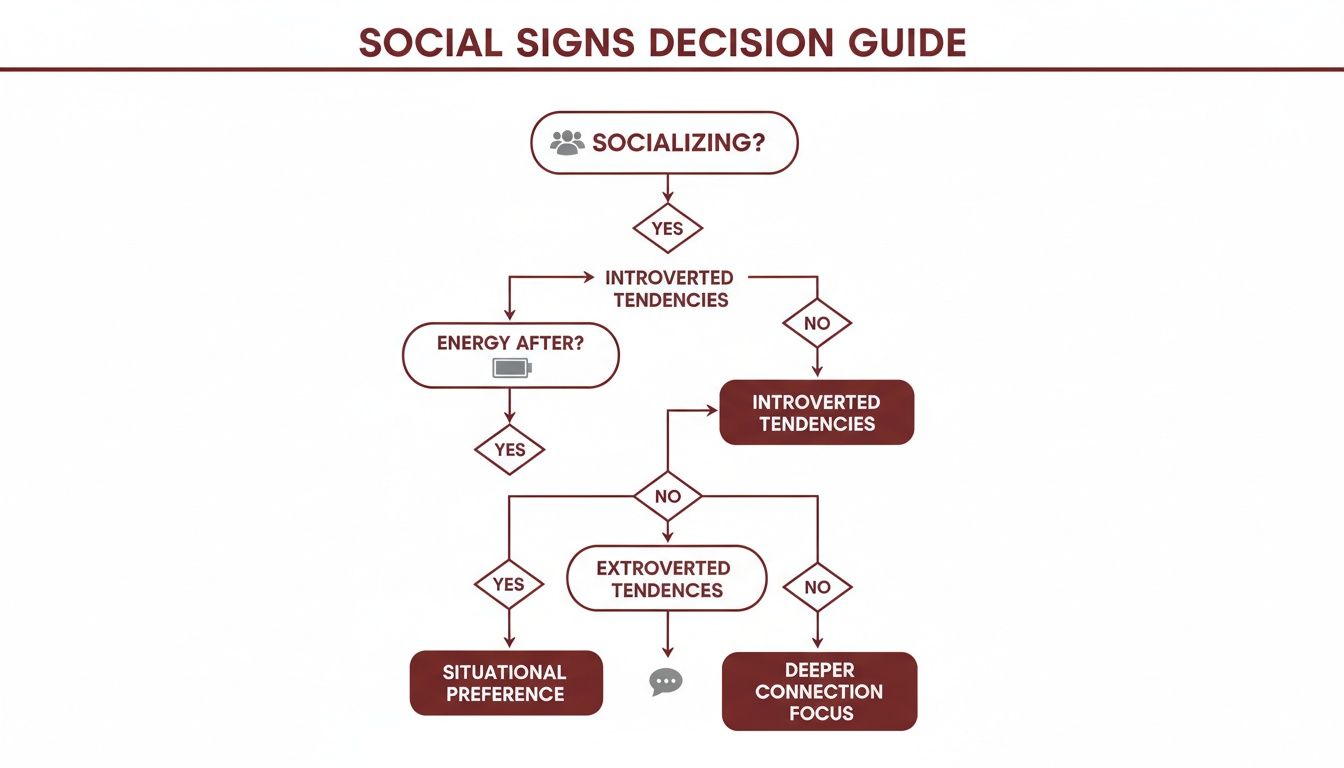
As the visual guide shows, things like your social energy levels and how you feel about small talk can point toward different social styles. This is often a great starting point for adults who are just beginning to explore the possibility of being autistic.
The most important thing to remember is that the goal of an evaluation is not to find something "wrong." It's to give you a framework and a vocabulary to understand yourself better, empowering you to advocate for the support and environment you need to thrive.
If you're just starting this journey and want a quick gut check to see if your experiences line up with common autistic traits, an initial screening can be helpful. You can explore some common questions in our free autism test for adults to get some preliminary insight.
Comparing Evaluation Types
To make this decision a bit easier, I've put together a table that compares the three main types of evaluations side-by-side. This should help you match your specific needs to the right service, saving you time, money, and stress down the road.
Choosing the Right Adult Autism Evaluation
| Evaluation Type | Best For | What's Included |
|---|---|---|
| Diagnostic (Letter Only) | Self-understanding, workplace accommodations, medication management support. | A formal diagnostic letter from a psychologist confirming the diagnosis. |
| Diagnostic (Full Report) | A detailed personal record, sharing with other providers, state disability services. | The diagnostic letter plus a comprehensive 4-page report detailing history, challenges, and recommendations. |
| Neuropsychological Testing | Academic accommodations for standardized tests (SAT, GRE, etc.), identifying learning disorders. | A highly detailed 25+ page report with cognitive (IQ), academic, and emotional functioning analysis. |
As you can see, there's a clear progression here. The diagnostic letter gives you the essential confirmation needed for many practical situations. The full report provides a deeper, more detailed narrative for yourself or for sharing with other professionals.
When Is a Full Neuropsychological Evaluation Necessary?
It’s a common myth that every single person seeking an autism diagnosis needs an exhaustive and expensive neuropsychological exam. For most adults, that’s just not true. A focused diagnostic evaluation done via telehealth is perfectly valid and is more than enough for self-knowledge and getting accommodations at work.
However, a full neuropsychological or psychoeducational evaluation becomes essential in very specific situations—primarily for academic accommodations.
Neuropsychological or psychoeducational testing is not needed for a simple diagnosis of ASD or ADHD. It is necessary, however, to receive accommodations in school or extra time on a standardized test.
These in-depth tests provide the highly detailed cognitive and academic data that testing boards like the College Board (for the SAT) or ETS (for the GRE) require. Here at the Sachs Center, we’ve successfully helped many clients get the extra time they need on exams like the SAT, GRE, and MCAT.
Ultimately, choosing the right autism testing for adults is about aligning the type of evaluation with your personal goals. By understanding these key differences, you can confidently pick the assessment that will give you the answers and support you deserve.
How Telehealth Makes Testing More Accessible
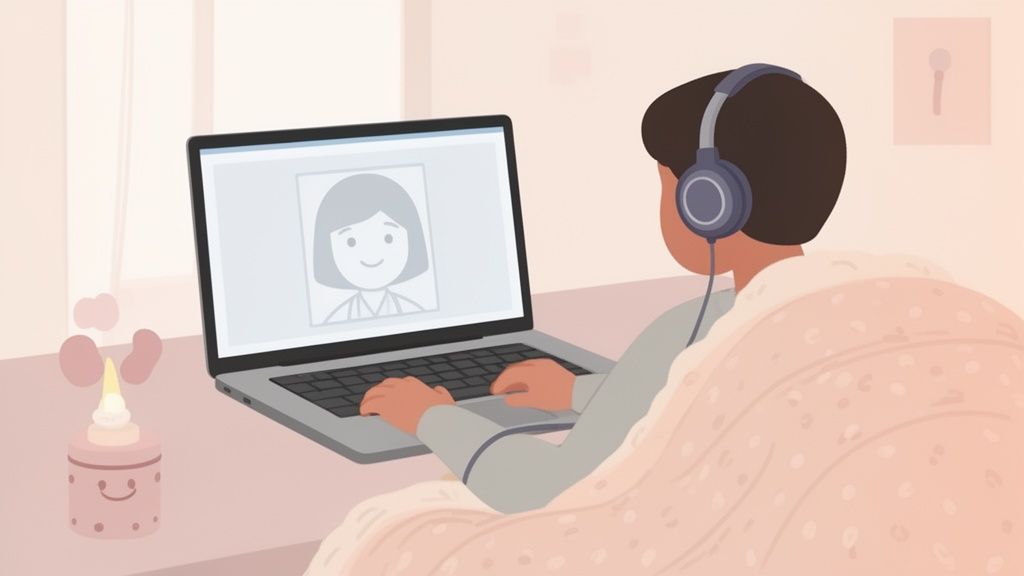
The idea of any clinical assessment can be stressful. But for an adult who might be autistic, the thought of navigating a new office, unfamiliar sounds and smells, and intense face-to-face interaction can be completely overwhelming. What if you could get the answers you’ve been searching for from the one place you feel most comfortable and in control—your own home?
That’s the real power of telehealth for autism testing in adults. It tears down so many of the barriers that have historically made getting a diagnosis incredibly difficult.
A virtual evaluation means you can stay in your familiar, sensory-friendly environment, which can dramatically reduce the anxiety of the process. When you aren't constantly managing sensory overload or masking to cope with a sterile clinical setting, you can be more present and, most importantly, more yourself.
This authenticity is absolutely crucial for an accurate assessment. The goal is for the psychologist to get a clear picture of who you truly are. That’s far more likely to happen when you're relaxed in your own space, maybe wrapped in a favorite blanket or with your pet snoozing nearby.
What Does a Virtual Session Actually Look Like?
A modern telehealth evaluation isn't just a quick video chat; it's a structured, thorough, and compassionate process. The two-hour diagnostic evaluation for Autism and ADHD goes far beyond a simple checklist.
The assessment is conducted virtually via Zoom or Google Meet and typically takes between 2 and 2.5 hours. It combines a detailed clinical interview with validated, current self-report measures. You can learn more about how we at the Sachs Center approach these evaluations to see the depth of care involved.
This modern approach to autism testing for adults is designed to be both convenient and highly effective.
Telehealth isn't just a matter of convenience; it’s about creating a more accessible and humane diagnostic experience. By removing the environmental stressors of an in-person visit, we can conduct a more accurate and compassionate evaluation.
The process is designed to fit into your life, not disrupt it. You can say goodbye to travel time, commuting stress, and the need to take a full day off work. This flexibility makes getting a diagnosis finally possible for people in rural areas, those with mobility challenges, or anyone with a demanding schedule.
Is an Online Diagnosis Accurate and Effective?
It's a fair question: is a virtual assessment as "real" or valid as an in-person one? The answer is a resounding yes.
For an adult autism diagnosis, the heart of the evaluation is the clinical interview—the process of gathering your life history, your experiences, and your current challenges. This can be done just as effectively, if not more so, through a secure video call where you feel at ease.
Providers who specialize in telehealth are skilled at creating a strong therapeutic connection online and use validated diagnostic tools specifically adapted for virtual use. The entire process is managed efficiently, and clinicians who use tools like efficient medical documentation software can further streamline their workflow, making these consultations even more accessible.
The result is a clear, reliable diagnostic picture that you can use for self-understanding, requesting workplace accommodations, and creating a path forward. Getting an online autism diagnosis for adults is a powerful and valid option that prioritizes your comfort without ever sacrificing clinical accuracy. It’s a modern solution for a modern need, finally making answers accessible to everyone, everywhere.
Life After an Adult Autism Diagnosis
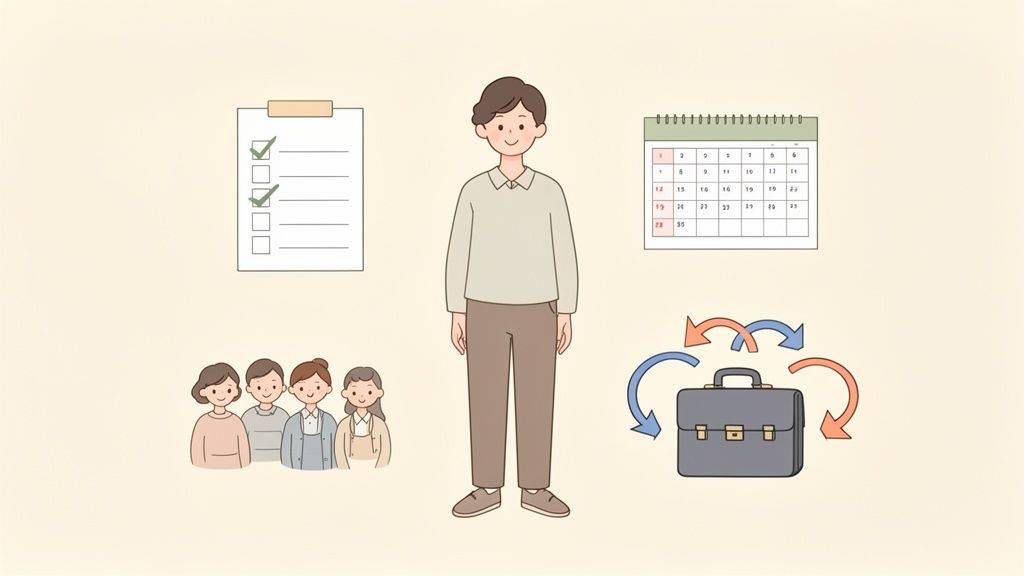
Getting an autism diagnosis as an adult isn't the end of the road. In reality, it’s the start of a whole new chapter. The results from your autism testing for adults aren't just a label; think of them as a new lens—a way to see yourself and your entire life’s story with fresh clarity and a lot more compassion.
Many people are hit with a powerful wave of emotions. The most common feeling? Profound relief. A lifetime of feeling "different," wrestling with unseen challenges, or being saddled with misdiagnoses finally has a name. That validation can be incredibly healing.
But it’s also common to feel a sense of grief. You might grieve for the child who struggled without anyone understanding why, or for the adult you might have become with the right support sooner. Looking back at past moments—social blunders, sensory overwhelm, chronic burnout—through this new lens of autism is a crucial part of integrating your identity.
Reframing Your Personal Narrative
This new understanding gives you the power to reframe your personal history. What once felt like a story of personal failings can now be understood as a story of neurological difference. The times you were called "too sensitive" were actually moments of sensory overload. The social events that left you wiped out weren't a sign of being antisocial, but the result of intense masking and the cognitive effort it took to get through them.
This reframing is an act of deep self-compassion. It swaps self-criticism for self-awareness, allowing you to finally let go of the shame and confusion that may have followed you for years.
"A late diagnosis doesn't just explain the present; it re-writes the past. It's the moment you stop blaming yourself for struggling and start appreciating how incredibly hard you've worked to navigate a world not built for you."
Understanding your neurotype is the first step. The next is learning how to use that knowledge as a practical tool to build a life that truly works for you.
Using Your Diagnosis for Empowerment
Your diagnosis is a key. It unlocks access to support and accommodations that can make a world of difference in your daily life. It gives you the official language you need to advocate for yourself, especially in the workplace.
Many autistic adults find that small, reasonable adjustments at work can dramatically cut down on stress and boost performance. With your diagnostic letter in hand, you can confidently ask for these changes.
Common workplace accommodations include:
- Flexible Hours: Starting your workday earlier or later to avoid a stressful commute during peak hours.
- Written Instructions: Getting tasks and feedback in writing rather than verbally to ensure clear communication and reduce your processing load.
- Sensory Adjustments: Permission to use noise-canceling headphones or to move your desk to a quieter spot with less foot traffic and harsh lighting.
- Clearer Communication: Requesting that meeting agendas be sent out in advance so you have time to prepare your thoughts.
These aren't special privileges; they are necessary adjustments that allow you to do your best work. A diagnosis gives you the standing to ask for what you actually need.
Finding Your Community and Support
Beyond practical accommodations, a diagnosis opens the door to a community of people who get it because they’ve lived it, too. Finding your "neurotribe" can be a deeply affirming experience, finally ending a lifelong feeling of isolation.
There are many ways to connect with others and find the right support:
- Online Support Groups: Forums and social media groups for autistic adults provide a safe space to share experiences and trade advice.
- Specialized Therapy: Finding a therapist who specializes in adult autism can help you process your diagnosis and develop new coping strategies.
- Coaching: Life skills or executive function coaching can offer practical, hands-on support for challenges with organization, planning, and day-to-day tasks.
Ultimately, life after an adult autism diagnosis is about intentionally creating an environment that honors your neurotype. It's about giving yourself permission to unmask, to dive into your special interests without apology, and to build a life that is authentically yours.
How to Find a Qualified and Compassionate Provider
Finding the right professional for autism testing for adults is probably the most critical part of this whole process. This isn't just about getting a diagnosis on paper. It's about finding a partner who truly gets the nuances of the adult neurodivergent experience.
The right provider can make you feel seen and validated, creating a safe space to explore who you are. The wrong one? You might walk away feeling more misunderstood and dismissed than when you started.
Think of it like hiring a guide for a trek into a new country. You wouldn't pick someone whose only map is for a completely different continent. In the same way, you need a clinician who specializes in adult autism, not just kids. The way autism shows up in adults is often far more complex and subtle, layered under years of life experience and camouflaging.
What to Look for in a Clinician
Your ideal provider is someone with a deep, modern understanding of neurodiversity—someone who sees it from a strength-based perspective. They should view autism not as a problem to be fixed, but as a different way of being, with its own unique strengths and very real challenges. This core philosophy changes everything about the quality and compassion of your evaluation.
When you're looking at potential providers, keep an eye out for these non-negotiables:
- Specialization in Adult Neurodiversity: They need specific training and a lot of experience working with adults. Don't settle for a pediatric specialist who occasionally sees adults.
- Expertise in Masked Presentations: This is a deal-breaker. The clinician absolutely must be skilled at spotting autism in people who have learned to hide their traits, especially women, non-binary folks, and BIPOC adults.
- A Person-Centered Philosophy: Their entire approach should be built around your lived experience and individual strengths, not just ticking boxes on a clinical checklist.
- Transparent and Clear Process: Everything from the cost to what the evaluation actually looks like should be explained clearly from the get-go. No confusing jargon, no hidden fees.
The goal is to find someone who does more than just diagnose. You want a partner who can help you make sense of your life in a way that feels empowering and affirming—validating the person you've always known you are.
Questions to Ask a Potential Provider
Don't be shy about asking direct questions before you commit. A good clinician will welcome your curiosity and be happy to talk about their process. You're interviewing them for a very important role in your life.
Here are a few essential questions to get you started:
- What’s your experience diagnosing autism specifically in adults?
- How do you approach identifying autism in someone who masks heavily?
- Can you describe your overall philosophy on neurodiversity?
- What does your evaluation process involve, from start to finish?
- What are the total costs, and what exactly do I get at the end?
Finding a practice that shares these values is everything. Some centers, for instance, are committed to moving beyond simple labels. At the Sachs Center, our approach to Autism & ADHD testing is both holistic and person-centered, with a deep understanding of how neurodivergence presents in highly masked individuals. Choosing a provider with this kind of mindset ensures your journey toward an adult autism diagnosis is met with the expertise and genuine compassion you deserve.
Common Questions About Adult Autism Testing
Taking the first step toward autism testing for adults can bring up a few last-minute, practical questions. Let's walk through some of the most common concerns to help you feel confident about moving forward.
Is a Telehealth Diagnosis as Valid as an In-Person One?
Yes, absolutely. For what most adults need—like getting accommodations at work or building a better support plan—a telehealth diagnosis holds the same weight.
When a specialist uses up-to-date, validated assessment tools, virtual evaluations give you accurate results. Plus, you get to do it all from a familiar, comfortable space, which is a huge bonus.
Do I Need a Referral to Get Tested?
In most cases, no. Specialized centers typically allow adults to self-refer and schedule an evaluation on their own time. This approach cuts through the red tape, putting you in control of your own journey without having to wait around for a doctor's sign-off.
What if I Suspect Both Autism and ADHD?
This is incredibly common, and you'll often hear it called AuDHD. Many experienced providers offer combined evaluations designed specifically to identify both conditions and untangle their overlapping traits.
This integrated approach makes sure you walk away with a clear, complete picture of your unique neurotype. After your assessment, making sense of your autism test scores is a really important step in processing the results and figuring out what comes next.
A diagnosis isn't just a label; it's a tool for self-understanding and a key to unlocking the right support. Answering these questions helps demystify the process, making it feel much more approachable.
Will Insurance Cover the Cost?
This is a tricky one because coverage varies so much. Many specialized assessors, including us at the Sachs Center, are out-of-network providers.
What this means is you would likely pay for the service upfront. However, we can provide a "superbill"—which is basically a detailed, itemized receipt—that you can submit to your insurance company. Depending on your plan's out-of-network benefits, you may be able to get partial reimbursement.
Ready to get the clarity you’ve been looking for? The Sachs Center offers compassionate, expert telehealth evaluations for adults. Book your evaluation today and take the next step on your journey of self-discovery.
