

Your child may be bright, curious, and full of ideas, yet homework turns into tears the moment reading starts. Or you may be an adult who’s always felt capable but exhausted, someone who can think with insight, speak well, and still lose the thread when reading a long email or finishing paperwork. In both situations, people often ask the same question: is this dyslexia, ADHD, or both?
That confusion makes sense. The overlap between dyslexia and adhd is real, and from the outside the two can look surprisingly similar. A person may avoid reading because decoding words is hard. Another may avoid reading because attention drifts, working memory gets overloaded, or the task feels impossible to organize. Some people are dealing with both at once.
What matters most is this: confusion doesn’t mean you’re missing something obvious. It often means the picture is more layered than a quick checklist can capture.
Is It Dyslexia ADHD or Both
A common story goes like this. A parent says, “My son is smart, but he can’t get through a chapter without fidgeting, zoning out, or getting upset.” An adult says, “I’ve always been disorganized, and reading takes me so much effort that I avoid it unless I absolutely have to.” In both cases, people often get one label first, while the other possibility stays hidden.

That hidden overlap is not rare. The co-occurrence of ADHD and dyslexia is substantial, with studies showing it happens 30% to 50% of the time, and having ADHD increases the chances of also having dyslexia fourfold, from 5% to 19%, according to CHADD’s overview of ADHD prevalence and co-occurring dyslexia.
Why people get stuck on the wrong question
Many families ask, “Which one is it?” That’s understandable, but sometimes the better question is, “What is driving the difficulty in this moment?”
If a child melts down during reading, the problem might be:
- Word-level strain that makes reading slow and effortful
- Attention drift that makes it hard to stay with the task
- Mental fatigue from compensating for both at the same time
For adults, it can look different:
- Reading avoidance because every page takes too much energy
- Chronic disorganization that gets mistaken for laziness
- Shame from years of being told they “just need to focus”
Practical rule: If reading and attention problems seem to feed each other, it’s worth considering both conditions rather than assuming one explains everything.
What clarity usually changes
When people finally understand whether they’re dealing with dyslexia, ADHD, or both, the emotional shift is often immediate. They stop treating every struggle as a character flaw. They start asking better questions about support, accommodations, and treatment.
That kind of clarity matters because the next steps are different depending on what’s underneath the surface.
Understanding Each Condition Separately
Before untangling the overlap, it helps to separate the two conditions in plain language.
What dyslexia is really about
Dyslexia is a language-based learning disability. It is not just reversing letters, and it’s not a sign of low intelligence. A better way to think about it is this: the brain has trouble efficiently linking printed symbols to speech sounds, so reading accuracy, reading speed, spelling, and automatic word recognition can all become harder.
It’s also common. Dyslexia is the most common learning disability, affecting 1 in 10 people, and in the United States over 40 million adults have dyslexia while only about 2 million have ever received a formal diagnosis, according to this dyslexia statistics summary.
A simple analogy helps. Reading for a person without dyslexia can feel like opening a well-organized filing cabinet. Reading for a person with dyslexia can feel more like opening a drawer where the labels are partly scrambled. The information is there, but finding it takes more effort.
For a side-by-side explanation, this guide on dyslexia vs ADD can help clarify where the experiences differ.
What ADHD is really about
ADHD affects attention regulation, impulse control, and activity level. People often think only of hyperactivity, but many experience ADHD more as distractibility, inconsistent focus, difficulty starting tasks, losing track of materials, poor time sense, or trouble holding information in mind long enough to use it.
A useful analogy is a powerful car with unreliable brakes and an inconsistent steering system. The engine is not the problem. In many cases, it’s strong. The challenge is directing attention where and when it’s needed, then sustaining it long enough to finish.
The simplest distinction
A quick way to separate the two in everyday terms:
- Dyslexia primarily affects reading-related language processing.
- ADHD primarily affects regulation of attention, behavior, and executive functioning.
That sounds neat on paper, but real life is messier.
A child with dyslexia may look inattentive because reading is exhausting. A child with ADHD may look like a poor reader because attention keeps dropping before the text can make sense.
Where readers often get confused
People often assume:
- If someone can read well sometimes, it can’t be dyslexia
- If someone can focus on favorite activities, it can’t be ADHD
- If someone is successful in school or work, neither diagnosis fits
None of those assumptions is reliable. Many bright children and adults compensate for years. They memorize, guess from context, overwork, avoid, mask, and still appear “fine” until demands rise.
That’s one reason dyslexia and adhd can stay hidden for so long.
Why Dyslexia and ADHD Often Overlap
The overlap is not random. These conditions often travel together because they share some underlying brain-based vulnerabilities.
Shared pathways in the brain
Both dyslexia and ADHD involve executive dysfunction in frontal-striatal brain circuitry, and both can include weaknesses in working memory, processing speed, and procedural learning, which helps explain their neurobiological overlap, as described by the International Dyslexia Association’s discussion of ADHD and dyslexia.
That sentence is dense, so let’s translate it.
- Working memory is the ability to hold information in mind while using it.
- Processing speed is how quickly the brain can take in and respond to information.
- Procedural learning helps skills become automatic with practice.
If those systems are shaky, reading may never feel automatic, and staying organized or attentive may also take far more effort than other people realize.
How one weakness can show up in two different ways
Take processing speed. In dyslexia, slower processing can make rapid word recognition and reading fluency difficult. In ADHD, slower processing can make fast instructions, timed work, and multi-step tasks hard to manage.
Take working memory. In dyslexia, a person may lose track of sounds, word parts, or sentence meaning while decoding. In ADHD, a person may forget directions halfway through, lose the main idea, or start one step and miss the next.
The same broad weakness can create different surface problems.
Symptom Overlap vs. Unique Traits
| Symptom Area | Shared Manifestation | Primarily Dyslexia | Primarily ADHD |
|---|---|---|---|
| Reading tasks | Avoidance, fatigue, frustration | Slow or effortful decoding, spelling difficulty | Skipping around, inconsistent attention to text |
| Comprehension | Trouble holding onto meaning | Meaning breaks down because decoding takes so much effort | Meaning breaks down because attention and working memory drift |
| Written work | Messy output, incomplete assignments | Spelling and word retrieval problems | Organization, planning, and follow-through problems |
| Classroom behavior | Off-task appearance | Mental fatigue during reading-heavy tasks | Broad inattention, impulsivity, or restlessness across settings |
| Skill building | Tasks stay effortful longer than expected | Reading may not become automatic | Routines and self-management may not become automatic |
Genetics matter, but they don’t simplify the picture
Research discussed by the IDA source above also notes shared genetic architecture, including variants such as KIAA0319 and DCDC2. For families, the practical takeaway is simple: if one condition is present, it’s reasonable to stay alert to the other.
When symptoms overlap on the surface, the goal isn’t to pick the most obvious label. The goal is to identify the mechanism underneath it.
That is why a brief screening can miss the mark. Two people can both look inattentive during reading. One is losing focus because the text is hard to decode. The other is losing focus because attention regulation breaks down even when the text itself is manageable.
How Symptoms Appear Across Age and Gender
The same combination of traits can look very different depending on age, demands, and how a person has learned to cope.
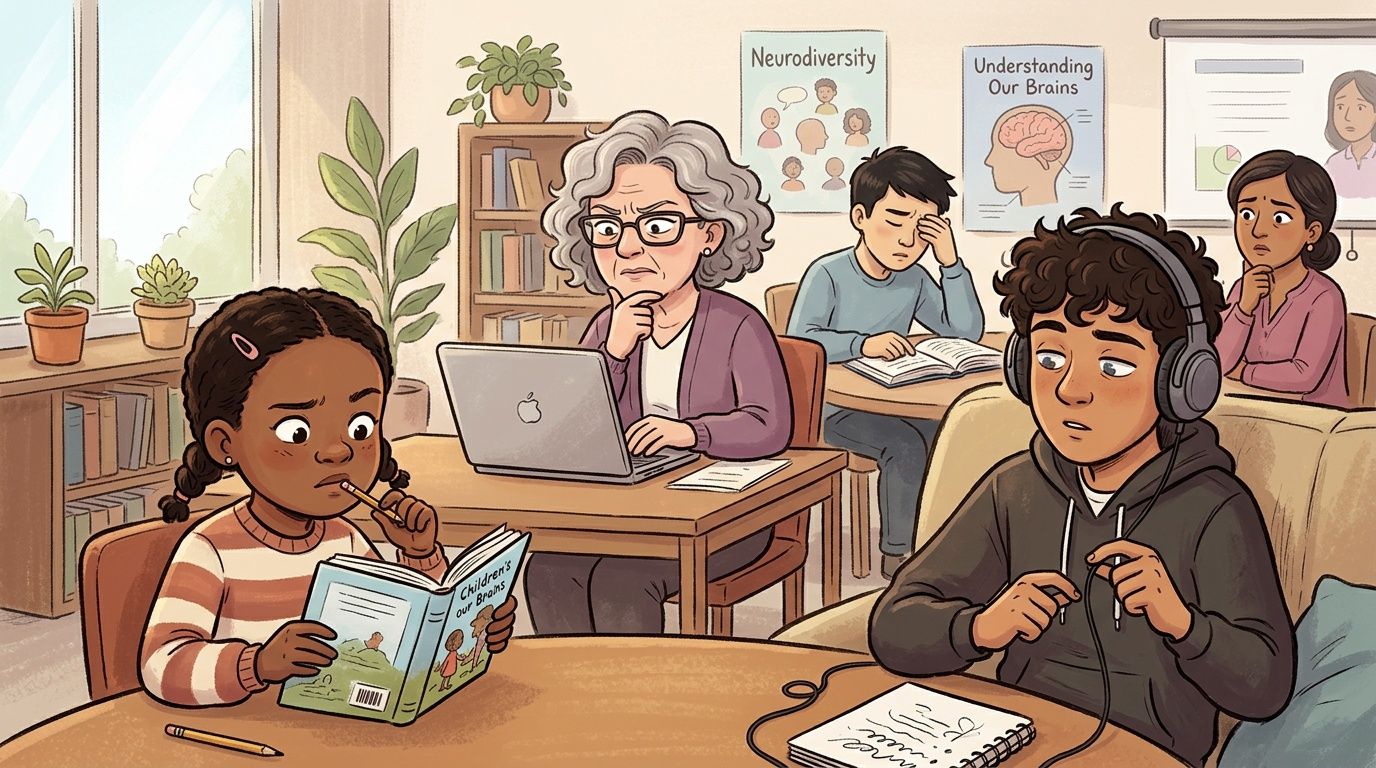
In young children
In children, the signs are often easier to spot. A child may avoid reading aloud, guess at words, complain that books are “boring,” leave homework unfinished, or bounce from task to task. Adults may notice the behavior first and miss the strain underneath it.
Sometimes the visible pattern looks like noncompliance. It may, in fact, be overload.
In teenagers
Teens often become harder to read. By then, many have learned how to hide weaker skills. They may use charm, humor, procrastination, or last-minute cramming to compensate.
What teachers and parents see can include:
- Late assignments even when the student understands the material
- Emotional blowups around essays, reading loads, or studying
- Strong verbal insight paired with weak written output
The mismatch confuses adults. People think, “If they can explain it out loud, why can’t they get it done?”
In women and girls
Masked presentations are especially important here. Many individuals diagnosed with dyslexia in childhood remain undiagnosed for ADHD into adulthood because evaluators may focus on one condition and miss the other. This masking is especially common in women and girls, whose symptoms may show up more as mental fatigue or anxiety than classic inattention, as discussed in this video on diagnostic masking and overlap.
That matters because many girls are not disruptive. They may sit unobtrusively, work very hard, and internalize the struggle. Adults may praise them for coping while overlooking the cost.
In adults
Adults often describe a lifelong sense that routine tasks take too much effort. They may read slowly, re-read often, dread forms and dense documents, lose track of details, overprepare for meetings, or feel constantly behind despite high ability.
Common adult signs can include:
- Email and paperwork avoidance
- Exhaustion after reading-heavy work
- Difficulty organizing deadlines, notes, and follow-up
- Anxiety that grows from years of compensating
Some adults aren’t “suddenly struggling.” They’re finally in a life stage where compensation no longer hides the problem.
Why gender stereotypes delay help
A boy who runs around the classroom may get evaluated quickly. A girl who daydreams, masks confusion, and spends hours over home reading may get labeled anxious, perfectionistic, or scattered. An adult woman may be told she’s overwhelmed, when she has been carrying an undetected learning and attention profile for years.
That’s why context matters. The same neurotype can look loud in one person and quiet in another.
Navigating the Path to an Accurate Diagnosis
When dyslexia and adhd may both be present, a quick online quiz won’t give enough clarity. The evaluation has to separate symptoms that look similar but come from different causes.
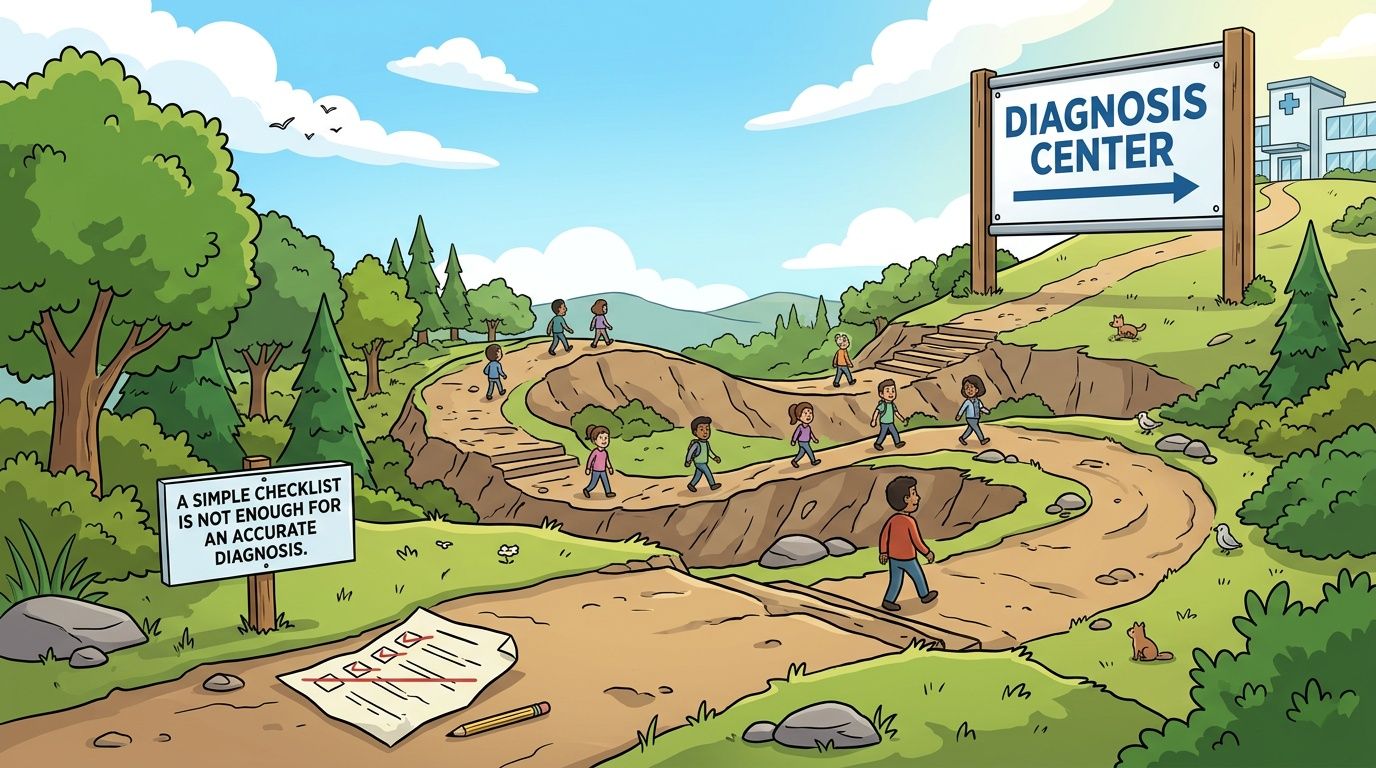
During evaluations, undiagnosed dyslexia can mimic ADHD inattention because reading creates mental fatigue. Conversely, ADHD impulsivity can affect dyslexia testing and muddy the results. That’s why multiple assessment methods are needed to sort out the root cause of problems like weak reading comprehension, as described in this overview of overlap and assessment complexity.
What a good diagnostic process usually includes
A careful diagnostic evaluation often involves several pieces viewed together:
Clinical interview
This looks at childhood history, school patterns, current struggles, and what happens across settings.Standardized measures
These help identify whether attention problems are broad and persistent, or whether they show up mainly around reading, writing, or other language-heavy tasks.Behavioral pattern review
Evaluators look for clues like mental fatigue, avoidance, inconsistent output, impulsivity, and how performance changes with task type.Collateral information
Parent input, school observations, prior reports, and real-world examples often help clarify what testing alone cannot.
Key distinction: Diagnosis asks, “What condition or conditions best explain this person’s pattern?” Accommodations ask, “What documentation is required by a school, employer, or testing agency?”
Diagnosis versus accommodations
Many readers get tripped up here, so let’s make it plain.
When a diagnostic evaluation may be enough
A standard diagnostic evaluation may help when someone needs:
- Clarity about whether ADHD is present
- A diagnostic letter or brief report for treatment planning
- Workplace accommodations
- Documentation to discuss medication with a prescribing provider
At the Sachs Center, for example, ADHD and autism diagnostic evaluations are conducted virtually and typically take 2 to 2.5 hours, using clinical interviews and validated self-report tools, while more extensive testing is offered separately for accommodation needs. If you’re trying to understand the difference between those paths, this page on neuropsychological testing for learning disabilities explains the fuller accommodation-focused option.
When full neuropsychological testing is usually needed
A more in-depth neuropsychological or psychoeducational evaluation is often the route for:
- Standardized test accommodations
- School-based documentation
- IEP or 504 planning
- Detailed academic and cognitive profiling
That type of assessment goes beyond diagnostic clarity. It documents learning, cognitive, and functional patterns in much greater depth.
Questions to ask before booking
- What is the main goal right now? Diagnosis, treatment planning, workplace support, or academic accommodations?
- Are reading and attention concerns both being examined?
- Will the evaluator consider masked presentations in adults and women?
- What documentation will I receive at the end?
Those questions often save families time, money, and frustration.
Effective Treatment and Support Strategies
Once the picture becomes clearer, support usually works best when it addresses the full pattern, not just the label that got noticed first.
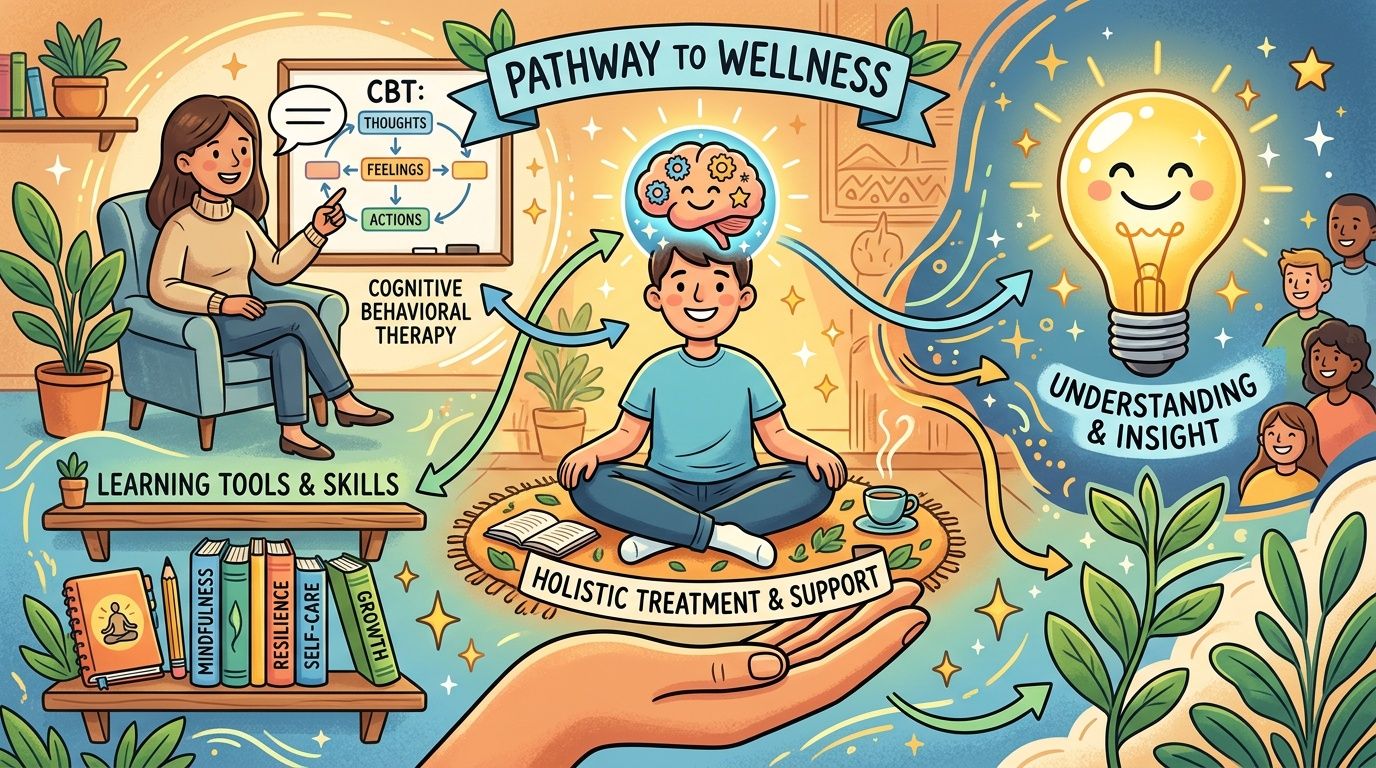
Shared genetic liabilities raise practical treatment questions, and an integrated treatment approach combining CBT for executive function, psychoeducation, and individualized coaching is often necessary because treating only one condition may leave major challenges untouched, as discussed in this research review on shared liabilities and treatment implications.
What integrated support can look like
If someone has both dyslexia and ADHD, support often needs more than one lane.
- CBT and executive function support can help with task initiation, planning, emotional regulation, and the shame that often builds after years of struggle.
- Reading-specific intervention targets decoding, fluency, spelling, and strategies for understanding text without burning through all available mental energy.
- Coaching or skills support helps people build routines for school, work, deadlines, note-taking, and follow-through.
The point is not to decide which condition is “more real.” The point is to support the parts of daily life that keep breaking down.
Accommodations that reduce friction
Support also becomes more practical when it changes the environment.
In school
- Audiobooks or text-to-speech can reduce the load of decoding when the goal is learning content.
- Extended time may help when reading speed or sustained attention slows output.
- Written and verbal instructions can support students who miss details the first time.
At work
- Written follow-up after meetings helps when working memory gets overloaded.
- Noise-reducing tools may improve focus in busy environments.
- Task chunking and deadline scaffolding can make large assignments more manageable.
For families trying to understand school supports, this guide on 504 plans vs IEPs is a useful starting point.
What about medication, supplements, and daily supports
Medication questions are common, especially when ADHD is part of the picture. In general, treatment planning should stay individualized. Improving attention may help a person use reading supports more effectively, but it doesn’t automatically remove a reading disability. Likewise, reading intervention doesn’t automatically resolve executive function problems.
Some families also want to explore lifestyle supports alongside formal care. For readers interested in nutrition-related options, this overview of omega-3 and ADHD support may be a helpful adjunct resource.
Support works better when it matches the actual bottleneck. A child who can’t decode needs reading help. A teen who can’t organize work needs executive support. A person with both usually needs both.
One example of an integrated model is the Sachs Protocol, which combines CBT, psychoeducation, and individualized care as part of broader neurodiversity support. That kind of combined approach can make sense when one symptom cluster keeps interfering with progress in another.
Your Clear Next Steps for Assessment and Care
If you’ve made it this far, you probably don’t need more reassurance that the struggle is real. You need a plan that makes the next step feel manageable.
Start by naming the main problem you want answered. Is the urgent issue reading? Attention? School accommodations? Work functioning? Long-standing exhaustion and confusion? The answer helps determine whether you need diagnostic clarification, full learning-based testing, or both.
Then gather a few real examples before any appointment. Write down what happens during reading, what happens during non-reading tasks, when the struggles first became obvious, and where masking may be hiding the pattern. Adults should include work examples, not just school memories. Parents should note whether difficulties appear across settings or mostly in literacy-heavy situations.
If lectures or spoken information are hard to retain, tools can help while you pursue evaluation. Some readers find it useful to transcribe lectures to text so they can review information in more than one format.
A simple next-step checklist
- List the biggest pain points at school, work, or home
- Collect prior reports or teacher feedback if you have them
- Ask whether both dyslexia and ADHD are being considered
- Confirm what documentation you’ll receive
- Choose the evaluation type that matches your goal
Clarity is possible. It often starts with realizing that what looks like laziness, inconsistency, anxiety, or poor motivation may be an unrecognized pattern of dyslexia and adhd.
Frequently Asked Questions
| Question | Answer |
|---|---|
| Can someone have dyslexia and ADHD at the same time? | Yes. The overlap is common, and in some people one condition hides the other. |
| Why does dyslexia sometimes look like ADHD? | Reading can become so effortful that a person appears inattentive, restless, or avoidant. The behavior may be a response to mental fatigue rather than a pure attention disorder. |
| Why does ADHD sometimes look like dyslexia? | ADHD can affect working memory, task persistence, and careful responding. That can interfere with reading performance and make it harder to interpret test results unless both conditions are considered. |
| Why are women and adults often missed? | Many learn to mask. They may appear anxious, perfectionistic, or chronically overwhelmed rather than outwardly hyperactive. |
| Is a diagnosis the same as testing for accommodations? | No. A diagnostic evaluation is meant to determine whether a condition is present. Accommodation-focused testing is typically more extensive and is often required for school supports or standardized testing requests. |
| What’s the difference between a diagnostic letter and a fuller report? | A diagnostic letter is usually a concise document identifying the diagnosis if one is made. A fuller report typically includes background, current functioning, diagnostic impressions, and recommendations. |
| Do all children with reading problems have dyslexia? | No. Reading problems can come from different causes. That’s why evaluators need to look at language, attention, behavior, and learning history together. |
| Will treating ADHD fix dyslexia? | Not necessarily. Attention treatment may help a person engage better with instruction, but reading-specific difficulties usually need their own support. |
| Will dyslexia intervention fix ADHD? | Not necessarily. Better reading support can reduce stress and fatigue, but executive function and attention regulation may still need separate treatment. |
| What should I bring to an evaluation? | Any prior testing, school reports, examples of current struggles, and a short history of when concerns began are all useful. |
If you want formal clarity about attention, learning-related concerns, or the right evaluation path, Sachs Center offers telehealth diagnostic services for children, teens, and adults, along with neuropsychological testing for accommodation needs. A thoughtful evaluation can help you move from guessing to understanding, and from understanding to support that fits.
